
Disclosure: As an Amazon Associate, My Indoor Space earns from qualifying purchases through links in this article, at no extra cost to you.
Quick verdict
Choose a fabric case for clothing or bedding you access often and want to retrieve without re-compressing a bag. Choose vacuum storage for suitable bulky textiles you put away for longer periods. Measure the filled shape under the bed and follow the textile maker’s care limits before compressing anything.
Research-based buying guide. Product information checked October 16, 2026. We have not tested these products hands-on; recommendations distinguish published features from our buying judgments.
Fabric under-bed storage bags
Vacuum clothing-storage bags
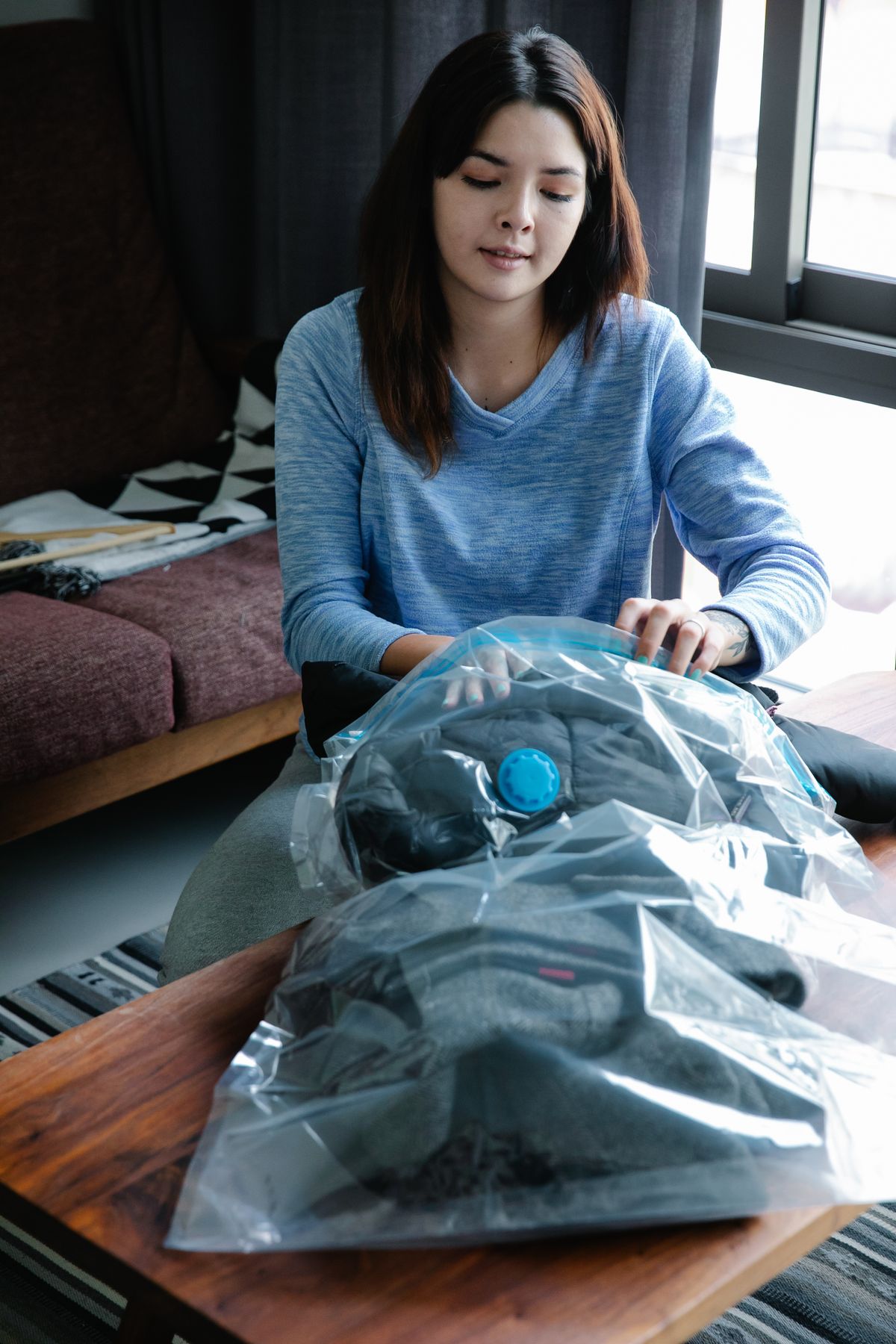
These storage methods solve different problems. A fabric case gives a defined place and easier access. A vacuum bag removes air to reduce the bulk of suitable contents. One is not automatically an upgrade over the other.
Choose by how often you open it
| Stored items | Better starting choice | Reason |
|---|---|---|
| Frequently used spare sheets | Fabric case | Easy access without resealing |
| Suitable seasonal bulky bedding | Vacuum bag | Compression can reduce stored bulk |
| Structured or delicate garments | Check textile care first | Compression may be unsuitable |
| Very low bed clearance | Measure both filled | Advertised empty size is insufficient |
Where fabric bags work well
IKEA’s SKUBB is an example of a fabric case with handles, a zip closure and ventilation areas. The cited larger version is 19 cm high, while several footprint sizes exist. Its purpose is organized textile storage and dust protection, not squeezing the contents flat.
That makes this type useful for spare sheets, folded clothes or other items you may retrieve regularly. A handle is easier to use when the case is not overfilled or wedged behind a bed leg. Do not assume every fabric bag is washable; the cited smaller SKUBB specifies vacuuming or using a lint roller instead.
Where vacuum bags make sense
Vacuum bags are worth considering when suitable bulky items spend a season in storage. Removing air can make the same textiles occupy less space, but the actual reduction depends on their structure and how much air they contain.
Do not assume a universal percentage saving or a permanent airtight seal. We have not tested compression ratios or long-term valve leakage. Check closure and valve instructions, compatible vacuum methods and whether you can reseal the bag conveniently after opening it.
Textile care comes first
Follow the clothing or bedding maker’s instructions, particularly for filled items, structured pieces, delicate fabrics and materials that need loft. The cited Space Bag retailer guidance includes limits for down compression and periodic restoring of loft; do not treat that as a universal instruction for every bag and textile.
If you cannot confirm compression is suitable, choose an appropriate non-compressing storage method. A smaller packet is not a saving if it damages an expensive coat or duvet.
Measure the route, not only the floor space
Check the lowest bed-frame clearance, crossbars, support feet and the width available to pull a bag out. A bag that fits beneath the middle of the bed may not pass through the opening from the side.
For vacuum storage, consider the filled packet’s uneven shape. The valve, closure and folded corners can protrude even when much of the bag is flat. For fabric cases, allow for soft sides bulging around overfilled contents.
Keep storage clean and dry
Put away textiles clean and completely dry, following their care labels. Neither ventilation netting nor an airtight bag is a treatment for existing dampness. Check the under-bed space for moisture problems before making it a long-term store.
Label the visible end and group items by how often you need them. Several smaller bags can be easier to retrieve than one enormous bundle, but extra zips and valves also mean more points to manage.
Best value and when to skip a purchase
Use existing suitable storage before buying a set. Start with one case or a few bags and test them under the actual bed. A discounted bundle with the wrong height is not a useful bargain.
Compare Canadian or U.S. prices by useful dimensions and quality of the closure, rather than bag count alone. Include any pump or vacuum requirement and replacement cost if a valve or seam fails.
Final winner
Fabric cases win for repeated access and straightforward organization. Vacuum bags win for suitable bulky textiles stored for longer periods. Fit, textile care and retrieval frequency should determine your choice, not the most dramatic compression photo.
Compare current listings in your country
These buttons open matching Amazon search listings rather than a guaranteed in-stock offer. Confirm the exact model, seller, included parts, delivered price and return terms. Offers can differ between the United States and Canada.
Fabric under-bed storage bags
Vacuum clothing-storage bags