
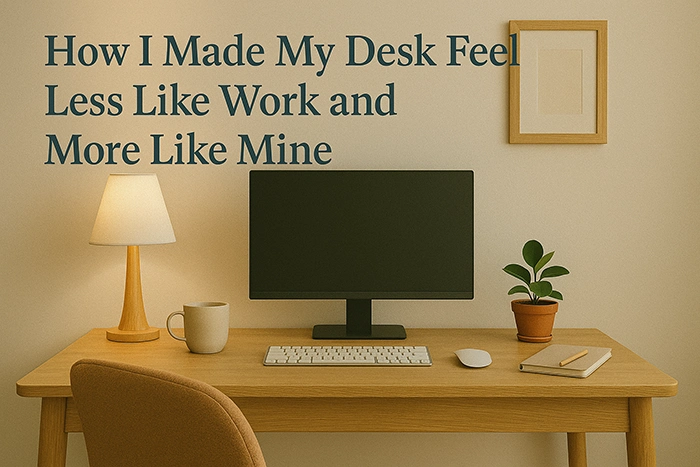
For a long time, my desk felt purely functional. It did its job, but it never felt inviting. I’d sit down to work and immediately feel a subtle tension — not because I didn’t want to be there, but because the space felt borrowed, temporary, like something I was using rather than something that belonged to me. I didn’t hate it, but I never fully settled into it either.
What I eventually realized was that my desk had been set up for efficiency, not comfort. The chair was fine. The screen was at the right height. Everything technically worked. But there was no warmth in it, no signal to my body that this was a place I could stay for a while without bracing myself. So instead of redesigning the whole setup, I started making small, intentional changes — one at a time.
The first thing I adjusted was how my body felt while sitting there. I lowered the chair slightly, brought the keyboard closer, and added support where I didn’t know I needed it until it was there. Almost immediately, the strain I’d been carrying in my shoulders eased. The desk stopped feeling like something I had to endure and started feeling like something that worked with me instead of against me.
Next, I softened the space visually. I replaced harsh overhead light with a warmer lamp and angled it so it didn’t glare off the screen. The difference was subtle but noticeable. The desk felt calmer. Less clinical. I also cleared just enough space so my eyes weren’t constantly jumping from object to object. What stayed on the desk had a reason to be there.
The final shift was personal, not practical. I added one or two things that didn’t serve a productivity purpose at all — something familiar, something grounding. A small object I like seeing. A texture that made the space feel lived in. Those details didn’t distract me; they anchored me. The desk stopped feeling generic and started feeling like mine.
Now, when I sit down, I don’t feel the same resistance I used to. The space welcomes me instead of challenging me. Work still happens there, but it no longer defines the desk entirely. Comfort, ergonomics, and a bit of warmth turned it into a place I can focus and settle — and that’s made all the difference.
🪑 The desk didn’t become more productive — it became more human.
📦 Buy on Amazon USA
🪑 Ergonomic Office Chair Cushion
💡 Warm Desk Lamp with Soft Light
🖱️ Desk Mat for Comfort and Surface Protection
🕯️ Final Thoughts
A desk doesn’t need to look impressive to feel right. It needs to support your body, calm your eyes, and reflect just enough of who you are to make sitting down feel natural instead of forced. When those elements align, work becomes easier to return to.
Comfort isn’t indulgent — it’s functional in a quieter way. When your space stops pulling at you, your attention has room to stay where you put it. Small ergonomic and visual choices can completely change how a desk feels without changing what it’s used for.
If your desk still feels like a place you tolerate rather than enjoy, try adjusting how it treats you first. A few thoughtful changes can turn it from a workstation into a space that actually feels like it belongs to you.
📦 Buy on Amazon Canada
🪑 Ergonomic Office Chair Cushion