
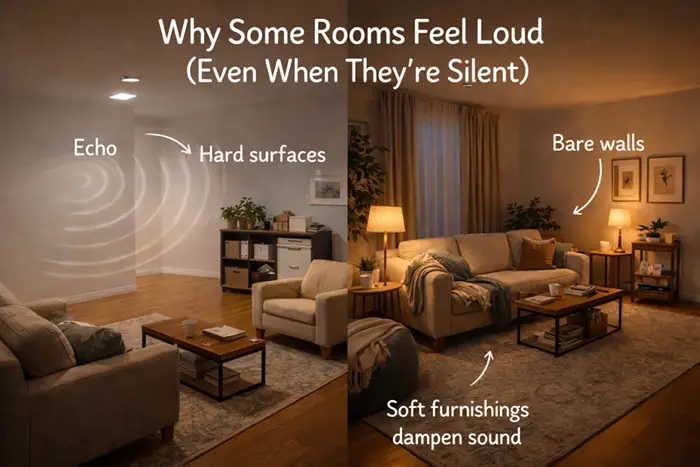
There was a time when my space felt oddly tense, even when nothing was happening. No TV on. No music playing. No conversations bouncing around. And yet, sitting there felt restless, like the room itself was buzzing. It took a while to realize that silence doesn’t always mean calm — sometimes it just means there’s nothing masking the noise the room is creating on its own.
Hard surfaces were the biggest contributor. Bare floors, uncovered windows, smooth walls — everything reflected sound instead of absorbing it. Footsteps echoed longer than they needed to. The clink of a mug felt sharp. Even small movements carried more weight than expected. The room wasn’t noisy, but it was alert, constantly feeding sound back into itself.
Bare walls added to that feeling too. Without anything to interrupt them, sound had nowhere to land. Voices felt slightly harsher. Quiet moments felt exposed. The space didn’t soften what happened inside it — it amplified it. I noticed I was speaking more carefully, moving more cautiously, without really knowing why.
The shift came when I introduced softness, not for decoration, but for balance. A rug underfoot changed how the room responded immediately. Sound stopped bouncing and started settling. Curtains dulled the sharpness coming from the windows. Even fabric wall decor helped break up flat surfaces that had been acting like mirrors for sound.
What surprised me most was how quickly my body reacted. I felt less on edge without consciously relaxing. Sitting still felt easier. The room stopped reacting to every movement, and in doing so, it stopped asking for my attention.
I didn’t expect something this simple to make my home feel calmer.
📦 Buy on Amazon USA
Soft wall hangings or textile decor
🕯️ Final Thoughts
Sound shapes how a room feels just as much as light or layout. When everything reflects noise, even silence can feel sharp and unsettled. A space doesn’t have to be loud to be tiring — it just has to lack softness.
What worked for me wasn’t muting the room completely, but rounding off its edges. Letting sound fade instead of bounce. Allowing the space to absorb life rather than echo it back. Those small changes made the room feel more forgiving.
A calmer home often sounds quieter not because there’s less happening, but because the space knows how to hold it gently. When a room stops reacting to every sound, it finally feels like a place you can rest.