Walking through the front door should feel like arriving home — not like stepping into a small pile of chaos. For a long time, though, that’s exactly what it felt like for me. Keys ended up on random tables. Mail piled up on the counter. Bags landed wherever there was space. Coats sometimes made it to the closet, but more often they hung over a chair or the back of a door. None of it felt dramatic on its own, but together it created a quiet kind of daily clutter that made the house feel more stressful than it needed to be.
What I eventually realized is that the problem wasn’t the stuff — it was the lack of a simple landing place for it. Every home benefits from what people sometimes call a “drop zone,” a small, intentional area near the door where everyday items can land the moment you walk in. It doesn’t need to be large or fancy. It just needs to exist. Once I created one, the difference in how the space felt was surprisingly noticeable.
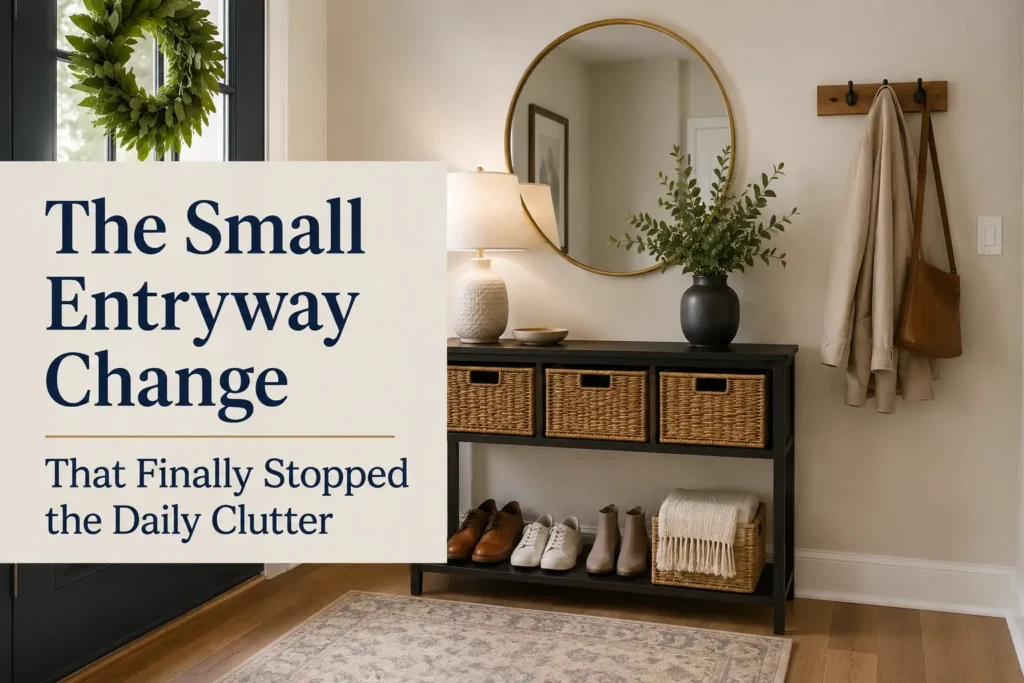
A drop zone works because it matches how people actually move through their homes. When you arrive home, you’re usually carrying something — keys, a bag, a jacket, maybe the day’s mail. If there isn’t an obvious place for those items, they scatter naturally. But when there is a bench, a hook, or a small tray waiting nearby, everything suddenly has a home. Keys land in the tray. Bags hang on the hooks. Mail gets placed in a small organizer instead of drifting around the house.
What surprised me most was how small the setup could be. Even a narrow section of wall can become an effective drop zone with just a few pieces. A small bench gives you a place to sit while removing shoes and provides hidden storage underneath. A row of simple hooks instantly solves the coat-and-bag problem. A tray for keys prevents that familiar daily search through pockets and counters. None of it feels complicated — but together it changes the rhythm of coming home.
I also noticed that once a drop zone exists, the rest of the house naturally stays tidier. Instead of everyday items migrating through different rooms, they stop right at the door where they belong. The living room feels calmer. The kitchen counters stay clearer. The entryway quietly handles the little bits of life that used to spread everywhere.
🛋️ Human line:
“I didn’t expect something this simple to make my home feel calmer.”
There’s something reassuring about walking into a home where the first few steps already feel organized. It removes a tiny bit of friction from daily life — the kind of friction you barely notice until it disappears.
📦 Buy on Amazon USA
Small Entryway Storage Cabinet
🕯️ Final Thoughts
Small home changes rarely feel dramatic at first. A drop zone near the door is one of those subtle upgrades that quietly improves everyday life without calling attention to itself. It simply works in the background, catching the things you carry and giving them a natural place to land.
Over time, those small habits add up. Keys stop disappearing. Mail stays contained. Bags and coats stop drifting from room to room. The entryway becomes less of a transition space and more of a quiet system that keeps the rest of the home running smoothly.
Sometimes the most helpful improvements in a home aren’t the big renovations or expensive furniture pieces. They’re the simple adjustments that make daily routines easier — the kind that make you walk through the door and feel like everything already has its place.