
Disclosure: As an Amazon Associate, My Indoor Space earns from qualifying purchases through links in this article, at no extra cost to you.
Quick verdict
Choose long slots for wide bakery slices that do not fit standard openings. Choose four individual slots when ordinary slices and separate browning controls suit the household. “Four-slice” describes capacity, not the number or length of the openings.
Research-based buying guide. Information checked October 16, 2026. We have not tested these products hands-on; published specifications and our buying judgments are identified separately.
long-slot toasters
four-slot toasters
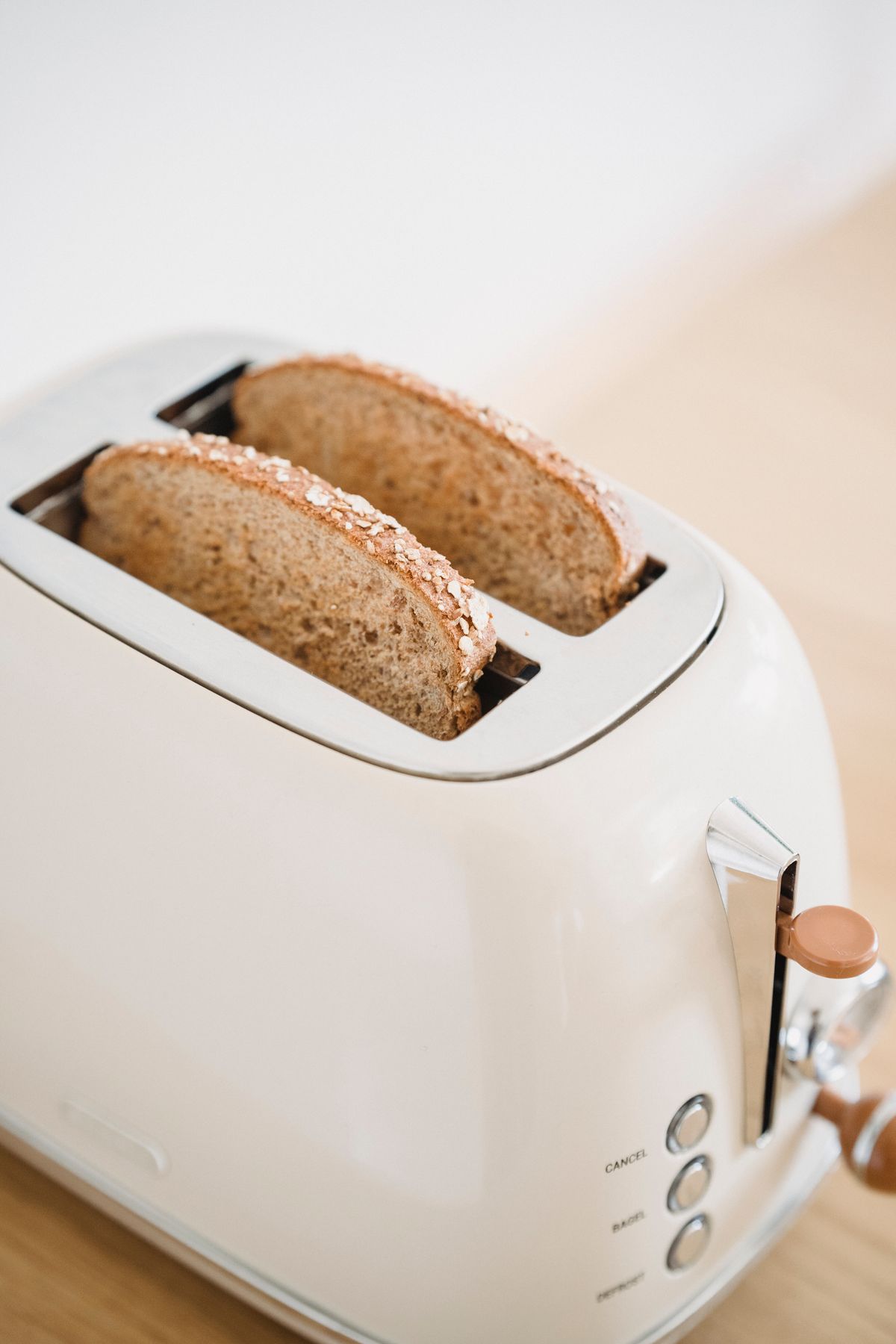
A four-slice toaster may have two long openings or four shorter ones. Both can serve a family breakfast, but only one may accept your favorite sourdough without trimming it. Before choosing, measure a typical slice from the loaf you buy most often, including its thickness.
Which layout solves your problem?
| Your priority | Long slots | Four individual slots |
|---|---|---|
| Wide bakery bread | Useful when actual slot length is sufficient | May require shorter slices |
| Different browning preferences | Check whether slots share one control | Look for independently controlled pairs |
| Counter shape | Often a longer footprint | Often a wider footprint; measure the model |
Measure the opening, not the serving claim
Breville describes its BTA730 A Bit More as a long-slot four-slice design. That illustrates why capacity alone is an unreliable filter. Check usable length, width and depth in the listing or manual. Extra-wide does not mean extra-long, and a deep opening can make small slices awkward to retrieve.
Compare the size of bagels, dense bread and ordinary sandwich slices separately. A high-lift function can help with shorter pieces, but use only the retrieval method specified in the instructions. Do not force oversized bread into the slot or improvise with metal utensils.
Separate controls can be more valuable than extra capacity
If two people want different browning levels, independent controls can reduce the need to reset the dial between batches. Four slots do not guarantee that feature: examine the control panel and manual. For one person making two similar slices, a larger toaster may add footprint without saving much time.
Likewise, frozen and bagel modes vary by model. A bagel label is not proof of identical heating behavior across brands. Choose functions you will use, then assess real-world performance through a returnable purchase. We have not tested browning uniformity or compared successive batches on these products.
Plan where the toaster will operate
Mark the full base dimensions on the counter and check the manufacturer’s operating clearances. Consider the crumb tray’s removal direction, access to the plug and space for the lever. A toaster that fits beneath a cupboard for storage may need to move before use.
Include cleaning access in the decision. A tray that pulls out toward a wall can be inconvenient even in an otherwise compact layout. Choose a cord arrangement that reaches the intended outlet without creating an awkward route across the work area.
When is the upgrade worth it?
Pay for long slots when you regularly cut down bread to make it fit. Pay for four independently controlled openings when simultaneous different preferences are the problem. Keep a smaller working toaster if breakfast is usually one or two standard slices. The right capacity is the capacity you use, not the largest number on the box.
Compare listings in your country
These buttons open matching Amazon search results, rather than a guaranteed in-stock offer. Confirm the exact model, seller, included parts, delivered price and return terms. Prices and availability can differ between the United States and Canada.
long-slot toasters
four-slot toasters
Related guides on My Indoor Space
- Air Fryer Oven vs Basket Air Fryer
- Best Electric Kettle: 7 Features to Look For
- Is the OXO Brew 8-Cup Worth It for One or Two?