
Disclosure: As an Amazon Associate, My Indoor Space earns from qualifying purchases through links in this article, at no extra cost to you.
Quick verdict
Choose a cabinet when concealed storage and a shallow footprint justify installation. Choose an open rack for quick access and a simpler daily shoe rotation. Measure the actual shoes and moving clearances; advertised pair counts are only a starting point.
Research-based buying guide. Product information checked October 16, 2026. We have not tested these products hands-on; recommendations distinguish published features from our buying judgments.
slim shoe cabinets
open shoe racks
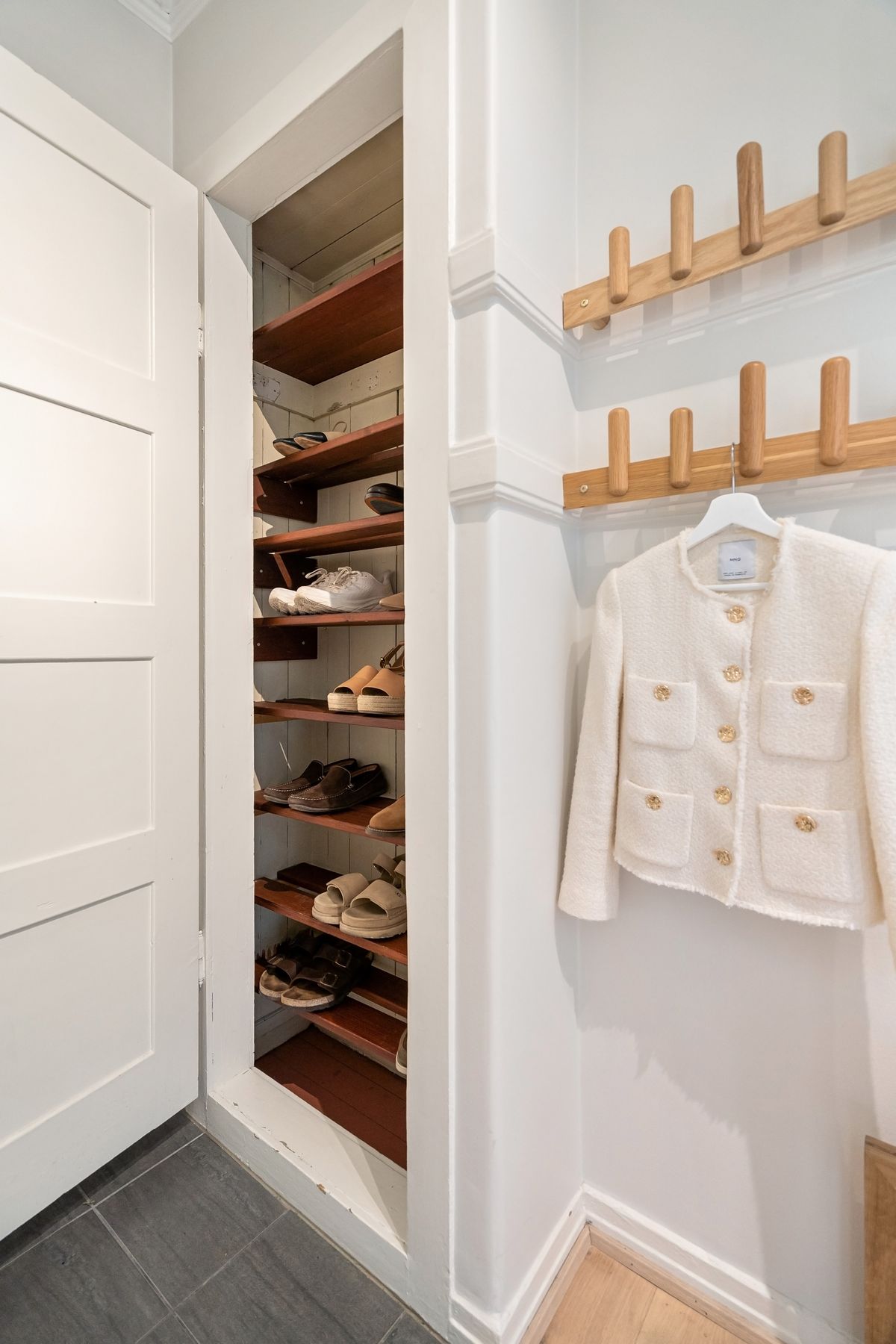
A narrow entryway needs space for people as well as shoes. A closed cabinet can make the area look tidier, while an open rack keeps everyday pairs visible. The best purchase is the one that fits your door movement and the shoes you really wear, including bulky winter footwear.
The practical comparison
| Priority | Shoe cabinet | Open rack |
|---|---|---|
| Appearance | Conceals stored footwear | Keeps pairs visible |
| Access | Needs door or tilt-out clearance | Direct access to shelves |
| Installation | Check required wall securing | Check assembly and stacking rules |
Measure the opening space too
A cabinet’s closed depth is not its whole operating footprint. Check how far doors or tilt-out compartments project when open. Leave room for a person to stand and use them without blocking the entrance. Skirting boards, nearby handles and outlets can also affect mounting or placement.
IKEA’s TRONES is one shallow example, listed at 52 cm wide, 18 cm deep and 39 cm high per cabinet. IKEA says these cabinets must be secured to the wall. Include suitable fasteners and rental permission in the plan. A lightweight plastic construction does not remove the anchoring requirement.
Capacity depends on your footwear
A manufacturer pair count cannot predict every shoe collection. Large trainers, high heels and tall boots occupy different shapes. Check compartment height and usable depth, then prioritize the pairs that need a home beside the door. Seasonal storage elsewhere may be more practical than an oversized entryway unit.
For comparison, IKEA’s cited GREJIG rack is 58 cm wide, 27 cm deep and 17 cm high, and lists three pairs per rack with up to three racks stacked. Those limits apply to that model; they are not permission to build an unlimited tower from any similar-looking rack. Taller boots may need a separate location.
Plan for damp and dirty shoes
A rack leaves footwear accessible while a cabinet hides it, but neither is a shoe dryer. Follow footwear care guidance and let damp items dry appropriately before closed storage. A tray or mat may help manage drips where suitable for the floor, but check whether it fits without creating a trip point.
Think about cleaning behind and beneath the unit. A cabinet with removable components may simplify access; TRONES specifies an easily removable door for interior cleaning. Open racks still need wiping and floor care, especially during muddy weather. A tidier appearance should not hide a maintenance problem.
When the cabinet upgrade is worth it
Pay for concealed storage if visible shoes are the issue and the mounted arrangement fits. Choose a basic rack when you rotate a few pairs and want immediate access. Keep an existing working system if the real problem is too many seasonal pairs in the entrance; changing furniture without reducing the load may simply move the clutter.
Compare current listings in your country
These buttons open matching Amazon search listings rather than a guaranteed in-stock offer. Confirm the exact model, seller, included parts, delivered price and return terms. Offers can differ between the United States and Canada.
slim shoe cabinets
open shoe racks
Related guides on My Indoor Space
- Best Shoe Storage for a Small Entryway
- Best Renter-Friendly Closet Organizer
- Best Washable Area Rug for Pets and Apartments