Bedroom & Comfort

Better sleep, comfortable rooms, lighting and relaxing indoor spaces.

Bedroom & Comfort, Cozy Living

Why Every Home Needs a “Soft Corner”

There’s a spot in my home that isn’t impressive. It’s not styled for guests. It’s not where conversations happen. It’s not even the most comfortable seat in the house.

But it’s mine.

I didn’t build it to look good on camera. I built it because I realized I didn’t have anywhere to decompress that wasn’t a couch with a screen in front of it. I needed a place that signaled something different. A mental exhale. A soft landing.

The shift started with lighting. A floor lamp instead of overhead glare. Warm light instead of bright light. That alone changed how the room felt at night. The space stopped feeling like a task area and started feeling like somewhere I could think.

Then came the chair. Not oversized. Not trendy. Just comfortable enough that I could sit with a book or a notebook without adjusting every two minutes. A small footrest made it better. Subtle support changes posture. Posture changes mood more than we admit.

I added a narrow bookshelf beside it. Nothing huge. Just enough space for a few favorite books — the kind I reach for when I want to slow down. Having them visible matters. It makes the act of sitting there feel intentional instead of accidental.

A plant finished it. That surprised me. I used to think plants were just decorative. But something about a little bit of green in the corner makes the space feel alive instead of staged. It softens the edges.

I didn’t expect something this simple to make my home feel calmer. But having a designated “reset” space changes how the rest of the house feels. It creates a boundary between stimulation and stillness.

This corner isn’t for productivity. It’s not for scrolling. It’s for pausing. And that’s the difference.


📦 Buy on Amazon USA

Warm Floor Lamp (Soft White Bulb Included)

Comfortable Accent Chair (Neutral Fabric)

Compact Footrest Ottoman

Slim Bookshelf (Small-Space Friendly)

Low-Maintenance Indoor Plant (Real or Faux)


🕯️ Final Thoughts

Homes often prioritize function — kitchen workflow, storage, media setups — but rarely do we intentionally create space for mental reset. A soft corner does exactly that. It gives the nervous system a cue to slow down.

It doesn’t require a full room. It doesn’t require expensive furniture. It requires intention. A lamp. A chair. A place to sit without distraction.

When a home includes a quiet place to land, the whole environment feels more balanced. And that balance shows up in subtle ways — calmer evenings, clearer thinking, fewer restless moments. Sometimes comfort isn’t about size or style. It’s about having somewhere soft to go when you need it.


📦 Buy on Amazon Canada

Warm Floor Lamp (Soft White Bulb Included)

Comfortable Accent Chair (Neutral Fabric)

Compact Footrest Ottoman

Slim Bookshelf (Small-Space Friendly)

Low-Maintenance Indoor Plant (Real or Faux)

Bedroom & Comfort, Cozy Living

My Home Feels Warmer—and It Has Nothing to Do with the Thermostat

I used to adjust the thermostat almost automatically. If the room felt off, I assumed it was temperature. Too cool. Too drafty. Not cozy enough. But even when the numbers were technically comfortable, something still felt slightly cold. Not physically — emotionally. The space looked fine, but it didn’t hold warmth.

The first thing I changed wasn’t the heat. It was texture. I added a rug where the floor had always been bare. The difference wasn’t dramatic, but it was immediate. The room stopped echoing. The space felt anchored. Walking across it in the evening felt softer, quieter. The temperature hadn’t changed, but the room felt less exposed.

Then I layered in curtains. Not heavy blackout ones — just fabric where there had been emptiness. The walls felt less stark. Light filtered differently. Shadows looked gentler. I didn’t realize how much bare windows had been contributing to that subtle chill.

A throw draped over the couch changed the mood more than I expected. Not because I was constantly using it — though I did — but because it visually suggested comfort. The room began to look lived in instead of staged. I even swapped out a cooler light bulb for a warmer tone, and suddenly evenings felt slower. The light stopped feeling clinical and started feeling calm.

What surprised me most was how much my body responded. I found myself slipping on soft house slippers instead of padding across the floor absentmindedly. I lingered longer in the living room. I didn’t rush to adjust the thermostat because I didn’t feel the need to.

🛋️ I didn’t expect something this simple to make my home feel calmer.

📦 Buy on Amazon USA

Area rug

Light-filtering curtains

Soft throw blanket

Warm LED light bulbs

Comfortable house slippers

🕯️ Final Thoughts

Warmth isn’t always about degrees. Sometimes it’s about softness, layering, and removing visual sharpness from a space. Texture, fabric, and light work quietly in the background, shaping how a room feels long before temperature does.

What I appreciate most is how natural the shift felt. I didn’t renovate. I didn’t replace furniture. I just softened the edges. And that softness translated into comfort I could feel.

Now when the room feels warm, it isn’t because the heat is high. It’s because the space feels finished, grounded, and welcoming. And that kind of warmth lingers longer than any setting on a dial.

📦 Buy on Amazon Canada

Area rug

Light-filtering curtains

Soft throw blanket

Warm LED light bulbs

Comfortable house slippers

Bedroom & Comfort, Cozy Living

The Thing I Added Beside My Couch That Made Me Sit Longer

For a while, I thought I just wasn’t a “sit and stay” person. I’d sit down on the couch to relax, but within minutes I’d be getting back up. To grab water. To plug something in. To adjust the lighting. To move something out of the way. It wasn’t discomfort exactly — it was friction. Tiny interruptions that kept breaking the moment.

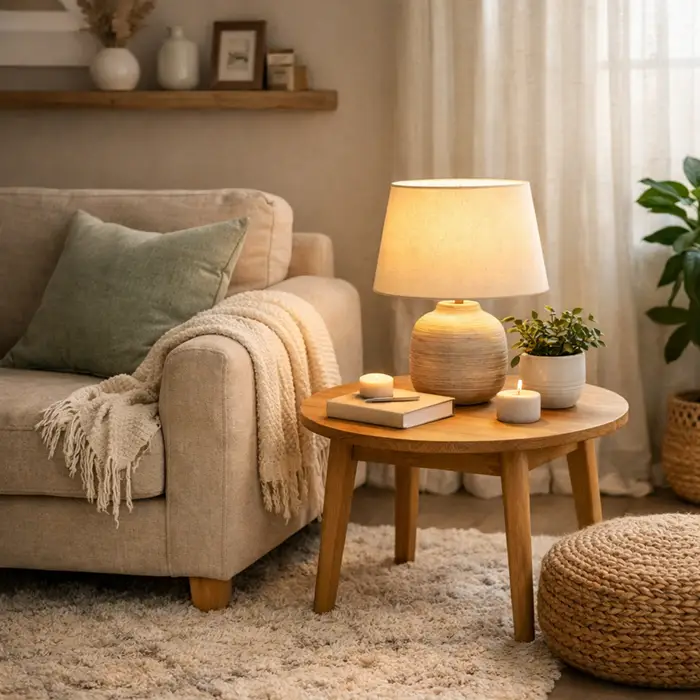
I didn’t realize how much that low-level disruption was shaping my evenings until I added one small thing beside the couch: a simple side table. Nothing oversized. Nothing decorative for the sake of it. Just a stable surface within arm’s reach. Suddenly my book had a place. My tea had a place. Even my phone stopped drifting between couch cushions.

That one addition changed the rhythm of sitting. I wasn’t constantly leaning forward or twisting sideways to reach something. I wasn’t balancing a mug on the armrest like it was a risky experiment. The couch stopped feeling temporary and started feeling intentional.

Then I added a subtle charging station tucked discreetly underneath. No more cables stretching across the floor. No more low-battery anxiety pulling me up just when I’d finally relaxed. Everything I needed was close — but not cluttered.

What surprised me most was how much longer I stayed put. The room didn’t change dramatically. The couch didn’t become softer. But the experience of sitting there became seamless. I even added a small lamp nearby, so I didn’t have to rely on overhead lighting. It created a little bubble of warmth around the space.

🛋️ I didn’t expect such a small functional addition to make the couch feel this much more inviting.

📦 Buy on Amazon USA

Slim side table

Charging station

Couch armrest tray

Small table lamp

🕯️ Final Thoughts

Comfort isn’t always about cushions or softness. Sometimes it’s about eliminating the tiny inconveniences that keep you from settling in fully. When your space supports you quietly, you stop noticing it — and that’s the point.

What I appreciate most is how invisible this change feels. The room looks almost the same, but the experience is smoother. Sitting doesn’t require planning. It just happens.

Now when I sink into the couch, I don’t feel like I’m pausing between tasks. I feel like I’m staying. And that small shift has made my evenings feel slower, steadier, and more complete.

📦 Buy on Amazon Canada

Slim side table

Charging station

Couch armrest tray

Small table lamp

Bedroom & Comfort, Cozy Living

Why Soft Sound Matters More Than Silence Indoors

I used to think the goal at home was total silence. No background hum, no music, no noise at all. Just stillness. I thought that was what calm looked like. But the more time I spent in a completely silent room, the more I noticed something uncomfortable creeping in. The silence wasn’t soothing — it was sharp. Every little creak in the house felt amplified. The fridge kicking on sounded dramatic. Even my own movements felt louder than they should.

What I realized is that silence can sometimes feel empty instead of peaceful. It leaves your nervous system searching. Listening. Waiting. And that subtle alertness doesn’t feel like rest — it feels like anticipation.

The shift happened when I stopped trying to eliminate sound and instead started shaping it. A soft white noise machine running in the background. Not loud — just enough to blur the edges of the room. Later, I added a small Bluetooth speaker for low instrumental music in the evenings. Nothing distracting. Just something warm that lived beneath everything else.

The difference was immediate. The room stopped echoing. Hard surfaces didn’t bounce sound back at me as aggressively. Even conversations felt more grounded. I also noticed how fabric mattered more than I thought. A thicker rug, curtains drawn in the evening, a soft throw over the arm of the couch — these weren’t just visual upgrades. They absorbed sound. They rounded it.

What surprised me most was how my body responded. I wasn’t as reactive to random noises anymore. I didn’t feel that subtle spike when something unexpected happened. The soft background layer made the space feel inhabited and settled instead of vacant and waiting.

🛋️ I didn’t realize how tense pure silence made me until I replaced it with something gentler.

📦 Buy on Amazon USA

White noise machine

Small Bluetooth speaker

Area rug

Curtains

🕯️ Final Thoughts

Silence isn’t the enemy. But it isn’t always the solution either. Comfort often lives in softness — in subtle layers that support the room without demanding attention. A gentle hum. A quiet melody. Fabric that absorbs instead of reflects.

What I appreciate most about this change is how invisible it feels. There’s no performance. No setup ritual. The sound just exists, and because of that, the room feels fuller and calmer at the same time.

Now when a space feels too sharp or hollow, I don’t try to make it quieter. I try to make it softer. And that small shift has made my home feel more restful than silence ever did.

📦 Buy on Amazon Canada

White noise machine

Small Bluetooth speaker

Area rug

Curtains

Bedroom & Comfort, Cozy Living

Why My Desk Feels Less Tiring Than It Used To

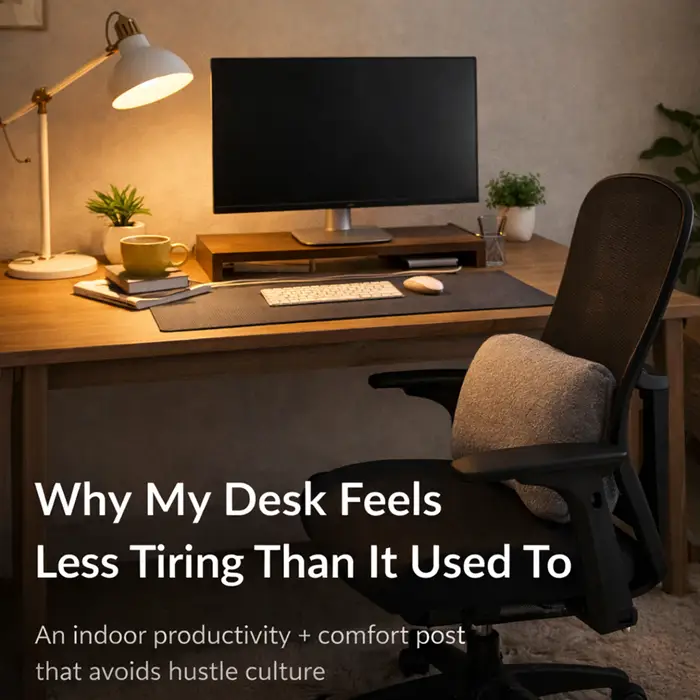
I didn’t change how long I work at my desk. I didn’t suddenly become more disciplined or focused. What changed was how the space met me. For a long time, sitting down felt like bracing myself — shoulders up, jaw tight, eyes already a little tired before I even started. The desk did its job, but it asked for effort in return.

The first thing I noticed wasn’t productivity — it was relief. A softer pool of light instead of glare. A surface that felt calm under my hands instead of cold or slippery. The desk stopped feeling like a place I had to endure and started feeling like somewhere I could stay without counting the minutes.

What surprised me most was how quickly fatigue backed off. My eyes didn’t burn as early. My neck didn’t demand breaks every half hour. Even my breathing slowed a little once the setup felt balanced. Nothing about the work changed — emails were still emails, tasks were still tasks — but my body stopped fighting the environment.

I added small supports almost accidentally. A slight lift for my monitor so my gaze felt natural instead of downward. A subtle cushion on the chair that didn’t scream “ergonomic,” but quietly did its job. A desk mat that absorbed sound and softened movement. Each piece on its own felt minor. Together, they made the desk feel finished.

What I appreciate most is that none of this pushed me to work harder. There’s no hustle baked into the setup. If anything, it made stopping easier too. When the space doesn’t exhaust you, you don’t feel the same need to escape it the second you’re done. The desk became neutral territory instead of a drain.

🛋️ I didn’t expect a few comfort-focused changes to make my desk feel this much easier to sit at.

📦 Buy on Amazon USA

Desk lamp (soft, adjustable light)

Desk mat

Monitor riser

Lumbar support cushion

Footrest

🕯️ Final Thoughts

A desk doesn’t have to motivate you. It just has to stop working against you. Once I understood that, the pressure to optimize everything disappeared. Comfort became the goal — not output, not speed, not squeezing more out of the day.

What changed wasn’t my ambition, but my relationship with the space. The desk now supports attention when I need it and lets go when I don’t. That balance matters more than any productivity trick I’ve tried.

Sometimes the most effective improvement isn’t doing more — it’s removing friction you’ve been living with so long you stopped noticing it.

📦 Buy on Amazon Canada

Desk lamp (soft, adjustable light)

Desk mat

Monitor riser

Lumbar support cushion

Footrest

Bedroom & Comfort, Cozy Living

My Evenings Got Better When I Started Preparing the Room, Not the TV

For a long time, my evenings followed the same quiet pattern. Sit down, turn on the TV, scroll until something landed, and hope the day would finally let go. Nothing was wrong with that routine, but it always felt like something was missing. Even when I found a good show, my body stayed tense. My mind stayed busy. The room never quite caught up to the idea that the day was over.

The shift happened when I stopped treating the TV as the starting point. One evening, without really planning to, I dimmed the lights first. I folded a soft throw over the arm of the couch instead of grabbing it later. I lit a candle, not for scent alone, but for the quiet signal it gave the room. Nothing dramatic changed — but everything softened.

What surprised me was how different the TV felt afterward. The same screen, the same volume, the same content — but it no longer led the experience. It sat inside the atmosphere instead of overpowering it. The room felt prepared, like it had been gently reset for rest instead of stimulation.

I started doing this more intentionally. A lamp instead of overhead light. A diffuser running before I even sat down. A side table cleared so nothing felt cluttered or demanding. Even silence felt more welcoming once the space was settled. I didn’t rush to press play anymore. Sometimes I didn’t even turn the TV on right away.

Over time, my evenings stopped feeling like recovery mode and started feeling like a transition. The room did some of the work for me. My shoulders dropped sooner. My thoughts slowed without effort. I realized I wasn’t trying to escape the day anymore — I was closing it gently.

🛋️ I didn’t realize how much calmer my evenings could feel until I started preparing the space instead of the screen.

📦 Buy on Amazon USA

Candles

Essential oil diffuser

Soft throw blanket

Small side table

🕯️ Final Thoughts

Preparing the room first taught me that comfort isn’t about entertainment — it’s about permission. Permission to slow down, to stop performing, to let the day end without noise. The TV can still be part of the evening, but it no longer defines it.

What I appreciate most is how repeatable this feels. There’s no effort, no rules, no productivity attached. Just small cues that tell my body it’s safe to rest. The room becomes a signal, not a backdrop.

Now, when evenings feel heavy or rushed, I don’t reach for the remote first. I reach for the light switch, the blanket, the quiet. And almost every time, the rest follows naturally.

📦 Buy on Amazon Canada

Candles

Essential oil diffuser

Soft throw blanket

Small side table

Bedroom & Comfort, Cozy Living

The Chair I Didn’t Think I’d Love—but Now Sit In Every Day

I didn’t buy the chair with any emotional expectation. It wasn’t meant to be the chair — just an extra seat to fill a quiet corner of the room. Something practical. Something neutral. I remember placing it there and thinking, that works, without giving it much more thought. It blended in, did its job, and stayed politely out of the way.

Then one evening, without planning to, I sat in it. Not for long — just to pause for a minute while the kettle boiled. But something about how it held my weight made me stay. My shoulders dropped. My back didn’t ask for adjustment. I wasn’t perched or leaning or waiting to move again. I was simply… there. Comfortable in a way that didn’t demand attention.

Over the next few days, I kept finding myself drifting back to that same spot. Morning coffee. A few pages of a book. Shoes off, feet tucked up, or resting on a small footrest I’d nearly forgotten I owned. The chair didn’t compete with the couch — it offered something different. A sense of being held without sinking, supported without stiffness. It became a place to land, not sprawl.

What surprised me most was how consistent it felt. No matter the time of day, the chair met me the same way — steady, familiar, ready. I added a small lumbar cushion more out of curiosity than necessity, and suddenly longer sits felt effortless. I stopped shifting. Stopped checking the clock. Time softened a little when I sat there.

🛋️ I didn’t expect something this simple to become the spot I return to every day.

📦 Buy on Amazon USA

Accent chair

Reading chair

Lumbar support cushion

Footrest

🕯️ Final Thoughts

There’s something quietly powerful about a piece of furniture that earns its place through use, not intention. This chair didn’t win me over at first glance — it did it slowly, through repetition. Through showing up exactly the same way every time I sat down.

What I value now is the ritual it created without trying. A consistent place to read, think, or simply sit without distraction. It doesn’t demand posture or productivity. It just offers presence. And that’s something I didn’t realize I was missing.

Sometimes comfort doesn’t announce itself. It waits patiently, until you notice that you’re choosing it again and again. And by then, it’s already become part of your day.

📦 Buy on Amazon Canada

Accent chair

Reading chair

Lumbar support cushion

Footrest

Bedroom & Comfort, Cozy Living

Why I Finally Stopped Using the Overhead Light

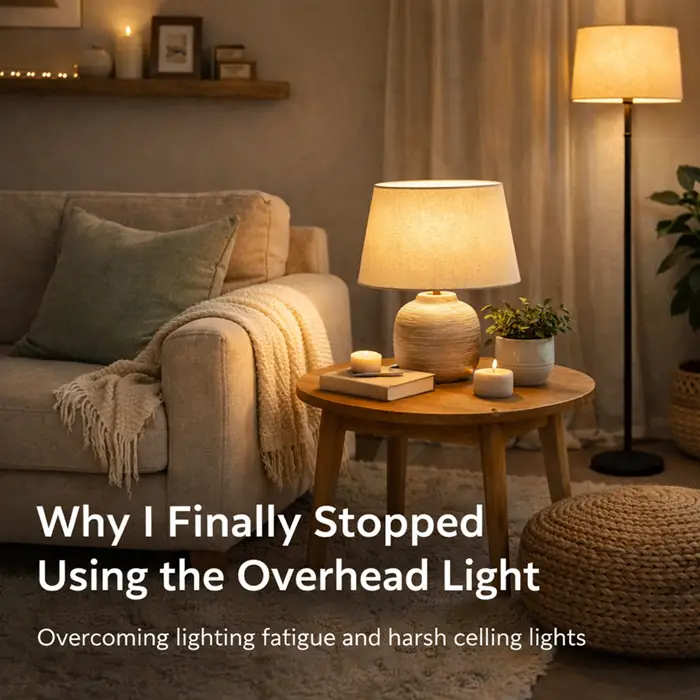
For a long time, I didn’t question the overhead light. It was just there — flip the switch, room turns on, day continues. But somewhere along the way, I started noticing how tired I felt in the evenings, even on calm days. My eyes felt strained. My shoulders stayed a little tense. The room was bright, technically functional… and yet I never quite relaxed in it.

The ceiling light had a way of flattening everything. Shadows disappeared. Texture vanished. The room felt exposed, like it was always midday even when my body knew it wasn’t. I’d sit down to unwind and still feel like I was waiting for something — an email, a task, a reason to get back up. It took me a while to realize it wasn’t my mood causing that feeling. It was the light.

The shift didn’t happen all at once. One evening, instead of turning on the overhead, I reached for a floor lamp in the corner. The change was immediate but gentle. The room didn’t go dark — it went soft. The light landed where it needed to instead of everywhere at once. My eyes stopped darting around. My body eased back into the couch without thinking about it.

As I leaned into that setup, I noticed how harsh ceiling lights had been keeping my nervous system slightly alert all the time. Bright, top-down lighting demands attention. It wakes you up, whether you want it to or not. Once I switched to lamps and warmer bulbs, evenings stopped feeling like an extension of the workday. They finally felt like their own chapter.

I experimented a little after that — warmer bulbs, a dimmer here, a subtle LED strip behind a shelf. Nothing flashy. Just layers. What surprised me most wasn’t how the room looked, but how it behaved. Conversations slowed down. Screens felt less overwhelming. Silence felt easier to sit with.

🛋️ I didn’t expect something this simple to make my home feel calmer.

📦 Buy on Amazon USA

Floor lamp

Smart LED bulbs (warm tone)

Plug-in dimmer switch

Soft LED light strips

🕯️ Final Thoughts

I don’t think overhead lights are bad — they’re just blunt. They’re great when you need clarity, energy, or focus. But for living, resting, and being present, they ask too much of us. Once I realized that, it felt natural to let them go in the evenings.

What I value now is choice. Being able to decide how awake or calm I want my space to feel. Lamps and softer lighting give me that control without effort. I don’t have to think about relaxing — the room meets me where I am.

If there’s one thing this change taught me, it’s that comfort often comes from subtraction, not addition. Turning off the overhead light didn’t make my home dimmer. It made it kinder.

📦 Buy on Amazon Canada

Floor lamp

Smart LED bulbs (warm tone)

Plug-in dimmer switch

Soft LED light strips

Bedroom & Comfort, Cozy Living

The One Small Change That Made My Living Room Feel Calmer

I didn’t set out to redesign my living room or fix anything major. There was no big moment of frustration, no urge to replace furniture or chase a new look. It was quieter than that. I just noticed that in the evenings, when everything was technically “fine,” I still felt slightly restless sitting there. The room worked, but it didn’t quite settle me. It felt a little too sharp, a little too awake, even when I wasn’t.

The change itself was almost embarrassingly small. I swapped out one light source — not adding more light, not moving furniture, not buying something dramatic — just changing how the room was lit. The difference wasn’t immediate in a flashy way. It was subtle, like exhaling without realizing you were holding your breath. The corners softened. The room stopped feeling like it was on display and started feeling like it was holding me instead.

What surprised me most was how quickly my behavior shifted. I stopped adjusting my position every few minutes. I lingered longer on the couch. Even the way conversations unfolded felt slower, less rushed. Nothing else in the room had changed, but the space suddenly felt less demanding. It wasn’t asking for attention anymore — it was offering rest.

I didn’t expect such a small tweak to affect my evenings, but it did. The living room became a place I naturally gravitated toward instead of something I passed through. Reading felt easier. Music felt warmer. Even silence felt intentional instead of empty. It was the same room, just tuned slightly differently — like adjusting a dial you didn’t know was there.

🛋️ I didn’t expect something this simple to make my home feel calmer.

📦 Buy on Amazon USA

Soft-glow floor lamp

Warm LED light bulbs

Neutral throw blanket

Minimal side table

🕯️ Final Thoughts

It’s easy to think comfort comes from big changes — new furniture, new layouts, new everything. But sometimes calm arrives through restraint. Through choosing less intensity instead of more stimulation. This change didn’t transform my living room into something unrecognizable; it simply allowed it to breathe.

What I appreciate most is how effortless it feels now. There’s no routine involved, no setup, no thought required. The room does the work on its own. At the end of the day, I don’t try to relax here — it just happens. That kind of ease is rare, and it usually comes from listening instead of upgrading.

I’m more aware now of how small details shape how a space feels. Not in a perfectionist way, but in a human one. Sometimes the calm we’re looking for isn’t missing — it’s just waiting for us to soften the edges.

📦 Buy on Amazon Canada

Soft-glow floor lamp

Warm LED light bulbs

Neutral throw blanket

Minimal side table

Bedroom & Comfort, Cozy Living

Why My Bedroom Finally Started Feeling Like a Place to Rest

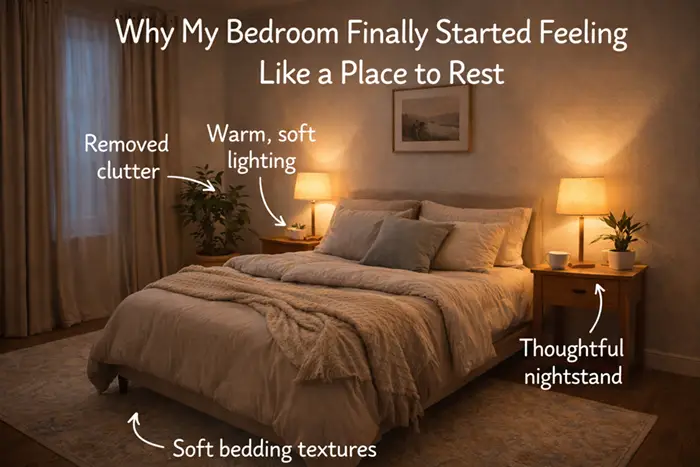
For a long time, my bedroom didn’t really feel like a place to rest — it felt like a storage room with a bed in it. I slept there, but I didn’t unwind there. The moment I walked in, my eyes landed on unfinished tasks, piled items, and little reminders of everything I hadn’t dealt with yet. Even lying down, my mind stayed alert, like it was still on duty.

The first change wasn’t dramatic. I didn’t redesign anything or buy new furniture. I simply removed what didn’t belong. Extra items on the dresser, things I never reached for, objects that had quietly turned into visual noise. With fewer things competing for attention, the room stopped asking questions. It felt quieter, even before I touched the lights.

Lighting was the next shift. Overhead light stayed useful during the day, but at night it kept the room feeling exposed. I swapped it for soft, warm light from a lamp near the bed, low enough to feel gentle instead of functional. Shadows softened. The edges of the room faded slightly. My body seemed to recognize the signal before my mind did.

Bedding textures mattered more than I expected. Sheets that felt smooth instead of stiff. A comforter with just enough weight to feel grounding. Even the way fabric sounded when I moved made a difference. The bed stopped feeling like a surface and started feeling like a place to land.

The nightstand played a quiet role too. Before, it held whatever ended up there — cords, papers, half-used items. I simplified it to only what I actually used at night. A lamp. A book. A clear surface. That small decision removed one last layer of mental clutter I didn’t realize I was carrying into sleep.

I didn’t expect something this simple to make my home feel calmer.


📦 Buy on Amazon USA

Warm-glow bedside lamp

Soft bedding set (cotton or microfiber)

Weighted or textured comforter

Minimal nightstand organizer


🕯️ Final Thoughts

Rest doesn’t come from doing more — it comes from removing what keeps the mind alert. A bedroom doesn’t need to be perfect to be peaceful; it just needs to stop asking for attention when the day is done.

What surprised me was how small the changes were. Fewer items. Gentler light. Softer textures. Each adjustment lowered the room’s energy just enough to invite rest instead of resistance.

When a bedroom finally supports sleep instead of interrupting it, everything else improves quietly. Rest becomes something you step into, not something you have to force. And sometimes, that’s all a space really needs to do.


📦 Buy on Amazon Canada

Warm-glow bedside lamp

Soft bedding set (cotton or microfiber)

Weighted or textured comforter

Minimal nightstand organizer

Scroll to Top