bedroom comfort

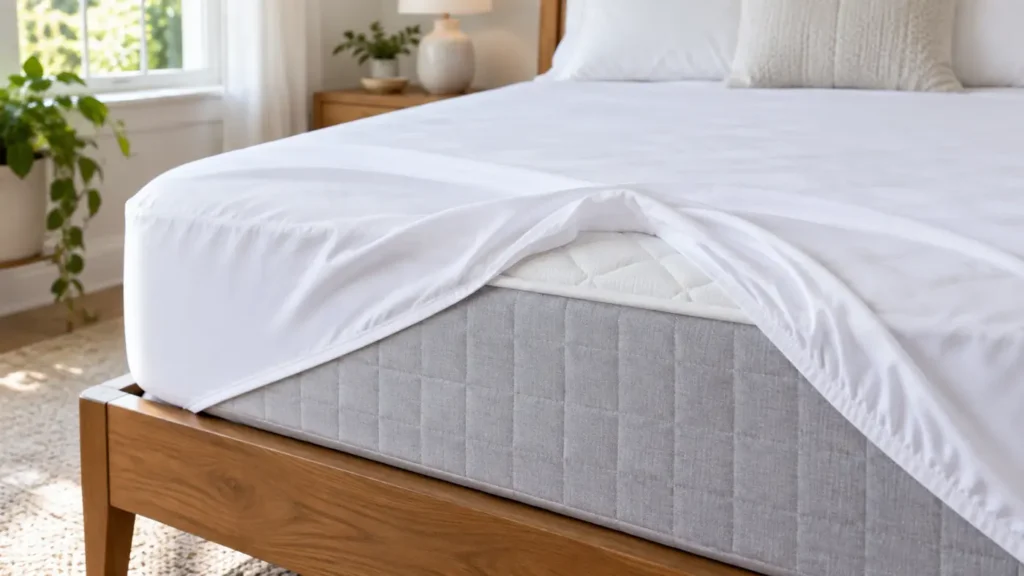
Smooth mattress protector fitted over a mattress corner
Bedroom & Comfort

Best Mattress Protector: Waterproof, Quiet and Breathable

Disclosure: As an Amazon Associate, My Indoor Space may earn from qualifying purchases made through links in this guide, at no extra cost to you.

A mattress protector should defend the bed from everyday spills, perspiration, and dust without making the sleep surface hot, noisy, or loose. The best design is not simply the thickest waterproof layer; it is the one that fits securely and survives regular washing.

Protectors range from fitted-sheet styles to full encasements. Materials, waterproof membranes, pocket depth, and care limits affect comfort and durability, so match the design to the reason you are protecting the mattress.

Quick verdict

Choose a fitted waterproof protector for routine spill defense and an encasement only when you need all-sided coverage. Look for a quiet flexible membrane, breathable top fabric, secure elastic, dimensions matched to the mattress depth, and care instructions you can follow consistently.

What to compare first

Feature Why it matters Practical target
Coverage Determines protected surfaces Fitted top or six-sided encasement
Membrane Controls liquid barrier and noise Thin, flexible waterproof layer
Fit Prevents bunching Pocket depth matched to mattress
Care Affects long-term protection Washable with clear heat limits

Choose the right coverage style

A fitted-sheet protector covers the top and sides and is easy to remove for washing. It suits common spills and perspiration. A five-sided model may add side protection without fully enclosing the underside.

A six-sided encasement zips around the entire mattress. It takes more effort to install but may be preferred for comprehensive containment. If allergen or pest claims matter, review the exact testing and zipper construction rather than relying on broad marketing language.

Understand waterproof membranes

Many waterproof protectors use a thin polyurethane-style barrier laminated beneath a fabric surface. A flexible, well-bonded membrane can block liquid with less crinkling than thick vinyl-like materials.

Waterproof does not mean indestructible. High heat, bleach, fabric softener, or a damaged seam can reduce performance. Follow the label and replace a protector that peels, cracks, or leaks.

Balance breathability and spill protection

The top fabric can move moisture and feel softer, while the waterproof membrane prevents liquid from reaching the mattress. Cotton blends, polyester knits, and rayon-derived fabrics each feel different, but construction matters more than a single fiber name.

A protector cannot cool a room or change the mattress core. If overheating is a concern, choose a thin model, use breathable sheets, and manage room temperature and bedding weight.

Measure mattress depth carefully

Measure from the bottom edge to the highest point, including any permanently attached pillow top. If you use a separate topper beneath the protector, include it in the total depth.

A pocket that is too shallow can pull off corners; one that is excessively deep may bunch. Strong continuous elastic or fitted side panels help maintain tension after repeated washing.

Reduce noise and texture changes

Thin knit surfaces and supple membranes tend to feel quieter than stiff layers. Reviews can reveal crinkling, but sound also depends on sheet tension, mattress firmness, and room quietness.

Wash the protector before first use if the care label recommends it. Proper fitting and a smooth sheet over the top can reduce shifting, although a protector with a rough or padded surface may still change mattress feel.

Follow care instructions exactly

Most protectors should be washed on a gentle or normal cycle with mild detergent, then dried at low heat or air-dried. The manufacturer’s label overrides general advice because membrane materials and laminates differ.

Own a second protector if overnight accidents or frequent washing are likely. Rotating two reduces the temptation to use high heat for a fast turnaround, which may shorten the waterproof layer’s life.

Inspect performance over time

Check seams, elastic, zipper areas, and the underside membrane when changing sheets. Delamination, cracking, persistent odor, or lost stretch are signs that protection may be compromised.

A protector supports mattress care but does not replace prompt spill cleanup. Remove wet bedding quickly and dry the mattress according to its manufacturer’s instructions before remaking the bed.

Common buying mistakes

  • Buying by bed size without measuring mattress and topper depth.
  • Assuming every waterproof protector is equally quiet or breathable.
  • Using high dryer heat, bleach, or fabric softener against the care label.
  • Choosing an encasement when frequent removal will make washing impractical.
  • Keeping a protector after the membrane begins peeling or cracking.

Frequently asked questions

Is a waterproof mattress protector noisy?

Some are, but thin flexible membranes and knit top fabrics tend to be quieter. Correct sizing and washing before use may also reduce stiffness.

Does a protector make a bed sleep hotter?

It can change airflow and feel, especially if thick or poorly fitted. A thin breathable top and lighter bedding may reduce the effect, but no waterproof barrier is completely air-open.

Should I put a protector over a mattress topper?

Usually, if you want to protect both layers and the combined depth fits the protector. Check the topper and mattress care guidance.

How often should I wash it?

Follow the label and wash after spills or soiling. For routine care, coordinate with bedding changes while avoiding unnecessary harsh heat or chemicals.

What is the difference between a protector and a mattress pad?

A protector focuses on defense from liquid or contaminants. A pad primarily changes cushioning, though some products combine both functions.

Who should buy it—and who should skip it

Buy it if: you want an extra barrier against spills, sweat, dust, or allergens without changing the feel of the mattress too much.

Skip it if: your current protector is quiet, breathable, waterproof where needed, and still in good condition.

Best value

A fitted protector with a quiet waterproof membrane and breathable top fabric is the best value for most beds.

When the upgrade is worth it

Pay more for better temperature control, deeper pocket fit, stronger seams, and easier laundering when those solve a real problem. Premium branding alone does not improve protection.

Final answer

The best mattress protector disappears under the sheet while providing dependable coverage. Match the style and pocket depth to the bed, favor a supple waterproof layer and secure elastic, and follow the washing limits. Good fit and careful drying are the keys to quiet, durable protection.

For a more comfortable bedroom, see our guides to blackout curtains and heated blanket features and safety.
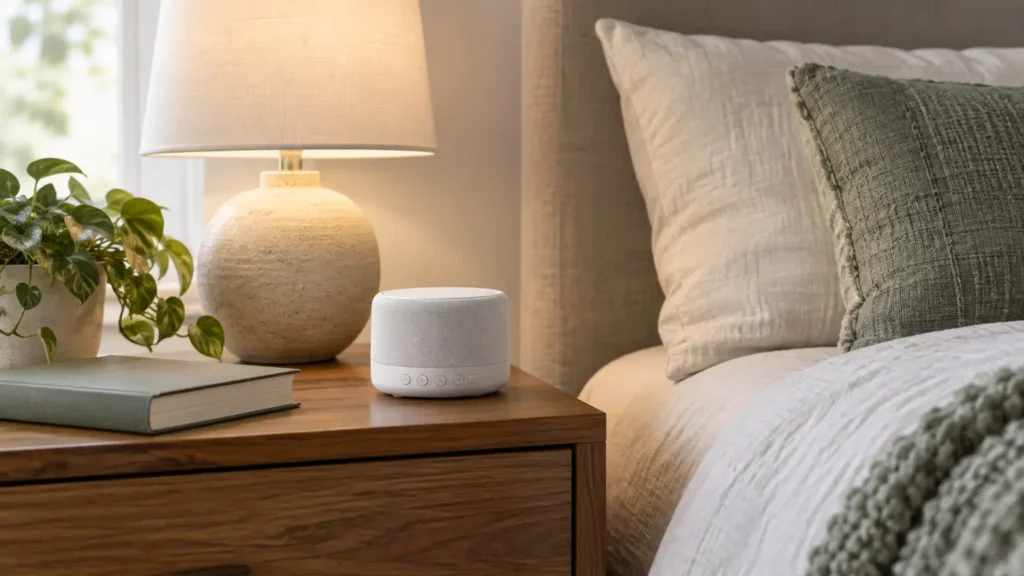

Compact white noise machine on a calm bedroom nightstand
Bedroom & Comfort

Best White Noise Machine for a Bedroom: Buying Guide

Disclosure: This post contains affiliate links. If you buy through one of our links, we may earn a commission at no extra cost to you. Keep listening levels comfortable and follow the product instructions, especially when using sound near infants or children.

A white noise machine can soften the contrast between a quiet bedroom and sudden sounds such as traffic, hallway doors or a partner’s schedule. It does not remove noise; it creates a steady background that makes changes less noticeable. The right machine depends on sound character, volume control, speaker quality and whether you want fan-based noise or digital recordings.

Quick verdict

For most adults, choose a compact machine with precise volume steps, continuous non-looping sound, a physical power button, memory for the last setting and a fully dark display. Pick fan-based sound if you like natural airflow noise; choose digital sound if you want brown, pink, rain or other options.

Fan-based vs digital sound

Type Best for Advantages Tradeoffs
Mechanical fan sound People who dislike recordings Natural variation and no audible loop Fewer sound choices and moving parts
Digital noise Flexible bedrooms and travel White, pink, brown and nature options Poor models may reveal loops or harsh speakers
Smart speaker or app Occasional use Uses equipment you may already own Depends on connection, app and notification settings

White, pink and brown noise

These names describe how energy is distributed across frequencies. White noise sounds brighter and hissier. Pink noise reduces the emphasis on high frequencies and often feels more balanced. Brown noise puts more energy into lower frequencies and has a deeper rumble.

No colour is universally best. A deeper sound may mask low traffic rumble, while a brighter sound can cover higher-frequency household noise. Choose the one that feels neutral enough to ignore at a modest volume.

Volume control is the most important feature

A useful machine offers small, predictable volume steps. If the jump from quiet to loud is too large, finding a comfortable level becomes difficult. The lowest setting should be genuinely quiet for a calm bedroom, while the upper range should not be used as a substitute for hearing protection or soundproofing.

Place the machine between you and the main noise source when practical, rather than directly beside your head. Start low and increase only until interruptions become less noticeable. Louder is not automatically more effective.

Listen for loops and speaker quality

Short digital recordings can repeat with an obvious click, bird call or wave pattern. Once noticed, the loop can become more distracting than the original noise. Look for products described as non-looping or with long, smoothly blended recordings, then check owner feedback for repetition.

A small speaker can sound sharp or distorted at higher volumes. If you prefer brown noise, speaker quality matters because deeper frequencies need more capable hardware. A clean, even sound is more useful than a list of 40 similar tracks.

Bedroom-friendly controls

  • Physical buttons: easier to use without opening an app.
  • Setting memory: restores the preferred sound and volume.
  • Display-off mode: prevents unwanted light.
  • Timer plus continuous mode: supports both naps and overnight use.
  • Headphone-free operation: keeps ears clear and avoids wearing devices in bed.
  • USB-C or a common power connection: simplifies travel, when properly implemented.

Continuous play or timer?

A timer works when you mainly need help settling down. Continuous play is better when traffic or building noise may occur throughout the night. Some people notice when sound stops suddenly, so a gentle fade-out is preferable to an abrupt cutoff.

Check whether the timer is optional. A machine that always shuts off may not suit shift workers or light sleepers.

Travel and power

A travel machine should be compact but still stable on a nightstand. Battery operation helps during trips or outages, though batteries add charging responsibility. Confirm whether the machine can play while charging and how long it runs at a realistic volume.

For home use, a plug-in model avoids battery wear. Keep cords away from walking paths and do not place the machine where bedding blocks ventilation or controls.

Features you can skip

Colour-changing lights, dozens of lullabies and app accounts can add clutter without improving masking. A night-light is useful only if you want one; otherwise it is another source of glow. Bluetooth playback is convenient for music but not necessary for dependable noise.

Common buying mistakes

  • Choosing by the number of sounds instead of their quality
  • Ignoring the size of volume steps
  • Buying a display that cannot go completely dark
  • Placing the machine directly beside the pillow and turning it too loud
  • Relying on a cloud service or app for a basic overnight function
  • Assuming “white noise” is the only useful sound colour

How to set it up

  1. Identify the main source of disruptive sound.
  2. Place the machine between that source and the bed when practical.
  3. Select a steady sound with no distracting detail.
  4. Start at the lowest useful volume.
  5. Dim or disable every light.
  6. Test a timer and continuous mode on separate nights.

Frequently asked questions

Will a white noise machine block loud noise?

No. It masks changes and reduces contrast; it does not physically block sound. Sealing gaps, using curtains and addressing the source can help more.

Is brown noise better for sleep?

Some people prefer its deeper character, but comfort is personal. Choose the least noticeable sound that masks the disturbance at a modest level.

Can I use a phone app instead?

Yes, but notifications, battery management and speaker quality can make a dedicated machine more dependable.

Where should the machine go?

Usually between the bed and the noise source, with enough distance to avoid blasting sound at your ear. Follow the maker’s placement guidance.

Do I need nature sounds?

Only if you find them relaxing. Detailed rain, birds or waves may be distracting if the recording loop becomes obvious.

Shop white noise machines

Compare sound quality, volume steps, continuous play, timer behaviour, dark mode, memory and power options.

Shop Amazon USA
Shop Amazon Canada

Who should buy it—and who should skip it

Buy it if: steady background sound helps mask traffic, neighbours, or household noise at bedtime.

Skip it if: you sleep well in a quiet room, dislike continuous sound, or need to address a specific noise source directly.

Best value

A simple machine with non-looping sound, precise volume control, and a warm dim display is the best value for most bedrooms.

When the upgrade is worth it

Pay more for better speaker quality, more precise volume steps, timer memory, or reliable app-free controls. Extra sound libraries are not worth much if you use only one or two settings.

Final answer

The best white noise machine is the one you stop noticing. Prioritize smooth sound, fine volume control, a dark display, setting memory and reliable continuous play. A simple digital model suits most bedrooms; a mechanical fan machine is ideal if natural sound matters more than variety.

For a calmer bedroom, pair it with our blackout curtain guide and bedroom humidifier guide.

Unbranded heated blanket lying flat on a neatly made bed with a controller on the nightstand
Bedroom & Comfort

Best Heated Blanket: What to Look For

Disclosure: This article contains affiliate links. If you buy through them, My Indoor Space may earn a commission at no extra cost to you.

Unbranded heated blanket lying flat on a neatly made bed with a controller on the nightstand

A heated blanket can provide comfortable, targeted warmth without making the entire room hotter. The best one is not simply the softest or the hottest. It should fit the way you intend to use it, carry recognized electrical certification for your market, include sensible temperature controls and remain easy to inspect, clean and store safely.

Quick Verdict

Best choice for most people: a machine-washable heated throw with several heat levels, automatic shutoff, overheat protection, a detachable controller and a clear warranty.

Best for couples: a full-size heated blanket with separate left and right controls so each sleeper can choose a different setting.

Best value: a simple single-controller throw from a reputable seller with recognized certification and replacement support. Extra app features matter less than dependable controls and safe construction.

Who a Heated Blanket Is Best For

  • Adults who want focused warmth while reading or relaxing.
  • Couples who prefer different temperatures on each side of the bed.
  • People who want to pre-warm a bed while they are awake.
  • Anyone prepared to inspect the blanket and follow its care instructions.

Who May Want to Skip It

  • Infants and anyone unable to recognize excessive heat or operate the controls safely.
  • Homes where pets may chew cords, scratch the fabric or lie on top while it is operating.
  • People who routinely bunch, fold or tuck blankets tightly around themselves.
  • Anyone planning to use a secondhand model with an unknown history or missing instructions.
  • People whose clinician has advised against direct heat because of reduced sensation, circulation or another medical concern.

Heated Throw, Blanket or Mattress Pad?

Product typeBest forMain trade-off
Heated throwSofa, chair and personal useToo small for full-bed coverage
Heated blanketWarmth over the body or pre-warming a bedMust remain flat and be used exactly as directed
Heated mattress padWarmth from beneath on a compatible mattressDifferent construction and placement rules
Dual-zone blanketCouples with different preferencesTwo controllers and more cords
Wearable heated wrapSeated use around shoulders or legsNot intended as bedding

These products are not interchangeable. A heated blanket designed to lie over you should not be placed beneath you unless its instructions explicitly allow that use. A heated mattress pad is designed for the opposite position. Follow the label rather than assuming that any electrically heated fabric works anywhere.

Nine Features That Matter Most

1. Recognized Electrical Certification

Choose a product intended for the country where it will be used and look for a certification mark recognized in that market. Buy from a seller that clearly identifies the manufacturer, model and warranty. A vague marketplace listing with no support information is not worth the risk.

2. Automatic Shutoff

A timer reduces the chance of the blanket staying on indefinitely, but it does not make unsafe use safe. Compare the shutoff duration and confirm whether it can be adjusted. Follow the manufacturer’s supervision and sleep instructions even when an automatic timer is included.

3. Overheat Protection

Look for a design that monitors abnormal heat and shuts the unit down when a fault is detected. Overheat protection is important, but the blanket still needs to remain flat, uncovered and undamaged while operating.

4. Useful Heat Levels

Several well-spaced settings are more useful than a long list of nearly identical steps. A low setting matters because gentle warmth is usually more comfortable over time than maximum heat. Fast preheat can be convenient when used while you are awake and following the instructions.

5. Easy-to-Use Controls

The controller should be readable in low light without glowing brightly all night. Raised buttons are easier to identify by touch than a smooth panel. Check whether the control remembers the last setting or always starts from a safe default.

6. Dual Controls for Larger Beds

For couples, independent zones prevent one person from controlling the entire blanket. Confirm that each side has its own connector and that the cords can reach suitable outlets without crossing a walkway or being pinched by the bed frame.

7. Correct Size and Coverage

A throw is ideal for one person on a sofa but may leave large gaps on a bed. A full-size blanket should cover the intended area without needing to be stretched, tucked tightly or folded. Compare actual dimensions instead of relying only on labels such as full, queen or king.

8. Detachable Cords and Clear Wash Instructions

Many modern blankets can be washed after the controllers and cords are removed, but the exact method varies. Read the care label before buying. If the cleaning process sounds too complicated for your routine, choose a simpler material or a removable cover designed for the product.

9. Warranty, Registration and Recall Support

Keep the receipt and model number, register the product when registration is offered and check official recall databases. The ability to identify your exact model is more important with an electrical bedding product than with an ordinary throw.

Material: Softness Without Trapping Too Much Heat

Plush fleece and sherpa feel warm before the heat is turned on, but thicker fabric may feel bulky. Microfleece is lighter and easier to fold loosely for storage. The wiring should not create hard ridges, although some texture may still be noticeable.

Do not judge only by softness in a product photo. Check the total weight, wash instructions and whether the controller connection sits where it will avoid pressure from your body or furniture.

Essential Safety Checklist

  1. Read the complete manual before the first use.
  2. Inspect the fabric, connector, controller, plug and cord for wear or damage.
  3. Lay the blanket flat—never operate it folded, bunched or tightly tucked.
  4. Do not place pillows, heavy bedding, pets or other objects on top while it is operating.
  5. Keep cords where they cannot be pinched by a bed frame, recliner or furniture.
  6. Never use the blanket when it is wet or damp.
  7. Do not combine it with a heating pad, hot-water bottle or another heated product.
  8. Plug it in and operate it only as directed by the manufacturer.
  9. Turn it off and unplug it when the instructions require or when it is not in use.
  10. Stop using it immediately if you notice hot spots, discoloration, an unusual smell or inconsistent heating.

The Electrical Safety Foundation International advises against folding an electric blanket while it is operating, placing anything on top of it or using damaged bedding. Its general guidance also says heated blankets should not be left unattended or used while sleeping. Follow the most cautious applicable guidance along with the instructions supplied with your exact model.

Can You Sleep With a Heated Blanket On?

The safest general approach is to use it for targeted warmth or to pre-warm the bed while you are awake, then turn it off before sleeping. Safety organizations caution against unattended or sleeping use. An automatic shutoff is a backup feature, not permission to ignore the manual.

If you need overnight warmth, improve the room and bedding first or discuss suitable options with a qualified professional when health or mobility is involved. A regular breathable blanket may be the better overnight solution.

Washing and Storage

  • Disconnect every removable controller and cord before cleaning.
  • Use only the wash and dry method printed on the care label.
  • Never plug the blanket in until it is completely dry.
  • Inspect the connector and fabric again after washing.
  • Store it loosely rolled or folded according to the manual.
  • Do not place heavy boxes on top during summer storage.

Keeping the bedroom uncluttered makes safe cord routing and storage easier. See Why My Bedroom Finally Started Feeling Like a Place to Rest for simple ways to make the room calmer without adding more furniture.

Best Value vs. Upgrade Worth Buying

Best value: a certified heated throw with automatic shutoff, overheat protection, a detachable controller and straightforward care instructions.

Upgrade worth buying: independent dual controls for a shared bed, a longer warranty and a controller that is easy to use in low light.

Upgrade most people can skip: app control. It adds complexity without replacing inspection, safe placement or direct access to the controller.

Frequently Asked Questions

Is a heated throw the same as a heated blanket?

The technology is similar, but throws are smaller and intended mainly for one person while seated or relaxing. Full heated blankets are sized for beds and may include dual controls.

Can a heated blanket go under another blanket?

Do not add layers above it unless the manufacturer specifically says that arrangement is safe. Trapped heat can create overheating. Use the product exactly in the position and layering arrangement shown in its manual.

Can pets lie on a heated blanket?

Pets can trap heat, damage wiring with claws or teeth and prevent you from noticing a problem. Keep pets off while the blanket is operating and choose a product made specifically for animals if a veterinarian recommends one.

Should you buy a used heated blanket?

Avoid one with an unknown age, missing controller, damaged label or uncertain storage history. New electrical bedding from a reputable seller provides a clearer model number, warranty, recall trail and current instructions.

Availability, prices and specifications change. Confirm certification, intended use, automatic shutoff, wash instructions, warranty and recall status before purchasing.

For other bedroom upgrades, compare our blackout curtain guide and mattress protector guide.

Final Answer

For most people, the winner is a simple heated throw or correctly sized blanket with recognized certification, automatic shutoff, overheat protection, several useful heat settings and a detachable controller. Choose dual controls for a shared bed, but never trade basic safety and easy inspection for unnecessary smart features.

Sources and Further Reading

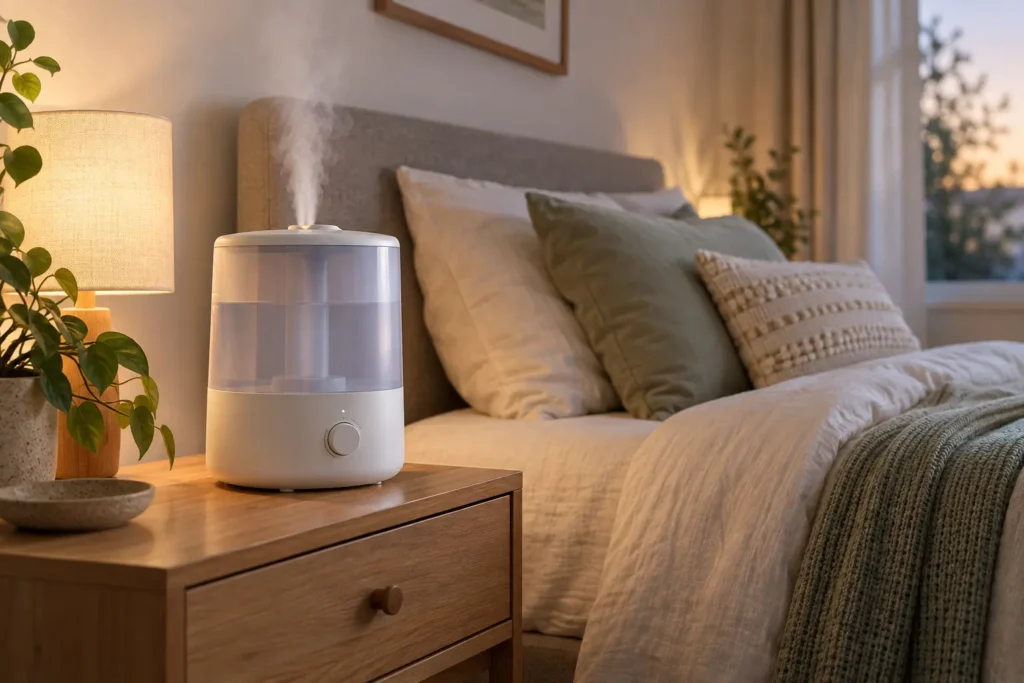
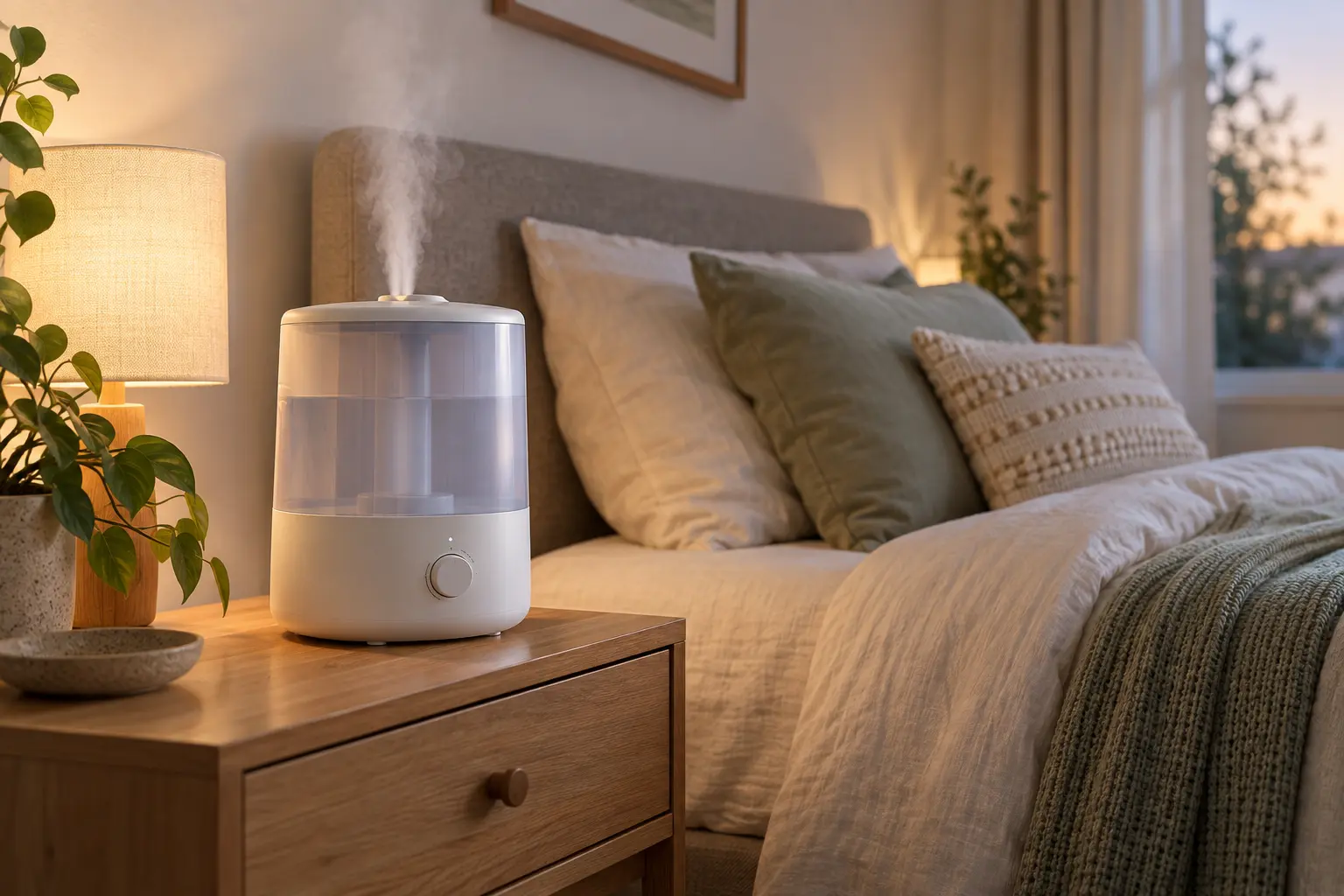
Unbranded cool-mist humidifier on a wooden nightstand in a calm bedroom
Bedroom & Comfort, Laundry & Cleaning

Best Bedroom Humidifier: What to Look For

Disclosure: This article contains affiliate links. If you buy through them, My Indoor Space may earn a commission at no extra cost to you.

Unbranded cool-mist humidifier on a wooden nightstand in a calm bedroom

A bedroom humidifier can make dry indoor air feel more comfortable, but only when the machine is correctly sized, easy to clean and used without pushing humidity too high. The best model is not the one that produces the biggest cloud of mist. It is the one you can maintain consistently and control accurately through the night.

Quick Verdict

Best choice for most bedrooms: a quiet cool-mist humidifier with a built-in humidistat, automatic shutoff, adjustable output and a tank that opens widely for cleaning.

Best value: a simple evaporative or ultrasonic model paired with a separate digital hygrometer so you can see the room’s actual relative humidity.

Upgrade worth considering: top-fill construction, dishwasher-safe parts where permitted, a reliable humidistat and an easy-to-read display that can be dimmed completely at night.

Who a Bedroom Humidifier Is Best For

  • Homes where heated winter air regularly feels uncomfortably dry.
  • People who want controlled moisture rather than simply running mist continuously.
  • Bedrooms where a hygrometer confirms that relative humidity is low.
  • Anyone willing to empty, refill and clean the tank on schedule.

Who May Want to Skip It

  • Rooms that already stay humid or show condensation on windows.
  • Anyone unlikely to clean a water tank and wetted parts regularly.
  • Bedrooms with an unresolved leak, damp carpet or visible mold.
  • People expecting a humidifier to diagnose or treat a health condition.

Start With a Hygrometer

Before buying a humidifier, measure the bedroom’s relative humidity with a small digital hygrometer. General indoor-air guidance often places comfortable home humidity around 30% to 50%, but the practical target can vary with outdoor temperature, insulation and condensation. If windows become wet or the room smells damp, reduce the setting or stop the machine.

A humidifier without a humidity reading can easily run longer than needed. A separate hygrometer is inexpensive, can be placed away from the mist stream and lets you check whether the built-in sensor is behaving realistically.

Choose the Right Humidifier Type

TypeBest forMain trade-off
Ultrasonic cool mistQuiet bedrooms and low power useMay leave mineral dust when used with hard water
EvaporativeNatural output that slows as humidity risesFan noise and replacement wick costs
Warm mistPeople who prefer a warm visible mistHot water and steam create a burn risk
Dual mistHouseholds wanting warm and cool optionsHigher price and more parts to clean
Whole-room consoleLarge rooms or connected spacesBulky for a normal bedroom

Eight Features That Matter Most

1. Room-Size Rating

Measure the bedroom floor area before shopping. Multiply length by width to get square footage. Treat advertised coverage as a starting point rather than a guarantee because ceiling height, ventilation, door position and outdoor dryness all affect performance. An oversized unit can raise humidity too quickly, while an undersized one may run constantly.

2. A Real Humidistat

A humidistat lets you choose a target and allows the machine to cycle instead of producing mist without feedback. The sensor should not sit directly in the mist path. Compare it with a separate hygrometer during the first few nights and adjust the target if the readings differ.

3. Easy Tank Access

A wide top opening makes daily emptying, wiping and refilling much easier. Check whether your hand can reach the interior surfaces and whether the tank stands securely in a sink. Narrow decorative tanks may look elegant but can be frustrating to clean thoroughly.

4. Low-Water Automatic Shutoff

The unit should stop when the tank is empty. This is especially important overnight, when you may not notice that the water has run out. A clear indicator is useful, but it should dim or turn off in sleep mode.

5. Quiet Operation

Ultrasonic models are usually quiet, although some produce faint bubbling or electronic sounds. Evaporative models contain a fan and may be more noticeable. Look beyond a single decibel claim: fan speed, water movement and button beeps can matter just as much in a quiet bedroom.

6. Adjustable Output and Mist Direction

Variable output helps you match the machine to changing weather. A rotating nozzle lets you direct mist into open air instead of toward bedding, walls or electronics. The goal is even room humidity, not a damp zone around the machine.

7. Manageable Filter and Part Costs

Evaporative humidifiers need replacement wicks, and some ultrasonic models use demineralization cartridges. Check availability and cost before buying. A low-priced machine can become expensive if it requires a proprietary part every few months.

8. Controls That Disappear at Night

Sleep mode should reduce fan speed, dim the display and silence unnecessary alerts. Physical buttons are often easier to use in the dark than a touchscreen. App control can be convenient, but it is not a substitute for simple controls on the machine.

How Large Should the Tank Be?

A bigger tank does not automatically mean better performance. It mainly means fewer refills. For a normal bedroom, choose enough capacity to cover your usual sleep period at the setting you actually need. Published runtime is commonly measured on the lowest output, so maximum-output runtime may be much shorter.

Also consider lifting weight. One litre of water weighs about one kilogram before the tank itself is added. A huge tank can be awkward to carry, turn over and fit beneath a faucet.

Ultrasonic Humidifiers and White Dust

Ultrasonic humidifiers can disperse minerals found in tap water, leaving pale dust on nearby furniture. The amount depends on the water and machine. Distilled or demineralized water may reduce it, and some models accept a demineralization cartridge. Follow the manufacturer’s water instructions rather than adding treatments or fragrances that are not approved for the tank.

Where to Place a Humidifier in a Bedroom

  1. Use a stable, level and water-resistant surface.
  2. Keep it away from the edge where it could be knocked over.
  3. Leave clearance from walls, curtains, books and electronics.
  4. Point the mist into open room air rather than at the bed.
  5. Protect wood furniture according to the manufacturer’s placement instructions.
  6. Keep the cord away from walkways and never route it beneath a rug.
  7. Follow the manual’s minimum clearance and height guidance.

If the bedroom feels crowded, first simplify the surface around the unit. The ideas in How to Organize a Bedroom Without Buying More Furniture can help you create a safer dedicated spot.

Cleaning Is Not Optional

Standing water and residue can allow microorganisms to grow. Empty leftover water, wipe accessible surfaces dry and refill with fresh water regularly. Clean and descale on the schedule and with the method specified in the manual. Unplug the base before filling or cleaning, and never submerge electrical parts.

The U.S. Consumer Product Safety Commission advises regular cleaning and warns against over-humidifying; moisture on windows or walls is a clear sign to reduce output. Its indoor-air guidance also recommends fresh water and frequent cleaning for cool-mist and ultrasonic units.

Best Value vs. Upgrade Worth Buying

Best value: a correctly sized cool-mist unit with adjustable output, low-water shutoff, a wide tank opening and a separate hygrometer. Easy maintenance is more valuable than a long list of modes.

Upgrade worth buying: a dependable built-in humidistat, top-fill tank, fully dimmable display and parts that are genuinely easy to remove and clean.

Upgrade most people can skip: voice control and elaborate mood lighting. Neither improves moisture control, tank hygiene or bedroom comfort.

Frequently Asked Questions

Should a humidifier run all night?

Only if the room needs it and humidity remains controlled. Use a humidistat or hygrometer, choose a moderate setting and stop if condensation appears. Continuous mist without measurement can make the room too damp.

Is cool mist or warm mist better for a bedroom?

Cool mist is the practical choice for most bedrooms because it avoids a hot-water and steam hazard. Warm mist may appeal to some adults, but it requires extra care and is a poor choice where children or pets could reach it.

Can a humidifier replace an air purifier?

No. A humidifier adds moisture; an air purifier filters airborne particles. They perform different jobs. If you use both, give each appliance open space and follow the placement guidance in Best Places to Put an Air Purifier.

Can essential oils go in the water tank?

Only when the manufacturer explicitly allows it and provides a dedicated tray or compartment. Oils can damage ordinary humidifier plastics, seals and ultrasonic components. Never assume an aroma diffuser and a humidifier are interchangeable.

Availability, prices and specifications change. Confirm the room-size rating, safety features, cleaning instructions, electrical certification and warranty on the retailer’s page before purchasing.

Check the room before adding moisture: our humidity monitor guide explains sensor placement and readings. If the room is damp instead, see the dehumidifier sizing guide.

Final Answer

For most bedrooms, choose a quiet cool-mist humidifier sized for the room, with a built-in humidistat, low-water shutoff, adjustable output and a tank you can easily reach and clean. Pair it with a separate hygrometer, keep the room below the point where condensation appears and treat daily water care as part of owning the machine.

Sources and Further Reading

Scroll to Top