Laundry & Cleaning

Simple cleaning routines, laundry solutions and a healthier indoor space.

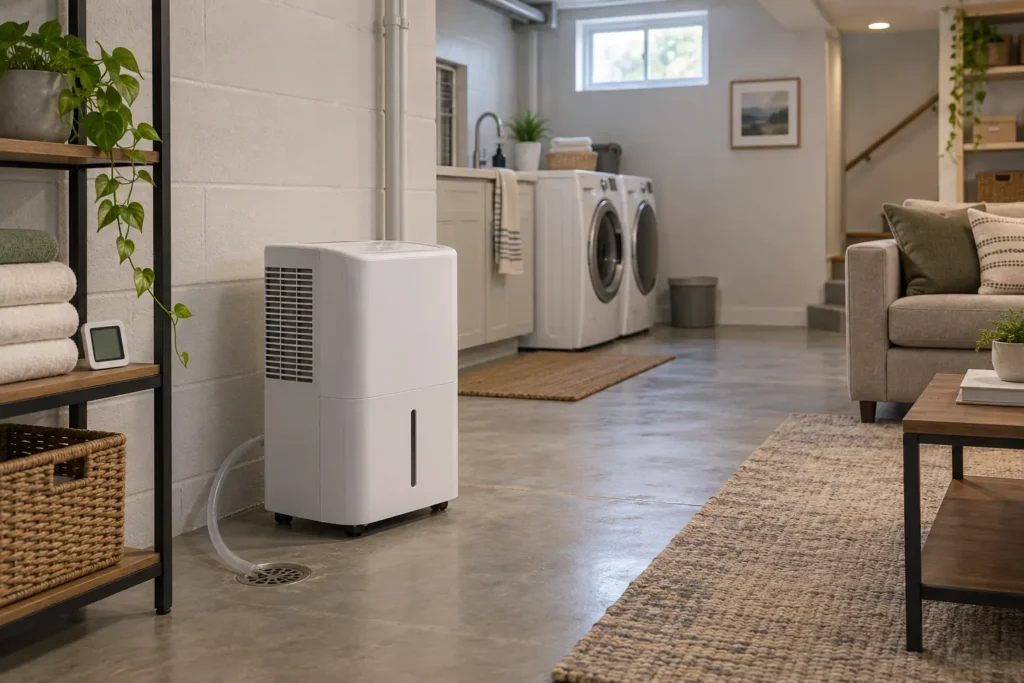
Portable dehumidifier with drain hose in a clean finished basement laundry area
Bedroom & Comfort, Laundry & Cleaning

What Size Dehumidifier Do I Need?

Disclosure: This post contains affiliate links. If you buy through one of our links, we may earn a commission at no extra cost to you. A dehumidifier manages airborne moisture; it does not repair leaks, stop water intrusion, or replace proper mold remediation.

Dehumidifier size is measured by how many pints of water the machine can remove in 24 hours under specified test conditions—not by the physical size of the cabinet. The right capacity depends on the area, how damp it is, the room temperature, air leakage, laundry or shower moisture, and whether you can drain the collected water continuously.

Square footage is only the beginning. A moderately damp 1,000-square-foot basement can need less capacity than a much smaller room with seepage, wet laundry, or very high relative humidity. This guide helps you choose a practical portable dehumidifier and set it up safely.

Quick answer

For a small-to-medium space under about 2,000 square feet, ENERGY STAR’s current buying guidance suggests roughly:

Condition without dehumidification Typical relative humidity Starting capacity
Slightly to moderately damp; intermittent musty odor About 50–75% RH 20–30 pints/day
Very damp; persistent odor or damp spots About 75–90% RH 25–40 pints/day
Wet; sweating surfaces, seepage, or high moisture load About 90–100% RH 30–50 pints/day

For spaces over 2,000 square feet, the same guidance starts at 30+ pints for moderately damp conditions, 40+ for very damp conditions, and 50+ for wet conditions. Treat these as estimates. Persistent water, visible mold, or a structural moisture problem needs diagnosis—not merely a larger appliance.

Start by measuring humidity

Use a separate hygrometer to observe relative humidity over several days. Check morning, evening, rainy weather, and after activities such as showering or drying laundry. A single reading can miss the real pattern, and the sensor built into a dehumidifier may read the air immediately around the unit rather than the whole room.

The U.S. Environmental Protection Agency recommends keeping indoor relative humidity below 60%, ideally around 30% to 50% where practical. ENERGY STAR also describes 30% to 50% RH as a generally desirable building range. Very low humidity can feel uncomfortable, so more drying is not always better.

Capacity is water removal, not tank size

A “35-pint” dehumidifier does not necessarily have a 35-pint bucket. The capacity rating describes water removal over 24 hours at a defined temperature and humidity; the bucket may hold only a fraction of that. In a damp room, you could empty it several times a day unless you use continuous drainage.

Newer capacity labels may look lower than older ones because federal test conditions changed. ENERGY STAR explains that portable units began using a cooler, more realistic test condition, so a newer 30-pint model may be comparable to an older model labeled much higher. Compare products using the same current standard whenever possible.

How room conditions change the size you need

Basement seepage or wet walls

Stop the water source first. Correct grading, gutters, plumbing leaks, cracks, drainage, or waterproofing as appropriate. A dehumidifier can help with residual airborne moisture, but running continuously against active seepage wastes energy and can conceal a worsening problem.

Laundry drying indoors

Wet clothes add a significant intermittent moisture load. Choose more capacity, improve exhaust or ventilation where appropriate, and consider continuous drainage. Keep the appliance clear of splashes and follow electrical-safety instructions.

Cool basement or garage

Compressor dehumidifiers can lose performance or frost in cool air. ENERGY STAR advises considering a model specified for lower-temperature operation when the space often falls below about 65°F (18°C). An automatic defrost function helps, but check the exact rated operating range.

Open floor plan

A portable unit works best in a reasonably contained area. Open stairs, frequently opened exterior doors, or multiple closed rooms make one unit’s job harder. Air needs a return path; a machine in one closed room will not reliably control humidity behind other closed doors.

Bathroom

Fix or upgrade exhaust ventilation first. Many portable dehumidifiers are not designed to sit in wet zones, and electrical clearances matter. Never place one where it can be splashed or reached from a tub or shower unless the product and installation are explicitly rated for that use.

Choose the drainage method before the capacity

Drainage Best for Watch for
Manual bucket Occasional use and easy access Frequent emptying; unit stops when full
Gravity hose Nearby floor drain lower than outlet Continuous downhill slope; kinks and trip hazards
Built-in pump Sink or drain above the unit Pump lift limit, hose routing, added noise and maintenance
External condensate pump Flexible permanent drainage Separate equipment, overflow protection, safe installation

A gravity hose must slope downward the entire way; it cannot push water uphill. Secure the hose at the drain, keep it away from electrical cords, and periodically inspect for slime, kinks, or blockage. Never route drainage where a leak could damage finished surfaces.

Features worth paying for

  • Accurate adjustable humidistat: lets the unit cycle instead of running constantly.
  • Automatic restart: helpful after a power interruption, provided settings are retained safely.
  • Low-temperature or defrost control: important in cool basements.
  • Continuous-drain connection: valuable for persistent moisture.
  • Washable, accessible air filter: easier routine maintenance.
  • ENERGY STAR certification: provides a verified efficiency basis for comparison.
  • Full-bucket shutoff: standard on many models and essential for bucket use.

Efficiency, noise, and heat

Dehumidifier efficiency is expressed as Integrated Energy Factor, or liters of water removed per kilowatt-hour. A higher IEF means more water removal for the electricity used under the test method. Compare models within an appropriate capacity class.

Every refrigerant dehumidifier adds some heat to the room while operating. That can be welcome in a cool basement but uncomfortable in a warm bedroom. For sleeping spaces, compare low-fan sound levels, compressor cycling character, display dimming, and whether the unit resumes loudly after a power interruption.

Portable vs whole-home dehumidifier

A portable unit makes sense for one basement, bedroom, storage room, or another defined area. A whole-home unit connects to ductwork and is intended to manage moisture across a larger conditioned area. Whole-home sizing, duct design, condensate disposal, and controls should be handled by an HVAC professional.

If you need portable units in many rooms or the central air conditioner leaves the entire home clammy, the building envelope and HVAC system may need assessment. Oversized air conditioning, air leakage, duct problems, or inadequate ventilation can contribute to humidity issues.

Placement and setup

  1. Use a grounded outlet that meets the manual’s requirements; avoid extension cords unless the manufacturer explicitly permits one.
  2. Leave the specified clearance around air intakes and exhaust. Do not crowd the unit behind furniture.
  3. Close windows and exterior doors while operating, unless a ventilation plan says otherwise.
  4. Keep the unit away from dust-producing work, which can clog coils and filters.
  5. Place it on a stable, level surface and protect the drainage route.
  6. Set an initial target around 45% to 50% RH, then confirm with a separate hygrometer.

For official capacity and placement guidance, see ENERGY STAR’s dehumidifier guide. For moisture and mold fundamentals, consult the EPA’s mold resources.

Maintenance that protects performance

  • Clean the filter on the manufacturer’s schedule.
  • Wash and dry the bucket regularly to control residue and odors.
  • Inspect the hose and drain connection for blockage or leakage.
  • Vacuum dust from accessible grilles with the unit unplugged.
  • Allow the appliance to stand as directed after transport before turning it on.
  • Check the model number against current recall information and register the product if desired.

When a dehumidifier is not the solution

Investigate urgently if you see active flooding, sewage, significant visible mold, a persistent plumbing leak, structural damage, or electrical equipment exposed to water. Porous materials that remain wet can be damaged even when room humidity later drops. A musty smell that persists at acceptable RH may indicate hidden moisture.

For a recent water event, prioritize safety, stop the source when it is safe to do so, document damage, and seek qualified help. Do not power an appliance in a wet area or handle electrical equipment while standing in water.

Frequently asked questions

Can a dehumidifier be too large?

A unit with an adjustable humidistat can cycle off at the target, so modest oversizing may provide useful reserve. But an unnecessarily large unit costs more, occupies more space, may be louder, and still will not fix a leak.

What humidity should I set?

Around 45% to 50% RH is a practical starting point for many homes. Adjust for comfort, condensation risk, climate, and building conditions while generally keeping below 60%.

Why does my dehumidifier blow warm air?

That is normal for a refrigerant dehumidifier. It removes moisture and rejects heat into the room, so discharge air feels warmer.

Will one dehumidifier handle several rooms?

Only if air circulates freely and the connected area is within the unit’s real capability. Closed doors and separate levels limit moisture transfer.

Should I run it continuously?

Use a humidistat target so the compressor can cycle as humidity falls. Continuous fan or drain operation varies by model. Persistent nonstop operation may signal an undersized unit, open windows, a blocked filter, low-temperature frosting, or an unresolved moisture source.

Shop dehumidifiers

Compare current pints-per-day ratings, rated operating temperature, IEF efficiency, drainage options, noise, filter access, and product dimensions. Confirm the capacity uses the current test standard.

Shop Amazon USA
Shop Amazon Canada

Final answer

Choose dehumidifier capacity from both the area and the dampness level. For a small-to-medium room under about 2,000 square feet, roughly 20 to 30 pints per day suits slight-to-moderate dampness, 25 to 40 pints suits very damp conditions, and 30 to 50 pints suits wet or high-load conditions. Increase capacity for larger or more demanding spaces, confirm cool-temperature performance, and choose drainage you will actually maintain. Most importantly, repair the moisture source rather than asking the appliance to fight it forever.

If humidity is mainly a bedroom comfort issue rather than a dampness problem, compare the opposite-use case in our bedroom humidifier guide.
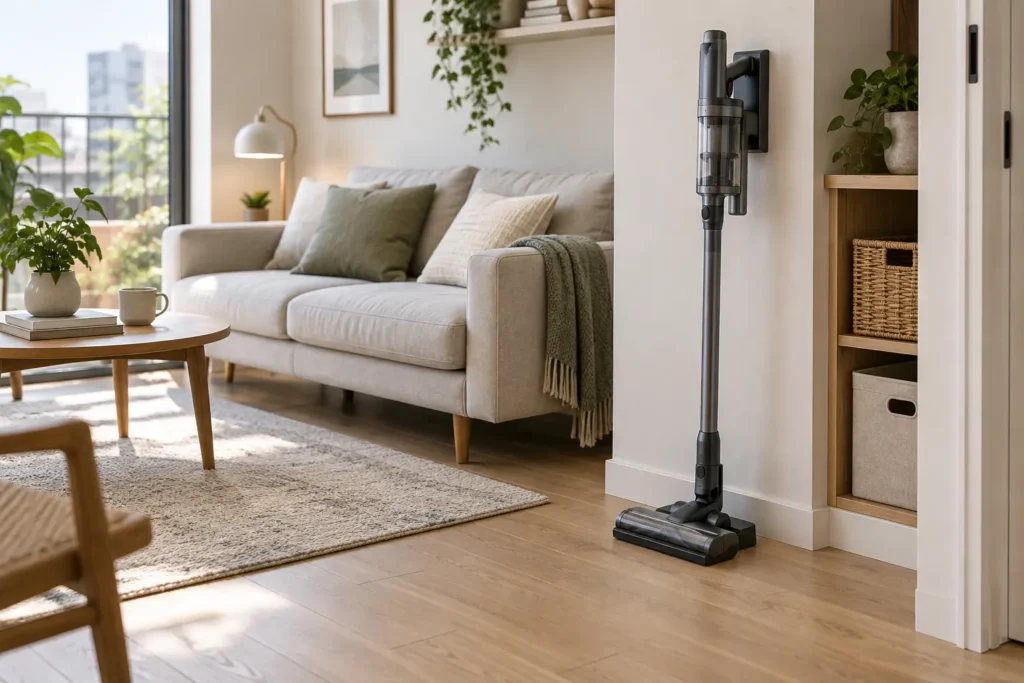
Slim cordless vacuum stored in a bright small apartment living room
Laundry & Cleaning

Best Cordless Vacuum for a Small Apartment

Disclosure: This post contains affiliate links. If you buy through one of our links, we may earn a commission at no extra cost to you. We recommend choosing by fit, floor type, and serviceability—not by the biggest number on the box.

A cordless vacuum can be a near-perfect match for a small apartment: it is quick to grab, easy to steer around furniture, and far simpler to store than a full-size upright. The catch is that “compact” does not always mean convenient. A top-heavy body, awkward charging dock, tiny dust bin, or non-replaceable battery can turn a promising purchase into daily friction.

This guide focuses on the details that matter in a smaller home. You will learn which features earn their space, which specifications deserve skepticism, and how to choose a vacuum that fits both your floors and your routine.

Quick verdict

For most small apartments, the sweet spot is a lightweight cordless stick vacuum with a motorized floor head, a washable pre-filter, a sealed exhaust path, a removable battery, and a crevice tool. Choose a soft roller or switchable brush for mostly hard floors; choose a stronger brush roll with easy hair removal for rugs, carpet, or pets. A stable freestanding dock or wall mount matters almost as much as suction when closet space is limited.

Who this guide is for

  • Renters who need a vacuum that stores in a narrow closet or corner
  • Studio and one-bedroom residents cleaning mostly hard floors and a few rugs
  • Pet owners who need fast, frequent pickup without dragging out a large machine
  • Anyone replacing a broom-and-dustpan routine with something quicker

You may be better served by a corded canister or upright if your home is carpet-heavy, you need long uninterrupted cleaning sessions, or you do not want to manage battery charging. Cordless convenience is valuable, but it is not automatically the best fit for every floor plan.

Small-apartment cordless vacuum checklist

What to check Good target Why it matters
Weight in hand Comfortable for a full-room test Total weight can hide a tiring, top-heavy design.
Floor head Low profile with swivel steering Helps reach under beds, sofas, and tight chair legs.
Battery Removable and replaceable Extends useful life and makes a spare battery possible.
Filtration Sealed path plus washable pre-filter Reduces dusty exhaust and keeps maintenance manageable.
Dust bin Easy one-step emptying A small bin is acceptable only if it is simple to empty cleanly.
Storage Wall dock or stable floor stand Keeps the vacuum secure without sacrificing much floor area.
Attachments Crevice tool; mini motorized tool if needed Covers edges, upholstery, stairs, and pet hair without clutter.
Parts support Filters, batteries, and brush rolls sold separately A replaceable wear part can prevent replacing the whole vacuum.

Start with your floors, not the marketing

The right cleaning head is more important than a dramatic “maximum power” claim. Hard floors need good edge pickup and a brush that does not scatter crumbs. A soft roller can be excellent on wood, vinyl, and tile, while a switchable or gentle brush roll helps protect delicate surfaces. Check your flooring manufacturer’s care instructions before using any powered brush.

Low-pile rugs usually benefit from a motorized brush head. If you have thicker carpet, confirm that the head can move freely without sealing itself to the surface. Homes with long hair or pets should prioritize a brush roll that can be removed or cleared without a complicated teardown.

How much runtime do you really need?

Published runtime is usually measured under favorable conditions, often on the lowest power setting without the most demanding powered head. Real cleaning time can be shorter. Instead of shopping for the largest advertised number, estimate how long your normal cleaning loop takes.

  • Studio or compact one-bedroom: a practical cleaning session is often short enough for one battery, provided the vacuum is not used on maximum power throughout.
  • More rugs, pets, or upholstery: favor a removable battery or a model with a readily available spare.
  • Whole-home deep cleaning: consider whether a corded machine would be more dependable.

Keep the charger in a ventilated, dry area and use the manufacturer-supplied charging equipment. If a battery is damaged, unusually hot, swollen, or has been dropped hard, stop using it and follow the manufacturer’s service guidance.

Filtration: look at the whole airflow path

A fine filter is useful only when air cannot simply leak around it. Look for language describing a sealed system or sealed filtration path, then check whether replacement filters are easy to obtain. A washable pre-filter can reduce ongoing cost, but it must be completely dry before it goes back into the machine.

If someone in your household has significant allergies or asthma, do not rely on the word “HEPA” alone. Check what part of the system is actually rated, whether the body is sealed, and whether emptying a bagless bin will expose you to dust. In some homes, a sealed bagged vacuum may be the cleaner choice.

Storage is a buying criterion

Before ordering, decide exactly where the vacuum will live. Measure the height and width of that space, confirm that an outlet is nearby, and check whether drilling is permitted in your lease. A wall dock saves floor space, but a freestanding stand is easier for renters. Some vacuums fold or stand on their own, though stability varies.

Also count the attachments. A vacuum that fits neatly but leaves four loose tools in a drawer is not truly compact. The best apartment setup usually includes only the tools you use every week.

Best feature set by household

Mostly hard floors

Prioritize a soft roller or gentle multi-surface head, strong front-edge pickup, a low-profile neck, and easy steering. Maximum suction matters less than controlled pickup that does not snowplow larger crumbs.

Rugs and mixed flooring

Choose a powered brush roll with at least two practical power levels. A brush on/off control is helpful when moving from rugs to delicate hard floors.

Pets or long hair

Look for a removable or anti-wrap brush roll, a mini motorized upholstery tool, and a bin that opens without reaching into collected debris. Replacement filters should be affordable and easy to find.

Very limited storage

Favor a narrow charging solution, onboard attachment storage, and a design that converts cleanly to a handheld. Measure first: product photos can make docks look smaller than they are.

Features worth paying for

  • Replaceable battery: the strongest long-term value feature for many cordless models.
  • Serviceable brush roll: makes hair removal and routine maintenance easier.
  • LED floor lights: genuinely useful for seeing dust under furniture, though not essential.
  • Two or three useful power modes: more helpful than a long list of modes you will not use.
  • Reliable parts availability: filters and batteries should be easy to purchase from a traceable seller.

Features you can usually skip

  • An oversized bundle of specialty tools with no onboard storage
  • A screen that adds information but not better cleaning
  • Extreme maximum-power claims without realistic runtime context
  • A mop attachment if you already have a simple floor-cleaning method you like
  • Automatic modes that add cost but do not match your flooring

Before you buy: the five-minute fit test

  1. Map your flooring: hard floor, low-pile rug, carpet, and upholstery.
  2. Measure the intended storage spot and the distance to an outlet.
  3. Check the assembled weight and, if available, the handheld unit’s weight.
  4. Confirm that filters, battery, and brush roll can be purchased separately.
  5. Read the warranty terms and return policy, especially for battery coverage.

How to keep a cordless vacuum working well

Empty the bin before debris reaches the maximum line. Clear hair from the brush roll, inspect the intake for clogs, and clean filters on the schedule in the manual. Never reinstall a damp filter. Wipe charging contacts with the vacuum unplugged and store the battery away from excessive heat.

A quick maintenance rhythm fits naturally into a small-home reset: empty the bin after use, inspect the brush once a week, and check the filter monthly. Pair it with our 10-minute evening reset to keep cleaning from becoming a weekend project.

Frequently asked questions

Can a cordless vacuum replace a full-size vacuum?

Yes, in many small homes with mostly hard floors and low-pile rugs. Carpet-heavy homes, large shedding pets, or long deep-cleaning sessions may still benefit from a corded machine.

Is a bigger dust bin always better?

No. A slightly smaller bin that empties cleanly and keeps the vacuum balanced can be a better apartment choice. Ease of emptying matters more than capacity alone.

Should I mount the charger to the wall?

Only if your lease permits it and the location is convenient. A freestanding dock or stand can offer nearly the same convenience without drilling.

Do I need a HEPA filter?

Fine filtration can help, but the complete system matters. Check for a sealed airflow path, correctly fitted filters, and a dust-emptying process you can tolerate.

How often should the filter be washed?

Follow the manufacturer’s instructions because filter materials differ. Overwashing, using soap when it is not recommended, or reinstalling a damp filter can damage performance.

Shop cordless vacuums

Use the checklist above while comparing current models, then verify dimensions, included tools, battery availability, and warranty details on the product page.

Shop Amazon USA
Shop Amazon Canada

Final answer

The best cordless vacuum for a small apartment is not necessarily the most powerful or expensive. It is the one that matches your floors, feels comfortable in your hand, stores without becoming an obstacle, and has replaceable wear parts. For most people, a lightweight multi-surface model with a sealed filtration path, removable battery, crevice tool, and tidy dock is the most dependable starting point.

If you want to automate more of the floor cleaning, compare the tradeoffs in our robot vacuum guide for small apartments. For a broader low-effort routine, see the small-kitchen habits that keep counters looking clean.

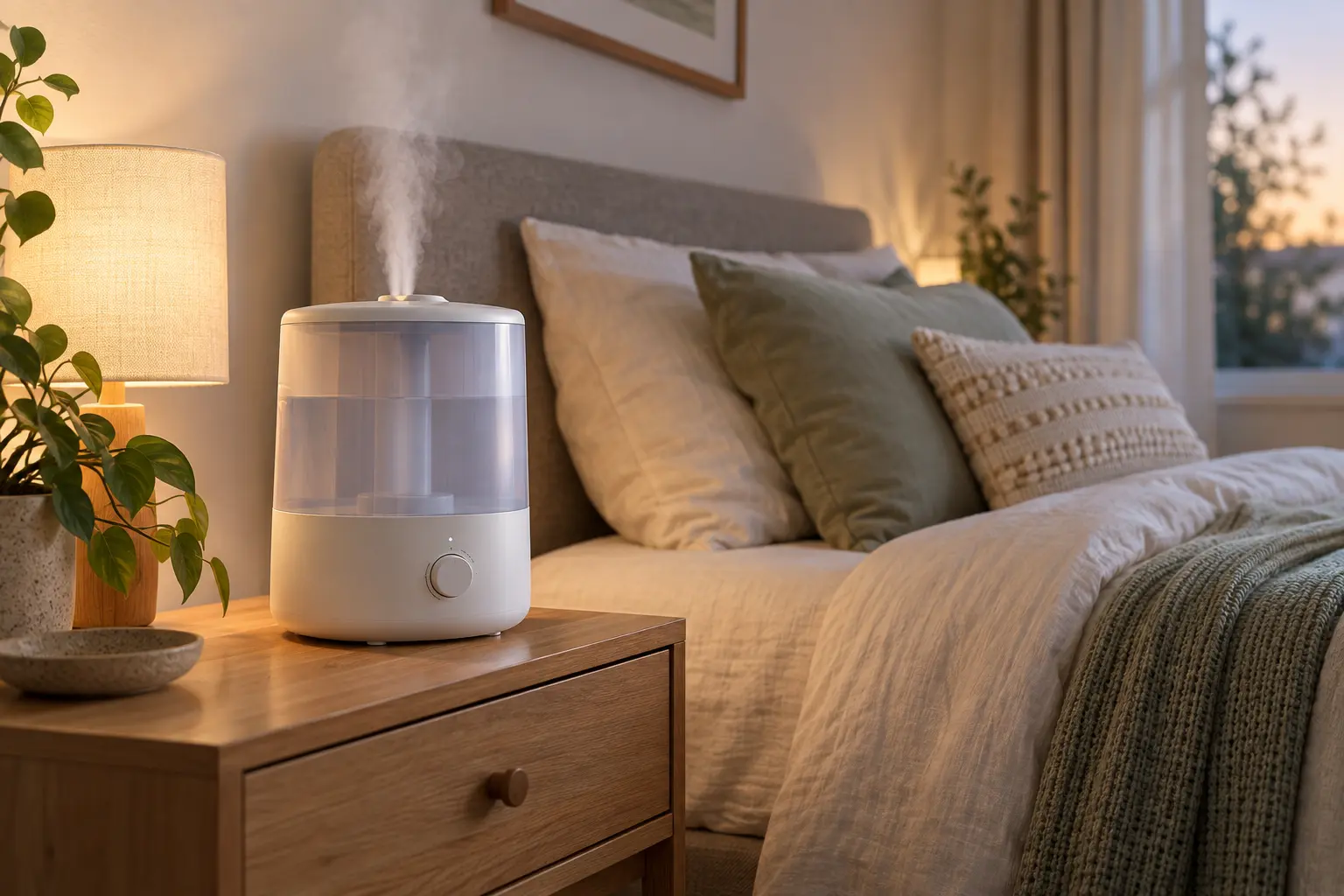
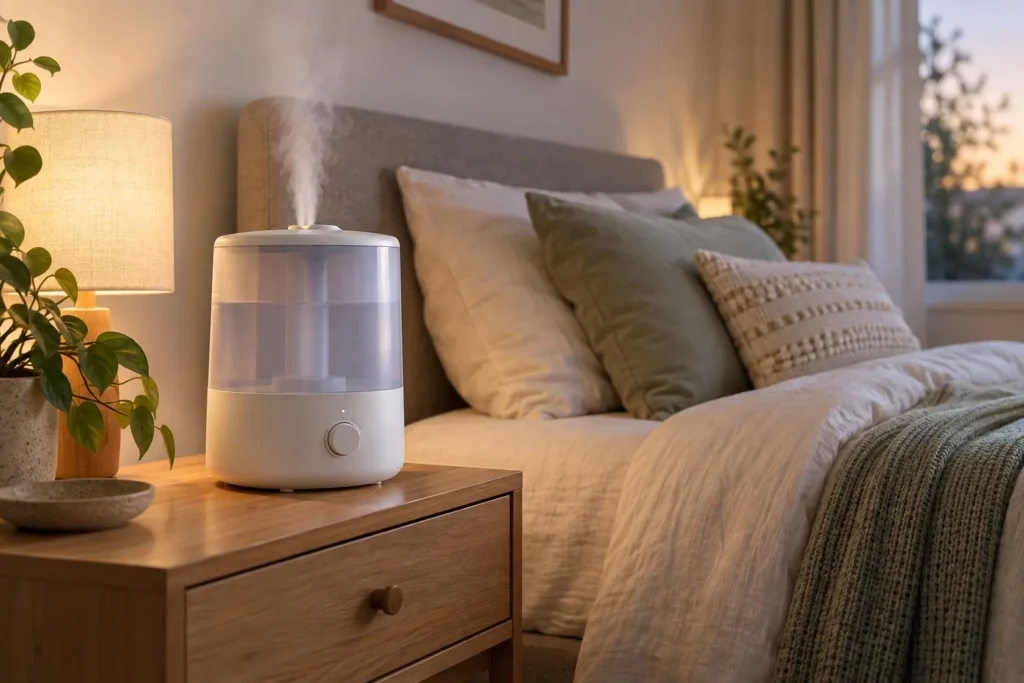
Unbranded cool-mist humidifier on a wooden nightstand in a calm bedroom
Bedroom & Comfort, Laundry & Cleaning

Best Bedroom Humidifier: What to Look For

Disclosure: This article contains affiliate links. If you buy through them, My Indoor Space may earn a commission at no extra cost to you.

Unbranded cool-mist humidifier on a wooden nightstand in a calm bedroom

A bedroom humidifier can make dry indoor air feel more comfortable, but only when the machine is correctly sized, easy to clean and used without pushing humidity too high. The best model is not the one that produces the biggest cloud of mist. It is the one you can maintain consistently and control accurately through the night.

Quick Verdict

Best choice for most bedrooms: a quiet cool-mist humidifier with a built-in humidistat, automatic shutoff, adjustable output and a tank that opens widely for cleaning.

Best value: a simple evaporative or ultrasonic model paired with a separate digital hygrometer so you can see the room’s actual relative humidity.

Upgrade worth considering: top-fill construction, dishwasher-safe parts where permitted, a reliable humidistat and an easy-to-read display that can be dimmed completely at night.

Who a Bedroom Humidifier Is Best For

  • Homes where heated winter air regularly feels uncomfortably dry.
  • People who want controlled moisture rather than simply running mist continuously.
  • Bedrooms where a hygrometer confirms that relative humidity is low.
  • Anyone willing to empty, refill and clean the tank on schedule.

Who May Want to Skip It

  • Rooms that already stay humid or show condensation on windows.
  • Anyone unlikely to clean a water tank and wetted parts regularly.
  • Bedrooms with an unresolved leak, damp carpet or visible mold.
  • People expecting a humidifier to diagnose or treat a health condition.

Start With a Hygrometer

Before buying a humidifier, measure the bedroom’s relative humidity with a small digital hygrometer. General indoor-air guidance often places comfortable home humidity around 30% to 50%, but the practical target can vary with outdoor temperature, insulation and condensation. If windows become wet or the room smells damp, reduce the setting or stop the machine.

A humidifier without a humidity reading can easily run longer than needed. A separate hygrometer is inexpensive, can be placed away from the mist stream and lets you check whether the built-in sensor is behaving realistically.

Choose the Right Humidifier Type

TypeBest forMain trade-off
Ultrasonic cool mistQuiet bedrooms and low power useMay leave mineral dust when used with hard water
EvaporativeNatural output that slows as humidity risesFan noise and replacement wick costs
Warm mistPeople who prefer a warm visible mistHot water and steam create a burn risk
Dual mistHouseholds wanting warm and cool optionsHigher price and more parts to clean
Whole-room consoleLarge rooms or connected spacesBulky for a normal bedroom

Eight Features That Matter Most

1. Room-Size Rating

Measure the bedroom floor area before shopping. Multiply length by width to get square footage. Treat advertised coverage as a starting point rather than a guarantee because ceiling height, ventilation, door position and outdoor dryness all affect performance. An oversized unit can raise humidity too quickly, while an undersized one may run constantly.

2. A Real Humidistat

A humidistat lets you choose a target and allows the machine to cycle instead of producing mist without feedback. The sensor should not sit directly in the mist path. Compare it with a separate hygrometer during the first few nights and adjust the target if the readings differ.

3. Easy Tank Access

A wide top opening makes daily emptying, wiping and refilling much easier. Check whether your hand can reach the interior surfaces and whether the tank stands securely in a sink. Narrow decorative tanks may look elegant but can be frustrating to clean thoroughly.

4. Low-Water Automatic Shutoff

The unit should stop when the tank is empty. This is especially important overnight, when you may not notice that the water has run out. A clear indicator is useful, but it should dim or turn off in sleep mode.

5. Quiet Operation

Ultrasonic models are usually quiet, although some produce faint bubbling or electronic sounds. Evaporative models contain a fan and may be more noticeable. Look beyond a single decibel claim: fan speed, water movement and button beeps can matter just as much in a quiet bedroom.

6. Adjustable Output and Mist Direction

Variable output helps you match the machine to changing weather. A rotating nozzle lets you direct mist into open air instead of toward bedding, walls or electronics. The goal is even room humidity, not a damp zone around the machine.

7. Manageable Filter and Part Costs

Evaporative humidifiers need replacement wicks, and some ultrasonic models use demineralization cartridges. Check availability and cost before buying. A low-priced machine can become expensive if it requires a proprietary part every few months.

8. Controls That Disappear at Night

Sleep mode should reduce fan speed, dim the display and silence unnecessary alerts. Physical buttons are often easier to use in the dark than a touchscreen. App control can be convenient, but it is not a substitute for simple controls on the machine.

How Large Should the Tank Be?

A bigger tank does not automatically mean better performance. It mainly means fewer refills. For a normal bedroom, choose enough capacity to cover your usual sleep period at the setting you actually need. Published runtime is commonly measured on the lowest output, so maximum-output runtime may be much shorter.

Also consider lifting weight. One litre of water weighs about one kilogram before the tank itself is added. A huge tank can be awkward to carry, turn over and fit beneath a faucet.

Ultrasonic Humidifiers and White Dust

Ultrasonic humidifiers can disperse minerals found in tap water, leaving pale dust on nearby furniture. The amount depends on the water and machine. Distilled or demineralized water may reduce it, and some models accept a demineralization cartridge. Follow the manufacturer’s water instructions rather than adding treatments or fragrances that are not approved for the tank.

Where to Place a Humidifier in a Bedroom

  1. Use a stable, level and water-resistant surface.
  2. Keep it away from the edge where it could be knocked over.
  3. Leave clearance from walls, curtains, books and electronics.
  4. Point the mist into open room air rather than at the bed.
  5. Protect wood furniture according to the manufacturer’s placement instructions.
  6. Keep the cord away from walkways and never route it beneath a rug.
  7. Follow the manual’s minimum clearance and height guidance.

If the bedroom feels crowded, first simplify the surface around the unit. The ideas in How to Organize a Bedroom Without Buying More Furniture can help you create a safer dedicated spot.

Cleaning Is Not Optional

Standing water and residue can allow microorganisms to grow. Empty leftover water, wipe accessible surfaces dry and refill with fresh water regularly. Clean and descale on the schedule and with the method specified in the manual. Unplug the base before filling or cleaning, and never submerge electrical parts.

The U.S. Consumer Product Safety Commission advises regular cleaning and warns against over-humidifying; moisture on windows or walls is a clear sign to reduce output. Its indoor-air guidance also recommends fresh water and frequent cleaning for cool-mist and ultrasonic units.

Best Value vs. Upgrade Worth Buying

Best value: a correctly sized cool-mist unit with adjustable output, low-water shutoff, a wide tank opening and a separate hygrometer. Easy maintenance is more valuable than a long list of modes.

Upgrade worth buying: a dependable built-in humidistat, top-fill tank, fully dimmable display and parts that are genuinely easy to remove and clean.

Upgrade most people can skip: voice control and elaborate mood lighting. Neither improves moisture control, tank hygiene or bedroom comfort.

Frequently Asked Questions

Should a humidifier run all night?

Only if the room needs it and humidity remains controlled. Use a humidistat or hygrometer, choose a moderate setting and stop if condensation appears. Continuous mist without measurement can make the room too damp.

Is cool mist or warm mist better for a bedroom?

Cool mist is the practical choice for most bedrooms because it avoids a hot-water and steam hazard. Warm mist may appeal to some adults, but it requires extra care and is a poor choice where children or pets could reach it.

Can a humidifier replace an air purifier?

No. A humidifier adds moisture; an air purifier filters airborne particles. They perform different jobs. If you use both, give each appliance open space and follow the placement guidance in Best Places to Put an Air Purifier.

Can essential oils go in the water tank?

Only when the manufacturer explicitly allows it and provides a dedicated tray or compartment. Oils can damage ordinary humidifier plastics, seals and ultrasonic components. Never assume an aroma diffuser and a humidifier are interchangeable.

Availability, prices and specifications change. Confirm the room-size rating, safety features, cleaning instructions, electrical certification and warranty on the retailer’s page before purchasing.

Final Answer

For most bedrooms, choose a quiet cool-mist humidifier sized for the room, with a built-in humidistat, low-water shutoff, adjustable output and a tank you can easily reach and clean. Pair it with a separate hygrometer, keep the room below the point where condensation appears and treat daily water care as part of owning the machine.

Sources and Further Reading

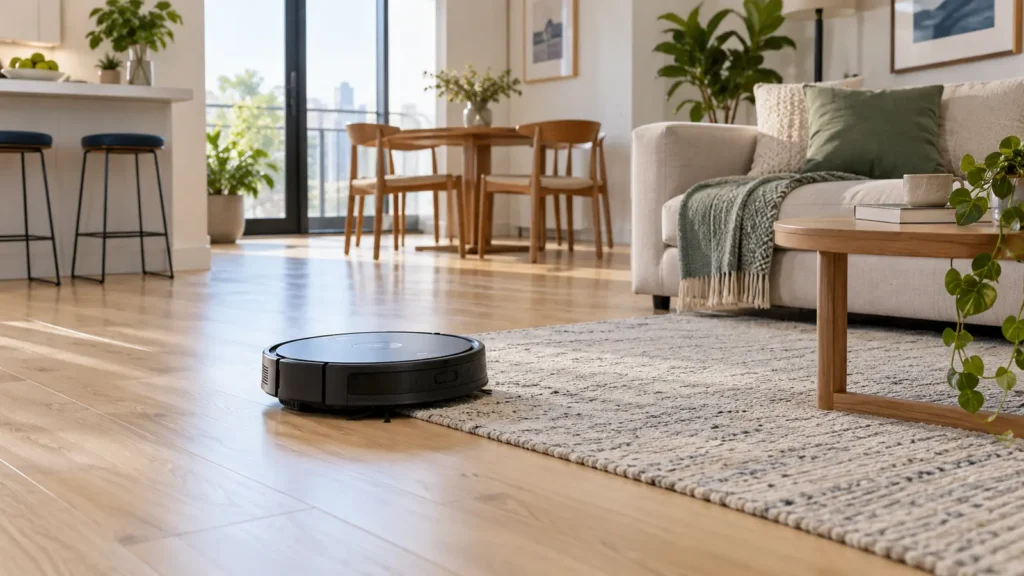
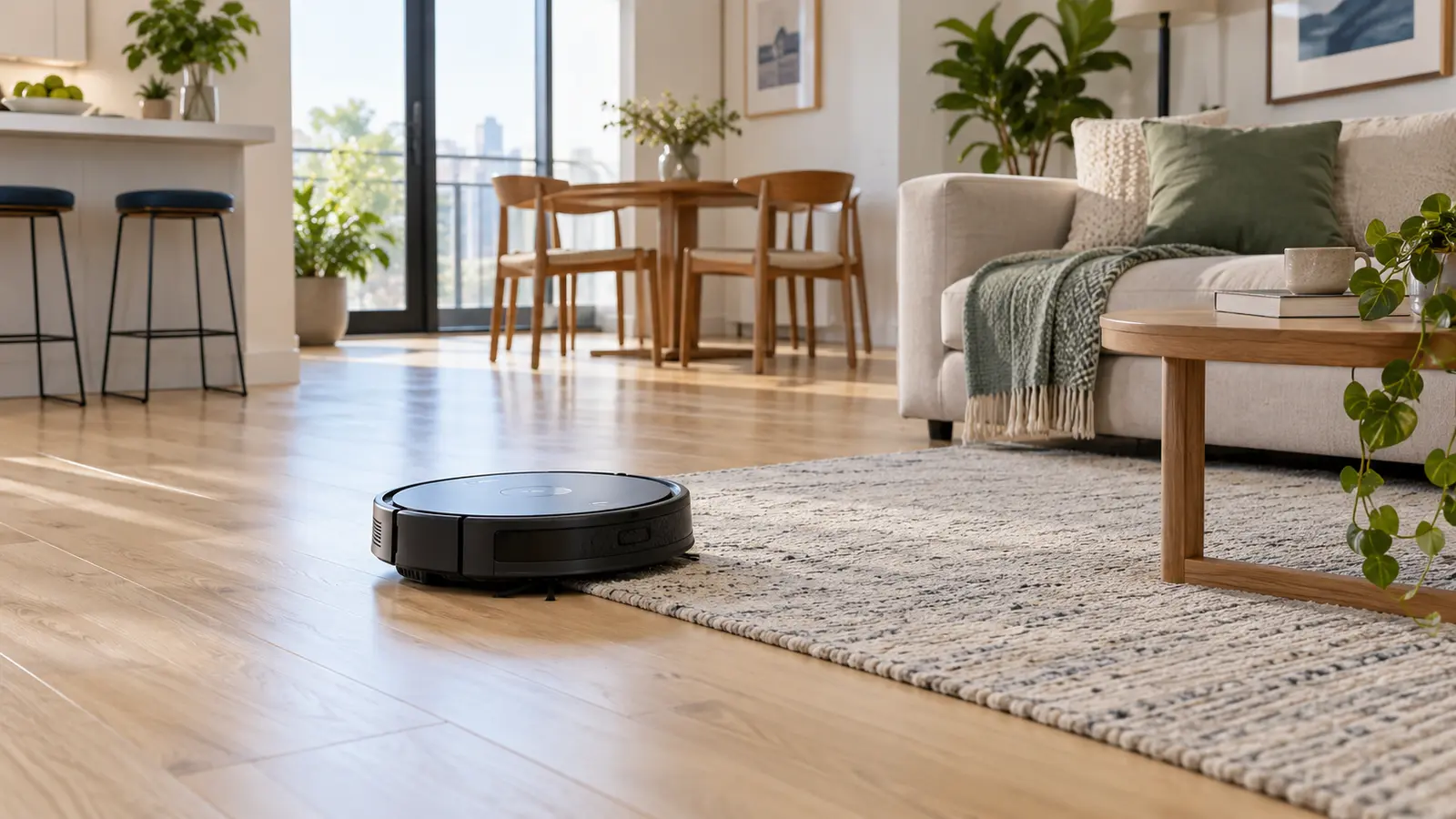
Unbranded robot vacuum moving from wood flooring onto a low-pile rug in a small apartment
Laundry & Cleaning, Smart Home

Robot Vacuum for a Small Apartment: What Actually Matters Before You Buy

Disclosure: This article contains affiliate links. If you buy through them, My Indoor Space may earn a commission at no extra cost to you.

Unbranded robot vacuum moving from wood flooring onto a low-pile rug in a small apartment

A robot vacuum can be especially useful in a small apartment because dust, crumbs and pet hair become noticeable quickly. The right model keeps open floors under control without taking up much storage space. The wrong one gets trapped, misses edges or creates more work than it saves.

Quick Verdict

For most apartments, navigation quality, compact size, replacement-part cost and reliable everyday pickup matter more than the longest feature list. Buy for your actual flooring and furniture—not the largest advertised coverage area.

Who a Robot Vacuum Is Best For

  • People who want light daily maintenance between deeper cleanings.
  • Homes where crumbs, dust or pet hair appear quickly.
  • Open layouts with clear paths beneath tables and chairs.
  • Anyone who finds frequent manual vacuuming tiring or easy to postpone.

Who May Want to Skip It

  • Rooms with many loose cords, tassels, small toys or lightweight objects on the floor.
  • Very thick rugs or tall transitions the vacuum cannot cross.
  • Furniture with clearance just low enough to trap the machine.
  • Anyone expecting a robot to replace occasional edge, stair and upholstery cleaning.

Seven Features That Actually Matter

1. Reliable Navigation

Basic bump-and-turn robots can work in a simple room, but mapping models usually clean more methodically. In an apartment filled with chair legs and narrow passages, dependable navigation prevents repeated collisions and wasted time.

2. Height and Furniture Clearance

Measure the lowest sofa, bed frame and cabinet the robot may enter. A small difference in height determines whether it cleans underneath or repeatedly wedges itself in place.

3. Performance on Your Floors

Hard-floor homes need good edge cleaning and a brush system that collects fine dust without scattering crumbs. Mixed-floor homes need smooth transitions and enough pickup for low-pile rugs. Thick carpet demands more power and may reduce battery life.

4. Pet-Hair Handling

If pets live in the home, check how easily hair can be removed from the main roller and side brush. A brush that takes thirty seconds to clean is far better than one that requires tools and patience every few days.

5. Noise

In a compact apartment, the vacuum is rarely far away. Look for adjustable power levels and schedule it when the sound will not interrupt sleep, calls or television.

6. Bin and Dock Size

A self-emptying dock is convenient, but it costs more and occupies valuable floor space. A small manually emptied dock may be the better fit when storage and open wall space are limited.

7. Replacement Parts

Before buying, check the price and availability of filters, rollers, side brushes and bags. An inexpensive vacuum becomes poor value when basic maintenance parts are hard to find.

Robot Vacuum and Mop Combos

A combination model can wipe light dust from sealed hard floors, but it is not the same as scrubbing. Look for controllable water flow, washable pads and no-mop zones if rugs share the room. Never use cleaning liquids unless the manufacturer specifically allows them.

Prepare the Apartment First

  1. Lift charging cables and blind cords off the floor.
  2. Remove socks, pet toys and small objects.
  3. Tuck rug tassels underneath or create a no-go zone.
  4. Leave enough open space around the charging dock.
  5. Run the first cleaning while you are home so you can identify trouble spots.

Best Value vs. Worthwhile Upgrade

Best value: a dependable vacuum-only model with systematic navigation, app scheduling and easy-to-buy replacement parts.

Upgrade worth considering: object avoidance, room-specific maps or a self-emptying dock when pets, frequent debris or physical limitations make daily bin emptying inconvenient.

Availability and prices change. Confirm current product details, electrical certification and warranty information on the retailer’s page before purchasing.

Final Answer

Choose the smallest dependable model that navigates your layout well, handles your flooring and has affordable replacement parts. In a small apartment, reliable daily cleaning beats oversized docks and features you will rarely use. Pair it with a simple 10-minute evening reset to keep the whole space easier to manage.

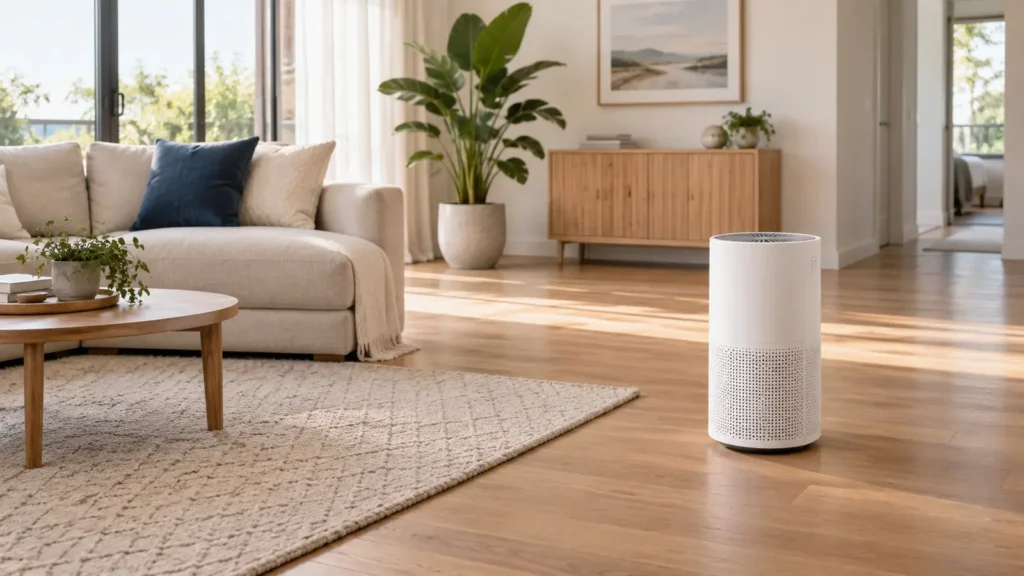
Air purifier positioned with open airflow in a bright living room
Laundry & Cleaning

Best Places to Put an Air Purifier for Cleaner Air and Quieter Sleep

Disclosure: This article contains affiliate links. If you buy through them, My Indoor Space may earn a commission at no extra cost to you.

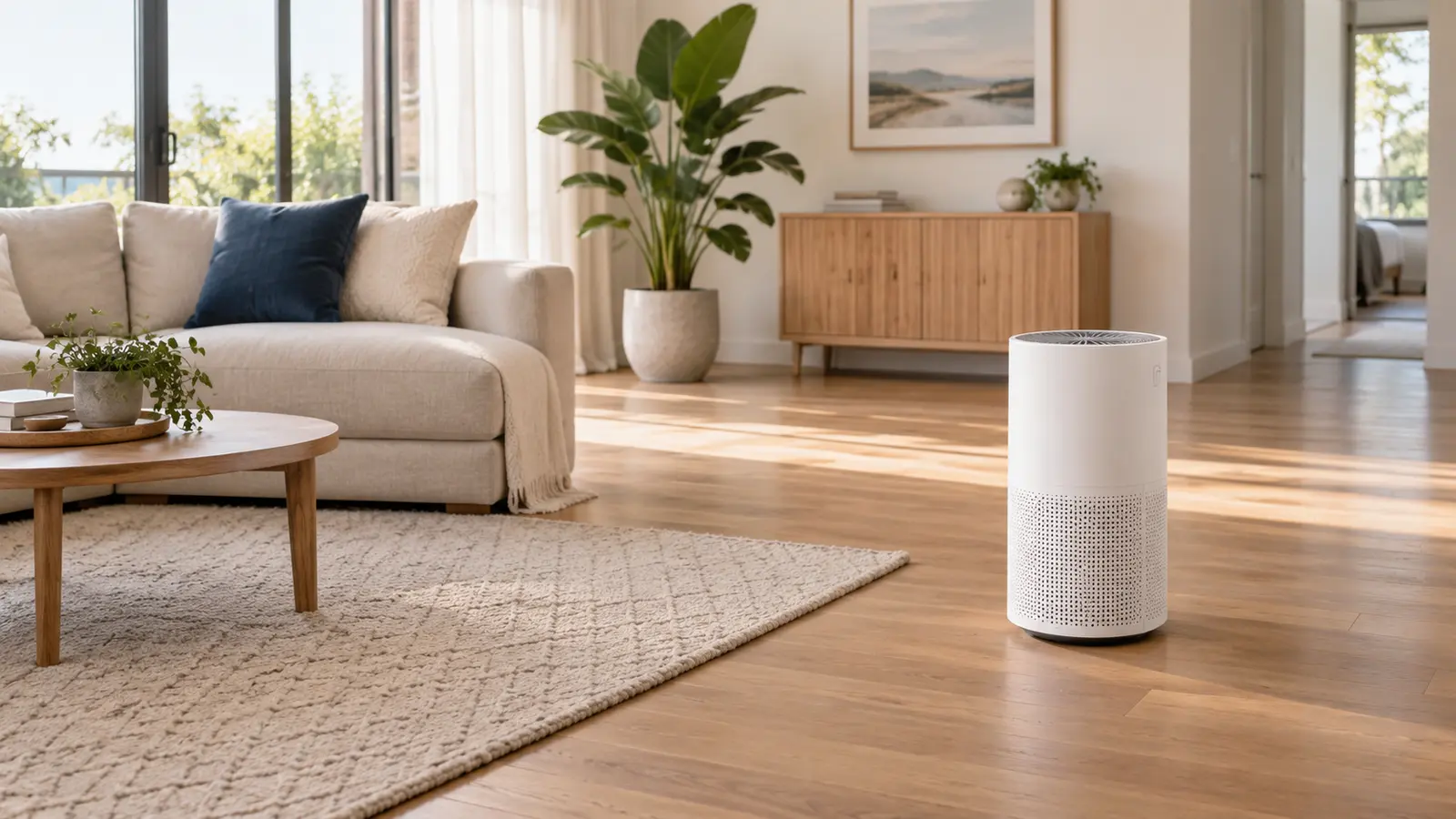
Air purifier positioned with open airflow in a bright living room

An air purifier works best where air can move freely through it. Give it open space, place it in the room where you spend the most time, and keep the intake and outlet away from walls, curtains and large furniture.

Quick Answer: Where Should an Air Purifier Go?

  • Bedroom: a few feet from the bed, with clean air directed into the room rather than straight at your face.
  • Living room: near the main seating area, but out of busy walkways.
  • Kitchen: near—but not beside—the source of cooking odours, grease, heat or steam.
  • Home office: close enough to serve your work area without creating distracting noise.

Leave Room Around the Air Intake

Most portable purifiers pull room air through vents on the front, sides or back and release filtered air from the top. If those vents are pressed against a wall or hidden behind a sofa, the unit has to work harder and may clean the room less evenly.

Start with the clearance recommended in the manual. When the manual is unavailable, an open position with several inches of space on every intake side is a sensible starting point. Never cover the top outlet.

Use It in the Room You Actually Live In

A single portable purifier cannot clean an entire home equally well through closed doors and long hallways. Move it to the room where it matters most, or use separate units in the bedroom and main living area.

Bedroom Placement for Quieter Sleep

Place the purifier where the display light and fan noise will not disturb you. A low or sleep setting can be more comfortable overnight, while a higher setting earlier in the evening can refresh the room before bed.

Five Placement Mistakes to Avoid

  1. Hiding it behind furniture.
  2. Putting it in a tight corner.
  3. Setting it beside an open window.
  4. Placing it near sinks, showers, stovetops or radiators.
  5. Using a purifier that is too small for the room.

What to Look for Before You Buy

  • A room-coverage rating that matches your space.
  • A true particulate filter and, if odours matter, activated carbon.
  • Replacement filters that are easy to find and reasonably priced.
  • A noise level you can tolerate where you plan to place it.
  • Simple controls, a timer or automatic mode if you will use them.
  • A washable or vacuumable pre-filter for larger dust and hair.

Bottom Line

The best location is usually an open, stable spot in the room you use most. Keep the vents clear and choose a purifier properly sized for the room. Also see the most overlooked way to improve indoor air quality.

Bright organized laundry room with practical storage and warm details
Cozy Living, Laundry & Cleaning

How to Turn Your Laundry Room Into a More Pleasant Space

Laundry may never become your favorite chore, but your laundry room doesn’t have to feel cold, cluttered, or uninspiring. With a few simple upgrades, you can create a cleaner, brighter, and more enjoyable space that makes laundry day a little easier.

Here are a few ideas to get started.

Improve the Lighting

A bright laundry room feels larger and more welcoming. If your space has poor lighting, consider replacing old bulbs with bright LED lights or adding an attractive ceiling fixture.

Good lighting also makes it easier to sort clothes and spot stains.

Add Storage

Laundry supplies can quickly take over the room.

Install floating shelves, cabinets, or rolling storage carts to keep detergent, dryer sheets, stain removers, and cleaning products organized and within easy reach.

Create a Folding Area

Even a small countertop above front-loading machines or a folding table can make laundry much more convenient.

Having a dedicated space to fold clothes helps keep wrinkles to a minimum and makes the job feel more organized.

Make It Feel More Inviting

Add a few decorative touches to make the room feel less like a utility space.

Consider a washable runner rug, a small plant, framed wall art, or decorative storage baskets. These simple additions can make a surprising difference.

Stay Organized

Laundry rooms often become catch-all spaces.

Use labeled baskets or hampers to separate lights, darks, towels, and delicate items. Keeping everything organized makes laundry day faster and less stressful.

A few thoughtful improvements can completely change how your laundry room looks and feels.


🛒 Buy on Amazon USA

Everything you need for a better laundry room:


Final Thoughts

Your laundry room works hard every week, so it deserves a little attention too. By improving the lighting, adding smart storage, and including a few decorative touches, you can turn an ordinary utility room into a space that’s cleaner, more organized, and much more enjoyable to use.


🍁 Buy on Amazon Canada

Everything you need for a better laundry room:

  • Rolling Laundry Cart – Check Price on Amazon Canada
  • Floating Wall Shelves – Check Price on Amazon Canada
  • Decorative Storage Baskets – Check Price on Amazon Canada
  • Washable Runner Rug – Check Price on Amazon Canada
  • Laundry Hamper with Sorter Bags – Check Price on Amazon Canada

Clean home interior illustrating better indoor air quality
Cozy Living, Laundry & Cleaning

The Most Overlooked Way to Improve Indoor Air Quality

When people think about improving indoor air quality, they often focus on expensive air purifiers, houseplants, or special filters. While those can certainly help, one of the most overlooked ways to improve the air inside your home is much simpler: regularly cleaning and replacing your HVAC and furnace filters.

It’s a small task that many homeowners forget, yet it can have a noticeable impact on air quality, dust levels, and even the efficiency of your heating and cooling system.

Why Filters Matter

Your furnace or HVAC filter traps dust, pet hair, pollen, and other airborne particles before they circulate through your home. Over time, these filters become clogged, making it harder for air to flow properly.

A clean filter can help:

  • Reduce dust throughout the home
  • Improve airflow
  • Capture airborne particles
  • Help your HVAC system run more efficiently
  • Improve overall indoor comfort

Many experts recommend checking filters monthly and replacing them every one to three months depending on your home and usage.

Buy on Amazon USA

Filtrete MERV 11 Air Filters

Designed to capture dust, pollen, pet dander, and other airborne particles while maintaining good airflow.

Honeywell Home Air Purifier

A popular option for bedrooms, living rooms, and home offices.

Levoit Core 300 Air Purifier

Compact, quiet, and ideal for improving air quality in smaller spaces.

Don’t Forget Vent Cleaning

Air vents and returns can collect dust over time. A quick vacuuming every few weeks helps prevent buildup and keeps air moving more efficiently throughout the home.

This simple maintenance task often gets overlooked but can make a noticeable difference.

Reduce Everyday Dust Sources

Small habits can also improve indoor air quality:

  • Vacuum regularly
  • Wash bedding often
  • Keep entryways clean
  • Remove shoes indoors
  • Dust furniture with microfiber cloths
  • Control pet hair buildup

Together, these habits can significantly reduce airborne dust and allergens.

Final Thoughts

Improving indoor air quality doesn’t always require expensive equipment. One of the simplest and most effective steps is checking and replacing your furnace or HVAC filter regularly. Combined with basic cleaning habits, it can help create a fresher, cleaner, and more comfortable home environment.

Sometimes the most effective home improvements are the ones hiding in plain sight.

Buy on Amazon Canada

Filtrete MERV 11 Air Filters

A simple upgrade that helps reduce dust and airborne particles throughout the home.

Honeywell Home Air Purifier

A trusted option for improving air quality in living spaces and bedrooms.

Levoit Core 300 Air Purifier

Compact, affordable, and effective for everyday air purification.

A clean filter today can mean cleaner air, less dust, and a more comfortable home tomorrow. 🌿🏡✨

Tidy living room after a quick evening reset
Cozy Living, Laundry & Cleaning

The 10-Minute Evening Reset That Makes Your Home Feel Cleaner

Most homes don’t get messy overnight. Clutter builds up a little at a time until it suddenly feels overwhelming.

One simple habit can change that: a 10-minute evening reset.

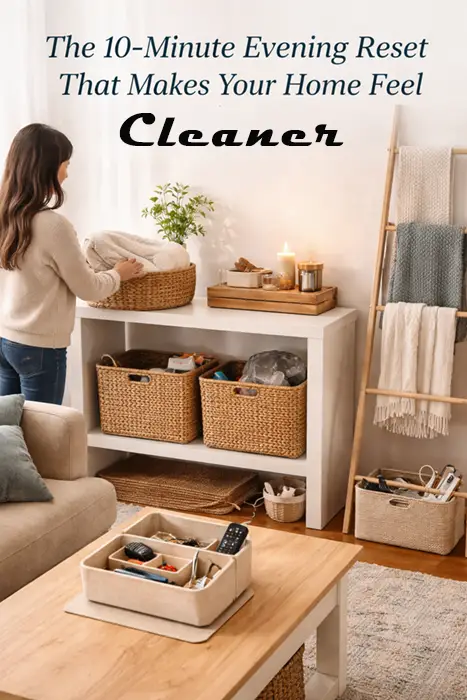
Before heading to bed, spend a few minutes putting things back where they belong. Straighten the living room, clear kitchen counters, put shoes away, and prepare for the next day. It doesn’t have to be perfect. The goal is simply to wake up to a home that feels calm and organized.

This small routine can reduce stress, save time in the morning, and make your space feel cleaner every single day.


📦 Buy on Amazon USA


🕯️ Final Thoughts

A cleaner home isn’t always about cleaning more. Often, it’s about spending a few minutes each day preventing clutter from piling up. Ten minutes tonight can make tomorrow feel a whole lot better.


🍁 Buy on Amazon Canada

Cozy Living, Laundry & Cleaning

The 10-Minute Evening Reset That Makes Your Home Feel Instantly Cleaner

There’s a quiet moment that happens late in the evening when the day finally slows down. The dishes are mostly done, the lights are softer, and the house settles into that calm nighttime feeling. I started noticing that if I spent just a few minutes resetting a few small things around my space before bed, the whole place felt different the next morning. Not perfect. Not spotless. Just calmer and easier to walk into.

For a long time, clutter used to sneak up on me during the week. A charging cable here, a blanket tossed on the couch, a couple of small items left on the desk. None of it was a big problem by itself, but together it created that subtle feeling that the room was always a little messy. I eventually realized the trick wasn’t cleaning more — it was simply resetting the space before the night ended.

Now my evening reset takes about ten minutes. I start with the obvious things first. Blankets go back onto the ladder beside the couch instead of staying in a loose pile. Small items on the desk get placed back into a tray so the surface clears out again. Even those tiny adjustments immediately change how the room feels.

The next thing I deal with is cables. Charging cords have a funny way of spreading across desks and side tables throughout the day. A small cord organizer keeps them gathered in one place so they’re easy to find without looking messy. It’s one of those tiny changes that quietly removes visual clutter.

Storage baskets have also become part of my nightly reset routine. A soft basket beside the couch is perfect for things that tend to wander during the day — magazines, a tablet, sometimes even a throw pillow. Instead of trying to find a perfect place for everything at night, the basket simply gathers it so the room looks clean again.

What surprised me most is how much better the space feels the next morning. Walking into a room that looks reset instead of cluttered changes the mood of the whole start of the day. I didn’t expect something this simple to make my home feel calmer. But those ten quiet minutes before bed have become one of the easiest habits to keep.

📦 Buy on Amazon USA

Woven Storage Basket for Living Rooms

Cable Organizer Box for Desk and Charging Stations

Minimalist Desk Organizer Tray

Decorative Wooden Blanket Ladder


🕯️ Final Thoughts

A clean home doesn’t always come from big weekend cleaning sessions. Sometimes it comes from small routines that quietly keep things from piling up in the first place. That’s what the evening reset does. It gently returns your space to neutral so the next day begins without yesterday’s clutter still sitting around.

What I like most about this routine is that it doesn’t feel like work. Ten minutes is short enough that it never becomes overwhelming, and the tools that help with it — baskets, trays, organizers — make the process feel natural instead of forced.

Over time, these little habits shape how a home feels. Not perfectly organized, but calm and easy to live in. And sometimes that’s exactly what a space needs.

📦 Buy on Amazon Canada

Woven Storage Basket for Living Rooms

Cable Organizer Box for Desk and Charging Stations

Minimalist Desk Organizer Tray

Decorative Wooden Blanket Ladder

Cozy Living, Laundry & Cleaning

The 15-Minute Living Room Reset Ritual

There are days when my living room isn’t messy — it just feels off. The light is flat. The air feels stale. The couch cushions look tired. Nothing is technically wrong, but the room doesn’t invite me to sit down. That’s when I don’t clean it. I reset it.

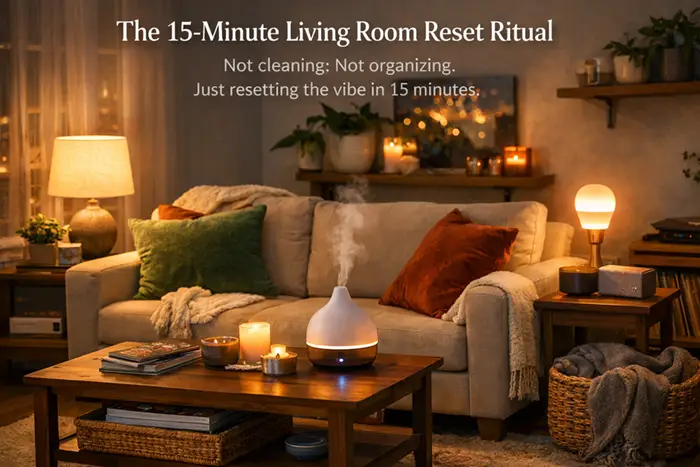
This ritual isn’t about organizing bins or wiping surfaces. It’s about shifting the atmosphere in small, intentional ways. I start with lighting. I turn off the harsh overhead and switch on a table lamp instead. Sometimes I adjust the brightness lower than usual. The room instantly feels softer. The corners feel warmer. It’s the same furniture — just a different mood.

Then I change the scent. Not heavy, not overwhelming. Just something subtle that makes the air feel intentional. A diffuser running quietly in the background does more than I expected the first time I tried it. It makes the room feel like it was prepared — not just occupied.

I swap the cushions next. Nothing dramatic. Sometimes I flip them. Sometimes I change one cover. Occasionally I bring in a throw blanket that wasn’t there before. Texture changes everything. The couch stops looking like a waiting area and starts looking like a place to unwind.

And then the background music. Not loud. Just enough to shift the silence. Instrumental, soft jazz, low ambient — something that fills the space without asking for attention. The room stops feeling empty and starts feeling lived in.

I didn’t expect something this simple to make my home feel calmer. But that’s what surprised me. It’s not about cleaning the room — it’s about recalibrating it. Fifteen minutes is enough to change how the space feels. And when the space feels better, I do too.


📦 Buy on Amazon USA

Table Lamp (Soft Warm Light)

Smart LED Bulbs (Adjustable Warmth & Brightness)

Essential Oil Diffuser

Textured Throw Blanket

Low-Profile Storage Baskets


🕯️ Final Thoughts

What I like about this reset ritual is that it doesn’t demand effort or perfection. It doesn’t ask me to deep clean or reorganize my life. It just asks me to notice the room and adjust it slightly. That feels manageable. And on busy days, manageable matters.

Small environmental shifts can change your mood faster than big overhauls. Softer lighting lowers tension. A subtle scent creates presence. A blanket invites stillness. These aren’t luxury upgrades — they’re comfort adjustments.

The living room doesn’t need to be perfect. It just needs to feel like a place you want to be. And sometimes, fifteen quiet minutes is all it takes to make that happen.


📦 Buy on Amazon Canada

Table Lamp (Soft Warm Light)

Smart LED Bulbs (Adjustable Warmth & Brightness)

Essential Oil Diffuser

Textured Throw Blanket

Low-Profile Storage Baskets

Scroll to Top