
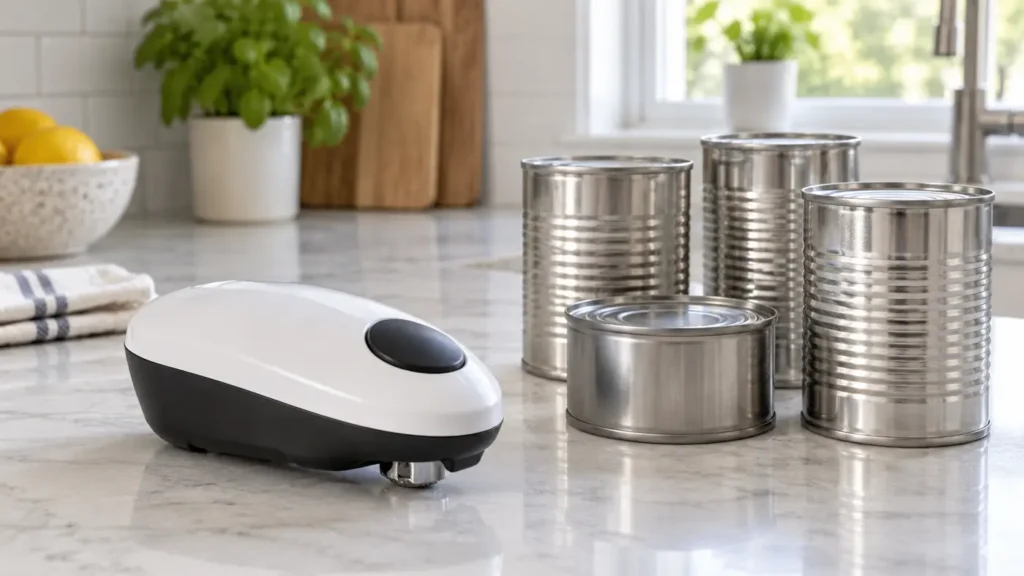
Best Electric Can Opener for Easy One-Touch Use
Disclosure: As an Amazon Associate, My Indoor Space may earn from qualifying purchases made through links in this guide, at no extra cost to you.
An electric can opener can remove the repetitive twisting and gripping required by a manual model. The best option is easy to position, starts and stops predictably, handles the can sizes you use, and does not turn cleanup into a new problem.
One-touch designs include countertop openers that rotate the can vertically and compact battery models that travel around the lid. Each style has tradeoffs in stability, storage, power, and the type of cut it makes.
Quick verdict
Choose a stable countertop model for frequent use and varied can sizes, or a compact battery opener when storage and portability matter most. Look for clear controls, a dependable magnet or lid lift, easy access for cleaning, and a manual release for jams.
What to compare first
| Feature | Why it matters | Practical target |
|---|---|---|
| Opener type | Changes stability and storage | Countertop or compact travel-around |
| Cut style | Affects edge and lid reuse | Top cut or side cut |
| Release | Helps with jams | Accessible manual release |
| Cleaning | Prevents residue buildup | Removable washable cutter |
Choose countertop or compact operation
Countertop models usually hold the can against a cutting assembly while a motor turns it. They are convenient for frequent use and often handle a wider range of standard cans, but they require dedicated counter or cabinet space.
Compact openers sit on the lid and move around it. They store easily and may be useful for someone who cannot comfortably align a heavy can with a tall machine. Check the allowed can shapes and diameters because irregular or very large cans may not work.
Understand top-cut and side-cut designs
Traditional openers cut through the lid near the inner rim, which can leave a sharp edge and bring the cutting wheel close to food. Side-cut or smooth-edge models separate the lid at the seam, often creating a less sharp edge.
No cut is guaranteed harmless. Handle lids carefully, keep fingers away from the cutting mechanism, and discard damaged or swollen cans without opening or tasting the contents.
Look for simple, predictable controls
A true one-touch design should begin with a large, obvious control and stop automatically or with an equally clear second action. Tiny switches or multi-step alignment can undermine the convenience.
Check how a jam is released before purchase. A manual release lever, reverse function, or accessible battery compartment can help, but always unplug the unit or follow the manufacturer’s safety directions before touching the cutter.
Match the opener to your usual cans
Review maximum can height, diameter, weight, and shape. Tall countertop openers need enough clearance, while small travel-around units may struggle with heavy, dented, rimless, or non-round containers.
If you open only a few standard cans a month, a compact unit may be sufficient. For frequent cooking, prioritize motor consistency, a broad stable base, and a cord arrangement that will not pull the machine toward the counter edge.
Check power and battery requirements
Corded openers provide consistent power but need a nearby outlet. Battery-operated models reduce cord clutter, yet weak batteries can cause slow cutting or stalls. Rechargeable versions avoid disposable batteries but must be kept charged.
Confirm battery type, expected runtime, charging connector, and whether the device can be opened manually if power fails. Never mix old and new disposable batteries.
Make cleaning easy
Food residue can collect around the cutter and magnet. A removable cutting assembly is easier to clean than a fixed mechanism, provided it locks back into place securely after drying.
Do not immerse a motorized opener unless the manufacturer explicitly allows it. Wipe the body with a damp cloth, wash removable parts as directed, and let every component dry fully before reassembly.
Prioritize stability and safe placement
A wide non-slip base helps a countertop opener resist tipping. Set it on a dry, level surface with the cord away from burners, sinks, and walkways. Support unusually heavy cans rather than letting them hang from the mechanism.
Store compact units so the start button cannot be pressed accidentally. Keep the opener and removed lids away from children, and inspect the cutter for damage before use.
Common buying mistakes
- Assuming every opener works with oversized, rimless, or non-round cans.
- Choosing a model with no clear jam-release method.
- Ignoring the cleaning instructions for the blade and magnet.
- Letting a heavy can hang unsupported from a small countertop unit.
- Handling a cut lid as if it cannot be sharp.
Frequently asked questions
Do electric can openers leave sharp edges?
It depends on the cutting design. Side-cut models often produce a smoother edge, while top-cut designs can leave a sharper rim. Handle every lid carefully.
Are one-touch openers suitable for limited grip strength?
They may reduce twisting and squeezing, but alignment, lifting, and cleaning still matter. Check control size and weight, and consider professional guidance for specific mobility needs.
Can an electric opener handle large cans?
Only if the manufacturer lists the can’s size and weight as supported. Tall or heavy cans may need a full-height countertop model and hand support during use.
How should I clean the cutter?
Unplug the opener or remove batteries, detach the cutter if designed to be removable, and follow the manual. Do not immerse the motor housing.
What should I do if the opener jams?
Stop the motor and use the model’s specified release or reverse procedure. Do not pull the can toward the exposed blade or insert fingers into the mechanism.
Who should buy it—and who should skip it
Buy it if: grip strength, wrist comfort, or frequent can opening makes a manual opener frustrating.
Skip it if: you rarely open cans or already have a manual opener that is easy and comfortable to use.
Best value
A stable one-touch countertop opener with simple controls and easy blade cleanup is the best value for most kitchens.
When the upgrade is worth it
Pay more for better stability, easier release, cleaner edge handling, and dependable operation with common can sizes. Extra styling is not a meaningful upgrade.
Final answer
The best one-touch electric can opener combines low-effort operation with stable positioning, a clear release method, and easy cleaning. Pick the format that matches your storage and can sizes, then treat the cutter and removed lid with the same care you would use with any sharp kitchen tool.
For related low-effort choices, read our ergonomic kitchen tools guide and food storage container comparison.