Kitchen & Dining

Practical ideas and products for cooking, dining and everyday kitchen life.

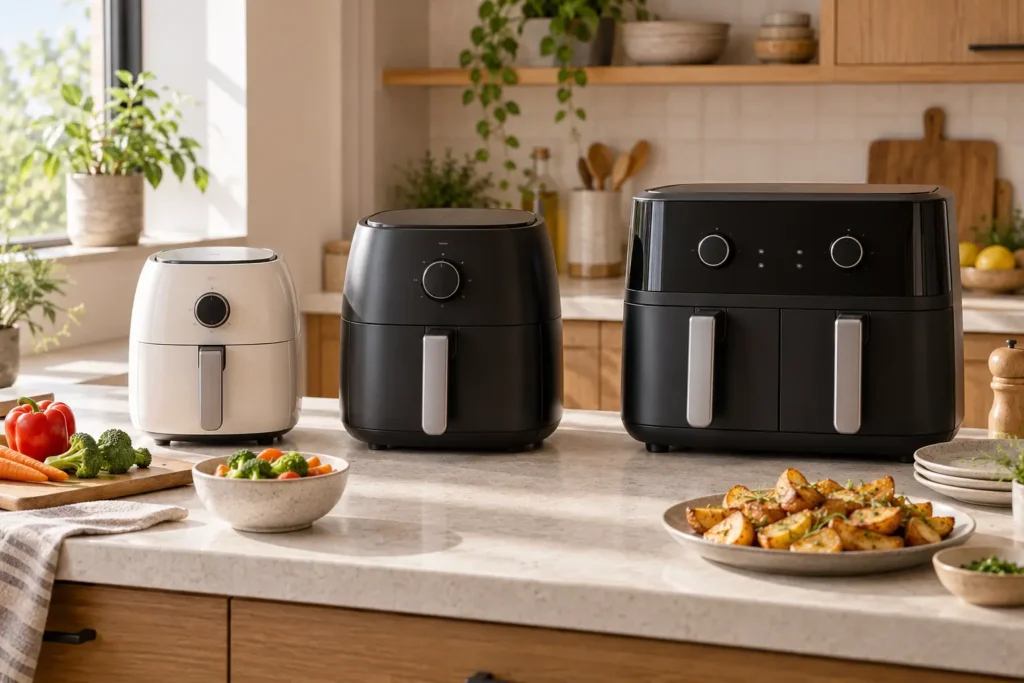
Three unbranded air fryers in compact, medium, and dual-basket sizes on a kitchen counter
Kitchen & Dining

What Size Air Fryer Do I Need?

Disclosure: This post contains affiliate links. If you buy through one of our links, we may earn a commission at no extra cost to you. Capacity labels are not standardized, so always compare basket dimensions and exterior measurements—not quarts alone.

The most common air-fryer mistake is buying by household size without considering what you actually cook. A compact basket may handle one person’s vegetables beautifully but require several batches for two chicken breasts. A large dual-basket model can cook a full dinner, yet take up more counter and storage space than a small kitchen can comfortably spare.

This air fryer size guide translates the usual capacity ranges into real kitchen decisions for one, two, or four people. The goal is not the biggest appliance you can afford. It is the smallest one that cooks your normal meal in a useful number of batches.

Quick answer

Household Useful starting range Best for
1 person 2–4 qt Snacks, vegetables, reheating, one main portion
2 people 4–6 qt Two portions, a few chicken pieces, shared sides
3–4 people 6–8 qt or dual basket Family portions, larger proteins, two foods at once
4+ or frequent entertaining 8+ qt, dual basket, or oven style Larger batches and multi-item meals

These ranges are starting points, not guarantees. A wide 5-quart basket may hold more food in a single layer than a tall 6-quart basket. Interior shape is often more important than the number printed on the box.

The rule that matters most: food needs surface area

Air fryers move hot air around food. For browning and crisping, pieces generally perform best with some room between them. A deep basket can advertise impressive volume while offering limited cooking surface. If your favorite foods are chicken cutlets, salmon fillets, or roasted vegetables, look for a wide, square basket.

Think in “single-layer servings” rather than quarts. Before buying, check the basket’s usable width and length and compare them with the food you cook most often. Product photos can be misleading, so look for published interior dimensions or review images with familiar foods.

Best air fryer size for one person

A 2- to 4-quart model is usually the practical range for one person. The smaller end works well for snacks, reheating leftovers, a portion of vegetables, or one small protein. Moving closer to 4 quarts gives you room to cook a main and side in one batch or prepare two portions for planned leftovers.

Choose 2–3 quarts if:

  • Counter and cabinet space are extremely limited
  • You mainly reheat pizza, fries, or small portions
  • You are comfortable cooking one component at a time
  • Low weight and easy storage matter most

Choose 3–4 quarts if:

  • You want a little breathing room around food
  • You meal-prep two servings at once
  • You regularly cook a protein plus vegetables
  • You would rather avoid replacing an undersized model later

Best air fryer size for two people

For two adults, 4 to 6 quarts is the most flexible range. A wide 5- or 6-quart basket can often accommodate two modest portions without stacking. This is also a useful size for a couple who cooks once and saves leftovers.

Do not assume a larger capacity always means a much larger footprint. Some models gain volume by becoming taller; others grow wider. For countertop use, measure the appliance width, depth, and height, then add the manufacturer’s required clearance for ventilation.

A single basket works best when:

  • Both people eat the same meal
  • Foods use similar temperatures and timing
  • You value one large cooking surface
  • You want simpler cleaning and storage

A dual basket works best when:

  • You often cook a main and side at different settings
  • Household members prefer different foods
  • You use sync-finish features regularly
  • You have enough counter depth and width

Best air fryer size for four people

Start around 6 to 8 quarts, then judge the basket layout. A family that cooks wings or vegetables may benefit from one wide basket. A family that wants chicken in one zone and potatoes in another may prefer a dual-basket model.

For four full portions, even a large basket may require batching—especially when crispness matters. An oven-style air fryer offers multiple racks and more visual capacity, but results can vary by rack position and the appliance is more involved to clean. Choose it for flexibility, not because it automatically cooks every food better.

Basket, dual-basket, or oven style?

Style Strengths Tradeoffs
Single basket Fast, simple, compact, easy to shake One temperature; may require batches
Dual basket Two foods, separate settings, synchronized finish Wider footprint; each zone may be narrow
Flexible divider One large zone or two smaller zones More parts; verify usable area in both modes
Oven style Multiple racks, toast and bake functions, larger flat foods More cleaning; rack position may affect browning

Measure your kitchen before buying

Write down four measurements:

  1. Counter footprint: the appliance’s width and depth.
  2. Operating clearance: the free space required around and above it.
  3. Drawer clearance: the extra depth needed to pull the basket out fully.
  4. Storage opening: cabinet or pantry height, including the handle and cord.

Do not operate an air fryer inside a closed cabinet or directly under a surface that conflicts with the manual’s clearance requirements. Hot exhaust needs a safe path away from walls, cabinets, curtains, paper, and other heat-sensitive materials.

Capacity labels can be confusing

Depending on the market and manufacturer, capacity may be listed in quarts, liters, pounds of food, or an example such as “fits a whole chicken.” These descriptions are not directly interchangeable. A claimed chicken size does not tell you how well vegetables spread out, and total volume does not reveal usable basket area.

When comparing two models, prioritize:

  • Usable basket width and length
  • Exterior footprint and open-drawer depth
  • Whether the insert is easy to lift and clean
  • Replacement basket, tray, and accessory availability
  • Warranty and return window

Features worth paying for

  • A useful temperature range: helpful for reheating, roasting, and lower-temperature cooking.
  • Simple controls: a clear time and temperature adjustment is more valuable than dozens of presets.
  • Dishwasher-safe removable parts: useful if the material and your dishwasher instructions allow it.
  • Easy-to-grip basket: especially important when hot and loaded.
  • Dual-zone sync: worthwhile only if you routinely cook two different foods.
  • Accessible replacement parts: extends the appliance’s useful life.

Features you may not need

  • Wi-Fi controls for a task that still requires hands-on food loading
  • Many one-touch presets that simply select time and temperature
  • A viewing window if it adds cleaning work you dislike
  • A very high capacity when you mostly cook one portion
  • A large accessory kit before you know which accessories you will use

Food-safety basics

An air fryer is a small convection oven, not a guarantee of doneness. Cooking time varies with food thickness, starting temperature, load size, and appliance design. Use a food thermometer in the thickest part of meat or poultry and follow current safe-temperature guidance from FoodSafety.gov.

Avoid overfilling the basket, keep raw foods separate from ready-to-eat foods during preparation, and clean removable parts after greasy or raw-meat cooking. Let the appliance cool before deep cleaning and follow the manual for any nonstick surface.

Common sizing mistakes

  • Buying for rare parties: a daily appliance should fit daily life; occasional extra batches may be easier than storing an oversized unit.
  • Ignoring basket shape: wide and square often beats narrow and tall.
  • Forgetting open-drawer depth: the appliance may fit the counter but block a walkway in use.
  • Assuming dual baskets double convenience: two narrow zones can limit larger foods.
  • Counting servings from marketing alone: appetites and recipes vary.

A simple decision method

  1. List the three foods you expect to cook most often.
  2. Estimate how many portions you want per batch.
  3. Decide whether those foods need one large surface or two separate zones.
  4. Measure the permanent counter or storage space.
  5. Choose the smallest model that fits the food in a useful arrangement.

If your counters already feel crowded, apply the layout ideas in The Small-Kitchen Habits That Keep Counters Looking Clean before committing to a large appliance.

Frequently asked questions

Is a 4-quart air fryer big enough for two people?

It can be, especially for smaller portions or foods that do not need much surface area. A wider 5- or 6-quart basket offers more flexibility and may reduce batching.

What size air fryer fits a whole chicken?

It depends on both the chicken and the basket’s internal dimensions. Check the manufacturer’s maximum food-size guidance and ensure the chicken does not touch the heating element. Verify doneness with a thermometer.

Does a larger air fryer take longer to cook?

Not necessarily. Food load, airflow, power, preheating, and basket shape all affect time. Follow the recipe as a starting point and check food early.

Is a dual-basket air fryer better for a family?

It is better when you regularly need different temperatures or times. One large basket may be better for a single large batch such as vegetables, wings, or cutlets.

Can I keep an air fryer in a cabinet?

You can store a cool, unplugged appliance in a cabinet if it fits safely. Operate it only in a location that meets the manual’s ventilation and clearance instructions.

Shop air fryers by size

Use the capacity range as a filter, then compare the actual basket dimensions, exterior measurements, clearance instructions, and included parts.

Shop Amazon USA
Shop Amazon Canada

Final answer

For one person, start at 2 to 4 quarts; for two people, 4 to 6 quarts; and for three or four people, 6 to 8 quarts or a dual-basket model. Then override that rule if your favorite foods need more flat cooking area. Basket dimensions, counter footprint, and the number of batches you will tolerate matter more than the capacity label alone.

For a calmer cooking space, continue with The No-Renovation Kitchen Upgrade.
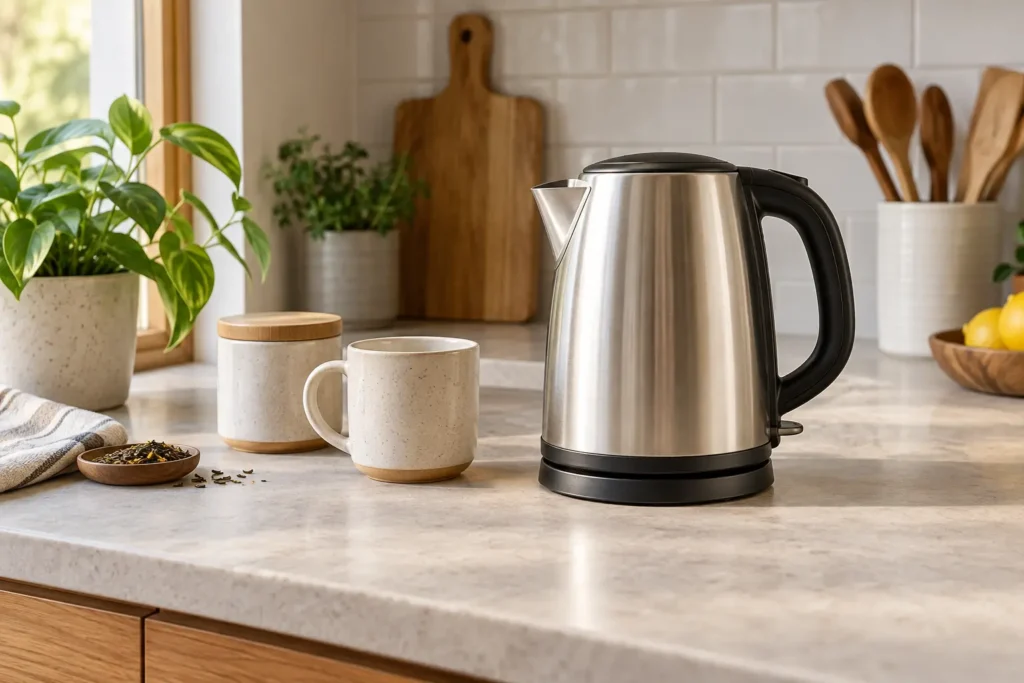
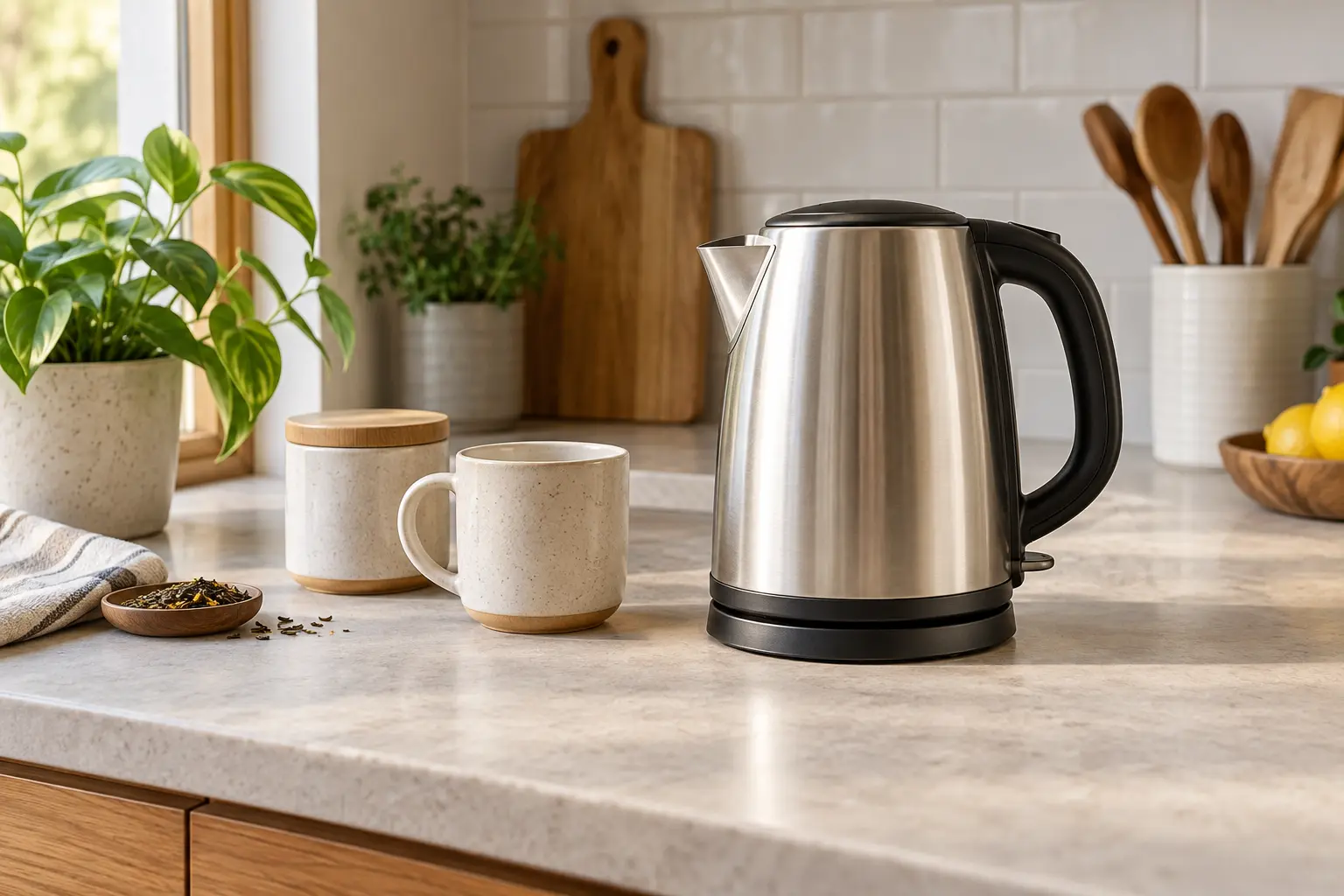
Unbranded stainless steel electric kettle on a bright apartment kitchen counter
Kitchen & Dining

Best Electric Kettle: 7 Features to Look For

Disclosure: This article contains affiliate links. If you buy through them, My Indoor Space may earn a commission at no extra cost to you.

Unbranded stainless steel electric kettle on a bright apartment kitchen counter

The best electric kettle is not automatically the most expensive one. For most kitchens, a dependable kettle with automatic shutoff, boil-dry protection, a comfortable handle and an easy-to-clean interior delivers better everyday value than a complicated model filled with settings you may never use.

Quick Verdict

Best choice for most homes: a 1.5- to 1.7-litre cordless kettle with a wide lid, clear water-level markings, automatic shutoff and boil-dry protection.

Best upgrade: a variable-temperature kettle if you regularly prepare green tea, delicate tea, French-press coffee or pour-over coffee.

Best for a small kitchen: a compact 1-litre model with a small base and cord storage. It heats only the water you need and gives more counter space back.

Who an Electric Kettle Is Best For

  • Tea and instant-coffee drinkers who heat water several times a day.
  • Anyone who wants hot water without using a saucepan or microwave.
  • Small households that value speed and a compact countertop footprint.
  • People who prepare oatmeal, soup cups, hot chocolate or pour-over coffee.

Who May Want to Skip It

  • Homes that already have an instant hot-water dispenser.
  • Anyone who rarely heats water outside normal cooking.
  • Very small kitchens where even a compact appliance would remain unused.
  • People who need a travel appliance; a full-size household kettle may not suit different voltages or hotel rules.

Choose the Right Type

Kettle typeBest forMain trade-off
Basic boil-onlyEveryday tea, instant coffee and simple valueNo temperature control
Variable temperatureDifferent teas and specialty coffeeHigher price and more controls
GooseneckControlled pour-over coffeeUsually slower to pour for general kitchen use
Compact 1-litreOne or two people and small countersMore refills for guests
Large 1.7-litreFamilies, entertaining and batch useLarger footprint and heavier when full
Double-wallHeat retention and a less-hot outer surfaceHeavier and harder to see the water level

Seven Features Worth Paying For

1. Automatic Shutoff and Boil-Dry Protection

These are the first features to check. Automatic shutoff turns the kettle off after the water boils. Boil-dry protection stops heating when there is too little water. Neither replaces careful use, but both are more important than decorative lights or app controls.

2. The Right Capacity

A 1-litre kettle is usually enough for one or two people and roughly three or four generous mugs. A 1.5- to 1.7-litre kettle makes more sense for a family, a home office with frequent refills or anyone who serves guests. Buying a kettle much larger than you need takes more space and encourages overfilling.

3. A Comfortable Handle and Controlled Pour

A good handle should feel balanced when the kettle is full and keep your hand comfortably away from the body and lid. The spout should pour in a clean stream without dribbling. If grip strength is a concern, compare the empty weight as well as the capacity.

4. An Easy-to-Clean Interior

Look for a lid that opens wide enough for cleaning and a concealed heating element that leaves a smoother base inside. A removable scale filter at the spout is also useful, especially in areas with hard water. Complicated seams and narrow openings make mineral buildup harder to remove.

5. Useful Water-Level Markings

Clear markings help you boil only what you need. Check whether the scale is visible from the side you naturally use. Some handsome kettles hide the window behind the handle, which can make filling less convenient.

6. A Stable Cordless Base

A 360-degree base lets you return the kettle from either direction, which is helpful for left- and right-handed users. A broad, non-slip base and cord storage keep the appliance steadier and the counter neater. Measure the full base, not just the kettle body, before buying for a narrow counter.

7. Recognized Electrical Certification and a Clear Warranty

Choose a model intended for your country and look for recognized electrical certification for your market. Check the warranty length, return policy and whether the company provides replacement filters or other small parts. A bargain is less appealing if support disappears when the lid or base develops a problem.

Is Variable Temperature Worth It?

Variable temperature is worthwhile when the drink changes with the day. Delicate teas can taste harsh when the water is too hot, while black tea and many instant foods benefit from hotter water. Coffee drinkers may also prefer control below a full rolling boil.

If you simply want boiling water for ordinary tea, instant coffee or cooking, one-button operation is faster to understand, easier to live with and usually less expensive. Temperature presets are a genuine upgrade only when you will use them.

Stainless Steel, Glass or Plastic?

Stainless steel is durable, hides mineral marks and suits most kitchens. Single-wall metal can become very hot, so keep hands on the handle.

Glass makes the water level easy to see and can look attractive on the counter. It also shows scale quickly and is heavier and more breakable.

Plastic keeps weight and price down. Look for a well-made model from a reputable seller and check which surfaces contact the water if material choice matters to you.

What About Speed and Wattage?

Higher-wattage kettles generally heat water faster, but the result also depends on household voltage, water quantity and starting temperature. In a North American kitchen, a good full-size kettle is often designed to use much of the power available from a standard outlet. Avoid sharing an overloaded circuit with other high-draw countertop appliances.

Small-Kitchen Buying Checklist

  1. Measure the counter area, including the base and handle.
  2. Check the height beneath upper cabinets with the lid fully open.
  3. Decide whether one litre is enough for normal use.
  4. Choose a cord length that reaches without crossing a sink or walkway.
  5. Make sure steam will not vent directly onto a cabinet or wall.
  6. Pick a finish you will be comfortable leaving visible every day.

If your counters already feel crowded, combine the kettle with the simple habits in The Small Kitchen Habits That Keep Counters Looking Clean. A defined appliance zone can also make a kitchen feel more intentional without a renovation.

Best Value vs. Upgrade Worth Buying

Best value: a straightforward cordless kettle with automatic shutoff, boil-dry protection, a wide lid and a removable scale filter. This covers the needs of most households without adding controls that complicate a basic job.

Upgrade worth buying: a variable-temperature model with a simple display and keep-warm function if you prepare several types of tea or coffee throughout the day.

Upgrade most people can skip: app control. Heating water is quick, and the kettle still needs to be filled before use. Reliable physical controls usually matter more.

Use It Safely

  • Place the base on a dry, level surface away from the sink and counter edge.
  • Do not fill above the maximum line.
  • Keep the spout pointed away from cabinets, people and pets.
  • Never immerse the kettle, base, plug or cord in water.
  • Descale according to the manufacturer’s instructions.
  • Stop using the kettle if the cord, plug, lid or base is damaged.
  • Follow the manual for outlet, cleaning and extension-cord guidance.

Frequently Asked Questions

Is a 1-litre kettle big enough?

For one or two people, usually yes. It saves counter space and is lighter to lift. A larger kettle is more convenient when several people want hot drinks at the same time.

Does a keep-warm function use a lot of electricity?

It uses additional energy because the kettle reheats or maintains temperature. The exact amount varies by model and duration. If you rarely return for a second drink, boil fresh water instead.

How often should an electric kettle be descaled?

There is no single schedule for every home. Hard water and frequent use create scale faster. Inspect the interior regularly and follow the cleaning interval and method in the manual.

Is a gooseneck kettle better?

It is better for slow, controlled pouring over coffee grounds. For filling a teapot, soup cup or saucepan, a conventional spout is often quicker and more practical.

Availability, prices and specifications change. Confirm the current capacity, safety features, electrical certification and warranty on the retailer’s page before purchasing.

Final Answer

For most kitchens, the winner is a simple 1.5- to 1.7-litre cordless kettle with automatic shutoff, boil-dry protection, a comfortable handle and a wide opening for cleaning. Choose a compact 1-litre version if counter space matters more than serving a crowd. Pay extra for variable temperature only when different teas or specialty coffee are part of your normal routine.

Clean and uncluttered kitchen counters
Cozy Living, Kitchen & Dining

The Small Kitchen Habits That Keep Counters Looking Clean

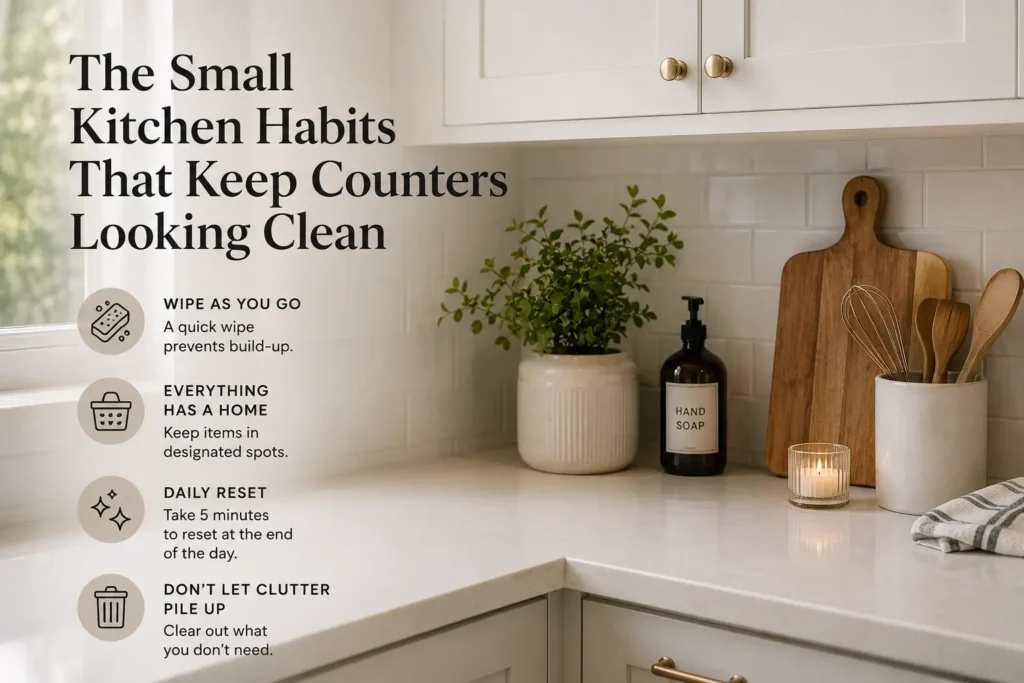
A clean kitchen doesn’t always come from deep cleaning sessions or expensive organizers. In many homes, the difference comes down to a few simple daily habits. Small actions repeated every day can keep counters looking neat, organized, and ready for whatever comes next.

The good news? Most of these habits take less than a minute.

Keep Only Daily Essentials Out

One of the easiest ways to make counters look cleaner is to remove items you don’t use every day. Small appliances, extra containers, and random clutter can quickly make a kitchen feel crowded.

Try keeping only your most-used items on display and storing everything else in cabinets or drawers.

Buy on Amazon USA

Simple Houseware Cabinet Basket Organizer

A simple way to create extra storage space inside cabinets and reduce countertop clutter.

YouCopia StoraLid Container Lid Organizer

Keeps food container lids organized and out of sight.

OXO Good Grips Dish Brush

Makes quick sink and counter cleanups fast and easy.

Wipe As You Go

Instead of waiting until the end of the day, get into the habit of wiping counters after making coffee, preparing meals, or washing dishes.

A 30-second wipe prevents crumbs, spills, and stains from building up.

Give Everything a Home

Mail, keys, reusable bags, and grocery receipts often end up on kitchen counters. Having a designated spot for these items helps keep surfaces clear.

Even a small basket can make a big difference.

Put Things Away Immediately

When you’re finished using something, try putting it away right away rather than leaving it on the counter for later.

This simple habit prevents clutter from building throughout the day.

Final Thoughts

Keeping kitchen counters clean isn’t about perfection. It’s about creating a few simple habits that make staying organized easier. Small actions like wiping surfaces, storing unused items, and putting things away immediately can make your kitchen feel cleaner every single day.

The best part is that these habits take very little time but deliver results you’ll notice every time you walk into the room.

Buy on Amazon Canada

Simple Houseware Cabinet Basket Organizer

Adds valuable storage space and helps reduce countertop clutter.

YouCopia StoraLid Container Lid Organizer

Keeps containers and lids organized inside cabinets.

OXO Good Grips Dish Brush

Perfect for quick daily cleanups and maintaining tidy counters.

A few small habits today can save a lot of cleaning tomorrow and keep your kitchen looking neat all week long. 🍽️✨🏡

Cozy Living, Kitchen & Dining

The “No Renovation” Kitchen Upgrade

There was a point where I stood in my kitchen and thought, this place needs work. Not because it was broken. Not because the cabinets were falling apart. It just felt tired. Flat. Like it hadn’t evolved in years.

But I didn’t want to tear anything out. I didn’t want quotes, contractors, or weeks of chaos. I just wanted the room to feel different.

So instead of renovating it, I upgraded the mood.

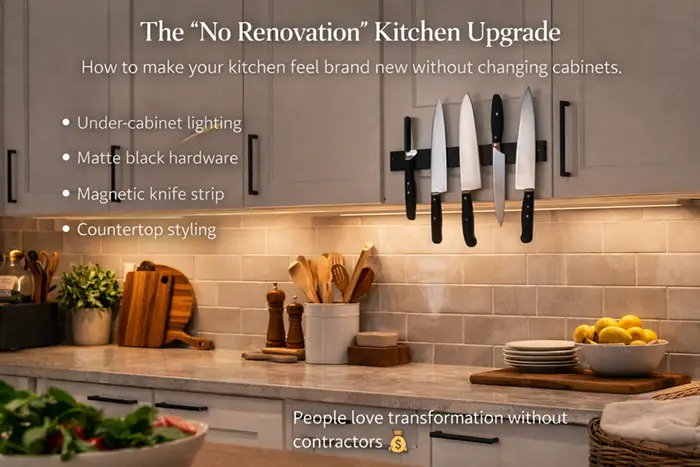
The first change was under-cabinet lighting. I didn’t realize how shadowy my counters felt until I added soft light underneath the upper cabinets. Suddenly the backsplash looked intentional. The counters looked cleaner. Evening cooking felt warmer instead of dim. It changed how the space functioned without touching a single cabinet door.

Next was hardware. Swapping basic pulls for matte black handles felt almost too simple — but visually, it anchored the whole room. The cabinets didn’t change. The layout didn’t change. But the contrast gave the space definition. It felt more deliberate. More current. I didn’t expect something this simple to make my home feel calmer. But the cleaner lines and consistent finish made the kitchen feel finished in a way it hadn’t before.

I also added a magnetic knife strip to clear the counter block. That one surprised me. Removing the bulky holder instantly gave the countertop breathing room. The wall became functional, and the counter became lighter. It wasn’t about aesthetics — it was about space feeling usable again.

Then came countertop styling. Not clutter. Not decoration overload. Just one tray. A wood board leaned against the backsplash. A neutral container for cooking utensils. Suddenly the kitchen felt styled instead of accumulated.

None of these changes required drilling into cabinets or replacing anything major. But together, they shifted the entire tone of the room.


📦 Buy on Amazon USA

Under-Cabinet LED Lighting (Warm White)

Matte Black Cabinet Hardware Set

Magnetic Wall-Mounted Knife Strip

Decorative Countertop Tray (Wood or Stone)

Minimalist Utensil Holder


🕯️ Final Thoughts

What I appreciate about this approach is how contained it feels. No dust. No permits. No weeks of disruption. Just thoughtful swaps that quietly improve the space.

Kitchens don’t always need renovation. Sometimes they just need refinement. Better lighting. Cleaner lines. Less bulk. A little contrast. Small decisions that make the room feel intentional again.

The biggest shift wasn’t visual — it was psychological. When the kitchen feels updated, you move through it differently. You cook slower. You notice details. You feel less irritated by small things. And that’s the kind of upgrade that lasts longer than tile trends.


📦 Buy on Amazon Canada

Under-Cabinet LED Lighting (Warm White)

Matte Black Cabinet Hardware Set

Magnetic Wall-Mounted Knife Strip

Decorative Countertop Tray (Wood or Stone)

Minimalist Utensil Holder

Scroll to Top