
Kitchen & Dining

Practical ideas and products for cooking, dining and everyday kitchen life.

French press beside a glass cup
Kitchen & Dining

Espro P3 vs Bodum Chambord: Is the Double Filter Worth It?

As an Amazon Associate, My Indoor Space earns from qualifying purchases.

Quick verdict

Choose the Espro P3 if reducing the sediment associated with a basic French press is the reason for upgrading, and its minimum batch suits you. Choose the glass Chambord if you already like a traditional mesh-filter cup and prefer a simpler familiar arrangement. Neither glass model is the answer to a need for insulation or impact resistance.

Research-based buying guide, checked October 18, 2026. We have not tested these products hands-on. Manufacturer specifications and attributed outside findings are distinguished from our buying judgments.

French press beside a glass cup
Context photo: a French press and cup, not a verified image of either exact model.

Who should buy or skip

Buy if: you want immersion coffee and have a clear preference about how much fine sediment remains in the cup.

Skip if: you want a brewer that makes any tiny dose equally well, a shatterproof pot or the cleanest possible paper-filter result without buying additional filters.

Compare the choices

Choice Choose it for Main tradeoff
Espro P3 Dual micro-filters aimed at reducing sediment More filter pieces and a model-specific minimum brew
Glass Chambord A traditional mesh-filter routine Fine sediment may remain in the cup
Paper-filter immersion brewer A different approach to a cleaner cup Uses disposable filters and a different workflow

The useful upgrade is filtration

Espro’s P3 uses two nested micro-filters rather than the conventional mesh assembly in the glass Chambord. The reason to pay for that system is the cup you want, not the assumption that more parts always make better coffee.

If you enjoy the body of a familiar French press and do not mind the last sip, there may be little problem to solve. If fine particles bother you, a filtration change has a clearer purpose. We have not compared sediment levels or tasted these models ourselves.

Check minimum brew size before the maximum

Espro’s current page lists a 32 oz P3 with a 24 oz minimum brew size; it also offers another size. Confirm the manual for the exact version you buy. A large nominal capacity is not proof that the filter will work as intended with one small mug.

Write down how much coffee you actually drink in one sitting. If you routinely brew much less than the selected model’s minimum, choose a smaller appropriate brewer. Do not purchase a larger press solely because its cost per advertised cup looks lower.

A filter system also has a washing routine

Nested filters need to be separated and cleaned according to the instructions. Inspect how the pieces reconnect and what replacement filters cost in your country. The same questions apply to the Chambord’s screen and other model-specific parts.

Consider the cleanup after a normal weekday brew, not just the appearance of a clean product photograph. Coffee residue left in fine openings can undermine the convenience you expected from an upgrade. Buy a system whose maintenance you are willing to repeat.

Do not confuse filtration with a thermal carafe

Both products in this comparison use glass. Espro’s product family includes insulated metal models, but their heat-retention features should not be transferred to the P3. A frame protects and supports a vessel; it does not make the glass unbreakable.

Espro markets its plunger design as limiting further extraction after pressing. We have not tested that claim, and it is not a promise that coffee left for hours will taste freshly brewed. Make an amount that suits your serving routine and follow the brewer’s instructions.

Buying in the United States or Canada

Compare the exact P3 size and the glass Chambord capacity. Search results may mix Espro P3, P5 and insulated P7 models or different Bodum materials. Check minimum brew guidance, spare glass and filter availability before ordering from a US or Canadian seller.

The buttons open the named country’s Amazon search results. Match the exact model, size and included parts before ordering. Compare delivered cost, seller and return terms; no fixed price, availability or warranty eligibility is promised.

Questions before ordering

Will P3 make completely particle-free coffee?
Espro markets reduced grit, but we have no independent measurement here proving a particle-free result. Grind, use and maintenance still matter.

Can I add paper to the Espro?
Espro lists compatible paper filters separately. Verify the exact filter size and manual rather than inserting an arbitrary paper filter.

Final buying decision

P3 is the more purposeful upgrade when sediment is the complaint and its batch size fits. Chambord remains sensible when you like the traditional result and do not want a more involved filter system. Buy for a specific cup preference rather than replacing a working press because a filter count sounds impressive.
Related guides

Sources and research

French press beside a glass cup
Kitchen & Dining

Bodum Brazil vs Chambord: Is the Metal Frame Worth More?

As an Amazon Associate, My Indoor Space earns from qualifying purchases.

Quick verdict

Choose the glass Brazil if you want a straightforward French press at the lower delivered price. Choose the glass Chambord when you prefer its metal-frame appearance enough to pay for it. With comparable capacity and a conventional mesh-filter workflow, the frame upgrade is not by itself a reason to expect better coffee.

Research-based buying guide, checked October 18, 2026. We have not tested these products hands-on. Manufacturer specifications and attributed outside findings are distinguished from our buying judgments.

French press beside a glass cup
Context photo: French-press coffee preparation, not a verified product image of these exact models.

Who should buy or skip

Buy if: you enjoy immersion coffee and want a simple brewer with a reusable filter.

Skip if: you need an unbreakable pot, long heat retention or a very clean paper-filter-style cup.

Compare the choices

Choice Choose it for Main tradeoff
Glass Brazil A lightweight plastic-frame format Glass remains breakable
Glass Chambord A metal frame and a more decorative table presence A higher price need not buy a different brewing result
Insulated steel press Durability and heat retention as the main priorities Different feel and often a higher initial cost

Compare the same capacity and material first

The Brazil and Chambord ranges include different sizes and finishes. This guide compares their roughly 1 L glass versions, not every item sharing those names. Brazil uses a plastic body, handle and lid; Chambord places its glass vessel in a metal frame.

Product cup counts are small serving measures. If you use a large breakfast mug, compare millilitres or fluid ounces rather than expecting an eight-cup label to mean eight full mugs. Allow room for grounds and follow the brewer’s fill instructions.

The frame does not replace the brewing recipe

Both use a familiar immersion-and-plunge approach. Coffee, grind, water and steeping choices remain the main variables you control. We have not blind-tasted these models and have no evidence that the Chambord frame alone improves the flavour.

If your present press makes coffee you like, changing its exterior is mainly a design purchase. If you dislike sediment, investigate filtration or a different brewing method. If the problem is coffee cooling, investigate insulation. Each issue points to a different upgrade.

Replacement glass can change the value calculation

Before ordering, look up the exact replacement beaker and filter assembly for the chosen size. A spare that looks similar may differ in diameter or height. Availability in your country matters more than a generic claim that the brand sells parts.

A glass vessel can break even inside a frame. Think about the sink, drying rack and shelf where it will be handled. If breakage is the main concern in a busy household, another glass brewer may leave that concern unresolved.

Choose the one you will clean and use

Check how the filter separates for cleaning and whether the lid and handle are easy for you to grip. Empty used grounds into an appropriate waste container and clean according to the supplied care instructions rather than forcing them down a drain.

We have not tested frame rigidity, long-term finish wear or dishwasher performance. During a return period, check pouring control with the actual amount you normally make. A handsome frame is worth paying for only if the complete brewer works comfortably in daily use.

Buying in the United States or Canada

US and Canadian marketplace listings can combine several capacities and materials under one product family. Confirm glass construction, the actual 1 L size, frame finish and replacement-part match. Compare delivered cost rather than a discount displayed for a different size.

The buttons open the named country’s Amazon search results. Match the exact model, size and included parts before ordering. Compare delivered cost, seller and return terms; no fixed price, availability or warranty eligibility is promised.

Questions before ordering

Will the Chambord remove more sediment?
Do not assume that from the frame. Check the exact filter assembly; both products here use a conventional reusable mesh brewing approach.

Does an eight-cup label mean eight large mugs?
No. Compare the stated volume with the amount you actually pour into your mugs.

Final buying decision

Brazil is our value pick when it is meaningfully cheaper. Chambord is a reasonable design upgrade for someone who likes the metal frame and will keep it on display. If your dissatisfaction is heat retention, fragility or sediment, spend the upgrade budget on a design that addresses that specific problem.

Related guides

Sources and research

Modern coffee grinder on a kitchen counter
Kitchen & Dining

OXO Brew Conical Burr vs Baratza Encore for Daily Filter Coffee

As an Amazon Associate, My Indoor Space earns from qualifying purchases.

Quick verdict

Choose the standard OXO Brew Conical Burr for its remembered timer setting and an everyday filter-coffee routine when it costs less. Choose the standard Baratza Encore when parts access, repair documentation and continued maintenance matter more. If espresso is the main task, compare a purpose-oriented grinder rather than treating either standard model as the automatic choice.

Research-based buying guide, checked October 18, 2026. We have not tested these products hands-on. Manufacturer specifications and attributed outside findings are distinguished from our buying judgments.

Modern coffee grinder on a kitchen counter
Context photo: a home coffee-grinding station, not a verified image of either compared model.

Who should buy or skip

Buy if: you make filter coffee regularly and want adjustable burr grinding without moving to a complicated appliance.

Skip if: you mainly want a built-in scale, precise espresso adjustments or a silent grinder; those are different purchase requirements.

Compare the choices

Choice Choose it for Main tradeoff
OXO Brew 8717000 Remembered timed grinding Time is not a measured dose
Baratza Encore ZCG485 Manual operation with a documented parts ecosystem Repairability still involves parts, work and possible service cost
Espresso-oriented grinder Fine adjustment for a demanding shot workflow May cost more than a filter-first setup needs

Timer convenience versus weighing the dose

OXO’s one-touch timer remembers its previous setting. That is convenient if you use similar beans and make a similar batch each morning. It does not weigh the coffee: a different roast or grind setting can change how much reaches the container in the same time.

Baratza lists the Encore’s dosing as manual. If you already weigh each dose, the OXO timer may be less important than it first sounds. Decide whether you want a repeatable time shortcut or a weigh-before-and-after routine.

More numbered settings do not prove a better cup

OXO lists 15 settings plus intermediate adjustments; Baratza lists 40 individual settings. The numbers belong to different adjustment systems and do not form a shared quality score. The useful question is whether you can find and repeat an appropriate grind for your brewer.

TechGearLab’s original comparative testing found both capable for their price class and flagged more mess for the standard OXO. That is outside testing, not our result, and it is a reason to inspect cleanup rather than assume either grinder is mess-free.

Repair support is part of the Encore argument

Baratza publishes Encore documentation and sells model-specific parts. That gives a maintenance-minded owner something concrete to check before buying: which parts can be ordered locally, which procedures are documented and when professional support is needed.

It is not a guaranteed service life or a promise that repair is always economical. Compare the delivered purchase gap with the time and cost you would realistically spend maintaining a grinder. A buyer who will never repair one may value simple daily controls more.

Fit the actual grinder into the morning routine

Measure cupboard clearance with room to lift the hopper lid and remove the grounds container. Think about noise timing in a shared home, the nearest outlet and where a brush and scale will live. We have not measured these units’ sound in your kitchen.

Try your usual beans and brewer during the return period, then check whether the container pours neatly and the controls feel straightforward. Keep the burr chamber dry and follow the exact cleaning manual. A grinder that is easy to use and clean is more likely to earn its space.

Buying in the United States or Canada

Buy a locally rated electrical unit and compare the standard OXO 8717000 with the standard Encore ZCG485. OXO’s integrated-scale models and Baratza’s Encore ESP/ESP Pro are different products. Check seller authorization, local parts supply and applicable support in your country.

The buttons open the named country’s Amazon search results. Match the exact model, size and included parts before ordering. Compare delivered cost, seller and return terms; no fixed price, availability or warranty eligibility is promised.

Questions before ordering

Does the OXO timer measure grams?
No. A timed run is not a weight measurement. Use a suitable scale if dose by mass matters to your recipe.

Should I choose Encore ESP instead?
Consider its espresso-oriented adjustment if espresso is the main job. Compare the exact model’s features and cost rather than assuming all Encores are the same.

Final buying decision

OXO is the convenient value choice when its timer fits your routine and its delivered price is lower. Encore earns a premium for a buyer who values its parts and support path. For daily filter coffee, dose consistency, usable adjustment and cleanup matter more than the setting count alone.

Related guides

Sources and research

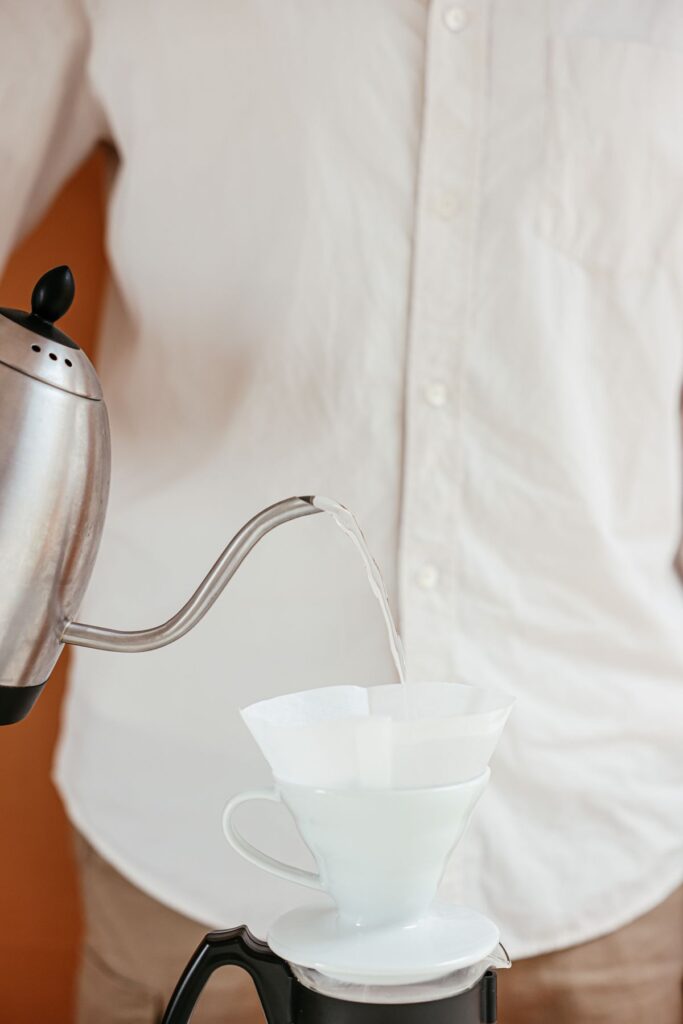
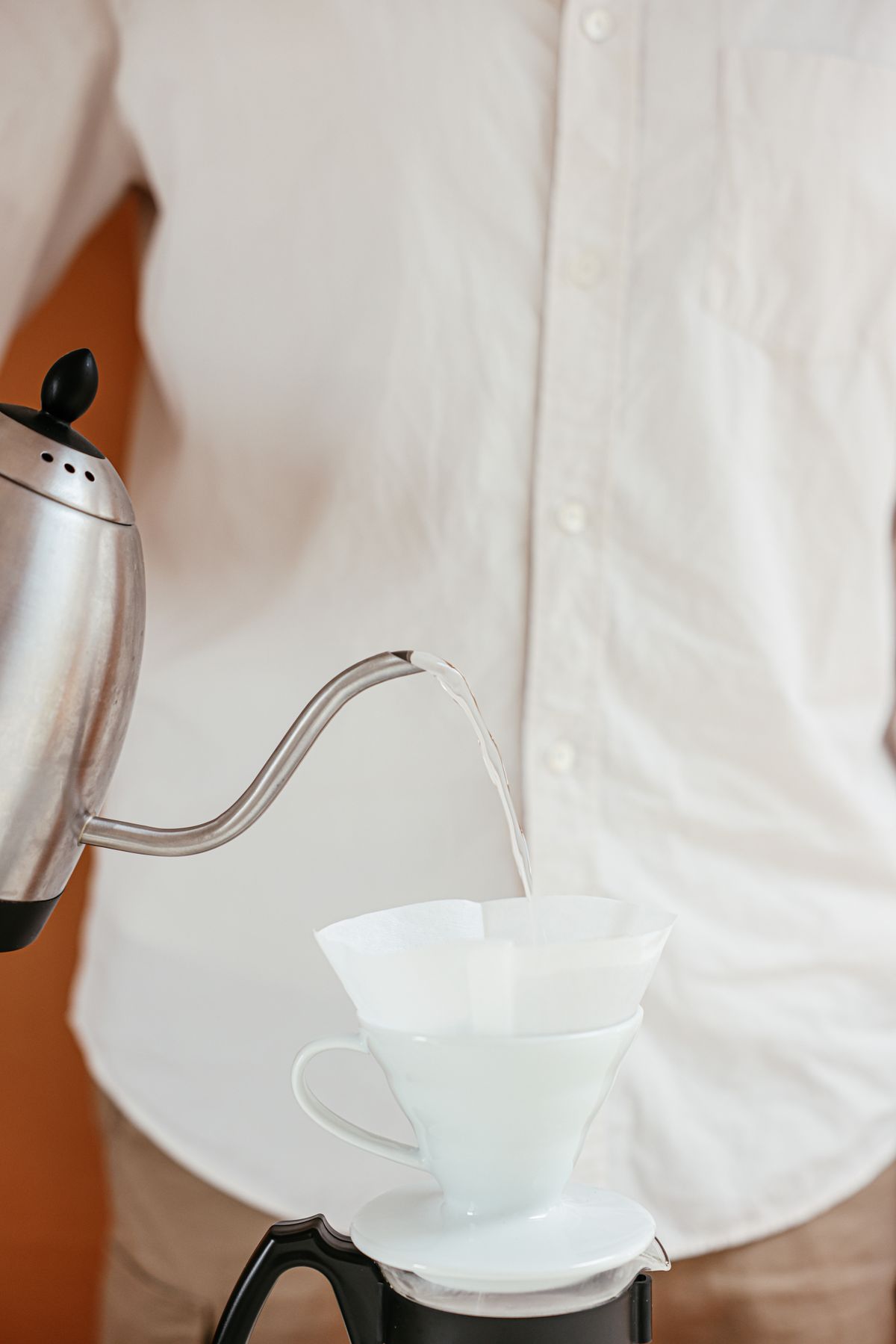
Hot water poured into a manual coffee dripper
Kitchen & Dining

Hario V60 Drip Scale vs Timemore Basic 2: Which Coffee Scale?

As an Amazon Associate, My Indoor Space earns from qualifying purchases.

Quick verdict

Choose Timemore Basic 2 if rechargeability, a backlit display and flow-rate information will help your brewing. Choose the Hario V60 Drip Scale for a simpler battery-powered pour-over routine, with an important caveat: its displayed weight increments become coarser at higher loads. Check footprint before buying either for espresso.

Research-based buying guide, checked October 18, 2026. We have not tested these products hands-on. Manufacturer specifications and attributed outside findings are distinguished from our buying judgments.

Hot water poured into a manual coffee dripper
Context photo: pour-over coffee preparation, not either scale.

Who should buy or skip

Buy if: you want to repeat a coffee-to-water ratio and time the brew on one device.

Skip if: you already have a suitably responsive scale and timer, need more than the rated capacity or assume a fine display proves laboratory accuracy.

Compare the choices

Choice Choose it for Main tradeoff
Hario V60 Drip Scale Simple manual pour-over weighing and timing 0.1 g display increments do not apply across the range
Timemore Basic 2 Backlit readout, rechargeable power and flow-rate feature Extra modes and a charging routine
Existing kitchen scale Basic ratios without another purchase Check response and minimum detectable changes

The Hario’s weight ranges matter in real recipes

Hario lists a 2,000 g maximum and increments of 0.1 g from 2–200 g, 0.5 g from 200–500 g and 1 g from 500–2,000 g. The brewer, server and water all contribute to the physical load, even when the display is tared.

That does not make the Hario unusable for coffee. It means you should buy it with the right expectation: measuring a small bean dose and tracking water into a loaded server are different tasks. Display resolution and measurement accuracy are separate concepts.

Decide whether more brewing information is useful

Timemore describes a 0.1 g readout, a 2 kg range and a 0.5 g minimum detection weight for Basic 2. It also lists automatic timing and a water-flow-rate function. Those features can help someone practicing a consistent pour, but they do not decide the recipe for you.

If you make one forgiving immersion brew every morning, manual weight and time may be enough. If you deliberately practice pour speed, the extra information has a clearer role. We have not measured either scale’s response time or calibration accuracy.

Check the space under the brewer

A scale must support the whole vessel without touching nearby objects. Measure the platform, cup clearance and drip-tray depth if you plan to use it under an espresso machine. A product called an espresso scale is not automatically small enough for every machine.

Put the empty vessel on the scale, tare it and watch the weight settle before brewing. During a return period, repeat the same small load several times. Avoid leaning a cable or kettle against the vessel because that can alter the reading.

Water protection is not permission to rinse it

Hario explicitly says this V60 scale is not water resistant. Timemore describes protection at the top surface and charging port, but the scale is still an electronic device; follow the manual and do not infer that it can be submerged or washed under a tap.

Keep the charging connector dry and use the supplied heat-protection pad as instructed. Compare ordinary replaceable batteries with the convenience and eventual wear of a rechargeable battery. The better choice is the one that stays ready in your kitchen.

Buying in the United States or Canada

Match the exact standard Hario V60 model and Timemore Basic 2/2.0. Older Basic, Basic Plus, Nano and other Black Mirror names have different features. Check included batteries or charging accessories and local returns; marketplace photos can mix generations.

The buttons open the named country’s Amazon search results. Match the exact model, size and included parts before ordering. Compare delivered cost, seller and return terms; no fixed price, availability or warranty eligibility is promised.

Questions before ordering

Does taring remove the vessel from the maximum capacity?
No. Tare changes the displayed zero, not the physical load supported by the sensor.

Do I need flow-rate measurement?
Only if you will use it to practice a repeatable pour. A clear weight readout and reliable timing cover many everyday brews.

Final buying decision

Timemore Basic 2 is our feature-oriented pick for someone who wants a rechargeable, information-rich routine. Hario makes more sense for simplicity when its resolution ranges and lack of water resistance are acceptable. Choose by actual brew load and fit rather than a single decimal place in the product title.

Related guides

Sources and research

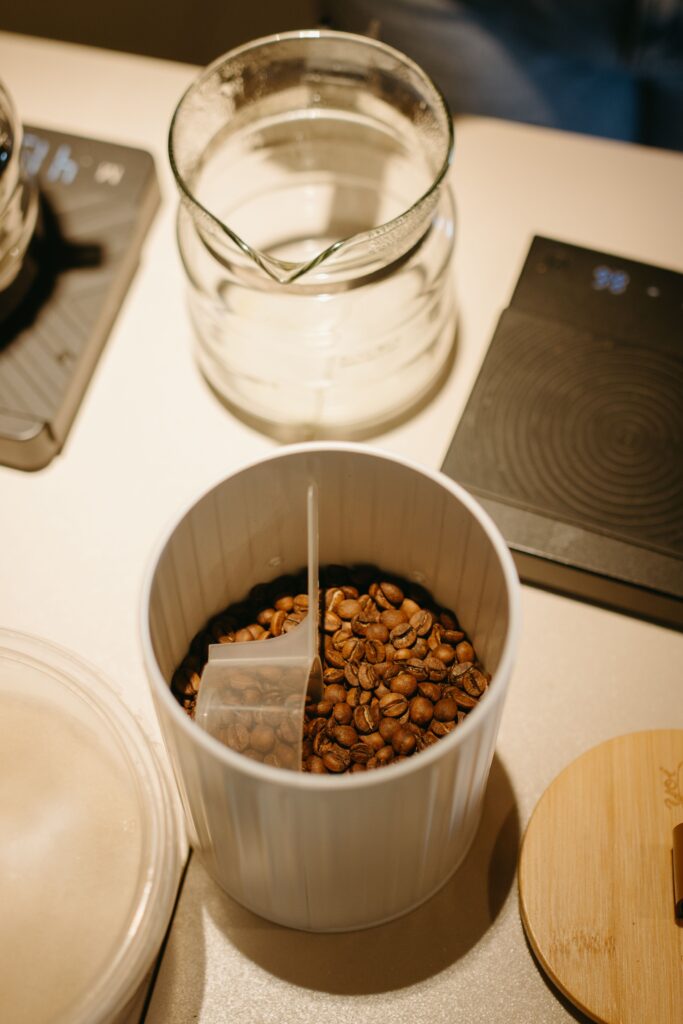
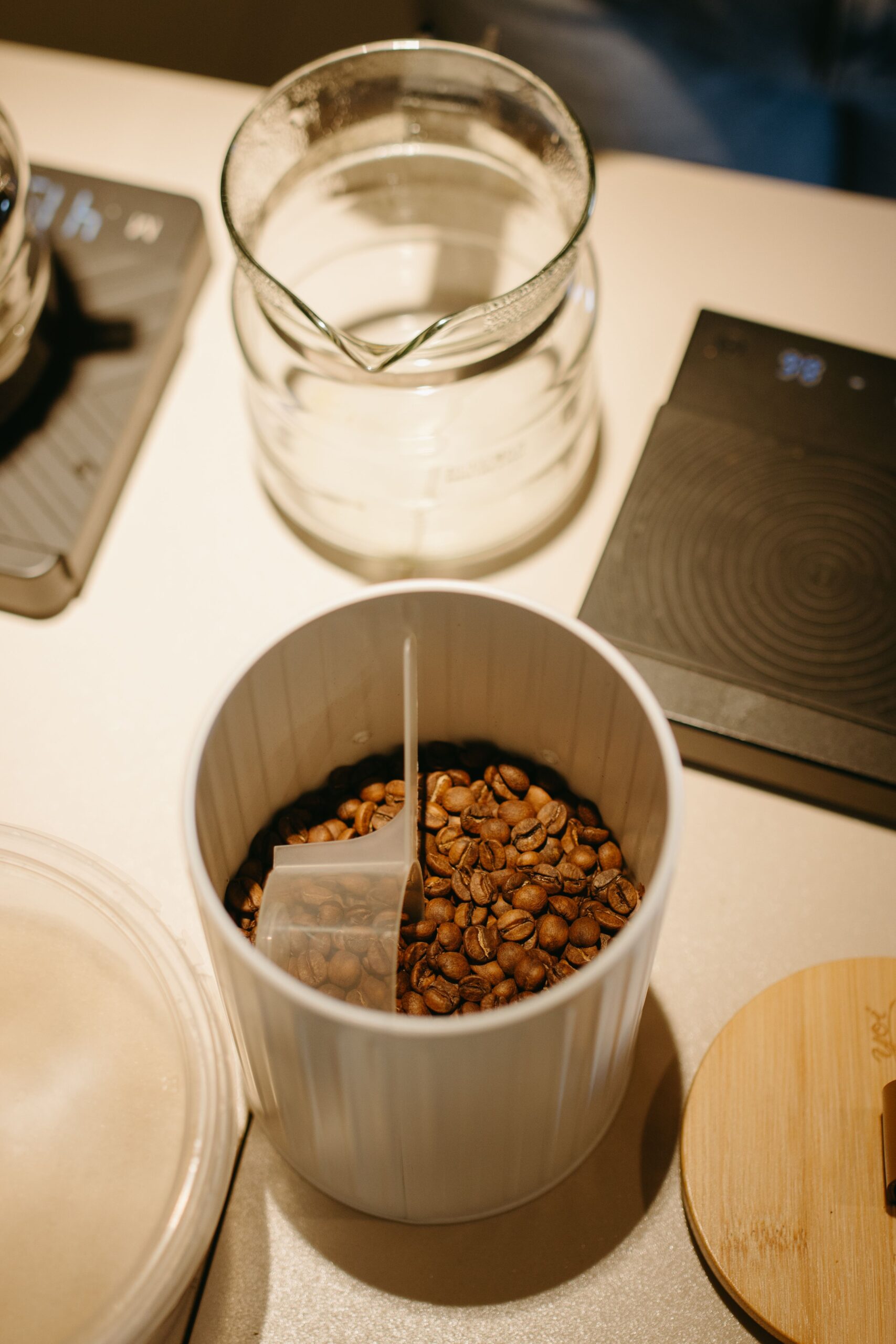
Coffee beans stored in a container on a kitchen counter
Kitchen & Dining

Bodum Bistro Blade vs Cuisinart DCG-20N: Which Budget Grinder?

As an Amazon Associate, My Indoor Space earns from qualifying purchases.

Quick verdict

Choose between these blade grinders by delivered cost, usable dose and how easily you can empty and clean them. The Cuisinart lists a slightly larger maximum bean load; the Bodum offers simple pulse control in a compact body. Neither is the upgrade to buy when repeatable grind-size adjustment is your main goal.

Research-based buying guide, checked October 18, 2026. We have not tested these products hands-on. Manufacturer specifications and attributed outside findings are distinguished from our buying judgments.

Coffee beans stored in a container on a kitchen counter
Context photo: coffee beans at home, not either blade grinder.

Who should buy or skip

Buy if: you want a small, inexpensive way to grind whole coffee beans and accept the limits of time-controlled blade chopping.

Skip if: you already own a working blade grinder, need precise espresso dialing or want the consistency controls of an adjustable burr grinder.

Compare the choices

Choice Choose it for Main tradeoff
Bodum Bistro 11160 blade Compact push-button operation Bistro branding also covers different burr models
Cuisinart DCG-20N A listed 70 g maximum bean capacity Maximum fill is not proof of uniform results
Entry-level burr grinder Repeatable grind-size selection Usually costs more and occupies more space

Make sure the comparison is actually blade against blade

The Bodum model here is the 11160-series blade grinder, not a Bistro conical burr grinder. Its rotating blade chops beans while a burr grinder passes them through an adjustable gap. A transparent lid helps you inspect the result; it does not turn blade grinding into a calibrated size setting.

The practical tradeoff is cost and simplicity versus repeatability. If a recipe keeps clogging or tasting different, replacing one blade model with another may leave the same underlying limitation. Consider whether the budget should go toward a burr grinder instead.

Capacity is a limit, not a quality score

Bodum lists up to 60 g of beans; Cuisinart lists 70 g for the DCG-20N. Measure your normal coffee dose rather than translating the manufacturers’ cup claims into your household’s mugs.

A larger maximum only helps if you need that amount and the resulting grind suits your brewer. Do not exceed the fill mark to save a second batch. Begin with the manufacturer’s operation guidance and inspect a small trial dose before grinding a whole bag.

Choose a cleaning routine you will actually follow

Both are simple countertop electrical appliances. Bodum instructs users to unplug its grinder, brush out the metal container and wipe rather than immerse it. Follow Cuisinart’s model-specific manual for its bowl, lid and electrical base; an easy-clean description is not a dishwasher instruction.

Coffee oils and trapped particles make cleanup part of ownership. Think about where grounds go when you tip the appliance out and whether the cord can be stored conveniently. We have not tested which model leaves less mess or runs more quietly.

Keep coffee separate from strong spice aromas

A grinder bought for coffee should remain a coffee tool if you want to avoid carrying strong spice aromas into a brew. Do not assume every hard ingredient is approved merely because the appliance has a blade.

If your main job is spice preparation, compare tools intended for those ingredients. If your main job is daily filter coffee, weigh beans before grinding and keep the brew method consistent so you can tell whether a change in grinding actually helped.

Buying in the United States or Canada

Buy the electrical version rated for your local supply. Canadian Cuisinart listings may use DCG-20NC or DCG-20BKNC suffixes; check the local manual and specifications rather than assuming every DCG-20 package matches the US DCG-20N. Confirm that the Bodum listing explicitly says blade, not burr.

The buttons open the named country’s Amazon search results. Match the exact model, size and included parts before ordering. Compare delivered cost, seller and return terms; no fixed price, availability or warranty eligibility is promised.

Questions before ordering

Does longer grinding make the particles uniform?
It can make the overall result finer while still leaving a mixture of particle sizes. Time is not the same control as a burr-gap setting.

Should I replace a working blade grinder with one of these?
Only if a specific problem such as capacity or usability is solved. For a grind-control upgrade, compare a burr design.

Final buying decision

Buy the lower-cost blade model that fits your dose and cleanup routine if budget simplicity is the priority. Pay for a burr grinder when repeatable adjustment is the reason for buying. The 10 g capacity difference alone is not a strong reason to replace equipment you already use successfully.

Related guides

Sources and research

Modern coffee grinder on a kitchen counter
Kitchen & Dining

Hario Skerton Pro vs Timemore C2: Which Hand Grinder Fits?

As an Amazon Associate, My Indoor Space earns from qualifying purchases.

Quick verdict

Choose the Timemore C2 for a compact, metal-bodied grinder used for small daily doses. Consider the Skerton Pro when its glass grounds container and larger stated grounds capacity suit a home-only routine, especially at a lower price. For several large coffees each morning, compare an electric burr grinder before committing to repeated hand grinding.

Research-based buying guide, checked October 18, 2026. We have not tested these products hands-on. Manufacturer specifications and attributed outside findings are distinguished from our buying judgments.

Modern coffee grinder on a kitchen counter
Context photo: home coffee-grinding equipment, not either hand grinder.

Who should buy or skip

Buy if: you brew small amounts, want adjustable burr grinding without a motor and are willing to turn a handle for every dose.

Skip if: you need effortless batches, have difficulty gripping or cranking, or want a grinder selected specifically for precise espresso adjustment.

Compare the choices

Choice Choose it for Main tradeoff
Skerton Pro A home-oriented glass grounds container Bulkier shape and breakable glass
Chestnut C2 Small doses and a compact metal body Model revisions matter; hand effort remains
Electric burr grinder Several servings with less manual work More counter space and purchase cost

Compare the amount you grind, not just the container

Hario lists 100 g of grounds capacity for the MMCS-2B Skerton Pro. The authorized Australian Timemore distributor lists a 25 g bean container for its updated C2. Those figures describe different containers; they are not evidence that one grinds four times as much in one uninterrupted load.

Weigh your normal dose first. If you regularly prepare more than the C2’s exact hopper allows, refilling is part of the routine. If you grind one small brew, a larger grounds jar may simply occupy more cupboard space.

Construction changes how you use and store it

Hario uses ceramic burrs and a borosilicate glass grounds bowl. The C2 listing describes steel burrs, bearings and an aluminium body. Our preference for the C2’s compact format is a buying judgment, not a measured claim that its coffee always tastes better.

For a shared kitchen, think about the grip, the turning clearance and where the handle will be stored. Glass is useful for seeing collected grounds but needs protection from knocks. Metal construction does not make a grinder safe to wash or drop indiscriminately.

Do not buy a different C2 by accident

Timemore names can look very similar: C2, C2S and folding-handle variants are not interchangeable specifications. The distributor’s current C2 description includes an updated aluminium adjustment dial. Check photographs and the exact model rather than relying on a broad marketplace title.

For repeatable brewing, record your chosen adjustment and the starting point defined in the supplied manual. A click number from a different revision or a different grinder is not a calibration standard. Change one variable at a time when dialing in a brew.

What owners highlight, and what remains untested

Several owner comments on Hario’s own Skerton Pro page mention the rubber base coming loose. Those are individual experiences, not a measured failure rate, but they make base fit and stability worth checking promptly.

We have not timed these grinders or measured their particle distribution. Try your normal beans and dose during the return period. If the effort or time makes you avoid freshly grinding, an electric burr model may be better value than an unused manual upgrade.

Buying in the United States or Canada

US and Canadian searches may return imported stock and newer Timemore variants. Confirm the exact C2 revision, seller support and replacement-part access. The Hario model in this guide is Skerton Pro MMCS-2B, not the original Skerton or Skerton Plus.

The buttons open the named country’s Amazon search results. Match the exact model, size and included parts before ordering. Compare delivered cost, seller and return terms; no fixed price, availability or warranty eligibility is promised.

Questions before ordering

Is the bigger Skerton container its hopper capacity?
Hario’s 100 g figure is for collected coffee grounds. Do not treat it as the amount of whole beans that can be loaded at once.

Are these our espresso picks?
No. For espresso as the main use, compare grinders with adjustment designed for that workflow and verify compatibility with your basket and machine.

Final buying decision

The C2 is our more appealing small-dose choice when the exact revision and delivered price are right. The Skerton Pro can suit a less portable routine and a buyer who prefers its container. Choose by dose, effort and actual model; do not buy either simply because manual grinding sounds more traditional.

Related guides

Sources and research

Measuring cups and baking ingredients
Kitchen & Dining

Are OXO Squeeze & Pour Measuring Cups Worth It for Microwave Prep?

As an Amazon Associate, My Indoor Space earns from qualifying purchases.

Quick verdict

The Squeeze & Pour set is worth considering when you often warm small ingredients in the microwave and want to form a narrower pouring spout. Keep a rigid measuring jug if it already measures and pours comfortably. Buy one size rather than the set if only one recurring task needs the flexible cup.

Research-based buying guide, researched October 18, 2026. We have not tested these products hands-on. Manufacturer specifications and attributed owner experiences inform the recommendations.

Measuring cups and baking ingredients
Baking-measurement context; the Squeeze & Pour set is not pictured.

Who should buyβ€”and who should skip

Buy if: you make small batches, use a microwave for ingredient preparation and value a flexible pouring body.

Skip if: you prefer a firm handle, need to measure larger volumes, or already have suitable microwave-safe containers.

Compare the practical differences

Option Best reason to choose it Main tradeoff
Squeeze & Pour set Small-volume warming and controlled pours Flexible grip may not suit everyone
One Squeeze & Pour cup One specific recurring job Less capacity choice
Rigid measuring jug Firm support and handle-based carrying Fixed spout and larger stored form

Check what is actually in the set

OXO identifies the three-piece set as SKU 11172700, with mini half-cup, one-cup and two-cup capacities. A four-cup Squeeze & Pour is a different product. Marketplace results may also show individual cups, so compare the item count as well as the photograph.

Write down the amount used in the recipe you make most often. A small cup can be convenient for one ingredient, while a two-cup maximum may be insufficient for a larger sauce. The set should solve a preparation need rather than duplicate three containers you already like.

Flexible pouring is the main upgrade

The manufacturer’s design lets you squeeze the body to shape the spout. That can be useful when transferring into a narrow opening, but it also means the container feels different from a rigid glass jug with a handle. Grip preference is a genuine buying factor.

Measure with the cup resting in its normal shape, then use the flexible body for the transfer. Do not expect squeezing during a measurement to preserve the same liquid level. For precision baking, use the measurement method specified by the recipe, including a scale where weights are given.

Microwave-safe does not mean cool contents

OXO labels the cups microwave-safe and describes the honeycomb surface as dissipating heat. That is a design claim, not permission to ignore hot liquid or steam. Follow the food, microwave and cup directions and use suitable protection when handling heated contents.

The tool’s appeal is combining several preparation steps in the same vessel. It is less useful if you dislike carrying a flexible container when full. A rigid jug can be the better choice even when the silicone model has more features on its product page.

Choose a set only if the sizes earn their place

Food Network’s measuring-cup roundup identifies this set as its flexible-cup pick. That supports considering the category; we have not independently measured the cup markings or compared pouring drips. Check readability and grip when the product arrives.

The maker also labels the set dishwasher-safe. Confirm the care guidance for your exact regional package, and inspect for retained food or odours before storing. If you only need a small cup for one warming task, compare the single-cup price with the complete set rather than assuming a bundle is better value.

Buying in the United States or Canada

Check the capacity markings shown in each country listing and buy for the units used in your recipes. A product described as 500mL by one retailer may be marketed as two cups elsewhere; verify the actual graduations. Compare genuine set contents and seller return terms before importing.

The buttons open country-specific Amazon searches. Check the exact model, seller, included parts, delivered cost and return policy in the results; a similar name does not establish that it is the same version. No fixed Amazon price or stock level is promised.

Questions before you order

Is the four-cup version included?
Not in the checked three-piece set, which contains half-cup, one-cup and two-cup sizes.

Can it replace dry measuring cups?
Use the measurement method intended by the recipe. A flexible liquid cup is not automatically the best tool for scooping and levelling dry ingredients.

Final buying decision

Buy for a repeated warming-and-pouring task that benefits from flexibility. Keep a rigid jug when its handle and support suit you better, and choose a single size when the other two would sit unused.

Related guides

Sources and research

Cookie dough portions arranged on a baking sheet
Kitchen & Dining

Is the OXO Silicone Cookie Spatula Worth the Drawer Space?

As an Amazon Associate, My Indoor Space earns from qualifying purchases.

Quick verdict

The OXO Silicone Cookie Spatula is worth buying when a broad everyday turner is awkward between closely spaced cookies or under small baked treats. Keep your current thin, nonstick-safe turner if it already lifts them cleanly. This is a size-and-control upgrade, not a tool every home baker needs.

Research-based buying guide, researched October 18, 2026. We have not tested these products hands-on. Manufacturer specifications and attributed owner experiences inform the recommendations.

Cookie dough portions on a baking sheet
Cookie-baking context; the OXO spatula is not pictured.

Who should buyβ€”and who should skip

Buy if: you bake small cookies often and want a compact lifting head suited to coated sheets.

Skip if: you rarely bake, prefer large cookies that need broader support, or already have a small suitable turner.

Compare the practical differences

Option Best reason to choose it Main tradeoff
OXO cookie spatula Small treats and tighter spacing Less support for very large pieces
Everyday nonstick-safe turner One tool for cooking and baking May be bulky between cookies
Icing spatula Spreading frosting and some positioning tasks Different head shape and pan compatibility

The shape is the reason to add it

OXO describes a stainless-steel core with a silicone outer layer and thin, flexible edges. The listed overall dimensions are about 2.625 Γ— 1 Γ— 9.25 inches. Its small format is the main reason to consider it beside an existing cooking turner.

Imagine the cookies on your usual sheet. If the only difficulty is fitting a wide turner between them, a smaller tool solves a specific problem. If cookies stick because they are underbaked or need more time to set, buying a different spatula may not solve the underlying issue.

Flexible edges and support need balancing

A thin edge can help approach the underside of a small treat, while the core provides structure. That design does not establish that every soft cookie can be moved immediately. Follow the recipe’s cooling instructions and support fragile items appropriately.

For a very large cookie or a slice of soft tray bake, a broader lifting surface may be more practical. Choose for the baked goods you actually make. Buying the smallest possible tool is not inherently better than using a well-sized turner already in the drawer.

Confirm that it is the cookie spatula

OXO’s range includes everyday silicone spatulas, jar spatulas, omelet turners and cookie scoops. A review praising one of those does not prove how the cookie spatula performs. Search the model name and SKU 1147100 when comparing packages.

The manufacturer marks this model dishwasher-safe and suitable for nonstick cookware. Follow both tool and pan care instructions, and inspect the silicone for damage over time. A coated core should not be used as if exposed metal could never contact a pan.

A small purchase still needs a job

The Canadian listing checked confirms this specific product is sold as a cookie spatula; available owner reviews may be syndicated from OXO. We have not measured cookie breakage or compared lifting force, so there is no basis for claiming a particular improvement rate.

Compare the delivered price of the single tool with any bundle. A cookie set can be poor value if it adds a scoop or mat you already own. The single spatula is easier to justify when it replaces a recurring awkward transfer rather than completing a matching collection.

Buying in the United States or Canada

Compare Good Grips and Softworks listings carefully, including the exact shape and product code. Colour or packaging differences are not enough to establish equivalence. A low unit price can lose its appeal if shipping makes a small tool expensive.

The buttons open country-specific Amazon searches. Check the exact model, seller, included parts, delivered cost and return policy in the results; a similar name does not establish that it is the same version. No fixed Amazon price or stock level is promised.

Questions before you order

Is it for mixing dough?
It is primarily a small lifting spatula. Choose a suitable mixing or scraping tool for a stiff dough.

Does it replace an offset icing spatula?
No. An icing spatula is shaped for a different main task; keep the tools that suit your baking.

Final buying decision

Buy it for frequent small-cookie transfers that your current turner handles poorly. Skip it when your existing thin, pan-safe turner already works. A clear recurring job is the best reason for another small baking tool.

Related guides

Sources and research

Batter being poured into a loaf pan
Kitchen & Dining

USA Pan Small vs Large Pullman Pan: Choose 9×4 or 13×4?

As an Amazon Associate, My Indoor Space earns from qualifying purchases.

Quick verdict

Choose the small 9 Γ— 4 Γ— 4-inch Pullman for a recipe designed for that size and a household that uses a smaller loaf. Choose the large 13 Γ— 4 Γ— 4-inch model for an appropriately scaled recipe and a clear plan to eat or freeze the bread. A lid is worth buying for square sandwich loaves; an ordinary open loaf pan is enough for many everyday bakes.

Research-based buying guide, researched October 18, 2026. We have not tested these products hands-on. Manufacturer specifications and attributed owner experiences inform the recommendations.

Batter being poured into a loaf pan
Loaf-pan context; the lidded Pullman models are not pictured.

Who should buyβ€”and who should skip

Buy if: you regularly bake sandwich bread and specifically want the shape a lidded Pullman provides.

Skip if: you mostly bake quick breads in a standard open pan, or do not want to adapt recipes for a different volume.

Compare the practical differences

Option Best reason to choose it Main tradeoff
Small 1170PM A recipe for a 9 Γ— 4 Γ— 4-inch pan Less bread per bake
Large 1160PM A recipe for a 13 Γ— 4 Γ— 4-inch pan More dough and storage planning
Open loaf pan Conventional domed loaves and quick breads No flat-lidded shape

Match the recipe before ordering the pan

USA Pan lists the small baking surface at 9 Γ— 4 Γ— 4 inches and the large at 13 Γ— 4 Γ— 4 inches. The larger nominal volume is about 44% greater, calculated from those dimensions. That is a rough geometric comparison, not an instruction to increase every recipe by exactly 44%.

A Pullman recipe must account for the dough, proofing and desired shape. Start with a reliable recipe specifying your pan size. Do not put a large-pan dough into a smaller covered pan and expect the lid to make the mismatch work.

The lid is the feature you are paying for

The maker describes using the lid for squared loaves and baking uncovered for a rounded top. Confirm that a marketplace offer includes the matching cover. A replacement lid or uncovered pan may appear beside the complete product in search results.

Consider whether square slices matter to the meals you make. If you like the domed loaf from a pan you already own, a Pullman is an optional shape change. It is not a required step toward better home bread, and the more expensive size does not automatically produce a better result.

Check the complete outside size and storage route

The large product’s outside dimensions are listed at approximately 14.5 Γ— 4.75 Γ— 4.062 inches. Use outside measurements to check the oven and cupboard, leaving appropriate handling space. Include the cover in your storage plan so it does not get bent or separated from the pan.

Bread storage matters too. A large loaf is convenient when you use it quickly or freeze slices. For a small household without much freezer room, a smaller loaf more often can be the more practical choice. That is a routine decision rather than a contest for maximum capacity.

Respect the coating and lid instructions

USA Pan specifies aluminized steel with its nonstick silicone coating, a 450Β°F maximum, and hand washing to preserve the finish. The care guidance advises nonmetal utensils and no cooking spray. Follow the current product and recipe instructions rather than transferring cleaning habits from an uncoated pan.

The maker also gives a particular sliding-lid method. Allow the pan to cool enough to handle and follow that direction; do not pry a stuck lid with a sharp tool. An owner on Macy’s described buying the small after owning the large for everyday bread, illustrating why the best size can be the smaller one.

Buying in the United States or Canada

Compare complete pan-and-cover packages and model numbers, not just a photo of a rectangular loaf. Check local return terms and warranty support. A U.S. direct-store price should not be presented as the Canadian cost once shipping and currency are involved.

The buttons open country-specific Amazon searches. Check the exact model, seller, included parts, delivered cost and return policy in the results; a similar name does not establish that it is the same version. No fixed Amazon price or stock level is promised.

Questions before you order

Can I use it without the lid?
The maker describes uncovered use for rounded loaves. Follow a recipe matched to the pan.

Should I buy both sizes?
Only if you have two recurring batch needs. One pan matched to your usual bread is the better starting point.

Final buying decision

Recipe fit comes first, loaf size second. Buy small for regular smaller loaves and large for a real larger-batch need. Keep an open pan if you do not need the lidded shape.

Related guides

Sources and research

Person dividing dough on a wooden board
Kitchen & Dining

Marcato Atlas 150 vs KitchenAid Pasta Roller: Which Setup Makes Sense?

As an Amazon Associate, My Indoor Space earns from qualifying purchases.

Quick verdict

Choose a classic manual Atlas 150 when you want a standalone pasta setup without buying a stand mixer. Choose the KitchenAid KSMPSA when you already own a compatible household KitchenAid mixer and want powered sheet rolling. Check cutters carefully: KSMPSA is the roller-only package, while classic Atlas 150 packages commonly include cutting rollers.

Research-based buying guide, researched October 18, 2026. We have not tested these products hands-on. Manufacturer specifications and attributed owner experiences inform the recommendations.

Person dividing dough on a wooden board
Dough-preparation context; the pasta machines are not pictured.

Who should buyβ€”and who should skip

Buy if: you plan to make fresh sheet pasta regularly and have somewhere stable to prepare, roll and lay out the dough.

Skip if: you mainly want convenient weeknight dried pasta, or would buy a stand mixer solely to use this one attachment.

Compare the practical differences

Option Best reason to choose it Main tradeoff
Classic Atlas 150 Standalone hand-cranked pasta making Needs a suitable clamping position
KitchenAid KSMPSA Powered sheets using an existing mixer Mixer and cutters sold separately
KitchenAid roller-and-cutter set Sheets plus specified noodle cutters Different bundle and total cost

Start with equipment you already own

KitchenAid says the KSMPSA fits household KitchenAid stand mixers and includes the roller and cleaning brush. A mixer is required and is sold separately. If you already have one, the attachment can be a compact addition to an existing system.

Without a mixer, compare the full setup cost rather than just the price of the attachment. A manual Atlas includes its own drive method. Buying a mixer for broader baking needs may make sense, but that is a separate purchase decision from choosing how to roll pasta.

Check the model and the cutters

The classic Atlas 150 manual describes a 150mm sheet and fettuccine and tagliolini cutting options, with a ten-position thickness adjustment. Marcato also has Atlas Roller, Atlas+ and other packages. Their contents should not be mixed into the classic model’s description.

KitchenAid’s model chart separates KSMPSA roller-only from KSMPRA roller-and-cutter packages. KSMPSA has eight thickness settings and is advertised for sheets about six inches wide. Setting numbers do not directly translate between brands; follow the instructions for your machine and recipe.

Manual and powered rolling change the workflow

A hand crank leaves you coordinating turning and dough support. A mixer-powered roller changes that coordination but also occupies the mixer’s position on the counter. Neither arrangement removes the need to prepare suitable dough and feed manageable pieces.

Check whether your counter accepts the Atlas clamp and whether there is room on both sides to handle sheets. For KitchenAid, measure the space in front of the mixer with the attachment fitted. A machine that technically fits in the cupboard can still be frustrating in use.

Cleaning and practice belong in the buying decision

Use the relevant manufacturer’s dry-cleaning procedure and do not assume the rollers are dishwasher-safe. KitchenAid’s roller guide describes drying and brushing residue, and Marcato’s manual gives its own cleaning restrictions. Follow the manual for the exact attachment rather than instructions for a newer combined machine.

Budget time for practice and cleanup as well as the meal. We have not performed a side-by-side dough test or measured which setup is faster. Our recommendation is based on ownership cost, included equipment and the workspace each requires, rather than an unsupported claim about superior pasta texture.

Buying in the United States or Canada

Compare a complete genuine Atlas package against the exact KitchenAid model code in your country. Imported bundles may change included cutters, accessories and warranty service. Do not treat an inexpensive third-party mixer attachment as the genuine KSMPSA merely because its title says compatible.

The buttons open country-specific Amazon searches. Check the exact model, seller, included parts, delivered cost and return policy in the results; a similar name does not establish that it is the same version. No fixed Amazon price or stock level is promised.

Questions before you order

Does KSMPSA cut spaghetti?
It is a roller-only package. Choose the appropriate cutter or a set that explicitly includes it.

Is Atlas+ the same comparison?
No. This guide distinguishes the classic Atlas 150; confirm the updated model’s package separately.

Final buying decision

An existing KitchenAid mixer makes KSMPSA a practical option for sheets. A standalone Atlas 150 makes more sense without one. The correct bundle and working space matter more than the count of thickness settings.

Related guides

Sources and research

Scroll to Top