Best Electric Kettle: 7 Features to Look For
Disclosure: This article contains affiliate links. If you buy through them, My Indoor Space may earn a commission at no extra cost to you.
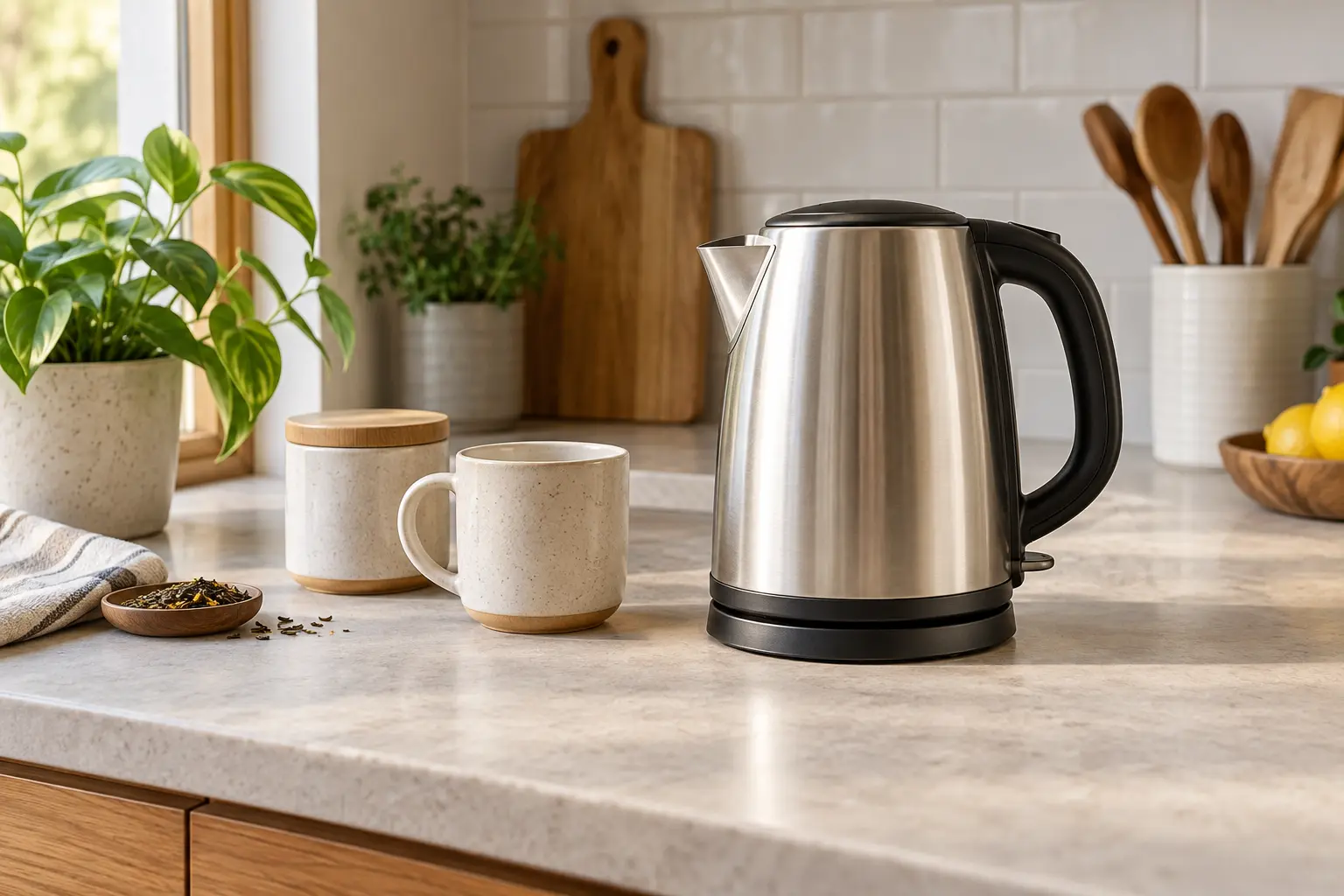
The best electric kettle is not automatically the most expensive one. For most kitchens, a dependable kettle with automatic shutoff, boil-dry protection, a comfortable handle and an easy-to-clean interior delivers better everyday value than a complicated model filled with settings you may never use.
Quick Verdict
Best choice for most homes: a 1.5- to 1.7-litre cordless kettle with a wide lid, clear water-level markings, automatic shutoff and boil-dry protection.
Best upgrade: a variable-temperature kettle if you regularly prepare green tea, delicate tea, French-press coffee or pour-over coffee.
Best for a small kitchen: a compact 1-litre model with a small base and cord storage. It heats only the water you need and gives more counter space back.
Who an Electric Kettle Is Best For
- Tea and instant-coffee drinkers who heat water several times a day.
- Anyone who wants hot water without using a saucepan or microwave.
- Small households that value speed and a compact countertop footprint.
- People who prepare oatmeal, soup cups, hot chocolate or pour-over coffee.
Who May Want to Skip It
- Homes that already have an instant hot-water dispenser.
- Anyone who rarely heats water outside normal cooking.
- Very small kitchens where even a compact appliance would remain unused.
- People who need a travel appliance; a full-size household kettle may not suit different voltages or hotel rules.
Choose the Right Type
| Kettle type | Best for | Main trade-off |
|---|---|---|
| Basic boil-only | Everyday tea, instant coffee and simple value | No temperature control |
| Variable temperature | Different teas and specialty coffee | Higher price and more controls |
| Gooseneck | Controlled pour-over coffee | Usually slower to pour for general kitchen use |
| Compact 1-litre | One or two people and small counters | More refills for guests |
| Large 1.7-litre | Families, entertaining and batch use | Larger footprint and heavier when full |
| Double-wall | Heat retention and a less-hot outer surface | Heavier and harder to see the water level |
Seven Features Worth Paying For
1. Automatic Shutoff and Boil-Dry Protection
These are the first features to check. Automatic shutoff turns the kettle off after the water boils. Boil-dry protection stops heating when there is too little water. Neither replaces careful use, but both are more important than decorative lights or app controls.
2. The Right Capacity
A 1-litre kettle is usually enough for one or two people and roughly three or four generous mugs. A 1.5- to 1.7-litre kettle makes more sense for a family, a home office with frequent refills or anyone who serves guests. Buying a kettle much larger than you need takes more space and encourages overfilling.
3. A Comfortable Handle and Controlled Pour
A good handle should feel balanced when the kettle is full and keep your hand comfortably away from the body and lid. The spout should pour in a clean stream without dribbling. If grip strength is a concern, compare the empty weight as well as the capacity.
4. An Easy-to-Clean Interior
Look for a lid that opens wide enough for cleaning and a concealed heating element that leaves a smoother base inside. A removable scale filter at the spout is also useful, especially in areas with hard water. Complicated seams and narrow openings make mineral buildup harder to remove.
5. Useful Water-Level Markings
Clear markings help you boil only what you need. Check whether the scale is visible from the side you naturally use. Some handsome kettles hide the window behind the handle, which can make filling less convenient.
6. A Stable Cordless Base
A 360-degree base lets you return the kettle from either direction, which is helpful for left- and right-handed users. A broad, non-slip base and cord storage keep the appliance steadier and the counter neater. Measure the full base, not just the kettle body, before buying for a narrow counter.
7. Recognized Electrical Certification and a Clear Warranty
Choose a model intended for your country and look for recognized electrical certification for your market. Check the warranty length, return policy and whether the company provides replacement filters or other small parts. A bargain is less appealing if support disappears when the lid or base develops a problem.
Is Variable Temperature Worth It?
Variable temperature is worthwhile when the drink changes with the day. Delicate teas can taste harsh when the water is too hot, while black tea and many instant foods benefit from hotter water. Coffee drinkers may also prefer control below a full rolling boil.
If you simply want boiling water for ordinary tea, instant coffee or cooking, one-button operation is faster to understand, easier to live with and usually less expensive. Temperature presets are a genuine upgrade only when you will use them.
Stainless Steel, Glass or Plastic?
Stainless steel is durable, hides mineral marks and suits most kitchens. Single-wall metal can become very hot, so keep hands on the handle.
Glass makes the water level easy to see and can look attractive on the counter. It also shows scale quickly and is heavier and more breakable.
Plastic keeps weight and price down. Look for a well-made model from a reputable seller and check which surfaces contact the water if material choice matters to you.
What About Speed and Wattage?
Higher-wattage kettles generally heat water faster, but the result also depends on household voltage, water quantity and starting temperature. In a North American kitchen, a good full-size kettle is often designed to use much of the power available from a standard outlet. Avoid sharing an overloaded circuit with other high-draw countertop appliances.
Small-Kitchen Buying Checklist
- Measure the counter area, including the base and handle.
- Check the height beneath upper cabinets with the lid fully open.
- Decide whether one litre is enough for normal use.
- Choose a cord length that reaches without crossing a sink or walkway.
- Make sure steam will not vent directly onto a cabinet or wall.
- Pick a finish you will be comfortable leaving visible every day.
If your counters already feel crowded, combine the kettle with the simple habits in The Small Kitchen Habits That Keep Counters Looking Clean. A defined appliance zone can also make a kitchen feel more intentional without a renovation.
Best Value vs. Upgrade Worth Buying
Best value: a straightforward cordless kettle with automatic shutoff, boil-dry protection, a wide lid and a removable scale filter. This covers the needs of most households without adding controls that complicate a basic job.
Upgrade worth buying: a variable-temperature model with a simple display and keep-warm function if you prepare several types of tea or coffee throughout the day.
Upgrade most people can skip: app control. Heating water is quick, and the kettle still needs to be filled before use. Reliable physical controls usually matter more.
Use It Safely
- Place the base on a dry, level surface away from the sink and counter edge.
- Do not fill above the maximum line.
- Keep the spout pointed away from cabinets, people and pets.
- Never immerse the kettle, base, plug or cord in water.
- Descale according to the manufacturer’s instructions.
- Stop using the kettle if the cord, plug, lid or base is damaged.
- Follow the manual for outlet, cleaning and extension-cord guidance.
Frequently Asked Questions
Is a 1-litre kettle big enough?
For one or two people, usually yes. It saves counter space and is lighter to lift. A larger kettle is more convenient when several people want hot drinks at the same time.
Does a keep-warm function use a lot of electricity?
It uses additional energy because the kettle reheats or maintains temperature. The exact amount varies by model and duration. If you rarely return for a second drink, boil fresh water instead.
How often should an electric kettle be descaled?
There is no single schedule for every home. Hard water and frequent use create scale faster. Inspect the interior regularly and follow the cleaning interval and method in the manual.
Is a gooseneck kettle better?
It is better for slow, controlled pouring over coffee grounds. For filling a teapot, soup cup or saucepan, a conventional spout is often quicker and more practical.
Availability, prices and specifications change. Confirm the current capacity, safety features, electrical certification and warranty on the retailer’s page before purchasing.
Final Answer
For most kitchens, the winner is a simple 1.5- to 1.7-litre cordless kettle with automatic shutoff, boil-dry protection, a comfortable handle and a wide opening for cleaning. Choose a compact 1-litre version if counter space matters more than serving a crowd. Pay extra for variable temperature only when different teas or specialty coffee are part of your normal routine.