
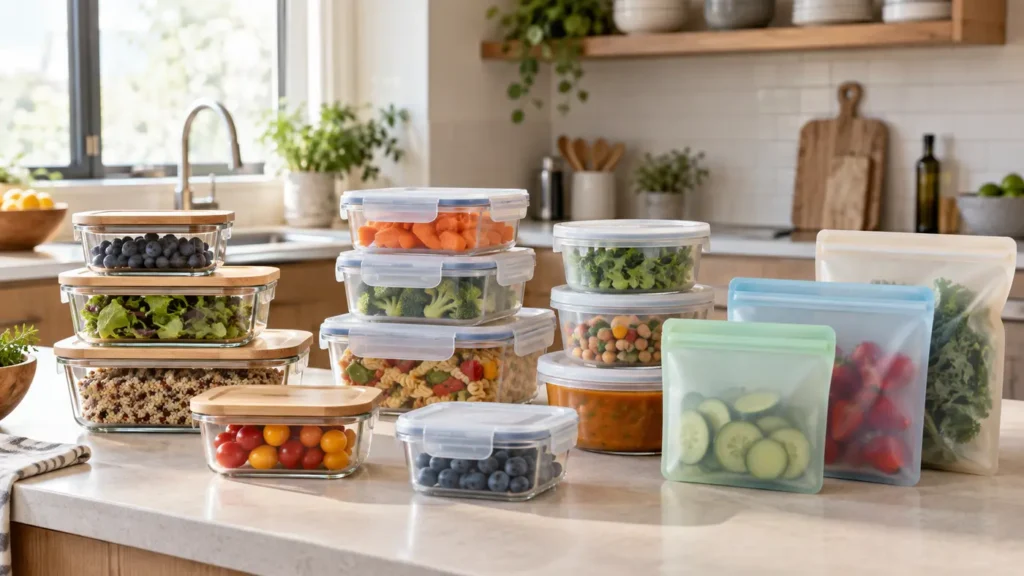
Best Food Storage Containers: Glass vs Plastic vs Silicone
Disclosure: This post contains affiliate links. If you buy through one of our links, we may earn a commission at no extra cost to you. Always follow the container maker’s temperature, microwave, freezer, dishwasher and oven instructions.
The best food storage containers are not simply the set with the most pieces. A useful set fits your refrigerator, stacks without wasting cabinet space, closes without a wrestling match and matches the way you actually cook. Glass, plastic and reusable silicone each solve different problems, which is why many kitchens work best with a small mix instead of one enormous matching collection.
This guide compares the three main materials, explains which lid and shape details matter, and helps you avoid paying for sizes that will sit unused.
Quick verdict
Choose glass for leftovers, reheating and stain resistance; lightweight plastic for lunches and everyday portability; and silicone bags or collapsible containers for snacks, freezer organization and space-saving storage. For most homes, the best starting set is a stackable rectangular glass set for meals plus a few lightweight containers for travel.
Glass vs plastic vs silicone
| Material | Best for | Main advantages | Watch for |
|---|---|---|---|
| Glass | Leftovers, meal prep, reheating | Resists odors and stains; easy to see contents; sturdy feel | Heavier; can chip or break; lids are usually not oven-safe |
| Plastic | Work lunches, children’s snacks, lightweight storage | Light, affordable and easy to carry | Can stain, scratch or retain odors; heat limits vary |
| Silicone | Snacks, freezer storage, travel and compact cabinets | Flexible, reusable and often space-saving | Can be slower to dry; seals and support vary by design |
Who should choose glass containers?
Glass is the strongest all-round choice for people who cook several portions at once and want to move food from refrigerator to microwave without changing containers. It does not absorb tomato, curry or garlic odors as readily as many plastics, and the clear sides make forgotten leftovers easier to spot.
Look for tempered glass from a reputable manufacturer, but remember that no household glass is indestructible. Sudden temperature changes, chips and hard impacts can cause breakage. Do not move a frozen glass container directly into a hot oven or onto a hot surface unless the instructions explicitly permit that use. The plastic or bamboo-style lid is normally not oven-safe, even when the glass base is.
Glass is less convenient for commuting. A full container adds noticeable weight to a lunch bag, and a drop onto concrete can end its useful life. If you carry meals daily, keep glass at home and use a lighter travel container.
Who should choose plastic containers?
Plastic makes sense when low weight and easy handling matter most. It is practical for lunches, snacks, picnics and sending leftovers home with family. A carefully chosen set can also cost less than glass while offering more sizes.
Do not assume every plastic container is suitable for every kind of heating. Check the exact microwave and dishwasher directions. Vent the lid as directed, avoid heavily scratched containers and replace pieces that are warped, cracked or no longer seal correctly. A microwave-safe label describes intended use under specified conditions; it does not mean the container is immune to staining, wear or overheating.
Square and rectangular plastic containers use refrigerator space more efficiently than round ones. Transparent bodies are easier to manage than opaque containers because you can see what needs to be eaten first.
When silicone storage works best
Reusable silicone bags are useful for chopped produce, sandwiches, snacks and freezer portions. Their flexible shape can squeeze into gaps that rigid boxes cannot, and some designs stand upright for filling. Collapsible silicone bowls can save cabinet room in an RV, apartment or small kitchen.
The tradeoff is structure. A soft bag filled with soup can be awkward to carry, and a shallow closure can open if it is packed carelessly. Test the seal over a sink before transporting liquid. Dry silicone fully before putting it away, especially around folded edges and closure tracks.
Shape matters more than piece count
A 24-piece set may mean 12 bases and 12 lids. More importantly, half the bases may be too small or too large for your normal portions. Before buying, list the jobs you need covered:
- Two-portion dinner leftovers
- Single lunch portions
- Cut fruit or vegetables
- Sauces and toppings
- Freezer-ready batch cooking
- Dry snacks or pantry ingredients
Rectangles are usually the best use of shelf space. Round containers are excellent for soups and stirring, but they leave gaps when lined up. Shallow containers cool food faster and make stacked leftovers easier to identify. Tall containers suit soups and bulky produce but can become unstable when stacked.
Look closely at the lids
The base may last for years while the lid becomes the weak point. Hinged locking tabs can create a reassuring seal, but the hinge area can eventually fatigue. Press-on lids are fast and compact, though they may loosen if the rim warps. Flexible stretch lids fit several bowl sizes but are not always ideal for transport.
Check whether replacement lids are sold separately. That one detail can extend the life of the entire set. Also look for:
- A removable gasket that can be cleaned and dried completely
- Tabs large enough to open without straining fingers
- Lids that nest or clip together for storage
- A vent designed for microwave use, if you reheat often
- A seal description that distinguishes leak-resistant from genuinely leakproof
Stacking and nesting: two different things
Stacking describes how securely filled containers sit on top of one another in the refrigerator. Nesting describes how empty containers fit inside each other in the cabinet. A set can be good at one and poor at the other.
For a small kitchen, measure your cabinet shelf and the refrigerator space you normally use. Straight-sided containers may not nest as tightly, but they often stack neatly when full. Deeply tapered containers nest well but sacrifice some usable interior volume. The best compromise keeps two or three common footprints across several heights.
Freezer, microwave and oven use
Read the instructions for every component rather than assuming the base and lid share the same limits. Leave expansion space when freezing liquids. Cool hot food as recommended before sealing and refrigerating it, and avoid thermal shock with glass.
Microwave venting matters because steam pressure builds under a tight lid. Loosen or open the specified vent and use short heating intervals, stirring when practical. Even when a container is dishwasher-safe, the top rack may be recommended for lids and flexible components.
Food storage habits matter too
A good container cannot make unsafe storage practices safe. Refrigerate perishable food promptly, label leftovers with the date and discard food when you are unsure how long it has been stored. Use first-in, first-out organization so older portions remain visible.
A simple erasable label system prevents mystery containers. Put the food name and date on the lid, then group ready-to-eat items on one refrigerator shelf. This small routine works well alongside our guide to small kitchen habits that keep counters looking clean.
Features worth paying for
- Replaceable lids: protects the value of the bases.
- Consistent footprints: makes refrigerator stacking more stable.
- Clear capacity markings: useful for meal prep and portioning.
- Removable gaskets: allows better cleaning around the seal.
- Useful medium sizes: generally earn more use than novelty mini containers.
- A restrained set: fewer well-chosen pieces are easier to store than a giant bundle.
Common buying mistakes
- Counting lids as full pieces without checking the number of actual containers
- Buying mostly tiny sizes because the set looks generous
- Assuming every glass base is oven-safe
- Transporting soup in a container described only as airtight
- Ignoring the stored height of nested lids
- Choosing a complicated gasket that is difficult to remove and dry
- Buying a brand that offers no replacement lids
Care that keeps containers usable
Let oily or strongly colored food cool before storing it in plastic, provided food-safety timing is respected. Wash soon after use. A baking-soda paste may help with some odors or stains, but follow the manufacturer’s care directions and avoid abrasive tools that scratch the surface.
Inspect glass rims for chips and plastic for deep scratches, clouding or warping. Dry lids and gaskets separately before reassembly. Store containers with lids loose or off when possible so trapped moisture and odors can escape.
Frequently asked questions
Are glass containers always better than plastic?
No. Glass is excellent for home storage and reheating, while plastic is lighter and easier to carry. The better material depends on the job.
Do airtight containers prevent all leaks?
Not necessarily. Airtight usually refers to air exchange, while leakproof describes resistance to liquid escaping. Check the product’s exact wording and test before carrying soup or sauce.
Can I freeze food in glass containers?
Many are designed for freezer use, but leave room for expansion and follow the temperature-change instructions. Do not use chipped glass or force a frozen container into sudden high heat.
How many containers does a household need?
Start with the number of leftover and lunch portions you normally store over two or three days. A modest set of frequently used sizes is usually easier to manage than a large set with duplicates.
Are reusable silicone bags hard to clean?
Wide-opening, stand-up designs are easier to wash and dry. Turn them only if the manufacturer permits it, and make sure seams and closure tracks are fully dry.
Shop food storage containers
Compare usable sizes, stored dimensions, replacement-lid availability and temperature instructions before ordering.
Shop Amazon USA
Shop Amazon Canada
Who should buy it—and who should skip it
Choose glass if: you prioritize stain resistance, reheating, and long service life. Choose plastic if: low weight and drop resistance matter most. Choose silicone if: collapsible storage is the priority.
Skip replacing what you own if your current containers seal well, are food-safe, and still fit your routine.
Best value
A small matched set in the material you use most is better value than a huge assortment of odd sizes. Replace only the sizes you repeatedly reach for.
When the upgrade is worth it
Pay more for dependable seals, replaceable lids, stackable shapes, and oven/freezer compatibility you will actually use. Premium branding alone does not improve storage.
Final answer
For most homes, glass rectangular containers are the best core set because they handle leftovers, reheating and stains well. Add a few lightweight plastic containers for travel and reusable silicone bags for snacks or flexible freezer storage. Buy by the sizes you use, not by the piece count, and prioritize replacement lids, secure stacking and care instructions you will actually follow.
Building a compact cooking setup too? See our air fryer size guide and electric kettle buying guide.