
Best Pantry Organizers for a Small Kitchen
Disclosure: As an Amazon Associate, My Indoor Space may earn from qualifying purchases made through links in this guide, at no extra cost to you.
A small pantry becomes frustrating when every shelf is packed but useful food still disappears behind taller packages. The best organizers do not simply add containers; they make everyday items visible, reachable, and easy to return to the right place.
Before buying a matching set, measure the actual shelf opening, depth, and vertical clearance. Then organize around what you store most often. A few correctly sized pieces usually outperform a large bundle of bins that leaves awkward gaps.
Quick verdict
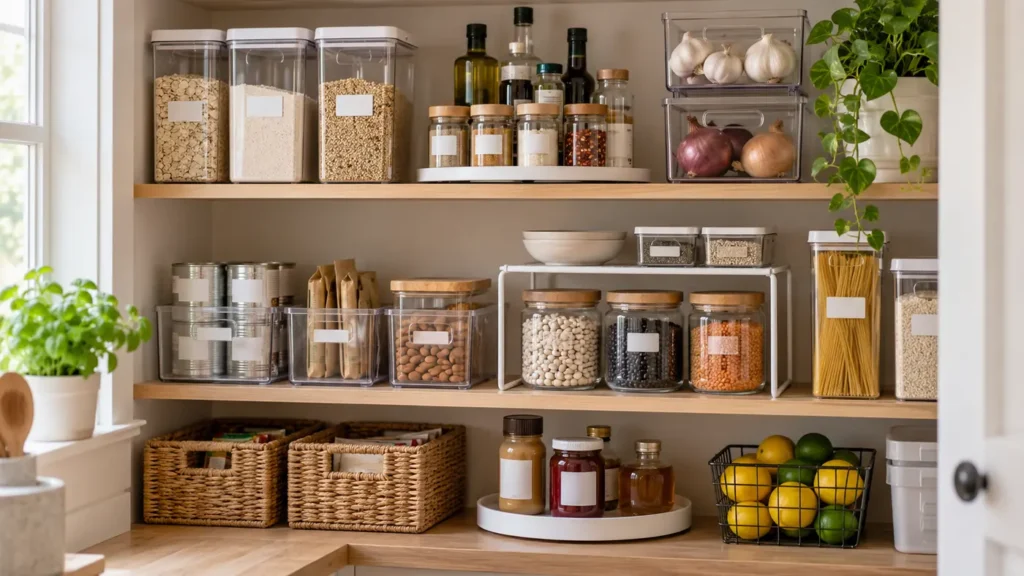
Start with clear open-front bins for categories, a turntable for bottles, and one adjustable shelf riser for cans or jars. Add airtight containers only for foods that benefit from a seal. Choose pieces that fit the shelf and your habits, not a staged pantry photo.
What to compare first
| Feature | Why it matters | Practical target |
|---|---|---|
| Open-front bins | Keep packets and snacks grouped | Handles plus straight sides |
| Turntable | Makes bottles in a corner reachable | Raised rim and non-slip base |
| Shelf riser | Uses vertical space above short items | Stable, adjustable width |
| Airtight container | Protects selected dry foods | Simple seal and wide opening |
Measure before you shop
Measure shelf width, depth, height, and the narrowest point at the door frame. Note hinges, shelf supports, and any lip that reduces usable space. Leave enough clearance to lift a bin or open a lid without scraping the shelf above.
Sketch each shelf and assign a purpose before choosing products. Repeating a few modular widths makes the layout easier to change later, while unusually shaped organizers can create wasted strips of space.
Choose visibility over perfect matching
Clear bins help you see remaining stock, but perfectly transparent containers are not essential for every category. Open bins with simple labels can work better for packets, baking supplies, lunch items, and snacks because nothing needs to be decanted.
Avoid deep bins for tiny items unless they include dividers. If products stack in multiple layers, the organizer has recreated the same hidden-item problem it was meant to solve.
Use turntables in difficult corners
A turntable is useful for oils, vinegars, condiments, and jars that would otherwise be pushed to the back. A raised edge helps prevent narrow bottles from tipping when the tray rotates.
Check diameter carefully. A turntable that is too large may hit the wall or shelf frame; one that is too small wastes the corner. Divided models can help, but fixed sections may limit what fits.
Add vertical storage carefully
Shelf risers create a second level for cans, mugs, jars, or short food boxes. Adjustable models are helpful when shelf widths differ, but the expanded center should remain rigid under the expected load.
Tiered steps improve label visibility, although they consume more depth than a flat riser. Keep heavier containers on the lowest level and do not stack glass where it can be knocked forward.
Decide what really needs an airtight seal
Flour, sugar, rice, cereal, and some snacks may benefit from airtight storage when humidity, pests, or stale food are concerns. The lid should seal consistently, come apart for cleaning, and be easy to operate with dry or slightly damp hands.
Decanting everything creates work and can hide cooking instructions or best-before dates. Keep labels or write the product name and date on the container. Do not mix new food into an old batch before washing and drying the container.
Plan for cleaning and maintenance
Smooth corners and removable parts make organizers easier to clean. Confirm whether a product is dishwasher-safe; many large bins and lids should be hand-washed to avoid warping.
Wipe spills promptly and let containers dry completely before refilling them. Once a month, bring older items forward and remove empty packages so the system continues to save space.
Build zones that match your routine
Place breakfast, baking, snacks, or dinner staples together based on how your household cooks. Store daily items between waist and eye level, with bulk refills and rarely used supplies higher or lower.
A small back-stock limit prevents overbuying. If a category no longer fits its bin, use what you have before adding more storage. The organizer should set a useful boundary rather than justify extra clutter.
Common buying mistakes
- Buying a large set before measuring every shelf.
- Using tall sealed containers for foods that are already convenient in their packaging.
- Choosing bins with heavily tapered sides that waste shelf width.
- Packing organizers so tightly that none can be removed easily.
- Ignoring dates and care instructions after decanting food.
Frequently asked questions
Are clear pantry bins worth it?
They are useful when visibility prevents duplicate purchases and forgotten food. Open-front or handled bins are often more practical than lidded boxes for items used every day.
Should pantry containers be airtight?
Use airtight containers for foods that benefit from moisture and pest protection. Packets, cans, and frequently used snacks may only need an open category bin.
What is the best organizer for a deep pantry shelf?
Use a pull-out bin, turntable, or clearly defined front-and-back zones. Avoid placing small loose items in the rear where they cannot be seen.
How much space should I leave around bins?
Leave enough room to grip and lift each bin without rubbing neighboring pieces. A small amount of clearance also makes cleaning easier.
Can I organize a pantry without decanting food?
Yes. Group original packages in bins, use shelf risers for cans, and add labels to zones. Decant only where it provides a real freshness or visibility benefit.
Who should buy them—and who should skip
Buy organizers if: pantry items are hard to see, deep shelves waste space, or food repeatedly expires because it gets buried.
Skip them if: the pantry already works well and adding bins would reduce usable space or hide labels.
Best value
Start with a few clear bins or turntables sized to the shelves and the foods you buy most. A small targeted setup is better value than filling every shelf with containers.
When the upgrade is worth it
Pay more for sturdy stackable bins, smooth turntables, or pull-out systems when they solve deep-shelf access. Decorative matching sets are not worth extra if they reduce flexibility.
Final answer
The best small-kitchen pantry system begins with accurate measurements and a few flexible tools. Prioritize access, visibility, stable construction, and easy cleaning. A simple arrangement of bins, a turntable, and a shelf riser is usually easier to maintain than a complicated wall of matching containers.
For more practical kitchen storage ideas, see our food storage container guide and kitchen habits for clear counters.