Home Organization

Decluttering, storage and practical organization ideas for a calmer home.

Useful furniture and storage in an overlooked corner of a home
Cozy Living, Home Organization

The Forgotten Corners of Your Home That Can Become Useful Spaces
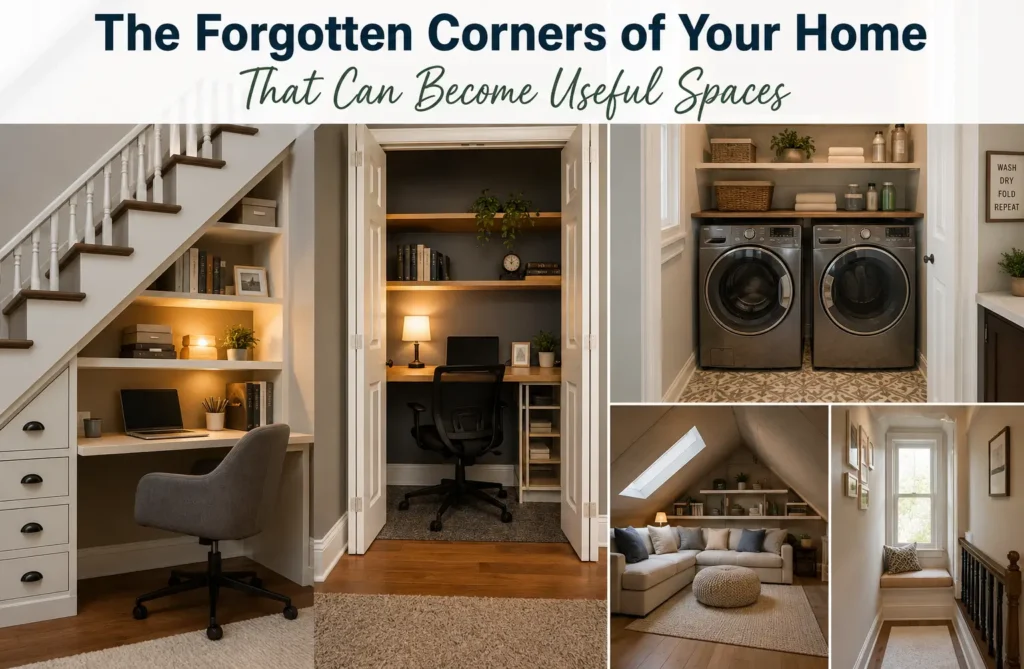
Every home has spaces that are often ignored. They collect dust, become clutter magnets, or simply sit empty because we aren’t sure what to do with them. With a little creativity and a few practical additions, these forgotten areas can become some of the most useful parts of your home.

Let’s take a look at four places that deserve a second chance.

Under the Stairs

The space beneath a staircase is one of the biggest missed opportunities in many homes. Instead of storing random boxes, turn it into organized storage with shelving, baskets, or cabinets.

It’s a great place for shoes, books, pet supplies, seasonal decorations, or even a small reading nook if you have enough room.

Empty Hallway Ends

That blank wall at the end of your hallway doesn’t have to stay empty.

A narrow bookshelf, floating shelves, or a slim console table can add both storage and style without taking up much space. Add a lamp or a framed photo to make the area feel warm and inviting.

Wide Landings

If your staircase has a large landing, think of it as an extra room.

A comfortable chair, a small side table, and a corner lamp can create a quiet reading space. You could also add a bookshelf or a few indoor plants to give the area more personality.

Awkward Corners

Every home seems to have one corner that’s difficult to decorate.

A corner shelving unit, floor lamp, or storage bench can completely change the look of the space while making it more functional. Even a decorative basket can help organize blankets, magazines, or children’s toys.

You’ll be surprised how much bigger and more organized your home feels when every corner has a purpose.


🛒 Buy on Amazon USA

Looking to transform those forgotten spaces? These products can help:


Final Thoughts

You don’t always need to renovate your home to make it feel bigger or more functional. Sometimes the best improvements come from simply looking at your space with fresh eyes. Those forgotten corners you’ve been walking past every day could become your favorite and most useful spots in the house.


🍁 Buy on Amazon Canada

Looking to transform those forgotten spaces? These products can help:
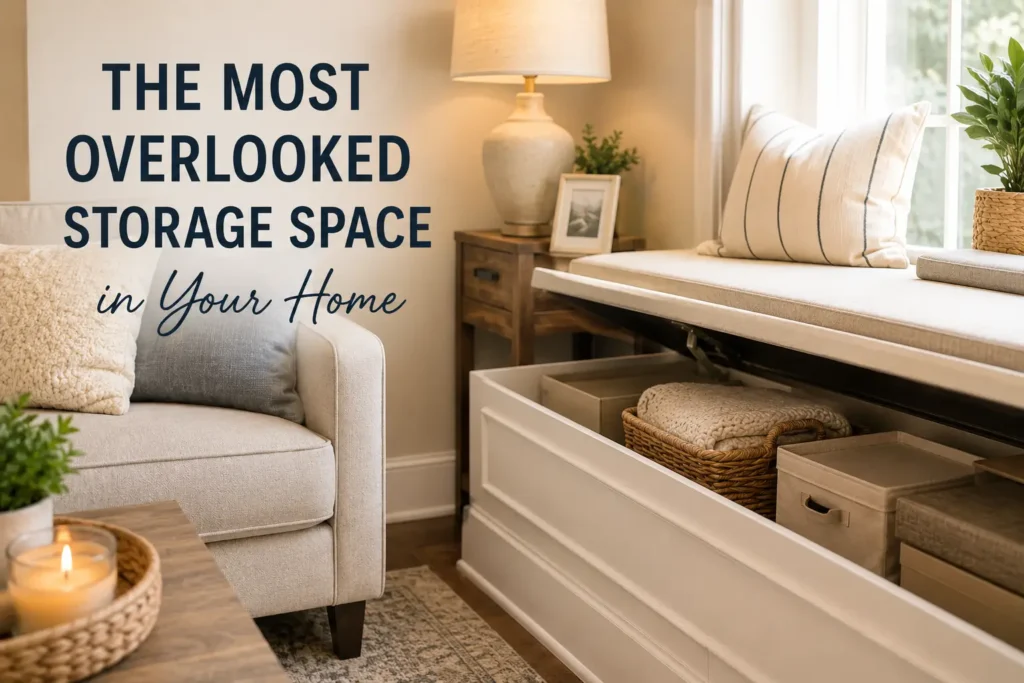
Organized under-bed storage in a bedroom
Cozy Living, Home Organization

The Most Overlooked Storage Space in Your Home

When most people think about storage, they focus on closets, shelves, and cabinets. But one of the most overlooked storage areas in the home is often hiding in plain sight—under the bed.

That space can be used to store seasonal clothing, extra bedding, shoes, holiday decorations, and other items that don’t need to be accessed every day. Using low-profile storage containers helps keep everything organized while making the most of unused space.

Another commonly overlooked area is vertical wall space. Floating shelves, wall hooks, and over-the-door organizers can create valuable storage without taking up precious floor space.

The key is to look beyond traditional storage areas and use every part of your home more efficiently.

A few smart storage solutions can help reduce clutter and make even a small home feel larger and more organized.


🇺🇸 Buy on Amazon USA

Under-Bed Storage Containers

Perfect for storing seasonal clothing, blankets, and shoes.

Vacuum Storage Bags

Save space by compressing bulky bedding and winter clothing.

Floating Wall Shelves

Add storage without using floor space.

Over-the-Door Organizers

Great for bedrooms, bathrooms, and closets.

Storage Bins with Lids

Keep items protected and easy to organize.

Bed Risers

Create additional storage space under the bed.


🕯️ Final Thoughts

Many homes already have hidden storage opportunities—they just aren’t being used. By taking advantage of under-bed storage and vertical wall space, you can reduce clutter, stay organized, and make your home feel more spacious without adding extra furniture.


🍁 Buy on Amazon Canada

Under-Bed Storage Containers

An easy way to maximize unused space.

Vacuum Storage Bags

Store bulky items while saving valuable room.

Floating Wall Shelves

Add both storage and decorative display space.

Over-the-Door Organizers

Perfect for organizing small items throughout the home.

Storage Bins with Lids

Keep belongings tidy and easy to find.

Bed Risers

A simple way to create extra storage in smaller homes.

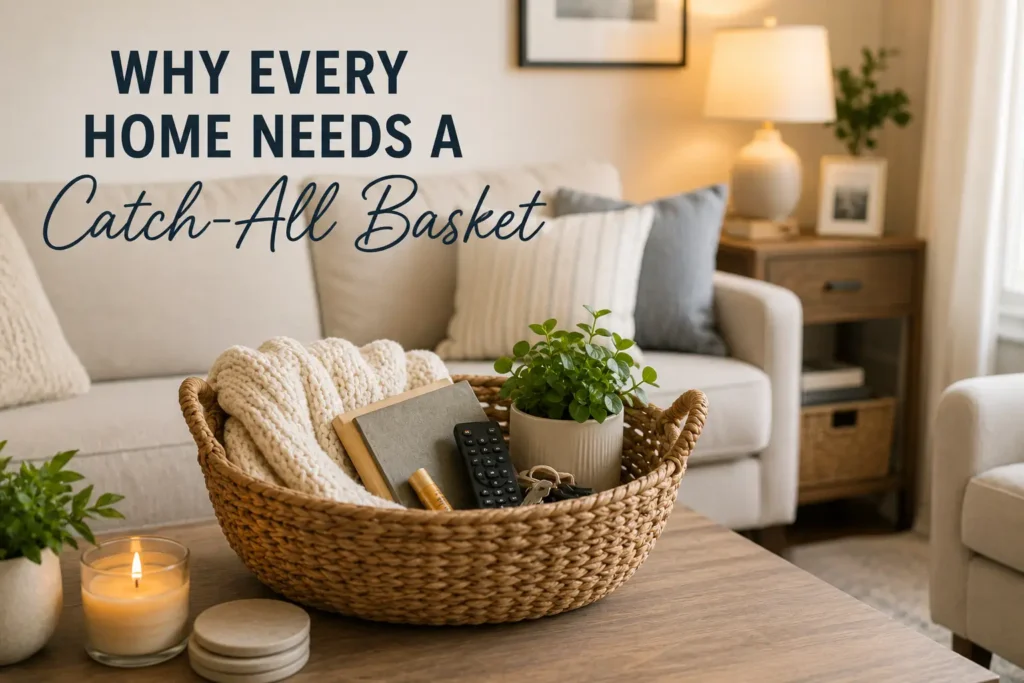
Entryway catch-all basket holding everyday household items
Cozy Living, Home Organization

Why Every Home Needs a Catch-All Basket

If clutter seems to appear out of nowhere, a catch-all basket might be the simplest solution you’ve never tried.

A catch-all basket is exactly what it sounds like—a designated place for everyday items that tend to get left around the house. Keys, mail, remotes, chargers, reading glasses, and other small items can quickly make a room feel messy.

Instead of letting these things pile up on tables and countertops, place a decorative basket in a convenient location. It keeps clutter contained while making it easy to find the items you use most often.

The best part? It takes almost no effort. Rather than constantly tidying up, you simply drop items into the basket and sort them later when you have time.

It’s a small change that can make your home feel more organized every day.


Buy on Amazon USA

Decorative Woven Basket

Perfect for storing everyday clutter while adding style.

Entryway Organizer Basket

Great for keys, wallets, sunglasses, and mail.

Storage Ottoman

Provides hidden storage and extra seating.

Wooden Catch-All Tray

Keeps small items neatly organized on tables and counters.

Decorative Storage Bin Set

Ideal for living rooms, bedrooms, and home offices.

Floating Shelf with Basket Storage

Adds organization without taking up floor space.


🕯️ Final Thoughts

Sometimes the best organizing solutions are the simplest ones. A catch-all basket gives everyday items a home, reduces visual clutter, and helps keep your living spaces looking tidy with very little effort.


🍁 Buy on Amazon Canada

Decorative Woven Basket

A stylish way to control everyday clutter.

Entryway Organizer Basket

Keep essentials organized and easy to find.

Storage Ottoman

Hide clutter while adding function to your room.

Wooden Catch-All Tray

Perfect for organizing keys, mail, and accessories.

Decorative Storage Bin Set

A versatile storage solution for any room.

Floating Shelf with Basket Storage

Adds both display space and practical organization.

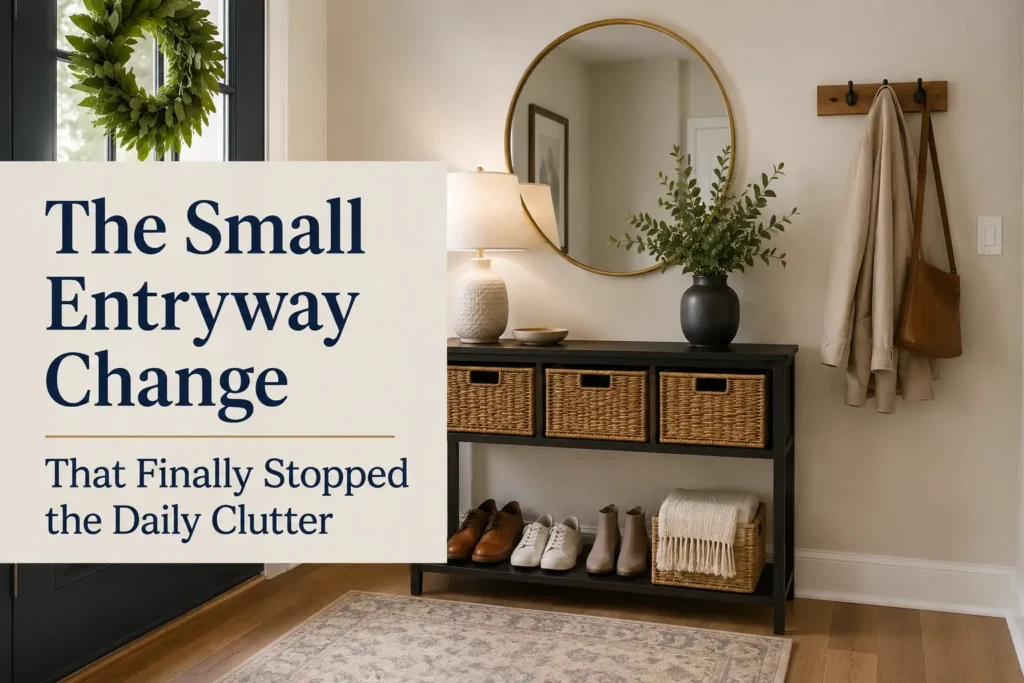
Organized small entryway with hooks and storage
Cozy Living, Home Organization

The Small Entryway Change That Finally Stopped the Daily Clutter

Walking through the front door should feel like arriving home — not like stepping into a small pile of chaos. For a long time, though, that’s exactly what it felt like for me. Keys ended up on random tables. Mail piled up on the counter. Bags landed wherever there was space. Coats sometimes made it to the closet, but more often they hung over a chair or the back of a door. None of it felt dramatic on its own, but together it created a quiet kind of daily clutter that made the house feel more stressful than it needed to be.

What I eventually realized is that the problem wasn’t the stuff — it was the lack of a simple landing place for it. Every home benefits from what people sometimes call a “drop zone,” a small, intentional area near the door where everyday items can land the moment you walk in. It doesn’t need to be large or fancy. It just needs to exist. Once I created one, the difference in how the space felt was surprisingly noticeable.

A drop zone works because it matches how people actually move through their homes. When you arrive home, you’re usually carrying something — keys, a bag, a jacket, maybe the day’s mail. If there isn’t an obvious place for those items, they scatter naturally. But when there is a bench, a hook, or a small tray waiting nearby, everything suddenly has a home. Keys land in the tray. Bags hang on the hooks. Mail gets placed in a small organizer instead of drifting around the house.

What surprised me most was how small the setup could be. Even a narrow section of wall can become an effective drop zone with just a few pieces. A small bench gives you a place to sit while removing shoes and provides hidden storage underneath. A row of simple hooks instantly solves the coat-and-bag problem. A tray for keys prevents that familiar daily search through pockets and counters. None of it feels complicated — but together it changes the rhythm of coming home.

I also noticed that once a drop zone exists, the rest of the house naturally stays tidier. Instead of everyday items migrating through different rooms, they stop right at the door where they belong. The living room feels calmer. The kitchen counters stay clearer. The entryway quietly handles the little bits of life that used to spread everywhere.

🛋️ Human line:
“I didn’t expect something this simple to make my home feel calmer.”

There’s something reassuring about walking into a home where the first few steps already feel organized. It removes a tiny bit of friction from daily life — the kind of friction you barely notice until it disappears.


📦 Buy on Amazon USA

Entryway Bench with Storage

Wall Mounted Coat Hooks

Decorative Key Tray

Small Entryway Storage Cabinet


🕯️ Final Thoughts

Small home changes rarely feel dramatic at first. A drop zone near the door is one of those subtle upgrades that quietly improves everyday life without calling attention to itself. It simply works in the background, catching the things you carry and giving them a natural place to land.

Over time, those small habits add up. Keys stop disappearing. Mail stays contained. Bags and coats stop drifting from room to room. The entryway becomes less of a transition space and more of a quiet system that keeps the rest of the home running smoothly.

Sometimes the most helpful improvements in a home aren’t the big renovations or expensive furniture pieces. They’re the simple adjustments that make daily routines easier — the kind that make you walk through the door and feel like everything already has its place.


📦 Buy on Amazon Canada

Entryway Bench with Storage

Wall Mounted Coat Hooks

Decorative Key Tray

Small Entryway Storage Cabinet

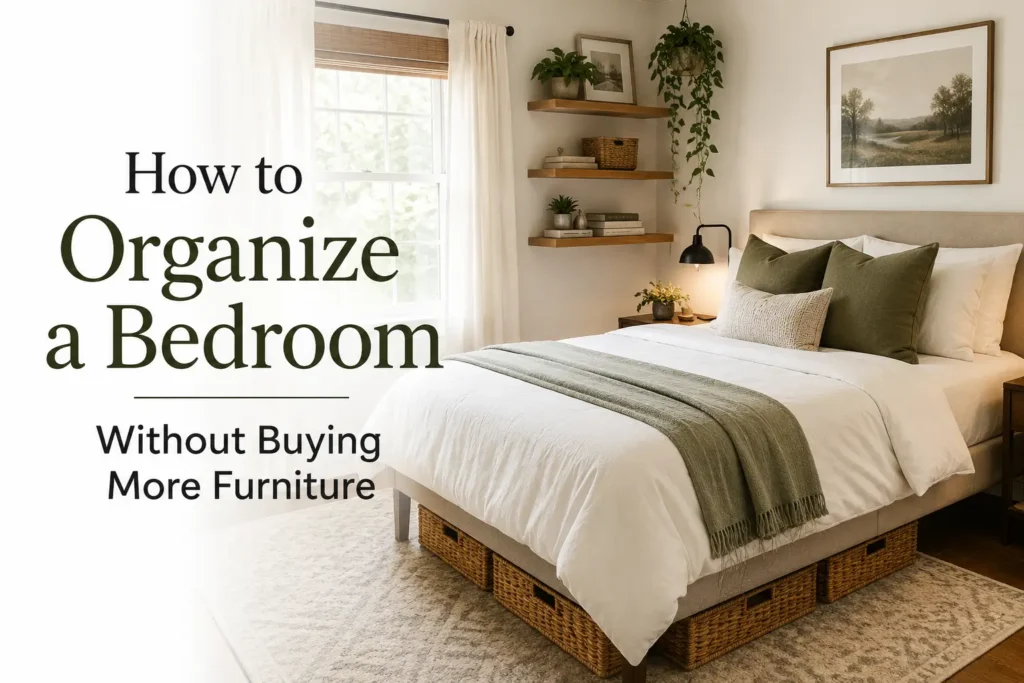
Neatly organized bedroom using existing furniture
Cozy Living, Home Organization

How to Organize a Bedroom Without Buying More Furniture

A cluttered bedroom can make it difficult to relax, sleep, and enjoy your space. The good news is that getting organized doesn’t always require buying new furniture or spending a lot of money. Sometimes the best solutions involve making better use of the space you already have.

Here are some simple ways to organize your bedroom using what you already own.

🛏️ Start by Removing What You Don’t Need

Before organizing anything, take a quick look around the room and identify items that no longer belong there.

Consider removing:

  • Clothes you no longer wear
  • Empty boxes and packaging
  • Old magazines and papers
  • Broken or unused electronics
  • Decorative items that create visual clutter

The less you have to manage, the easier organization becomes.

👕 Maximize Your Closet Space

Most closets have unused vertical space.

Try:

  • Hanging shorter clothing together
  • Storing seasonal items on higher shelves
  • Using matching hangers to save room
  • Folding sweaters and jeans neatly instead of hanging everything

A well-organized closet instantly makes the entire bedroom feel cleaner.

📦 Use Under-Bed Storage

The area under your bed is valuable storage space.

Store:

  • Extra bedding
  • Seasonal clothing
  • Shoes
  • Travel bags

Even simple storage bins can help keep these items out of sight while remaining easy to access.

🧺 Create a Laundry System

Dirty clothes are often one of the biggest sources of bedroom clutter.

Use:

  • A dedicated laundry basket
  • A separate basket for clean clothes waiting to be folded
  • A routine for putting clothes away immediately

This small habit can make a huge difference.

📚 Organize Nightstands and Surfaces

Flat surfaces tend to attract clutter.

Keep only essential items on your nightstand:

  • Lamp
  • Phone charger
  • Book or e-reader
  • Glass of water

Everything else should have a designated place elsewhere in the room.


📦 Buy on Amazon USA

Under-Bed Storage Containers

Fabric Storage Bins for Closets

Slim Laundry Hamper for Small Bedrooms

Drawer Organizer Trays

Over-the-Door Hanging Organizer


🕯️ Final Thoughts

Organizing a bedroom doesn’t have to involve expensive furniture or a complete makeover. By decluttering, maximizing closet space, using under-bed storage, and creating simple daily habits, you can transform your bedroom into a cleaner, calmer, and more relaxing space.

Small improvements often have the biggest impact, and the best part is that most of these changes can be made today using items you already have.


🍁 Buy on Amazon Canada

Under-Bed Storage Containers

Fabric Storage Bins for Closets

Slim Laundry Hamper for Small Bedrooms

Drawer Organizer Trays

Over-the-Door Hanging Organizer

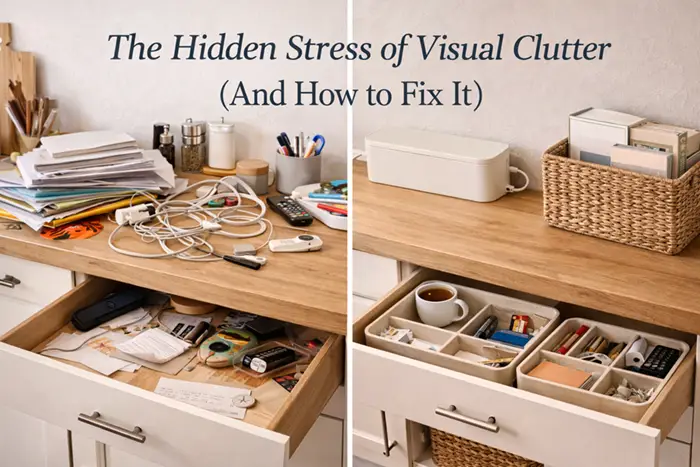
Calm uncluttered room with clear surfaces and organized cables
Cozy Living, Home Organization

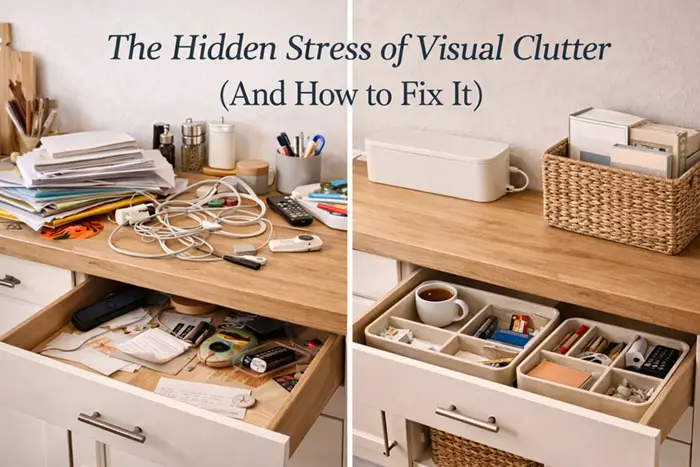
The Hidden Stress of Visual Clutter (And How to Fix It)

There’s a kind of clutter that doesn’t always seem serious at first. It’s not piles of garbage or a room that’s completely messy. It’s smaller things — cables sitting on a desk, a few random items on the kitchen counter, papers stacked in a corner that slowly grow over time. Individually they seem harmless, but together they quietly change how a room feels.

I started noticing that certain parts of my home felt slightly stressful even when nothing major was wrong. The counters weren’t dirty. The room wasn’t chaotic. But my eyes kept landing on small piles of things that didn’t quite belong anywhere. That subtle visual noise made the space feel more restless than it needed to be.

Visual clutter affects the brain in a way people don’t always realize. When objects compete for attention, your mind keeps processing them in the background. A stack of papers, tangled cables, or scattered accessories becomes something your brain keeps noticing over and over again. Even if you’re not consciously thinking about it, the space feels busier than it should.

One of the biggest culprits turned out to be cables. Charging cords and device wires tend to spread across desks and side tables without anyone noticing. Once I started using a simple cable box to gather them together, the difference was immediate. Suddenly the desk looked calmer because the wires weren’t constantly pulling your attention.

Drawer organizers helped in a similar way. Small items like pens, remotes, adapters, and tools often end up scattered around because they don’t have a defined place. Giving those objects a simple structure inside a drawer means they disappear from view but remain easy to find when you need them.

Storage bins also solved the issue of random items that move around the room during the day. A basket or bin doesn’t need to be complicated — it just gives wandering objects a home so they don’t end up creating new clutter piles on tables or countertops.

Even desktop trays can change the feel of a space. When a few everyday items sit neatly inside a tray instead of spreading across a surface, the whole desk suddenly looks intentional rather than messy. The room hasn’t changed much physically, but visually it feels more organized.

Once I started paying attention to these small details, the shift was noticeable. I didn’t expect something this simple to make my home feel calmer. But removing visual clutter quietly removes a lot of background stress that builds up during the day.

📦 Buy on Amazon USA

Cable Management Box for Desks and Charging Stations

Expandable Drawer Organizer for Home Storage

Fabric Storage Bins for Shelves and Closets

Minimalist Desktop Organizer Tray


🕯️ Final Thoughts

Clutter doesn’t always show up as a major mess. Often it’s the smaller things — loose objects, cables, or scattered items — that slowly create visual tension in a room. When too many things compete for attention, the space can feel busier than it really is.

What helps most is giving everyday objects a simple home. Cable boxes, organizers, and trays don’t remove the items you use — they just contain them so the room can breathe again.

Over time, these small changes make a home feel calmer and easier to live in. The space looks clearer, the mind feels quieter, and everyday routines start to feel a little smoother.

📦 Buy on Amazon Canada

Cable Management Box for Desks and Charging Stations

Expandable Drawer Organizer for Home Storage

Fabric Storage Bins for Shelves and Closets

Minimalist Desktop Organizer Tray

Cozy Living, Home Organization

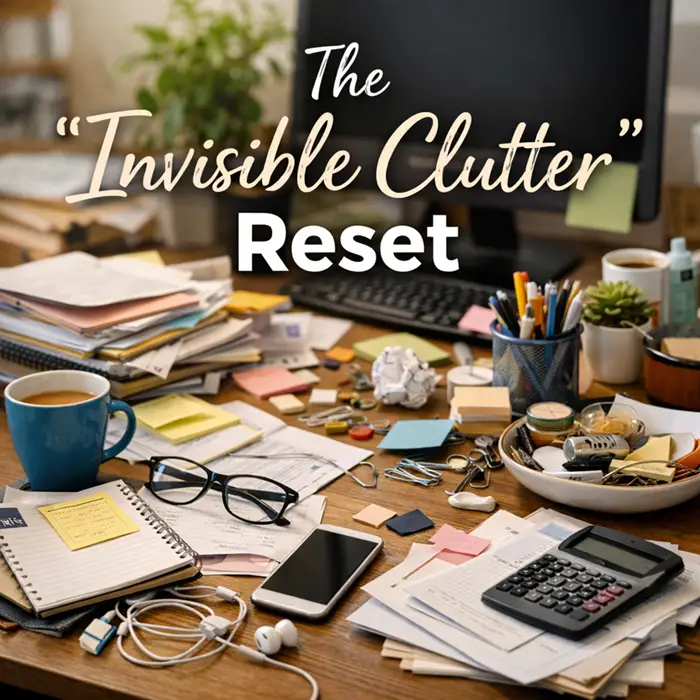
The “Invisible Clutter” Reset

Your brain notices more than you think.

I didn’t realize how much visual noise was sitting in my space until I stopped trying to “clean” and just stood still for a minute. Not scrubbing. Not organizing. Just looking. And once I saw it, I couldn’t unsee it.

It wasn’t dirt. It wasn’t chaos. It was the small things my eyes kept tripping over — cords looping across the floor, storage bins that didn’t match, surfaces holding just one too many items, random paper piles that weren’t urgent but also weren’t gone. Nothing dramatic. Just constant low-level distraction.

I didn’t expect something this simple to make my home feel calmer.

When I started paying attention, I realized my brain was quietly cataloging all of it. Every visible cable. Every overloaded shelf. Every uneven stack of documents. It wasn’t stressful in a loud way. It was subtle — like background static. And once I removed a few of those friction points, the room didn’t just look better. It felt lighter.

The first thing I tackled was cords. Not all of them — just the obvious ones. A cable box to hide the power strip. A simple cord organizer under the desk. Suddenly the floor looked intentional instead of busy. My eyes stopped snagging on black wires against light walls.

Then I looked at storage. Mismatched bins aren’t wrong… but when they sit out in the open, they create visual tension. Swapping them for a matching set instantly made the room feel coordinated without adding anything new. Same amount of stuff. Different visual rhythm.

Paper piles were next. I didn’t throw everything away. I just gave the papers a defined home — a document tray that made them look purposeful instead of forgotten. That small shift changed how the entire surface felt.

This reset isn’t about deep cleaning. It’s about removing the small visual interruptions your brain keeps processing in the background.

And once they’re gone, you notice something surprising:

Silence.

Not literal silence — visual silence. Your eyes move smoothly through the room instead of hopping from distraction to distraction. The space feels finished. Settled.

I didn’t expect something this simple to make my home feel calmer.


📦 Buy on Amazon USA

Cable Management Box

Under-Desk Cord Organizer Tray

Matching Storage Baskets (Set)

Document Paper Tray Organizer


🕯️ Final Thoughts

Invisible clutter is sneaky. It doesn’t shout at you the way a messy kitchen does. It just lingers — quietly tugging at your attention every time you walk past. And over time, that small tug adds up.

What surprised me most wasn’t how the room looked after the reset — it was how it felt. Calmer. More finished. Less restless. My brain wasn’t working as hard.

You don’t need a renovation. You don’t need new furniture. Sometimes all you need is to remove the tiny visual speed bumps your eyes keep hitting. That’s the reset.


📦 Buy on Amazon Canada

Cable Management Box

Under-Desk Cord Organizer Tray

Matching Storage Baskets (Set)

Document Paper Tray Organizer

Cozy Living, Home Organization

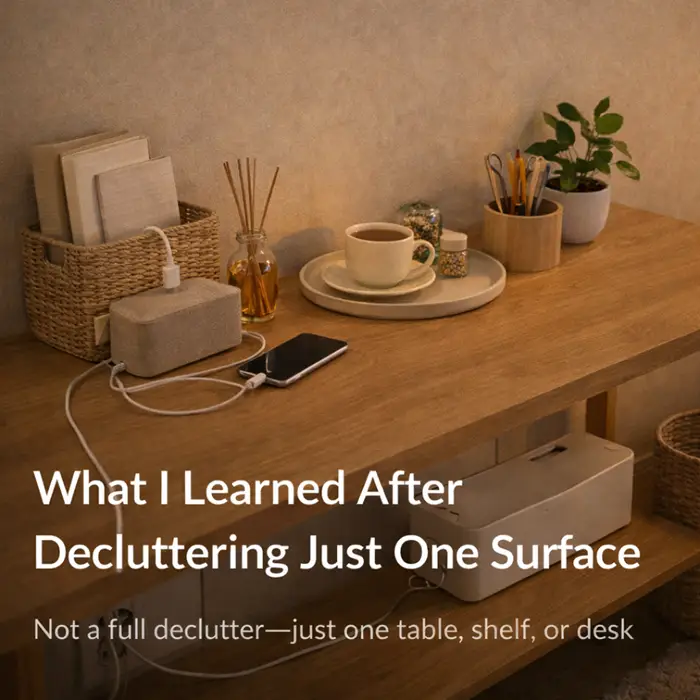
What I Learned After Decluttering Just One Surface

I didn’t overhaul my home. I didn’t pull everything out of closets or commit to some dramatic, all-day purge. I just cleared one surface.

It was a table that had quietly become a landing strip for everything — mail, keys, cables, receipts, things I meant to deal with later. Nothing chaotic, nothing embarrassing. Just enough visual noise that my eyes never really got to rest when they passed over it. I didn’t realize how often I was registering that clutter until it was gone.

The first thing I noticed after clearing it wasn’t pride. It was stillness. The room felt wider. Not physically larger, but calmer — like it could breathe again. One clean surface created a small pocket of order that rippled outward. I found myself setting things down more intentionally instead of dropping them and moving on.

What surprised me most was how little I actually needed to remove. A tray for the daily essentials. A simple basket for loose items that didn’t belong out in the open. A small cable box to tuck away the mess of cords that had been pretending not to exist. The difference wasn’t about minimalism. It was about containment.

I also noticed how that one cleared space changed how I moved through the room. I didn’t avoid glancing at it anymore. I didn’t feel a quiet reminder of “I should deal with that.” The surface stopped asking something from me. It just existed peacefully.

🛋️ I didn’t expect clearing one surface to shift the feel of the whole room.

📦 Buy on Amazon USA

Decorative tray

Storage baskets

Drawer organizers

Cable management box

🕯️ Final Thoughts

Decluttering doesn’t always need to be dramatic to be meaningful. One clear surface can act like a reset button for your eyes and your mind. It’s a small gesture that quietly lowers the volume in a room.

What I appreciated most was how sustainable it felt. I didn’t create a new system I had to maintain perfectly. I just gave everyday items a contained place to live. That alone reduced friction.

Sometimes calm doesn’t come from clearing everything. It comes from choosing one place, finishing it, and letting that finished feeling anchor the rest of the space.

📦 Buy on Amazon Canada

Decorative tray

Storage baskets

Drawer organizers

Cable management box

Cozy Living, Home Organization

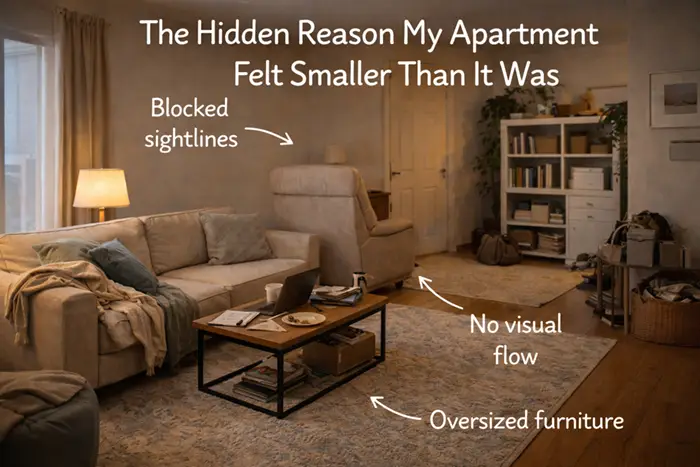
The Hidden Reason My Apartment Felt Smaller Than It Was

For a long time, I was convinced my apartment was just small. I’d walk in and feel slightly boxed in, even though nothing was technically wrong. The square footage hadn’t changed. The furniture fit. And yet the space felt tighter than it should have, like it was closing in instead of opening up.

What I eventually noticed was how quickly my eyes ran into obstacles. Tall shelves cut sightlines in half. Furniture sat directly in the path of doorways. Even when there was enough room to walk, the space looked interrupted. My eyes couldn’t travel far before hitting a visual wall, and that made the room feel shorter and narrower than it really was.

Oversized furniture played a bigger role than I realized too. A deep couch, a bulky chair, storage pieces that hugged the floor — they all anchored the room visually, but in a heavy way. They pulled attention downward and inward. Even when the room was tidy, it felt dense, like everything was fighting for the same slice of space.

The shift came when I focused on visual flow instead of layout. Lower-profile furniture opened up sightlines instantly. Slim shelving let the eye move through instead of stopping it. Wall hooks lifted everyday items off the floor, clearing visual clutter without removing function. The room didn’t lose anything — it gained breathing room.

Once those blocks were gone, the apartment started feeling more expansive without actually getting bigger. Light traveled farther. Corners felt reachable again. Even movement felt easier, like the space was cooperating instead of resisting.

I didn’t expect something this simple to make my home feel calmer.


📦 Buy on Amazon USA

Slim wall-mounted shelving

Minimal wall hooks

Narrow storage cabinet

Low-profile furniture risers


🕯️ Final Thoughts

A space can feel small even when it isn’t — especially when sightlines are broken and furniture overwhelms the eye. What tires us isn’t the size itself, but how quickly the room asks us to stop looking.

What worked for me wasn’t removing everything, but choosing pieces that allowed the space to flow visually. When the eye can move freely, the body relaxes. The room feels less compressed, even if nothing structural changes.

Sometimes the most spacious feeling comes from clearing what blocks the view, not adding more room. When a space finally opens up visually, it becomes easier to live in — and easier to rest inside.


📦 Buy on Amazon Canada

Slim wall-mounted shelving

Minimal wall hooks

Narrow storage cabinet

Low-profile furniture risers

Cozy Living, Home Organization

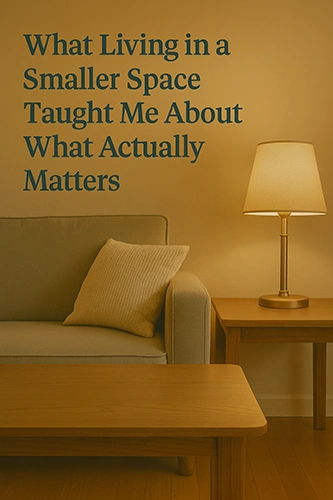
What Living in a Smaller Space Taught Me About What Actually Matters

Living in a smaller space quietly changes the way you see everything. At first, it feels like limitation. Less room. Fewer options. Nowhere to hide things you’re not ready to deal with. Every object is closer, more visible, more present. I didn’t choose a smaller space to learn a lesson — but it taught me one anyway.

When space is limited, what you keep starts to matter more. Not because of aesthetics, but because of impact. Every piece of furniture affects how you move. Every item you own affects how the room feels. There’s no room for excess without consequence. I started noticing how quickly clutter affected my mood, how even small piles could make the space feel heavy and unsettled.

What surprised me was how much I didn’t miss. Once the extras were gone, the space felt calmer instead of emptier. I moved more easily. I rested more fully. I stopped feeling like I needed to constantly adjust or improve things. The home began working with me instead of asking something from me all the time.

Living smaller also made me more intentional. I paid attention to light, warmth, and flow instead of filling corners. Comfort came from alignment, not accumulation. A chair in the right place mattered more than having more seating. A clear surface mattered more than decorative storage. The space became quieter, and in that quiet, I felt more present.

Over time, that presence extended beyond the home. I became less interested in buying things to solve feelings. I learned to adjust, remove, and simplify first. The smaller space trained me to notice what actually improved my day and what just took up room — physically and mentally.

Now, I see my home less as a container for stuff and more as a support system. Living smaller didn’t reduce my life. It refined it. It taught me that what matters most isn’t how much space you have, but how gently that space holds you.

🪑 Living smaller didn’t take anything away — it showed me what was already enough.


📦 Buy on Amazon USA

🪑 Compact Multi-Purpose Furniture

🕯️ Warm Ambient Table Lamps

📦 Slim Storage Bins for Small Spaces


🕯️ Final Thoughts

A smaller space makes priorities visible. When there’s less room to distract yourself, you start noticing what truly supports your comfort and peace. The home becomes honest — it reflects your habits, your needs, and your values without exaggeration.

There’s freedom in realizing that enough doesn’t require abundance. When your space is aligned with how you live, it stops demanding attention and starts offering support. Calm becomes easier to maintain because there’s less competing for it.

If you’re living in a smaller space — or feeling overwhelmed in a larger one — consider what the space is teaching you. What you keep, what you remove, and what you choose to live with every day quietly shapes how life feels. Sometimes smaller isn’t restrictive at all. Sometimes it’s clarifying.


📦 Buy on Amazon Canada

🪑 Compact Multi-Purpose Furniture

🕯️ Warm Ambient Table Lamps

📦 Slim Storage Bins for Small Spaces

Scroll to Top