Author name: takeonevideoandphotos@gmail.com

Cozy Living

Why Every Home Needs a “Soft Corner”

There’s a spot in my home that isn’t impressive. It’s not styled for guests. It’s not where conversations happen. It’s not even the most comfortable seat in the house.

But it’s mine.

I didn’t build it to look good on camera. I built it because I realized I didn’t have anywhere to decompress that wasn’t a couch with a screen in front of it. I needed a place that signaled something different. A mental exhale. A soft landing.

The shift started with lighting. A floor lamp instead of overhead glare. Warm light instead of bright light. That alone changed how the room felt at night. The space stopped feeling like a task area and started feeling like somewhere I could think.

Then came the chair. Not oversized. Not trendy. Just comfortable enough that I could sit with a book or a notebook without adjusting every two minutes. A small footrest made it better. Subtle support changes posture. Posture changes mood more than we admit.

I added a narrow bookshelf beside it. Nothing huge. Just enough space for a few favorite books — the kind I reach for when I want to slow down. Having them visible matters. It makes the act of sitting there feel intentional instead of accidental.

A plant finished it. That surprised me. I used to think plants were just decorative. But something about a little bit of green in the corner makes the space feel alive instead of staged. It softens the edges.

I didn’t expect something this simple to make my home feel calmer. But having a designated “reset” space changes how the rest of the house feels. It creates a boundary between stimulation and stillness.

This corner isn’t for productivity. It’s not for scrolling. It’s for pausing. And that’s the difference.


📦 Buy on Amazon USA

Warm Floor Lamp (Soft White Bulb Included)

Comfortable Accent Chair (Neutral Fabric)

Compact Footrest Ottoman

Slim Bookshelf (Small-Space Friendly)

Low-Maintenance Indoor Plant (Real or Faux)


🕯️ Final Thoughts

Homes often prioritize function — kitchen workflow, storage, media setups — but rarely do we intentionally create space for mental reset. A soft corner does exactly that. It gives the nervous system a cue to slow down.

It doesn’t require a full room. It doesn’t require expensive furniture. It requires intention. A lamp. A chair. A place to sit without distraction.

When a home includes a quiet place to land, the whole environment feels more balanced. And that balance shows up in subtle ways — calmer evenings, clearer thinking, fewer restless moments. Sometimes comfort isn’t about size or style. It’s about having somewhere soft to go when you need it.


📦 Buy on Amazon Canada

Warm Floor Lamp (Soft White Bulb Included)

Comfortable Accent Chair (Neutral Fabric)

Compact Footrest Ottoman

Slim Bookshelf (Small-Space Friendly)

Low-Maintenance Indoor Plant (Real or Faux)

Cozy Living

The “No Renovation” Kitchen Upgrade

There was a point where I stood in my kitchen and thought, this place needs work. Not because it was broken. Not because the cabinets were falling apart. It just felt tired. Flat. Like it hadn’t evolved in years.

But I didn’t want to tear anything out. I didn’t want quotes, contractors, or weeks of chaos. I just wanted the room to feel different.

So instead of renovating it, I upgraded the mood.

The first change was under-cabinet lighting. I didn’t realize how shadowy my counters felt until I added soft light underneath the upper cabinets. Suddenly the backsplash looked intentional. The counters looked cleaner. Evening cooking felt warmer instead of dim. It changed how the space functioned without touching a single cabinet door.

Next was hardware. Swapping basic pulls for matte black handles felt almost too simple — but visually, it anchored the whole room. The cabinets didn’t change. The layout didn’t change. But the contrast gave the space definition. It felt more deliberate. More current. I didn’t expect something this simple to make my home feel calmer. But the cleaner lines and consistent finish made the kitchen feel finished in a way it hadn’t before.

I also added a magnetic knife strip to clear the counter block. That one surprised me. Removing the bulky holder instantly gave the countertop breathing room. The wall became functional, and the counter became lighter. It wasn’t about aesthetics — it was about space feeling usable again.

Then came countertop styling. Not clutter. Not decoration overload. Just one tray. A wood board leaned against the backsplash. A neutral container for cooking utensils. Suddenly the kitchen felt styled instead of accumulated.

None of these changes required drilling into cabinets or replacing anything major. But together, they shifted the entire tone of the room.


📦 Buy on Amazon USA

Under-Cabinet LED Lighting (Warm White)

Matte Black Cabinet Hardware Set

Magnetic Wall-Mounted Knife Strip

Decorative Countertop Tray (Wood or Stone)

Minimalist Utensil Holder


🕯️ Final Thoughts

What I appreciate about this approach is how contained it feels. No dust. No permits. No weeks of disruption. Just thoughtful swaps that quietly improve the space.

Kitchens don’t always need renovation. Sometimes they just need refinement. Better lighting. Cleaner lines. Less bulk. A little contrast. Small decisions that make the room feel intentional again.

The biggest shift wasn’t visual — it was psychological. When the kitchen feels updated, you move through it differently. You cook slower. You notice details. You feel less irritated by small things. And that’s the kind of upgrade that lasts longer than tile trends.


📦 Buy on Amazon Canada

Under-Cabinet LED Lighting (Warm White)

Matte Black Cabinet Hardware Set

Magnetic Wall-Mounted Knife Strip

Decorative Countertop Tray (Wood or Stone)

Minimalist Utensil Holder

Cozy Living

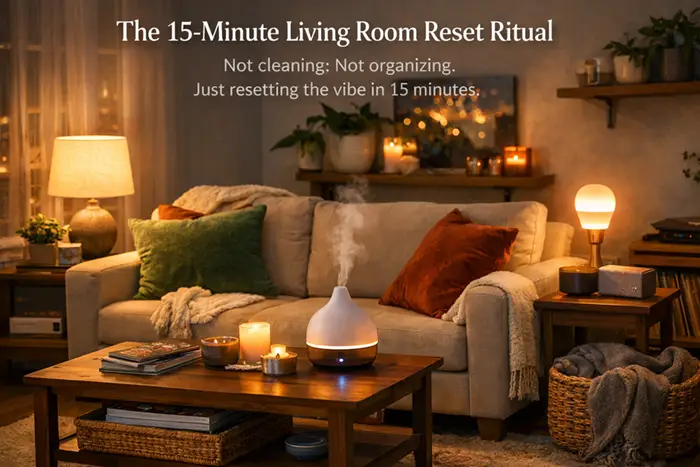
The 15-Minute Living Room Reset Ritual

There are days when my living room isn’t messy — it just feels off. The light is flat. The air feels stale. The couch cushions look tired. Nothing is technically wrong, but the room doesn’t invite me to sit down. That’s when I don’t clean it. I reset it.

This ritual isn’t about organizing bins or wiping surfaces. It’s about shifting the atmosphere in small, intentional ways. I start with lighting. I turn off the harsh overhead and switch on a table lamp instead. Sometimes I adjust the brightness lower than usual. The room instantly feels softer. The corners feel warmer. It’s the same furniture — just a different mood.

Then I change the scent. Not heavy, not overwhelming. Just something subtle that makes the air feel intentional. A diffuser running quietly in the background does more than I expected the first time I tried it. It makes the room feel like it was prepared — not just occupied.

I swap the cushions next. Nothing dramatic. Sometimes I flip them. Sometimes I change one cover. Occasionally I bring in a throw blanket that wasn’t there before. Texture changes everything. The couch stops looking like a waiting area and starts looking like a place to unwind.

And then the background music. Not loud. Just enough to shift the silence. Instrumental, soft jazz, low ambient — something that fills the space without asking for attention. The room stops feeling empty and starts feeling lived in.

I didn’t expect something this simple to make my home feel calmer. But that’s what surprised me. It’s not about cleaning the room — it’s about recalibrating it. Fifteen minutes is enough to change how the space feels. And when the space feels better, I do too.


📦 Buy on Amazon USA

Table Lamp (Soft Warm Light)

Smart LED Bulbs (Adjustable Warmth & Brightness)

Essential Oil Diffuser

Textured Throw Blanket

Low-Profile Storage Baskets


🕯️ Final Thoughts

What I like about this reset ritual is that it doesn’t demand effort or perfection. It doesn’t ask me to deep clean or reorganize my life. It just asks me to notice the room and adjust it slightly. That feels manageable. And on busy days, manageable matters.

Small environmental shifts can change your mood faster than big overhauls. Softer lighting lowers tension. A subtle scent creates presence. A blanket invites stillness. These aren’t luxury upgrades — they’re comfort adjustments.

The living room doesn’t need to be perfect. It just needs to feel like a place you want to be. And sometimes, fifteen quiet minutes is all it takes to make that happen.


📦 Buy on Amazon Canada

Table Lamp (Soft Warm Light)

Smart LED Bulbs (Adjustable Warmth & Brightness)

Essential Oil Diffuser

Textured Throw Blanket

Low-Profile Storage Baskets

Cozy Living

My Home Feels Warmer—and It Has Nothing to Do with the Thermostat

I used to adjust the thermostat almost automatically. If the room felt off, I assumed it was temperature. Too cool. Too drafty. Not cozy enough. But even when the numbers were technically comfortable, something still felt slightly cold. Not physically — emotionally. The space looked fine, but it didn’t hold warmth.

The first thing I changed wasn’t the heat. It was texture. I added a rug where the floor had always been bare. The difference wasn’t dramatic, but it was immediate. The room stopped echoing. The space felt anchored. Walking across it in the evening felt softer, quieter. The temperature hadn’t changed, but the room felt less exposed.

Then I layered in curtains. Not heavy blackout ones — just fabric where there had been emptiness. The walls felt less stark. Light filtered differently. Shadows looked gentler. I didn’t realize how much bare windows had been contributing to that subtle chill.

A throw draped over the couch changed the mood more than I expected. Not because I was constantly using it — though I did — but because it visually suggested comfort. The room began to look lived in instead of staged. I even swapped out a cooler light bulb for a warmer tone, and suddenly evenings felt slower. The light stopped feeling clinical and started feeling calm.

What surprised me most was how much my body responded. I found myself slipping on soft house slippers instead of padding across the floor absentmindedly. I lingered longer in the living room. I didn’t rush to adjust the thermostat because I didn’t feel the need to.

🛋️ I didn’t expect something this simple to make my home feel calmer.

📦 Buy on Amazon USA

Area rug

Light-filtering curtains

Soft throw blanket

Warm LED light bulbs

Comfortable house slippers

🕯️ Final Thoughts

Warmth isn’t always about degrees. Sometimes it’s about softness, layering, and removing visual sharpness from a space. Texture, fabric, and light work quietly in the background, shaping how a room feels long before temperature does.

What I appreciate most is how natural the shift felt. I didn’t renovate. I didn’t replace furniture. I just softened the edges. And that softness translated into comfort I could feel.

Now when the room feels warm, it isn’t because the heat is high. It’s because the space feels finished, grounded, and welcoming. And that kind of warmth lingers longer than any setting on a dial.

📦 Buy on Amazon Canada

Area rug

Light-filtering curtains

Soft throw blanket

Warm LED light bulbs

Comfortable house slippers

Cozy Living

The Thing I Added Beside My Couch That Made Me Sit Longer

For a while, I thought I just wasn’t a “sit and stay” person. I’d sit down on the couch to relax, but within minutes I’d be getting back up. To grab water. To plug something in. To adjust the lighting. To move something out of the way. It wasn’t discomfort exactly — it was friction. Tiny interruptions that kept breaking the moment.

I didn’t realize how much that low-level disruption was shaping my evenings until I added one small thing beside the couch: a simple side table. Nothing oversized. Nothing decorative for the sake of it. Just a stable surface within arm’s reach. Suddenly my book had a place. My tea had a place. Even my phone stopped drifting between couch cushions.

That one addition changed the rhythm of sitting. I wasn’t constantly leaning forward or twisting sideways to reach something. I wasn’t balancing a mug on the armrest like it was a risky experiment. The couch stopped feeling temporary and started feeling intentional.

Then I added a subtle charging station tucked discreetly underneath. No more cables stretching across the floor. No more low-battery anxiety pulling me up just when I’d finally relaxed. Everything I needed was close — but not cluttered.

What surprised me most was how much longer I stayed put. The room didn’t change dramatically. The couch didn’t become softer. But the experience of sitting there became seamless. I even added a small lamp nearby, so I didn’t have to rely on overhead lighting. It created a little bubble of warmth around the space.

🛋️ I didn’t expect such a small functional addition to make the couch feel this much more inviting.

📦 Buy on Amazon USA

Slim side table

Charging station

Couch armrest tray

Small table lamp

🕯️ Final Thoughts

Comfort isn’t always about cushions or softness. Sometimes it’s about eliminating the tiny inconveniences that keep you from settling in fully. When your space supports you quietly, you stop noticing it — and that’s the point.

What I appreciate most is how invisible this change feels. The room looks almost the same, but the experience is smoother. Sitting doesn’t require planning. It just happens.

Now when I sink into the couch, I don’t feel like I’m pausing between tasks. I feel like I’m staying. And that small shift has made my evenings feel slower, steadier, and more complete.

📦 Buy on Amazon Canada

Slim side table

Charging station

Couch armrest tray

Small table lamp

Cozy Living

Why Soft Sound Matters More Than Silence Indoors

I used to think the goal at home was total silence. No background hum, no music, no noise at all. Just stillness. I thought that was what calm looked like. But the more time I spent in a completely silent room, the more I noticed something uncomfortable creeping in. The silence wasn’t soothing — it was sharp. Every little creak in the house felt amplified. The fridge kicking on sounded dramatic. Even my own movements felt louder than they should.

What I realized is that silence can sometimes feel empty instead of peaceful. It leaves your nervous system searching. Listening. Waiting. And that subtle alertness doesn’t feel like rest — it feels like anticipation.

The shift happened when I stopped trying to eliminate sound and instead started shaping it. A soft white noise machine running in the background. Not loud — just enough to blur the edges of the room. Later, I added a small Bluetooth speaker for low instrumental music in the evenings. Nothing distracting. Just something warm that lived beneath everything else.

The difference was immediate. The room stopped echoing. Hard surfaces didn’t bounce sound back at me as aggressively. Even conversations felt more grounded. I also noticed how fabric mattered more than I thought. A thicker rug, curtains drawn in the evening, a soft throw over the arm of the couch — these weren’t just visual upgrades. They absorbed sound. They rounded it.

What surprised me most was how my body responded. I wasn’t as reactive to random noises anymore. I didn’t feel that subtle spike when something unexpected happened. The soft background layer made the space feel inhabited and settled instead of vacant and waiting.

🛋️ I didn’t realize how tense pure silence made me until I replaced it with something gentler.

📦 Buy on Amazon USA

White noise machine

Small Bluetooth speaker

Area rug

Curtains

🕯️ Final Thoughts

Silence isn’t the enemy. But it isn’t always the solution either. Comfort often lives in softness — in subtle layers that support the room without demanding attention. A gentle hum. A quiet melody. Fabric that absorbs instead of reflects.

What I appreciate most about this change is how invisible it feels. There’s no performance. No setup ritual. The sound just exists, and because of that, the room feels fuller and calmer at the same time.

Now when a space feels too sharp or hollow, I don’t try to make it quieter. I try to make it softer. And that small shift has made my home feel more restful than silence ever did.

📦 Buy on Amazon Canada

White noise machine

Small Bluetooth speaker

Area rug

Curtains

Cozy Living

What I Learned After Decluttering Just One Surface

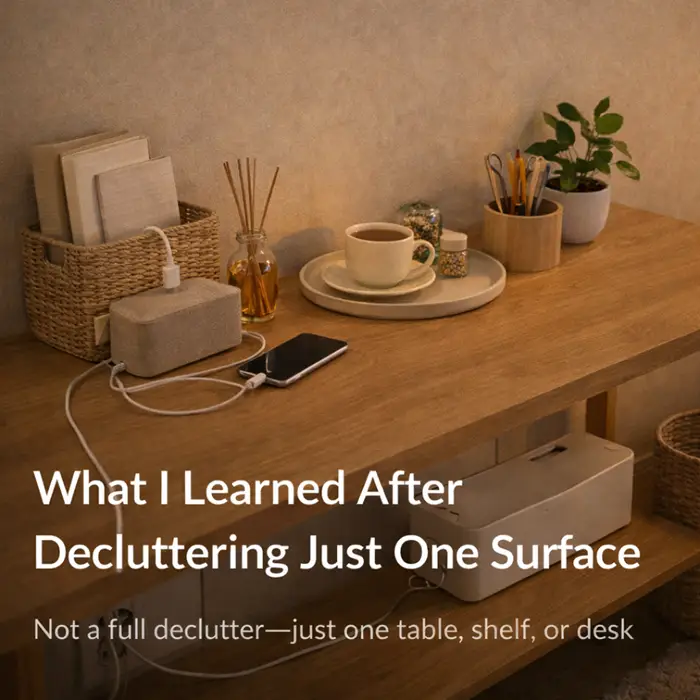
I didn’t overhaul my home. I didn’t pull everything out of closets or commit to some dramatic, all-day purge. I just cleared one surface.

It was a table that had quietly become a landing strip for everything — mail, keys, cables, receipts, things I meant to deal with later. Nothing chaotic, nothing embarrassing. Just enough visual noise that my eyes never really got to rest when they passed over it. I didn’t realize how often I was registering that clutter until it was gone.

The first thing I noticed after clearing it wasn’t pride. It was stillness. The room felt wider. Not physically larger, but calmer — like it could breathe again. One clean surface created a small pocket of order that rippled outward. I found myself setting things down more intentionally instead of dropping them and moving on.

What surprised me most was how little I actually needed to remove. A tray for the daily essentials. A simple basket for loose items that didn’t belong out in the open. A small cable box to tuck away the mess of cords that had been pretending not to exist. The difference wasn’t about minimalism. It was about containment.

I also noticed how that one cleared space changed how I moved through the room. I didn’t avoid glancing at it anymore. I didn’t feel a quiet reminder of “I should deal with that.” The surface stopped asking something from me. It just existed peacefully.

🛋️ I didn’t expect clearing one surface to shift the feel of the whole room.

📦 Buy on Amazon USA

Decorative tray

Storage baskets

Drawer organizers

Cable management box

🕯️ Final Thoughts

Decluttering doesn’t always need to be dramatic to be meaningful. One clear surface can act like a reset button for your eyes and your mind. It’s a small gesture that quietly lowers the volume in a room.

What I appreciated most was how sustainable it felt. I didn’t create a new system I had to maintain perfectly. I just gave everyday items a contained place to live. That alone reduced friction.

Sometimes calm doesn’t come from clearing everything. It comes from choosing one place, finishing it, and letting that finished feeling anchor the rest of the space.

📦 Buy on Amazon Canada

Decorative tray

Storage baskets

Drawer organizers

Cable management box

Cozy Living

The Forgotten Corner of My Home That’s Now My Favorite Spot

There was a corner in my home that I barely noticed for years. It wasn’t ugly. It wasn’t cluttered. It just… existed. A quiet triangle of wall space that held nothing but shadow and the occasional pile of something waiting to be moved. I’d walk past it every day without thinking twice.

One afternoon, I stood there longer than usual. The light from the window was falling into that corner in a way I hadn’t paid attention to before. It felt like unused potential — not in a dramatic, renovation-show way — but in a quiet, almost apologetic way. The space didn’t need to be big to matter. It just needed intention.

I started small. A compact chair that didn’t overwhelm the wall. A slim corner shelf that gave the eye somewhere to rest. A small lamp with a warm glow instead of the harsh spill from the ceiling light. None of it was expensive or bold. But when I stepped back, the corner didn’t look forgotten anymore. It looked invited.

What surprised me most wasn’t how it looked — it was how I used it. I began sitting there in the late afternoon, even if just for a few minutes. Coffee tasted slower there. Thoughts felt less tangled. I added a simple plant stand with something green and alive, and suddenly the corner felt grounded. Not staged — lived in.

It’s funny how a small shift can change the energy of a room. That corner used to absorb space. Now it gives it back. It’s where I read a few pages before bed, or sit quietly when I don’t want a screen. The rest of the room continues around me, but the nook feels slightly separate — like a pause inside the house itself.

🛋️ I didn’t expect something this simple to make my home feel calmer.

📦 Buy on Amazon USA

Corner shelf

Small table lamp (warm light)

Plant stand

Compact accent chair

🕯️ Final Thoughts

Not every improvement needs to be big to matter. Sometimes the spaces we ignore hold the most potential for comfort. That corner didn’t need a redesign — it needed attention.

What I appreciate most is how natural it feels now. There’s no ritual attached to it, no performance. I just drift there when I need a softer place to land. And that’s enough.

Homes aren’t just about square footage. They’re about moments. And sometimes, the smallest corner holds the most room for them.

📦 Buy on Amazon Canada

Corner shelf

Small table lamp (warm light)

Plant stand

Compact accent chair

Cozy Living

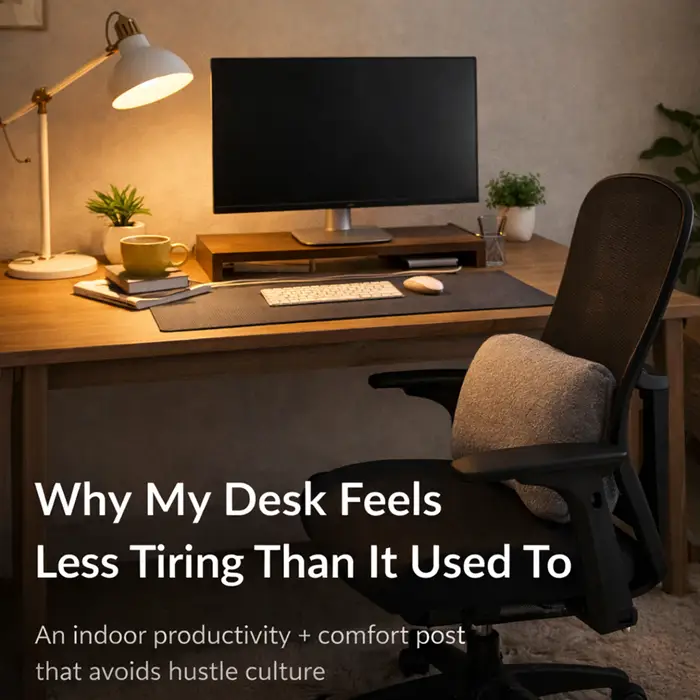
Why My Desk Feels Less Tiring Than It Used To

I didn’t change how long I work at my desk. I didn’t suddenly become more disciplined or focused. What changed was how the space met me. For a long time, sitting down felt like bracing myself — shoulders up, jaw tight, eyes already a little tired before I even started. The desk did its job, but it asked for effort in return.

The first thing I noticed wasn’t productivity — it was relief. A softer pool of light instead of glare. A surface that felt calm under my hands instead of cold or slippery. The desk stopped feeling like a place I had to endure and started feeling like somewhere I could stay without counting the minutes.

What surprised me most was how quickly fatigue backed off. My eyes didn’t burn as early. My neck didn’t demand breaks every half hour. Even my breathing slowed a little once the setup felt balanced. Nothing about the work changed — emails were still emails, tasks were still tasks — but my body stopped fighting the environment.

I added small supports almost accidentally. A slight lift for my monitor so my gaze felt natural instead of downward. A subtle cushion on the chair that didn’t scream “ergonomic,” but quietly did its job. A desk mat that absorbed sound and softened movement. Each piece on its own felt minor. Together, they made the desk feel finished.

What I appreciate most is that none of this pushed me to work harder. There’s no hustle baked into the setup. If anything, it made stopping easier too. When the space doesn’t exhaust you, you don’t feel the same need to escape it the second you’re done. The desk became neutral territory instead of a drain.

🛋️ I didn’t expect a few comfort-focused changes to make my desk feel this much easier to sit at.

📦 Buy on Amazon USA

Desk lamp (soft, adjustable light)

Desk mat

Monitor riser

Lumbar support cushion

Footrest

🕯️ Final Thoughts

A desk doesn’t have to motivate you. It just has to stop working against you. Once I understood that, the pressure to optimize everything disappeared. Comfort became the goal — not output, not speed, not squeezing more out of the day.

What changed wasn’t my ambition, but my relationship with the space. The desk now supports attention when I need it and lets go when I don’t. That balance matters more than any productivity trick I’ve tried.

Sometimes the most effective improvement isn’t doing more — it’s removing friction you’ve been living with so long you stopped noticing it.

📦 Buy on Amazon Canada

Desk lamp (soft, adjustable light)

Desk mat

Monitor riser

Lumbar support cushion

Footrest

Cozy Living

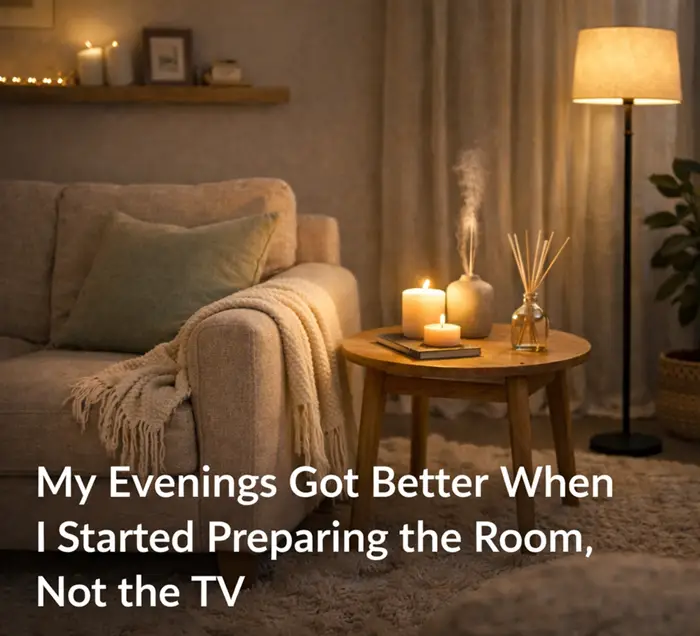
My Evenings Got Better When I Started Preparing the Room, Not the TV

For a long time, my evenings followed the same quiet pattern. Sit down, turn on the TV, scroll until something landed, and hope the day would finally let go. Nothing was wrong with that routine, but it always felt like something was missing. Even when I found a good show, my body stayed tense. My mind stayed busy. The room never quite caught up to the idea that the day was over.

The shift happened when I stopped treating the TV as the starting point. One evening, without really planning to, I dimmed the lights first. I folded a soft throw over the arm of the couch instead of grabbing it later. I lit a candle, not for scent alone, but for the quiet signal it gave the room. Nothing dramatic changed — but everything softened.

What surprised me was how different the TV felt afterward. The same screen, the same volume, the same content — but it no longer led the experience. It sat inside the atmosphere instead of overpowering it. The room felt prepared, like it had been gently reset for rest instead of stimulation.

I started doing this more intentionally. A lamp instead of overhead light. A diffuser running before I even sat down. A side table cleared so nothing felt cluttered or demanding. Even silence felt more welcoming once the space was settled. I didn’t rush to press play anymore. Sometimes I didn’t even turn the TV on right away.

Over time, my evenings stopped feeling like recovery mode and started feeling like a transition. The room did some of the work for me. My shoulders dropped sooner. My thoughts slowed without effort. I realized I wasn’t trying to escape the day anymore — I was closing it gently.

🛋️ I didn’t realize how much calmer my evenings could feel until I started preparing the space instead of the screen.

📦 Buy on Amazon USA

Candles

Essential oil diffuser

Soft throw blanket

Small side table

🕯️ Final Thoughts

Preparing the room first taught me that comfort isn’t about entertainment — it’s about permission. Permission to slow down, to stop performing, to let the day end without noise. The TV can still be part of the evening, but it no longer defines it.

What I appreciate most is how repeatable this feels. There’s no effort, no rules, no productivity attached. Just small cues that tell my body it’s safe to rest. The room becomes a signal, not a backdrop.

Now, when evenings feel heavy or rushed, I don’t reach for the remote first. I reach for the light switch, the blanket, the quiet. And almost every time, the rest follows naturally.

📦 Buy on Amazon Canada

Candles

Essential oil diffuser

Soft throw blanket

Small side table

Scroll to Top