Cozy Living

The One Thing I Adjust Before I Feel Comfortable at Home

It usually takes me a few minutes to realize something feels off. I’ll sit down, try to relax or focus, and notice a low-level restlessness I can’t quite explain. The room looks fine. Nothing is obviously wrong. But my body doesn’t settle — and over time I’ve learned that comfort often hinges on one small adjustment.

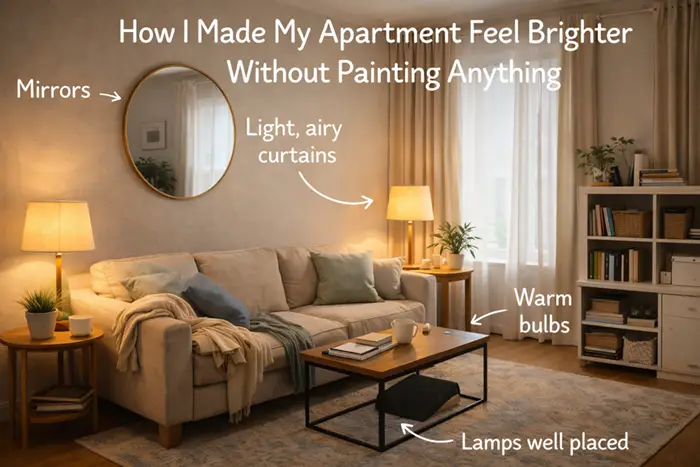
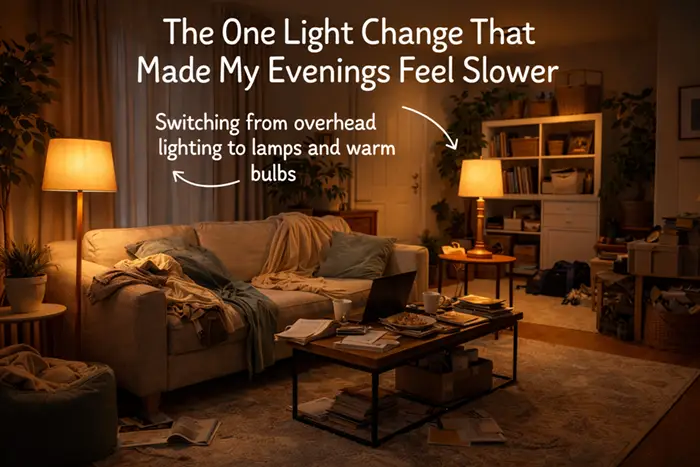
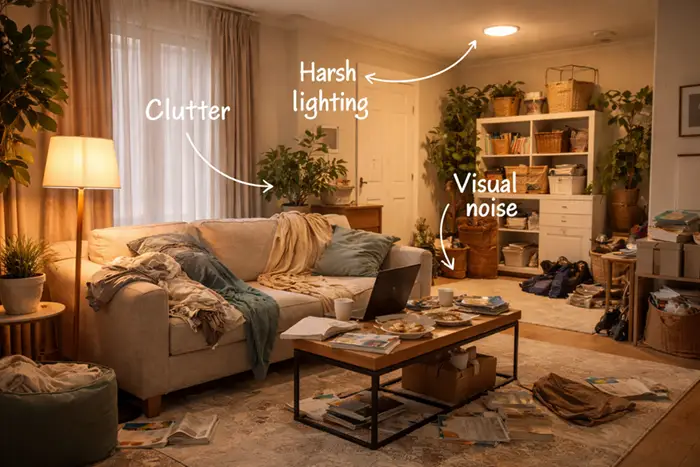
More often than not, it’s the lighting. Overhead light feels too sharp, too exposed, like the room is asking something of me. Before I can fully exhale, I reach for a softer source — a lamp angled just right, a warmer glow that changes the mood instantly. The space stops feeling functional and starts feeling lived in.

What surprises me is how quickly that shift affects everything else. My shoulders drop. I stop fidgeting. The room feels quieter, even though nothing else has changed. It’s not about brightness so much as intention — light that supports rest instead of demanding attention.

Once the lighting is right, I notice the smaller comforts fall into place naturally. I’ll pull a throw blanket closer, adjust my chair height without thinking, or rest my feet somewhere that feels grounded. The space works with me instead of against me, and that subtle cooperation makes all the difference.

I didn’t expect something this simple to make my home feel calmer.

📦 Buy on Amazon USA

Warm Desk Lamp with Adjustable Arm

Soft Throw Blanket for Everyday Use

Adjustable Footrest for Under Desk Comfort

Chair Cushion for Long Sitting Sessions

🕯️ Final Thoughts

Comfort at home isn’t about redesigning everything — it’s about removing the one irritation your body notices first. Often, that discomfort is subtle enough to ignore, but strong enough to keep you from fully settling in.

Lighting is one of those quiet levers. When it’s right, the room feels gentler and more forgiving. When it’s wrong, everything else feels slightly harder than it needs to be.

Making that one small adjustment doesn’t just improve the space — it changes how you feel inside it. And sometimes, that’s all home needs to do.

📦 Buy on Amazon Canada

Warm Desk Lamp with Adjustable Arm

Soft Throw Blanket for Everyday Use

Adjustable Footrest for Under Desk Comfort

Chair Cushion for Long Sitting Sessions

Cozy Living

What Living in a Smaller Space Taught Me About What Actually Matters

Living in a smaller space quietly changes the way you see everything. At first, it feels like limitation. Less room. Fewer options. Nowhere to hide things you’re not ready to deal with. Every object is closer, more visible, more present. I didn’t choose a smaller space to learn a lesson — but it taught me one anyway.

When space is limited, what you keep starts to matter more. Not because of aesthetics, but because of impact. Every piece of furniture affects how you move. Every item you own affects how the room feels. There’s no room for excess without consequence. I started noticing how quickly clutter affected my mood, how even small piles could make the space feel heavy and unsettled.

What surprised me was how much I didn’t miss. Once the extras were gone, the space felt calmer instead of emptier. I moved more easily. I rested more fully. I stopped feeling like I needed to constantly adjust or improve things. The home began working with me instead of asking something from me all the time.

Living smaller also made me more intentional. I paid attention to light, warmth, and flow instead of filling corners. Comfort came from alignment, not accumulation. A chair in the right place mattered more than having more seating. A clear surface mattered more than decorative storage. The space became quieter, and in that quiet, I felt more present.

Over time, that presence extended beyond the home. I became less interested in buying things to solve feelings. I learned to adjust, remove, and simplify first. The smaller space trained me to notice what actually improved my day and what just took up room — physically and mentally.

Now, I see my home less as a container for stuff and more as a support system. Living smaller didn’t reduce my life. It refined it. It taught me that what matters most isn’t how much space you have, but how gently that space holds you.

🪑 Living smaller didn’t take anything away — it showed me what was already enough.


📦 Buy on Amazon USA

🪑 Compact Multi-Purpose Furniture

🕯️ Warm Ambient Table Lamps

📦 Slim Storage Bins for Small Spaces


🕯️ Final Thoughts

A smaller space makes priorities visible. When there’s less room to distract yourself, you start noticing what truly supports your comfort and peace. The home becomes honest — it reflects your habits, your needs, and your values without exaggeration.

There’s freedom in realizing that enough doesn’t require abundance. When your space is aligned with how you live, it stops demanding attention and starts offering support. Calm becomes easier to maintain because there’s less competing for it.

If you’re living in a smaller space — or feeling overwhelmed in a larger one — consider what the space is teaching you. What you keep, what you remove, and what you choose to live with every day quietly shapes how life feels. Sometimes smaller isn’t restrictive at all. Sometimes it’s clarifying.


📦 Buy on Amazon Canada

🪑 Compact Multi-Purpose Furniture

🕯️ Warm Ambient Table Lamps

📦 Slim Storage Bins for Small Spaces

Cozy Living

The Quiet Comfort of a Clean, Clear Table at the End of the Day

There’s something deeply reassuring about walking into a room at night and seeing a table that’s been cleared. No stacks waiting to be dealt with. No half-finished tasks frozen in place. Just a clean, open surface that isn’t asking anything of you. I didn’t realize how much that mattered until I started doing it consistently.

For a long time, my table doubled as everything — workspace, drop zone, reminder board. It wasn’t chaotic, but it was never truly at rest. Even in the evening, when the day was technically over, the table still held traces of it. Papers, small objects, things I meant to put away later. I’d sit down to relax and still feel slightly on edge, like the day hadn’t fully ended.

Clearing the table became a small nightly habit almost by accident. Before winding down, I’d put things back where they belonged or stack them neatly out of sight. Not a deep clean — just enough to reset the surface. The first night I did it, the room felt different immediately. Quieter. Softer. The table stopped holding the weight of the day.

What surprised me most was how emotional the shift felt. A clear table wasn’t about neatness — it was about closure. It signaled that nothing was left unfinished right now. Tomorrow could handle tomorrow. Tonight was allowed to be empty. That empty space felt comforting instead of wasteful.

Over time, that habit started affecting how I moved through the evening. I relaxed faster. I slept better. The room felt more forgiving. The table became a place of rest instead of responsibility. And that small visual calm carried more weight than I ever expected.

Now, even on busy days, I try to end the night with a clear table. It’s a quiet way of telling myself the day is done. Nothing dramatic. Nothing performative. Just a small, intentional pause that makes the space — and my mind — feel lighter.

🪑 A clear table doesn’t mean the day was perfect — it just means it’s allowed to be over.


📦 Buy on Amazon USA

🧺 Decorative Storage Baskets (Neutral Tones)

🧽 Microfiber Cleaning Cloths

🪵 Minimalist Table Tray Organizer


🕯️ Final Thoughts

Calm often arrives after we remove what no longer needs our attention. A clean, clear table creates a sense of completion that words rarely do. It doesn’t celebrate productivity — it honors rest.

There’s comfort in knowing that your space isn’t holding onto anything for you overnight. When surfaces are cleared, your mind follows. The room stops reminding you of what you didn’t finish and starts supporting the quiet moments you need instead.

If evenings still feel unsettled, try ending the day with one intentional reset. Clear one table. Let the space exhale. Sometimes that’s all it takes to feel at ease again.


📦 Buy on Amazon Canada

🧺 Decorative Storage Baskets (Neutral Tones)

🧽 Microfiber Cleaning Cloths

🪵 Minimalist Table Tray Organizer

Cozy Living

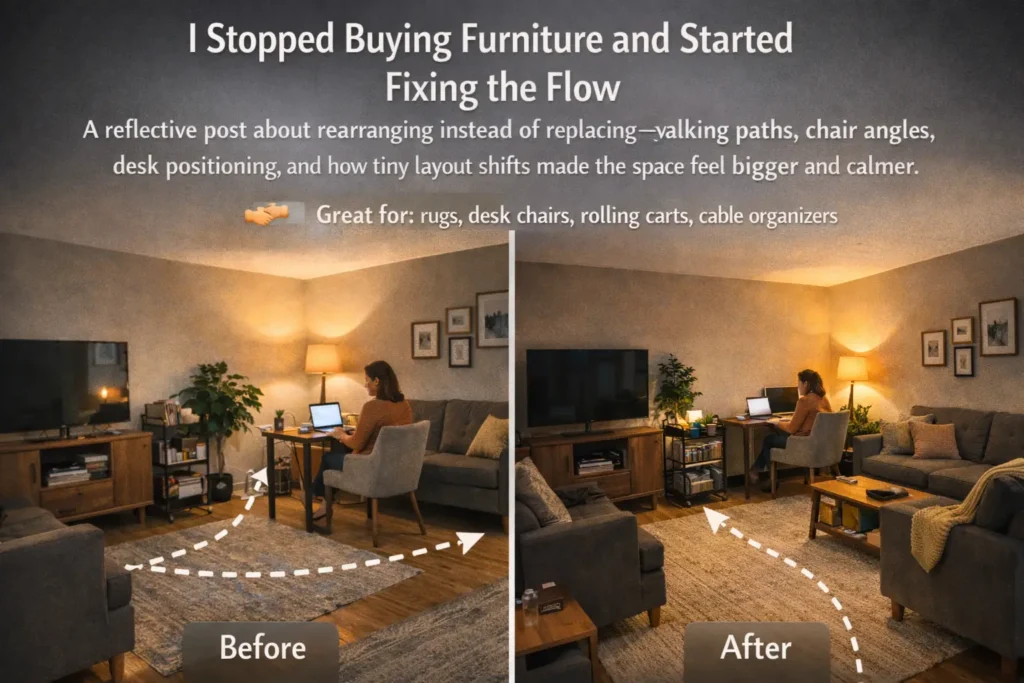
How I Learned to Stop Buying Furniture and Start Adjusting What I HadGreat for trust and authenticity.

For a long time, my instinct was to fix discomfort by replacing things. If a room didn’t feel right, I assumed something was missing. A different chair. A better table. One more piece that would finally make the space work the way I wanted it to. I’d browse, compare, convince myself the next purchase would solve the feeling — and sometimes it did, briefly. But the calm never really lasted.

What changed wasn’t my taste or my budget. It was realizing that most of the frustration wasn’t coming from what I owned, but from how I was using it. Furniture wasn’t wrong — it was just slightly off. Angles, spacing, height, placement. Small things I’d never questioned because buying something new felt easier than slowing down and paying attention.

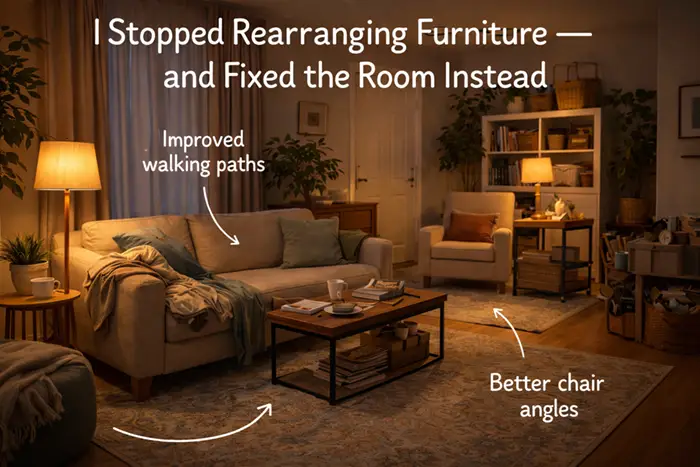
The first time I tried adjusting instead of replacing, it felt almost too simple. I moved a chair a few inches. Rotated a table. Pulled something away from the wall instead of pushing it closer. The room didn’t look dramatically different, but it felt different. Flow improved. The space breathed better. And for the first time, I noticed that comfort often lives in inches, not purchases.

I started doing this everywhere. Adjusting lamp height instead of buying a new one. Swapping furniture between rooms instead of adding more. Even removing pieces altogether. Each small change taught me more about how I actually live in the space, not how I thought I should. The home began to feel more intentional — less like a collection of things and more like a place that understood me.

What surprised me most was the trust that grew from this approach. I stopped second-guessing my space. I stopped chasing solutions. By working with what I already had, I learned what actually mattered to me — light, movement, ease. The urge to buy faded because the need had already been met.

Now, when something feels off at home, I don’t reach for my phone. I reach for the furniture. I adjust. I pause. And more often than not, that’s all it takes.

🪑 I didn’t stop buying furniture because I had enough — I stopped because I finally started listening to the space I was in.


📦 Buy on Amazon USA

🪑 Furniture Sliders for Hardwood & Carpet

📐 Adjustable Furniture Risers

💡 Dimmable Plug-In Lamp Cord Set


🕯️ Final Thoughts

It’s easy to believe comfort comes from upgrades, but real ease often comes from understanding. When you slow down and adjust what you already have, your home starts responding in quieter, more satisfying ways. Nothing new enters the space — but everything works better.

There’s confidence in realizing you don’t need more to feel settled. You need alignment. Small changes made thoughtfully can transform how a room feels without changing what’s in it. That awareness builds trust — in your space and in your decisions.

If your home feels slightly off right now, try adjusting before replacing. Move things. Change the angles. Give the room a chance to meet you where you are. Sometimes the solution is already there — it just hasn’t been moved yet.


📦 Buy on Amazon Canada

🪑 Furniture Sliders for Hardwood & Carpet

📐 Adjustable Furniture Risers

💡 Dimmable Plug-In Lamp Cord Set

Cozy Living

The One Drawer I Finally Fixed (and Why It Mattered More Than I Expected)Micro-organization story = powerful and human.

For months, there was one drawer I avoided opening unless I absolutely had to. It wasn’t disastrous — nothing spilling out, nothing broken — just a mess of small things that never stayed where I put them. Cables tangled with random tools, loose papers mixed with things I “might need later.” Every time I opened it, I felt a flicker of irritation, then closed it again and moved on.

What finally pushed me wasn’t motivation or a free afternoon. It was noticing how often that drawer quietly annoyed me. Each time I opened it, my shoulders tightened just a bit. I’d dig around longer than necessary, then leave it slightly worse than before. One evening, without planning to “organize,” I emptied it onto the table and decided to fix just that one space — nothing else.

I didn’t aim for perfection. I grouped things that belonged together and removed what clearly didn’t. I added simple dividers, gave everything a rough home, and stopped when it felt clear enough. The whole thing took less than half an hour. When I slid the drawer back in, it felt finished in a way the rest of the room suddenly didn’t.

The real surprise came later. The next time I opened the drawer, there was no resistance. No small spike of frustration. I found what I needed immediately and closed it again without thinking. That moment felt oddly satisfying — not because the drawer was organized, but because it was no longer asking anything from me.

Fixing that one drawer didn’t change how my home looked, but it changed how it felt to move through it. It removed a tiny but constant source of friction. And once I noticed that relief, I understood why small, focused organization can matter more than big cleanups. One resolved space can carry more mental weight than an entire room that’s “mostly fine.”

Now, whenever I feel overwhelmed by clutter, I think smaller. One drawer. One shelf. One place that keeps quietly bothering me. That single fix often does more for my sense of calm than tackling everything at once ever did.

🗂️ I didn’t fix the drawer to be organized — I fixed it so it would stop asking for my attention.


📦 Buy on Amazon USA

🗂️ Adjustable Drawer Dividers

📦 Small Clear Storage Trays

🧺 Non-Slip Drawer Organizer Liners


🕯️ Final Thoughts

Organization doesn’t always need momentum — sometimes it just needs focus. Fixing one small, specific problem can deliver more relief than spreading your energy across an entire space. That drawer mattered because it removed friction I’d been carrying without realizing it.

There’s something grounding about resolving a single annoyance completely. It restores a sense of control without demanding a full reset. When one space works the way it should, it quietly improves everything around it.

If clutter feels overwhelming right now, try going smaller than you think you should. One drawer, fully handled, can change how your home feels far more than a half-finished overhaul ever will.


📦 Buy on Amazon Canada

🗂️ Adjustable Drawer Dividers

📦 Small Clear Storage Trays

🧺 Non-Slip Drawer Organizer Liners

Cozy Living

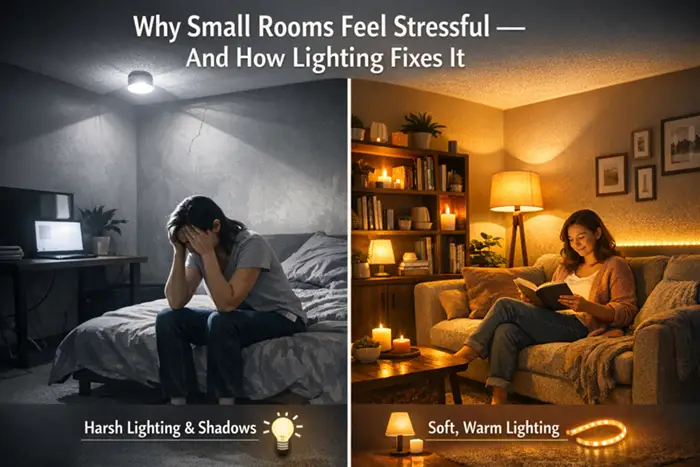
Why Soft Lighting Changed How I Feel Indoors at Night

For a long time, I didn’t realize how much my lighting was affecting me at night. I knew the rooms worked — everything was bright enough, functional enough — but evenings always felt slightly tense. Even when I was trying to relax, my body didn’t quite get the message. It wasn’t until I softened the lighting that I understood what had been missing.

The biggest issue wasn’t where the lights were, but how they felt. Overhead lighting did its job, but it kept the room alert instead of calm. At night, that constant brightness made it harder to shift gears. I’d sit down, but my mind stayed active. The space never really signaled that the day was winding down.

The change started small. I added a lamp with a warm bulb and turned off the overhead light in the evening. Instantly, the room felt different. Shadows softened. The edges of the space felt quieter. The light no longer demanded attention — it supported the mood instead of overpowering it. I didn’t feel rushed anymore. I felt settled.

What surprised me most was how physical the effect was. My shoulders relaxed. My breathing slowed. The room felt more forgiving. Soft lighting didn’t just change how the space looked — it changed how I moved through it. Even familiar furniture felt more comfortable under warmer light.

I also became more intentional about when lights were on. Lamps in the corners. Warmer bulbs instead of bright white. Light that felt layered instead of flat. The room stopped feeling like a workspace and started feeling like a place to rest. Nighttime finally had its own tone.

Now, evenings feel calmer without effort. I don’t have to tell myself to relax — the space does it for me. Soft lighting created a gentle transition from day to night, and once I felt that difference, I couldn’t go back.

🕯️ I didn’t change my routine — I changed the light, and my body followed.


📦 Buy on Amazon USA

🕯️ Warm Ambient Table Lamps

💡 Soft White LED Light Bulbs (Warm Tone)

🪔 Dimmable Floor Lamp


🕯️ Final Thoughts

Lighting shapes how a space feels long before we consciously notice it. When light is too harsh, the room stays alert. When it’s soft and warm, the space invites you to slow down. That quiet shift can make evenings feel completely different without changing anything else.

Soft lighting creates permission to rest. It signals the end of the day in a way screens and routines often can’t. When your environment supports calm, relaxation stops feeling like something you have to work at.

If nights at home still feel restless, consider starting with the light. A lamp, a warmer bulb, a gentler glow — sometimes that’s all it takes for a room to finally feel like evening.


📦 Buy on Amazon Canada

🕯️ Warm Ambient Table Lamps

💡 Soft White LED Light Bulbs (Warm Tone)

🪔 Dimmable Floor Lamp

Cozy Living

The Storage Solution I Didn’t Know I Needed Until I Used It

I didn’t think storage was my problem. My place wasn’t cluttered, and nothing felt out of control. Still, there was a low-level irritation I couldn’t quite explain. Small items never stayed where I expected them to. I’d move them from one surface to another without really noticing, always telling myself I’d deal with it later. It wasn’t chaos — just constant friction that never fully went away.

The change came when I added one simple storage solution without much planning. Nothing flashy. Nothing clever. It fit where it needed to fit, and that was enough. I placed a few everyday items inside — the ones that always seemed to float around — and went on with my day. I didn’t think much of it until later, when I realized the room felt different.

What surprised me was how quickly that difference showed up. The space felt calmer. Not cleaner in a dramatic way — calmer. My eyes stopped catching on loose objects. I stopped adjusting things every time I walked past. The room no longer felt unfinished or mildly irritating in the background.

The reason it worked was simple: it matched how I already lived. I didn’t have to remember a new system or force new habits. Items I used often were easy to reach. Things I didn’t need every day finally had a proper home. The storage didn’t add effort — it removed it.

Only afterward did I realize how much mental energy had been tied up in unfinished organization. Once those items had somewhere to go, that background noise disappeared. The room stopped asking for attention. And without trying, the entire space felt more comfortable and settled.

🗂️ I didn’t add storage to feel organized — I added it so my space could finally relax.


📦 Buy on Amazon USA

📦 Clear Stackable Storage Boxes

🧺 Fabric Storage Bins (Neutral Colors)

🗂️ Slim Drawer Organizers


🕯️ Final Thoughts

The best storage solutions don’t stand out. They quietly support your routines and then fade into the background. When storage works the way it should, you stop thinking about it — and that’s exactly the point.

A calmer home usually comes from removing small points of friction rather than making big changes. Giving everyday items a place that actually makes sense can shift how an entire room feels, even if nothing else changes.

If your space feels slightly unsettled but you can’t explain why, look for the things that never seem to land anywhere. The right storage solution won’t impress you — it will simply make your home feel better once it’s there.


📦 Buy on Amazon Canada

📦 Clear Stackable Storage Boxes

🧺 Fabric Storage Bins (Neutral Colours)

🗂️ Slim Drawer Organizers

Cozy Living

How I Made My Desk Feel Less Like Work and More Like Mine

For a long time, my desk felt purely functional. It did its job, but it never felt inviting. I’d sit down to work and immediately feel a subtle tension — not because I didn’t want to be there, but because the space felt borrowed, temporary, like something I was using rather than something that belonged to me. I didn’t hate it, but I never fully settled into it either.

What I eventually realized was that my desk had been set up for efficiency, not comfort. The chair was fine. The screen was at the right height. Everything technically worked. But there was no warmth in it, no signal to my body that this was a place I could stay for a while without bracing myself. So instead of redesigning the whole setup, I started making small, intentional changes — one at a time.

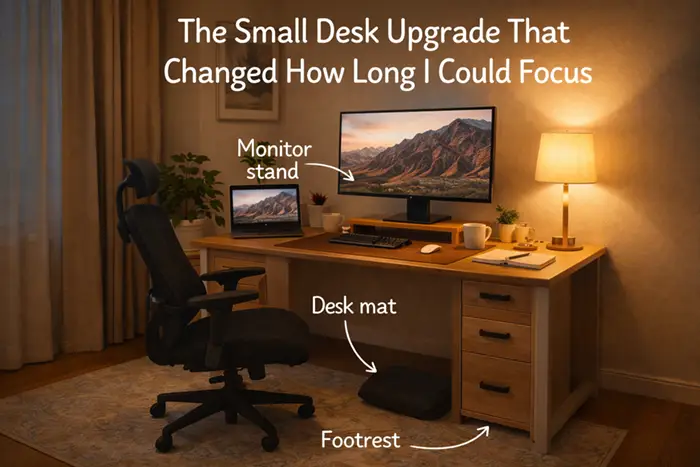
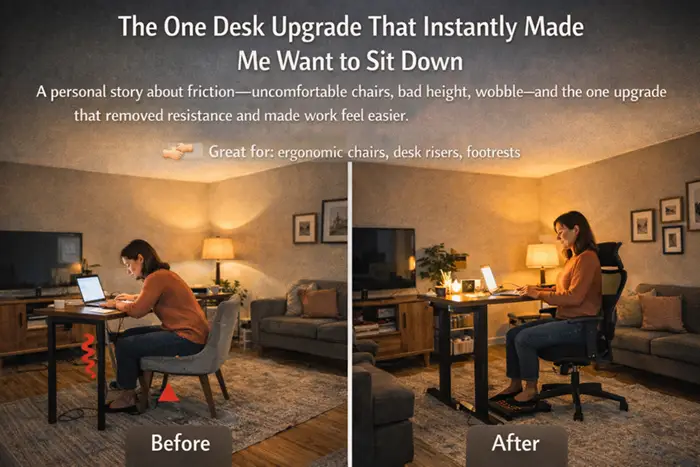
The first thing I adjusted was how my body felt while sitting there. I lowered the chair slightly, brought the keyboard closer, and added support where I didn’t know I needed it until it was there. Almost immediately, the strain I’d been carrying in my shoulders eased. The desk stopped feeling like something I had to endure and started feeling like something that worked with me instead of against me.

Next, I softened the space visually. I replaced harsh overhead light with a warmer lamp and angled it so it didn’t glare off the screen. The difference was subtle but noticeable. The desk felt calmer. Less clinical. I also cleared just enough space so my eyes weren’t constantly jumping from object to object. What stayed on the desk had a reason to be there.

The final shift was personal, not practical. I added one or two things that didn’t serve a productivity purpose at all — something familiar, something grounding. A small object I like seeing. A texture that made the space feel lived in. Those details didn’t distract me; they anchored me. The desk stopped feeling generic and started feeling like mine.

Now, when I sit down, I don’t feel the same resistance I used to. The space welcomes me instead of challenging me. Work still happens there, but it no longer defines the desk entirely. Comfort, ergonomics, and a bit of warmth turned it into a place I can focus and settle — and that’s made all the difference.

🪑 The desk didn’t become more productive — it became more human.


📦 Buy on Amazon USA

🪑 Ergonomic Office Chair Cushion

💡 Warm Desk Lamp with Soft Light

🖱️ Desk Mat for Comfort and Surface Protection


🕯️ Final Thoughts

A desk doesn’t need to look impressive to feel right. It needs to support your body, calm your eyes, and reflect just enough of who you are to make sitting down feel natural instead of forced. When those elements align, work becomes easier to return to.

Comfort isn’t indulgent — it’s functional in a quieter way. When your space stops pulling at you, your attention has room to stay where you put it. Small ergonomic and visual choices can completely change how a desk feels without changing what it’s used for.

If your desk still feels like a place you tolerate rather than enjoy, try adjusting how it treats you first. A few thoughtful changes can turn it from a workstation into a space that actually feels like it belongs to you.


📦 Buy on Amazon Canada

🪑 Ergonomic Office Chair Cushion

💡 Warm Desk Lamp with Soft Light

🖱️ Desk Mat for Comfort and Surface Protection

Cozy Living

The Morning Routine That Made My Apartment Feel Like HomeCoffee, light, opening blinds, small habits — very relatable.

For a long time, my apartment felt more like a place I passed through than a place I truly lived in. Everything was functional. Nothing was broken. But mornings felt rushed and slightly unsettled, like the space never quite woke up with me. I didn’t notice it at first — I just knew I didn’t feel fully at ease when the day began.

The change didn’t come from buying furniture or reorganizing the entire place. It came from slowing down the first ten minutes of my morning and letting the apartment breathe before I did anything else. No phone. No noise. Just a simple routine that I repeat almost without thinking now.

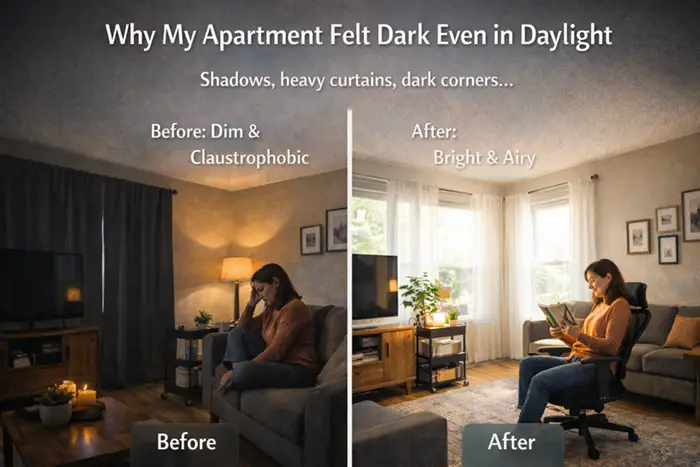
The first thing I do is open the blinds. Not dramatically — just enough to let natural light spill in. The room immediately feels different. Softer. Less closed-in. Even on cloudy days, that shift in light changes how the space feels. It stops being a box and starts feeling like part of the day outside.

Then comes coffee. Not rushed, not carried from room to room while doing five other things. I let it brew while the apartment is still quiet. That sound alone — water, movement, a little time passing — grounds the space. I sit in the same spot every morning with the same mug, and that consistency has become surprisingly comforting.

Before I move on with the day, I do one small reset. I straighten a cushion. Clear the coffee table. Put something back where it belongs. Not cleaning — just restoring order to one small area. It takes less than a minute, but it changes how the room feels. The apartment stops reminding me of what’s unfinished and starts supporting what comes next.

What surprised me most is how these small habits changed my relationship with the space. The apartment didn’t change — I did. By treating the morning as a quiet transition instead of a launchpad, the rooms started feeling familiar instead of temporary. Home wasn’t something I decorated into existence. It was something I practiced.

🛋️ My apartment didn’t start feeling like home when I fixed it — it started feeling like home when I slowed down inside it.


📦 Buy on Amazon USA

Simple Ceramic Coffee Mug (Neutral Tone)

🪟 Light-Filtering Curtain Panels

💡 Warm White LED Light Bulbs


🕯️ Final Thoughts

A home doesn’t announce itself all at once. It shows up in small, repeated moments — especially at the beginning of the day. When mornings feel calmer, the entire space feels more supportive, even if nothing else has changed.

There’s something powerful about greeting your home before the rest of the world gets involved. Light, warmth, and one small act of care can shift the tone of an entire day. Those moments add up, quietly building familiarity and comfort.

If your apartment still feels a little unsettled, try changing how you start your mornings instead of changing the space itself. Sometimes home isn’t about what you add — it’s about how you arrive.


📦 Buy on Amazon Canada

Simple Ceramic Coffee Mug (Neutral Tone)

🪟 Light-Filtering Curtain Panels

💡 Warm White LED Light Bulbs

Cozy Living

Why I Stopped Trying to Organize Everything at Once

For a long time, I approached organization the same way I approached stress — all or nothing. If I was going to get my home under control, I felt like I had to do everything at once. Every room. Every drawer. Every pile I’d been avoiding. I’d build it up in my head as a big reset, something dramatic that would finally make the space feel calm again. And almost every time, the idea alone was exhausting enough to stop me before I started.

What I didn’t realize then was how much pressure that mindset was creating. Looking at my home as one giant problem made it feel heavier than it actually was. Even when I had the time, I didn’t have the mental energy. I’d stand in the middle of a room, unsure where to begin, already discouraged by how much there was to do. Organization stopped being helpful and started feeling like another expectation I couldn’t meet.

The shift happened quietly. One afternoon, instead of planning a full overhaul, I picked a single room — not the worst one, not the most visible, just the one I happened to be in. I didn’t aim to finish it. I didn’t even aim to make it perfect. I chose one small area and worked until it felt lighter. When I stopped, something unexpected happened: I felt relief instead of guilt.

Working room by room changed everything. Each space became its own small project instead of part of an overwhelming whole. I started noticing progress again — real progress, not imagined perfection. A calmer corner here. A cleared surface there. Each completed area gave me permission to stop without feeling like I’d failed. The mental load lifted because the goal was no longer total control, just steady improvement.

What surprised me most was how much better the space felt before everything was finished. Living with one organized room at a time allowed the calm to arrive gradually. I could feel the difference immediately instead of waiting for some future moment when everything was done. The house didn’t need to be perfect to feel better — it just needed to be more intentional than it was yesterday.

Now, I don’t try to organize my entire home anymore. I listen to where the friction is and address it slowly. One room. One drawer. One shelf. That approach has made the process sustainable instead of stressful. Organization stopped being about control and became about care — and that’s a change that finally stuck.

🛋️ Letting myself organize slowly didn’t make me less productive — it made the relief arrive sooner.


📦 Buy on Amazon USA

🗂️ Simple Storage Bins (Neutral Colors)

🧺 Fabric Drawer Organizers

📦 Clear Stackable Storage Boxes


🕯️ Final Thoughts

Trying to organize everything at once often delays the very calm we’re searching for. When the goal becomes too big, the effort feels too heavy. Slowing down allows progress to feel achievable again, and that sense of completion — even in small doses — matters more than we realize.

A home doesn’t need to be fully organized to feel supportive. It needs pockets of ease, places where your attention can rest instead of scanning for what’s unfinished. Each room you gently improve becomes proof that change doesn’t have to be dramatic to be meaningful.

If organization has felt overwhelming lately, consider giving yourself permission to move slower. Start where you are. Finish what feels manageable. Calm has a way of showing up the moment you stop trying to force it.


📦 Buy on Amazon Canada

🗂️ Simple Storage Bins (Neutral Colors)

🧺 Fabric Drawer Organizers

📦 Clear Stackable Storage Boxes

Scroll to Top