Bedroom & Comfort

Better sleep, comfortable rooms, lighting and relaxing indoor spaces.

Bedroom & Comfort, Cozy Living

The One Small Change That Made My Living Room Feel Calmer

Disclosure: As an Amazon Associate, My Indoor Space may earn from qualifying purchases through links in this article, at no extra cost to you.
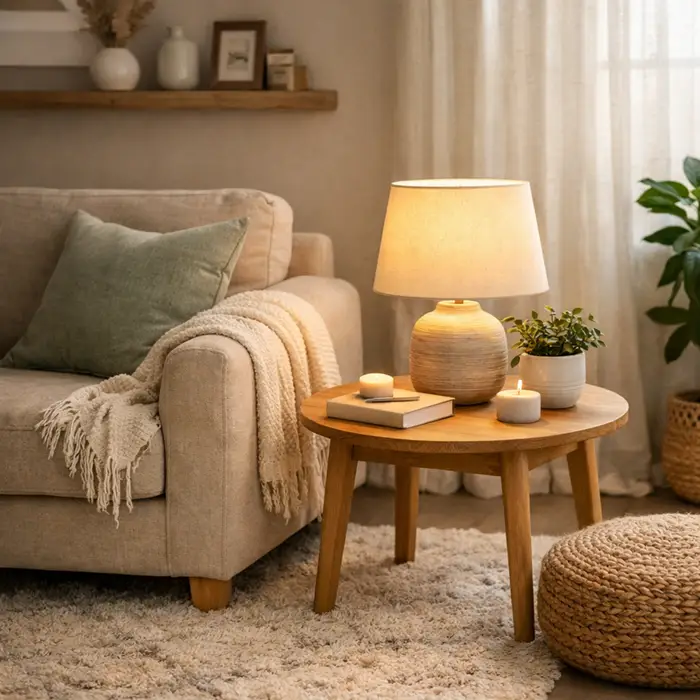
I didn’t set out to redesign my living room or fix anything major. There was no big moment of frustration, no urge to replace furniture or chase a new look. It was quieter than that. I just noticed that in the evenings, when everything was technically “fine,” I still felt slightly restless sitting there. The room worked, but it didn’t quite settle me. It felt a little too sharp, a little too awake, even when I wasn’t.

The change itself was almost embarrassingly small. I swapped out one light source — not adding more light, not moving furniture, not buying something dramatic — just changing how the room was lit. The difference wasn’t immediate in a flashy way. It was subtle, like exhaling without realizing you were holding your breath. The corners softened. The room stopped feeling like it was on display and started feeling like it was holding me instead.

What surprised me most was how quickly my behavior shifted. I stopped adjusting my position every few minutes. I lingered longer on the couch. Even the way conversations unfolded felt slower, less rushed. Nothing else in the room had changed, but the space suddenly felt less demanding. It wasn’t asking for attention anymore — it was offering rest.

I didn’t expect such a small tweak to affect my evenings, but it did. The living room became a place I naturally gravitated toward instead of something I passed through. Reading felt easier. Music felt warmer. Even silence felt intentional instead of empty. It was the same room, just tuned slightly differently — like adjusting a dial you didn’t know was there.

🛋️ A clear side table and a softer lamp are small changes that can make the seating area feel more settled.

📦 Buy on Amazon USA

Soft-glow floor lamp

Warm LED light bulbs

Neutral throw blanket

Minimal side table

🕯️ Final Thoughts

It’s easy to think comfort comes from big changes — new furniture, new layouts, new everything. But sometimes calm arrives through restraint. Through choosing less intensity instead of more stimulation. This change didn’t transform my living room into something unrecognizable; it simply allowed it to breathe.

What I appreciate most is how effortless it feels now. There’s no routine involved, no setup, no thought required. The room does the work on its own. At the end of the day, I don’t try to relax here — it just happens. That kind of ease is rare, and it usually comes from listening instead of upgrading.

I’m more aware now of how small details shape how a space feels. Not in a perfectionist way, but in a human one. Sometimes the calm we’re looking for isn’t missing — it’s just waiting for us to soften the edges.

To change the living room lighting without replacing a lamp, compare smart bulbs and switches.
📦 Buy on Amazon Canada

Soft-glow floor lamp

Warm LED light bulbs

Neutral throw blanket

Minimal side table

Bedroom & Comfort, Cozy Living

Why My Bedroom Finally Started Feeling Like a Place to Rest

Disclosure: As an Amazon Associate, My Indoor Space may earn from qualifying purchases through links in this article, at no extra cost to you.

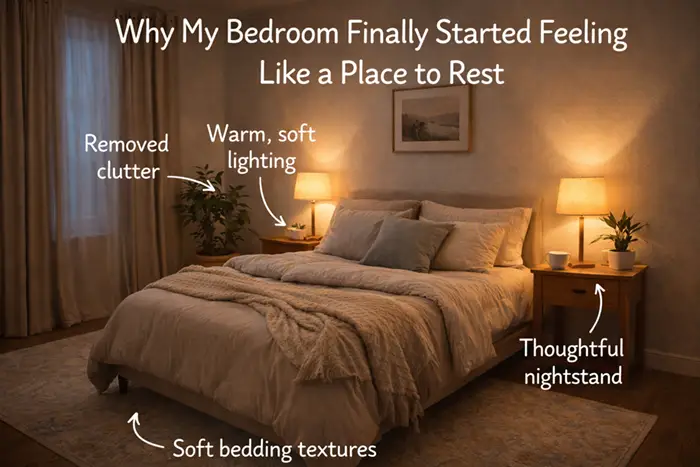
For a long time, my bedroom didn’t really feel like a place to rest — it felt like a storage room with a bed in it. I slept there, but I didn’t unwind there. The moment I walked in, my eyes landed on unfinished tasks, piled items, and little reminders of everything I hadn’t dealt with yet. Even lying down, my mind stayed alert, like it was still on duty.

The first change wasn’t dramatic. I didn’t redesign anything or buy new furniture. I simply removed what didn’t belong. Extra items on the dresser, things I never reached for, objects that had quietly turned into visual noise. With fewer things competing for attention, the room stopped asking questions. It felt quieter, even before I touched the lights.

Lighting was the next shift. Overhead light stayed useful during the day, but at night it kept the room feeling exposed. I swapped it for soft, warm light from a lamp near the bed, low enough to feel gentle instead of functional. Shadows softened. The edges of the room faded slightly. My body seemed to recognize the signal before my mind did.

Bedding textures mattered more than I expected. Sheets that felt smooth instead of stiff. A comforter with just enough weight to feel grounding. Even the way fabric sounded when I moved made a difference. The bed stopped feeling like a surface and started feeling like a place to land.

The nightstand played a quiet role too. Before, it held whatever ended up there — cords, papers, half-used items. I simplified it to only what I actually used at night. A lamp. A book. A clear surface. That small decision removed one last layer of mental clutter I didn’t realize I was carrying into sleep.

Keep the bedside area simple and choose lighting that supports winding down and reading.


📦 Buy on Amazon USA

Warm-glow bedside lamp

Soft bedding set (cotton or microfiber)

Weighted or textured comforter

Minimal nightstand organizer


🕯️ Final Thoughts

Rest doesn’t come from doing more — it comes from removing what keeps the mind alert. A bedroom doesn’t need to be perfect to be peaceful; it just needs to stop asking for attention when the day is done.

What surprised me was how small the changes were. Fewer items. Gentler light. Softer textures. Each adjustment lowered the room’s energy just enough to invite rest instead of resistance.

When a bedroom finally supports sleep instead of interrupting it, everything else improves quietly. Rest becomes something you step into, not something you have to force. And sometimes, that’s all a space really needs to do.


For better control of bedroom light, see the blackout curtain buying guide.

📦 Buy on Amazon Canada

Warm-glow bedside lamp

Soft bedding set (cotton or microfiber)

Weighted or textured comforter

Minimal nightstand organizer

Bedroom & Comfort, Cozy Living

The Small Desk Upgrade That Changed How Long I Could Focus

Disclosure: As an Amazon Associate, My Indoor Space may earn from qualifying purchases through links in this article, at no extra cost to you.

For a long time, I thought my focus problem was mental. I’d sit down with good intentions, clear tasks, even a quiet room — and still feel restless after a short stretch. I blamed motivation, discipline, maybe even the work itself. It never occurred to me that my body was quietly asking for help the entire time.

The first thing I noticed was how often I shifted in my chair. Not dramatically — just small adjustments. Feet tucking back, legs crossing and uncrossing, shoulders creeping upward. None of it felt uncomfortable enough to fix, but all of it pulled my attention away in tiny increments. My focus wasn’t breaking all at once — it was leaking.

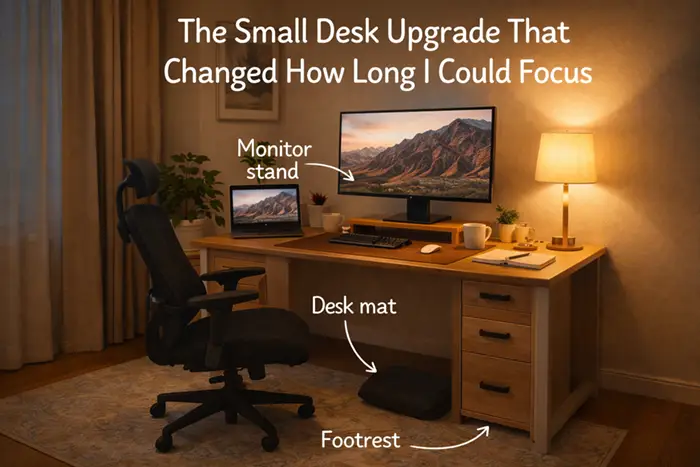
The change came from something almost embarrassingly simple: supporting my body better where it was already struggling. A footrest gave my legs a place to settle instead of hovering. A desk mat softened the space under my hands, reducing that subtle tension I didn’t realize I was holding. The desk didn’t look different — it just felt easier to stay in.

Once that friction was gone, time behaved differently. I wasn’t checking the clock as often. I wasn’t standing up just to reset myself. My thoughts stayed with the work longer because my body stopped asking for constant adjustments. Focus stopped feeling like effort and started feeling like a natural result of being comfortable.

What surprised me most was how quiet the improvement was. No productivity hacks. No timers. Just fewer physical interruptions pulling me out of the moment. The desk became a place I could stay, not escape from.

A desk feels easier to use when the screen, chair, lamp, and tools fit the work you do there.


📦 Buy on Amazon USA

Under-desk footrest

Desk mat with soft surface

Low-profile monitor stand

Supportive ergonomic desk chair


🕯️ Final Thoughts

Focus isn’t always about willpower — often it’s about how much resistance your body is quietly pushing against. When your posture is unsupported or your setup asks for constant micro-adjustments, attention gets scattered before you even notice it happening.

What worked for me was addressing the physical layer first. Giving my body fewer reasons to interrupt the task at hand made mental clarity easier to reach and easier to keep. The work didn’t change — the experience of doing it did.

Sometimes the most effective desk upgrades aren’t the ones that promise performance, but the ones that make staying put feel natural. When your body settles, your mind often follows.


For the foot support discussed here, use the under-desk footrest buying guide to compare sizes and adjustments.

📦 Buy on Amazon Canada

Under-desk footrest

Desk mat with soft surface

Low-profile monitor stand

Supportive ergonomic desk chair

Bedroom & Comfort, Cozy Living

Why Some Rooms Feel Loud (Even When They’re Silent)

Disclosure: As an Amazon Associate, My Indoor Space may earn from qualifying purchases through links in this article, at no extra cost to you.

There was a time when my space felt oddly tense, even when nothing was happening. No TV on. No music playing. No conversations bouncing around. And yet, sitting there felt restless, like the room itself was buzzing. It took a while to realize that silence doesn’t always mean calm — sometimes it just means there’s nothing masking the noise the room is creating on its own.

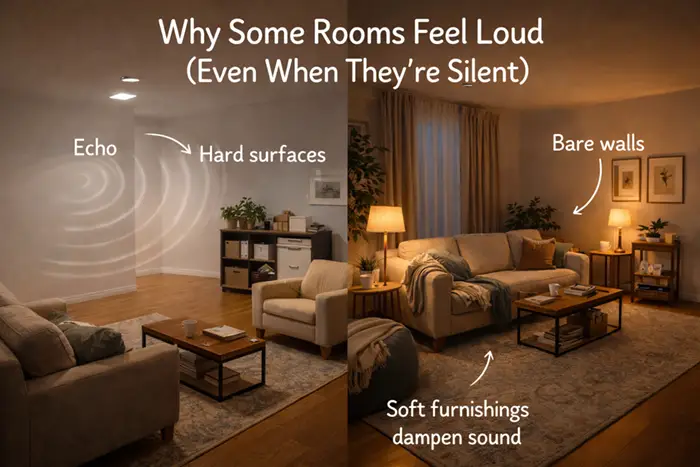
Hard surfaces were the biggest contributor. Bare floors, uncovered windows, smooth walls — everything reflected sound instead of absorbing it. Footsteps echoed longer than they needed to. The clink of a mug felt sharp. Even small movements carried more weight than expected. The room wasn’t noisy, but it was alert, constantly feeding sound back into itself.

Bare walls added to that feeling too. Without anything to interrupt them, sound had nowhere to land. Voices felt slightly harsher. Quiet moments felt exposed. The space didn’t soften what happened inside it — it amplified it. I noticed I was speaking more carefully, moving more cautiously, without really knowing why.

The shift came when I introduced softness, not for decoration, but for balance. A rug underfoot changed how the room responded immediately. Sound stopped bouncing and started settling. Curtains dulled the sharpness coming from the windows. Even fabric wall decor helped break up flat surfaces that had been acting like mirrors for sound.

What surprised me most was how quickly my body reacted. I felt less on edge without consciously relaxing. Sitting still felt easier. The room stopped reacting to every movement, and in doing so, it stopped asking for my attention.

Soft furnishings can reduce hard reflections, while a simpler visual layout can lower distraction.


📦 Buy on Amazon USA

Area rug with dense pile

Fabric or thermal curtains

Soft wall hangings or textile decor

Cushioned seating pads


🕯️ Final Thoughts

Sound shapes how a room feels just as much as light or layout. When everything reflects noise, even silence can feel sharp and unsettled. A space doesn’t have to be loud to be tiring — it just has to lack softness.

What worked for me wasn’t muting the room completely, but rounding off its edges. Letting sound fade instead of bounce. Allowing the space to absorb life rather than echo it back. Those small changes made the room feel more forgiving.

A calmer home often sounds quieter not because there’s less happening, but because the space knows how to hold it gently. When a room stops reacting to every sound, it finally feels like a place you can rest.


For a soft surface that also handles everyday cleaning, see the washable area rug guide.

📦 Buy on Amazon Canada

Area rug with dense pile

Fabric or thermal curtains

Soft wall hangings or textile decor

Cushioned seating pads

Bedroom & Comfort, Cozy Living

The One Light Change That Made My Evenings Feel Slower

Disclosure: As an Amazon Associate, My Indoor Space may earn from qualifying purchases through links in this article, at no extra cost to you.

For a long time, my evenings didn’t really feel like evenings. I’d finish what I needed to do, sit down, and still feel wired — like my body hadn’t gotten the message that the day was over. Nothing was wrong exactly. The apartment was fine. The routine was fine. But something about the space kept everything feeling alert instead of calm.

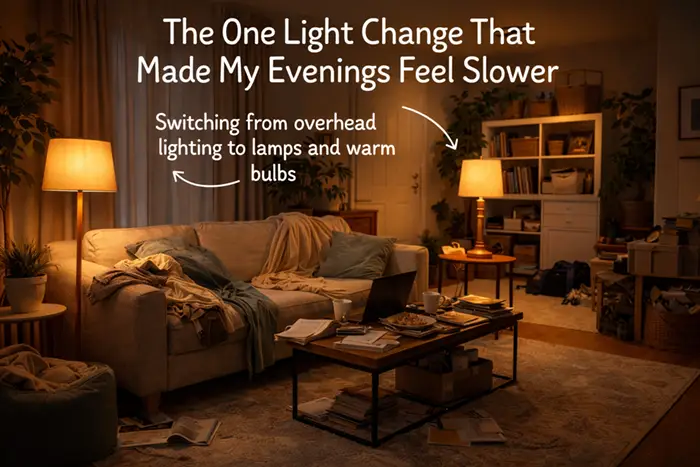
The biggest culprit turned out to be the overhead light. Bright, white, and centered — it lit the room efficiently, but it also flattened everything. Shadows were sharp, corners felt exposed, and the space stayed in “day mode” well into the night. Even when I was resting, my eyes and nervous system didn’t get a break.

Switching to lamps changed that almost immediately. Light coming from the side instead of above softened the room in a way I didn’t expect. Walls felt warmer. Depth came back. The room stopped feeling like a place to do things and started feeling like a place to be. It wasn’t dramatic — just noticeably easier on the senses.

Warm bulbs made an even bigger difference. That subtle shift from cool to warm light slowed everything down visually. Colors looked gentler. Evenings stretched instead of snapping shut. I found myself lingering a little longer with a book, or sitting quietly without feeling like I should be doing something else.

Placement mattered too. A lamp near where I sit, another tucked into a corner — not for brightness, but for balance. The room stopped feeling evenly lit and started feeling intentionally lit. That unevenness created pockets of calm, and somehow made time feel less rushed.

A smaller lamp beside the seat can make evening light useful without filling the whole room.


📦 Buy on Amazon USA

Warm-glow table lamp

Soft white LED bulbs (2700K)

Floor lamp with fabric shade

Plug-in dimmer switch


🕯️ Final Thoughts

Lighting sets the emotional tempo of a room more than we realize. Overhead lights are practical, but they’re rarely gentle. When they’re the only option, evenings can feel harsh and unfinished, even when everything else is in place.

What I appreciated most about this change was how subtle it was. No rewiring. No big purchases. Just choosing light that worked with the evening instead of against it. The space didn’t demand attention anymore — it allowed it to settle.

A calmer home doesn’t always come from adding more. Sometimes it comes from turning one thing off, and letting something softer take its place. When the light slows down, the rest of the night often follows.


For an adjustable light level, compare smart bulbs with smart switches.

📦 Buy on Amazon Canada

Warm-glow table lamp

Soft white LED bulbs (2700K)

Floor lamp with fabric shade

Plug-in dimmer switch

Bedroom & Comfort, Cozy Living

Why Your Home Feels Tiring — Even When You’re Doing Nothing

Disclosure: As an Amazon Associate, My Indoor Space may earn from qualifying purchases through links in this article, at no extra cost to you.

There was a stretch where I couldn’t figure out why I felt drained at home, even on days when I hadn’t done much at all. I wasn’t rushing, I wasn’t overwhelmed with tasks, and yet the space itself felt heavy. Sitting on the couch didn’t recharge me. Being at my desk didn’t feel grounding. It took a while to realize the problem wasn’t my energy — it was the environment quietly pulling from it.

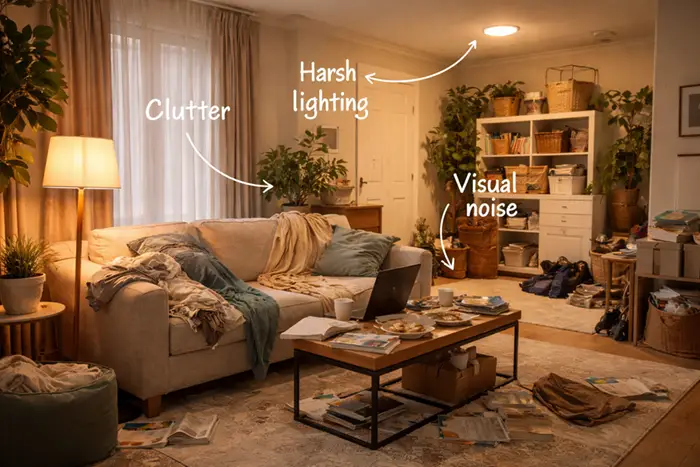
Visual noise plays a bigger role than we give it credit for. Open shelves packed with half-used items, cables that never quite disappear, stacks that don’t belong anywhere specific — none of it screams “stress,” but all of it whispers. Your eyes are constantly scanning, sorting, deciding. Even when you’re resting, your brain is still working, trying to make sense of the space around you.

Lighting was another piece I underestimated. Harsh overhead lights made evenings feel sterile and exposed, like the day never really ended. Shadows landed in odd places, corners felt unfinished, and nothing invited me to settle in. Once I started using softer, warmer light — lamps placed lower, light bouncing off walls instead of blasting straight down — the room instantly felt quieter. The same space, just easier to exist in.

Then there’s flow — how you move through a room without thinking about it. When furniture interrupts natural paths, when storage is inconvenient, when you have to sidestep or reach awkwardly just to live your life, it adds friction. Not enough to notice consciously, but enough to wear you down over time. When I adjusted a few placements and gave everyday items a real home, movement became automatic again.

Textures mattered more than I expected too. Hard surfaces everywhere reflected sound and light in ways that kept the room feeling alert instead of restful. Adding soft elements — curtains, fabric bins, a rug underfoot — absorbed some of that edge. The room didn’t change dramatically, but it stopped asking so much from me.

Glare, clutter, and awkward furniture placement are worth checking before adding another purchase.


📦 Buy on Amazon USA

Soft-glow table lamp

Fabric storage bins with lids

Light-filtering curtains

Low-pile area rug


🕯️ Final Thoughts

A home doesn’t have to be messy to be exhausting. Sometimes it’s just visually loud, poorly lit, or slightly out of sync with how you actually live. Those small mismatches add up quietly, especially when you’re spending a lot of time indoors.

What surprised me most was how gentle the fixes were. No big renovations. No dramatic overhauls. Just small adjustments that reduced visual strain and made the space feel more cooperative, like it was finally on my side instead of asking me to manage it.

Comfort at home often comes from subtraction rather than addition. Fewer distractions, softer light, smoother flow. When a space stops demanding your attention, rest becomes possible again — even when you’re doing absolutely nothing.


If the lighting is tiring, see the smart bulb and switch comparison for control options.

📦 Buy on Amazon Canada

Soft-glow table lamp

Fabric storage bins with lids

Light-filtering curtains

Low-pile area rug

Bedroom & Comfort, Cozy Living

The One Desk Upgrade That Instantly Made Me Want to Sit Down

Disclosure: As an Amazon Associate, My Indoor Space may earn from qualifying purchases through links in this article, at no extra cost to you.

For a long time, I avoided my desk without realizing I was doing it. I’d find reasons to work from the couch, the kitchen table, anywhere else. On the surface, everything looked fine — decent desk, chair that technically worked, nothing broken. But sitting down always felt like effort. Like my body knew something wasn’t quite right before my brain caught up.

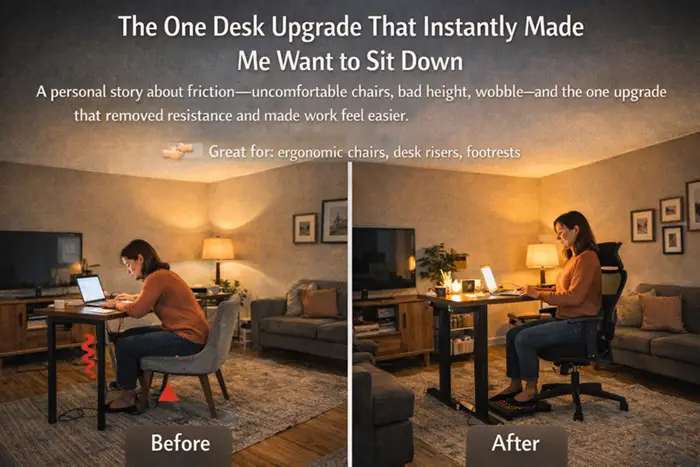
The friction showed up in small ways. The chair was a little too low. The desk a little too high. My feet never felt settled. There was a faint wobble when I leaned forward that made me tense without knowing why. None of it was dramatic — just enough resistance to make sitting down feel like a chore instead of an invitation.

What finally pushed me to change wasn’t productivity or posture goals. It was the realization that I was avoiding a space that was supposed to support me. That felt backwards. A desk shouldn’t require motivation to use — it should quietly remove obstacles.

The upgrade itself wasn’t flashy. I didn’t replace the desk or overhaul the room. I focused on one thing: how my body met the space the moment I sat down. The difference was immediate. The chair height finally matched the desk. My feet rested fully instead of hovering. The slight wobble disappeared. For the first time, sitting felt… neutral. And that neutrality turned into comfort faster than I expected.

I noticed it the same day. I sat down without hesitation. No shifting. No adjusting. No mental resistance. I stayed longer without forcing it. The desk stopped feeling like a task and started feeling like a place I could actually settle into.

Choose a desk setup that supports your posture and puts light and daily tools within easy reach.

What surprised me most was how much energy I’d been spending compensating before. When a chair is wrong or a desk height is off, your body is constantly micro-adjusting. Fixing that didn’t just improve comfort — it removed a quiet drain I didn’t know was there.


📦 Buy on Amazon USA

Ergonomic Desk Chair with Adjustable Height

Desk Riser (Sit-Stand or Height Adjustment)

Supportive Footrest for Under Desk


🕯️ Final Thoughts

Comfort at a desk isn’t about luxury — it’s about alignment. When your body fits the space without effort, your mind follows. Work feels lighter not because it’s easier, but because nothing is getting in the way anymore.

What I’ve learned is that resistance often hides in plain sight. A chair that’s almost right. A desk that’s close enough. Those small mismatches add up, quietly discouraging you from settling in.

If your desk feels fine but you keep avoiding it, trust that instinct. The right upgrade isn’t always more — sometimes it’s the one adjustment that finally lets your body relax into the space it’s already in.


If desk height is part of the issue, see the standing desk converter guide for fit and adjustment.

📦 Buy on Amazon Canada

Ergonomic Desk Chair with Adjustable Height

Desk Riser (Sit-Stand or Height Adjustment)

Supportive Footrest for Under Desk

Bedroom & Comfort, Cozy Living

Why Small Rooms Feel Stressful — And How Lighting Fixes It

Disclosure: As an Amazon Associate, My Indoor Space may earn from qualifying purchases through links in this article, at no extra cost to you.

For a long time, I couldn’t quite explain why certain rooms made me feel tense the moment I walked in. Nothing was wrong exactly — the space was clean, organized, even minimal — but I always felt a little on edge, like my shoulders were permanently raised without me noticing. It took me longer than I’d like to admit to realize it wasn’t the size of the room doing this. It was the lighting.

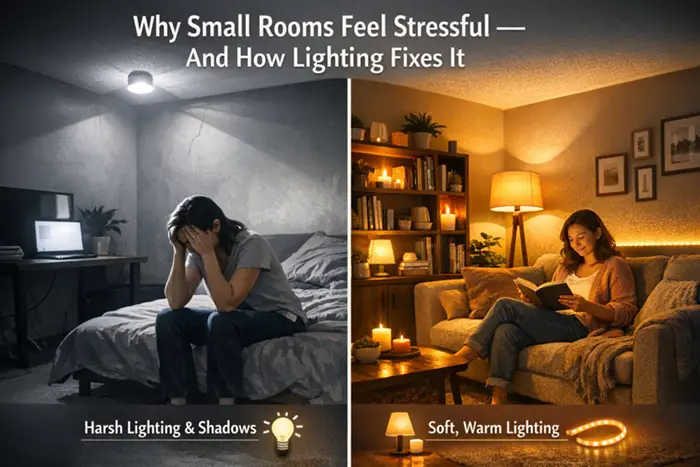
Small rooms amplify everything. Shadows feel heavier. Harsh overhead lights bounce straight back into your eyes. Corners disappear into darkness while the center of the room feels exposed and flat at the same time. Your eyes are constantly adjusting, scanning, compensating — and your nervous system reads that as low-level stress. You don’t consciously think this room is overwhelming, but your body does.

I noticed it most in the evenings. The same room that felt tolerable during the day suddenly felt tight and restless once the sun went down. One ceiling light, one temperature, one direction — it left nowhere for my eyes to rest. The space felt smaller than it actually was, like it was pressing inward instead of opening up.

The shift happened slowly, almost accidentally. I added a small table lamp with a warm bulb, not even thinking much about it. Then another light near the floor. Later, a soft strip of indirect light behind a shelf. Nothing dramatic. But the room changed. Shadows softened. The walls felt farther away. My eyes stopped darting around, searching for balance. The space finally felt like it was holding me instead of demanding attention.

What surprised me most was how physical the change felt. My breathing slowed. My shoulders dropped. I started lingering in the room instead of passing through it. Lighting didn’t just change how the room looked — it changed how long I wanted to stay there, and how calm I felt while I did.

Layered lamps can separate reading, relaxing, and moving safely through a small room.

Good lighting in a small room isn’t about brightness — it’s about layers. Soft light at eye level, gentle glow near the floor, warm tones that tell your brain it’s safe to relax. When light comes from different directions, the room stops feeling boxed in. It gains depth, even if the square footage never changes.


📦 Buy on Amazon USA

Warm LED Table Lamp

Smart Warm-Tone Bulbs (2700K–3000K)

LED Light Strip for Indirect Lighting

Slim Floor Lamp with Soft Shade


🕯️ Final Thoughts

Small rooms don’t need to be fixed — they need to be understood. When a space feels stressful, it’s often because our senses are overloaded or under-supported. Lighting quietly shapes that experience, whether we realize it or not.

What I’ve learned is that comfort doesn’t come from making a room brighter, newer, or bigger. It comes from reducing visual tension. Soft light gives your eyes a place to land. Warm tones signal rest. Indirect glow creates breathing room where walls once felt close.

If a room in your home feels off and you can’t explain why, start with the light. You might be surprised how much calmer your space — and your body — feels when the room finally stops asking for your attention.


For controllable light in a small room, compare smart switches and smart bulbs.

📦 Buy on Amazon Canada

Warm LED Table Lamp

Smart Warm-Tone Bulbs (2700K–3000K)

LED Light Strip for Indirect Lighting

Slim Floor Lamp with Soft Shade

Bedroom & Comfort, Cozy Living

The One Thing I Adjust Before I Feel Comfortable at Home

Disclosure: As an Amazon Associate, My Indoor Space may earn from qualifying purchases through links in this article, at no extra cost to you.

It usually takes me a few minutes to realize something feels off. I’ll sit down, try to relax or focus, and notice a low-level restlessness I can’t quite explain. The room looks fine. Nothing is obviously wrong. But my body doesn’t settle — and over time I’ve learned that comfort often hinges on one small adjustment.

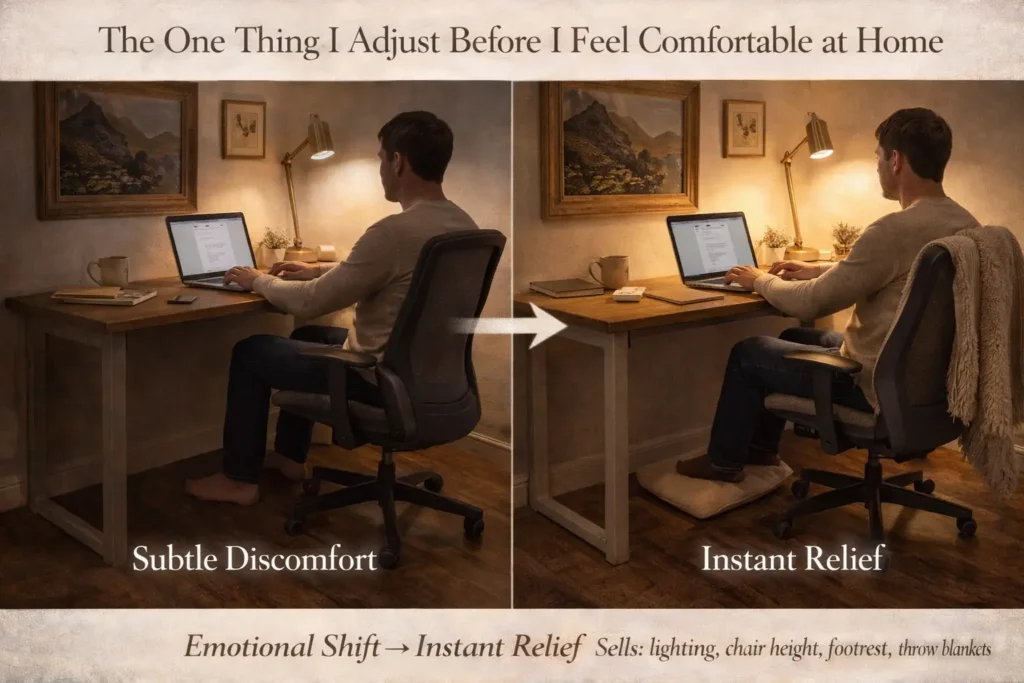
More often than not, it’s the lighting. Overhead light feels too sharp, too exposed, like the room is asking something of me. Before I can fully exhale, I reach for a softer source — a lamp angled just right, a warmer glow that changes the mood instantly. The space stops feeling functional and starts feeling lived in.

What surprises me is how quickly that shift affects everything else. My shoulders drop. I stop fidgeting. The room feels quieter, even though nothing else has changed. It’s not about brightness so much as intention — light that supports rest instead of demanding attention.

Once the lighting is right, I notice the smaller comforts fall into place naturally. I’ll pull a throw blanket closer, adjust my chair height without thinking, or rest my feet somewhere that feels grounded. The space works with me instead of against me, and that subtle cooperation makes all the difference.

Start with the lighting and the seat you use most; adjust them before buying another accessory.

📦 Buy on Amazon USA

Warm Desk Lamp with Adjustable Arm

Soft Throw Blanket for Everyday Use

Adjustable Footrest for Under Desk Comfort

Chair Cushion for Long Sitting Sessions

🕯️ Final Thoughts

Comfort at home isn’t about redesigning everything — it’s about removing the one irritation your body notices first. Often, that discomfort is subtle enough to ignore, but strong enough to keep you from fully settling in.

Lighting is one of those quiet levers. When it’s right, the room feels gentler and more forgiving. When it’s wrong, everything else feels slightly harder than it needs to be.

Making that one small adjustment doesn’t just improve the space — it changes how you feel inside it. And sometimes, that’s all home needs to do.

For seated comfort at a desk, compare the options in the under-desk footrest guide.

📦 Buy on Amazon Canada

Warm Desk Lamp with Adjustable Arm

Soft Throw Blanket for Everyday Use

Adjustable Footrest for Under Desk Comfort

Chair Cushion for Long Sitting Sessions

Bedroom & Comfort, Cozy Living

Why Soft Lighting Changed How I Feel Indoors at Night

Disclosure: As an Amazon Associate, My Indoor Space may earn from qualifying purchases through links in this article, at no extra cost to you.

For a long time, I didn’t realize how much my lighting was affecting me at night. I knew the rooms worked — everything was bright enough, functional enough — but evenings always felt slightly tense. Even when I was trying to relax, my body didn’t quite get the message. It wasn’t until I softened the lighting that I understood what had been missing.

The biggest issue wasn’t where the lights were, but how they felt. Overhead lighting did its job, but it kept the room alert instead of calm. At night, that constant brightness made it harder to shift gears. I’d sit down, but my mind stayed active. The space never really signaled that the day was winding down.

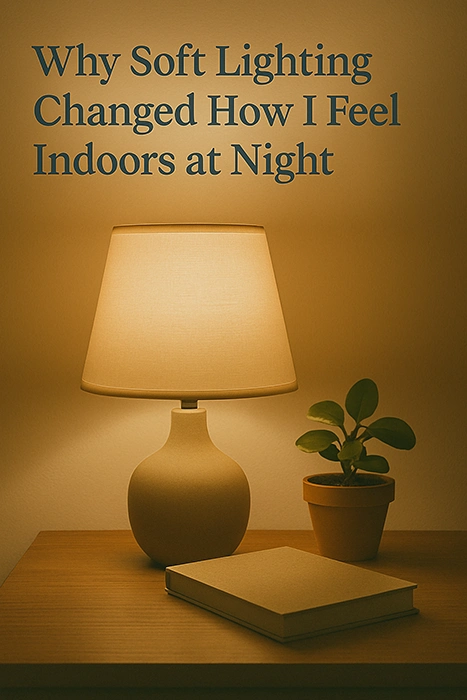
The change started small. I added a lamp with a warm bulb and turned off the overhead light in the evening. Instantly, the room felt different. Shadows softened. The edges of the space felt quieter. The light no longer demanded attention — it supported the mood instead of overpowering it. I didn’t feel rushed anymore. I felt settled.

What surprised me most was how physical the effect was. My shoulders relaxed. My breathing slowed. The room felt more forgiving. Soft lighting didn’t just change how the space looked — it changed how I moved through it. Even familiar furniture felt more comfortable under warmer light.

I also became more intentional about when lights were on. Lamps in the corners. Warmer bulbs instead of bright white. Light that felt layered instead of flat. The room stopped feeling like a workspace and started feeling like a place to rest. Nighttime finally had its own tone.

Now, evenings feel calmer without effort. I don’t have to tell myself to relax — the space does it for me. Soft lighting created a gentle transition from day to night, and once I felt that difference, I couldn’t go back.

🕯️ I didn’t change my routine — I changed the light, and my body followed.


📦 Buy on Amazon USA

🕯️ Warm Ambient Table Lamps

💡 Soft White LED Light Bulbs (Warm Tone)

🪔 Dimmable Floor Lamp


🕯️ Final Thoughts

Lighting shapes how a space feels long before we consciously notice it. When light is too harsh, the room stays alert. When it’s soft and warm, the space invites you to slow down. That quiet shift can make evenings feel completely different without changing anything else.

Soft lighting creates permission to rest. It signals the end of the day in a way screens and routines often can’t. When your environment supports calm, relaxation stops feeling like something you have to work at.

If nights at home still feel restless, consider starting with the light. A lamp, a warmer bulb, a gentler glow — sometimes that’s all it takes for a room to finally feel like evening.


If you want to adjust light from a phone or a wall control, compare smart bulbs and switches.
📦 Buy on Amazon Canada

🕯️ Warm Ambient Table Lamps

💡 Soft White LED Light Bulbs (Warm Tone)

🪔 Dimmable Floor Lamp

Scroll to Top