DIY & Decorating

Approachable decorating ideas and small DIY upgrades with a big impact.

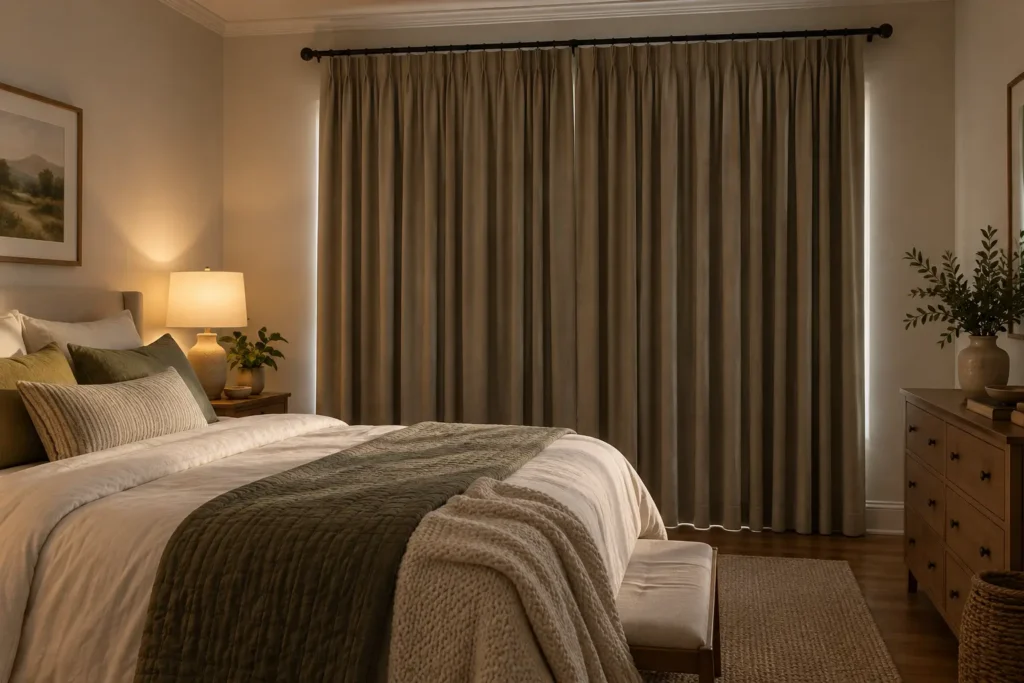
Layered neutral blackout curtains drawn across a cozy bedroom window
Bedroom & Comfort, DIY & Decorating

Best Blackout Curtains for a Bedroom

Disclosure: This post contains affiliate links. If you purchase through one of our links, we may earn a commission at no extra cost to you. Product dimensions, materials, and care instructions should always be confirmed before ordering.

Blackout curtains can make a bedroom feel calmer, reduce early-morning glare, and give you more control over privacy. But the word “blackout” on a package does not guarantee a truly dark room. Fabric density matters, yet most disappointing results come from light leaking above, beside, or between the panels.

The best setup is a system: correctly sized curtains, enough fabric fullness, thoughtful rod placement, and—when needed—a wraparound rod, side channel, or layered shade. This guide shows you how to choose and hang blackout curtains so they work as well as they look.

Quick verdict

For most bedrooms, choose two machine-washable, triple-weave or lined panels totaling 1.5 to 2 times the width of the curtain rod. Hang the rod 4 to 8 inches above the window frame and extend it 4 to 8 inches beyond each side where wall space allows. A wraparound rod and floor-length panels usually block more edge light than a standard rod with short curtains.

Who blackout curtains are best for

  • Light sleepers whose windows face streetlights or early sunrise
  • Shift workers who sleep during daylight hours
  • Nurseries and children’s rooms where flexible nap conditions help
  • Bedrooms that need more nighttime privacy
  • Renters seeking a reversible change with a large visual impact

They are less useful if your main light leak comes from a door, skylight, or bright electronics. Curtains also do not soundproof a room; heavy fabric may soften echoes slightly, but it cannot block traffic or neighbor noise the way structural changes can.

Blackout curtain buying checklist

Decision What to look for Why it matters
Light blocking Dense triple-weave or separate blackout lining Darkens the glass area; edge control completes the job.
Width Total panel width 1.5–2× rod width Creates fullness and prevents stretched-flat gaps.
Length Floor length or slightly longer Reduces light below the window and looks more intentional.
Rod Wraparound or return-style rod Brings fabric closer to the wall at both sides.
Header Grommet, rod pocket, back tab, or rings Changes light gaps, movement, and overall style.
Care Machine washable if practical Bedroom textiles collect dust and need periodic cleaning.
Safety Cord-free design and secure hardware Especially important in children’s rooms.

Blackout vs room-darkening curtains

Room-darkening curtains reduce a noticeable amount of light but may still glow in direct sun. They can be enough for a guest room or a bedroom where you want softened morning light.

Blackout curtains use dense fabric, a woven dark layer, or an applied lining to block much more light through the panel. Even a strong blackout panel will not stop light entering around its edges.

Thermal curtains focus on slowing heat transfer and drafts. Some are also blackout curtains, but the terms are not interchangeable. Verify both claims if you want both functions.

How to measure correctly

1. Measure the window and the usable wall

Record the outside width of the trim, the height from your planned rod position to the floor, and the clear wall space on both sides. Check for vents, radiators, outlets, furniture, and baseboard heaters before deciding on length.

2. Choose the rod width

A practical starting point is the window’s outside width plus 8 to 16 inches. That lets the rod extend 4 to 8 inches past each side, giving the curtain room to cover the edges and stack away from the glass when open.

3. Calculate panel fullness

Multiply the finished rod width by 1.5 for a cleaner, tailored look or by 2 for fuller folds and better coverage. For a 60-inch rod, aim for 90 to 120 inches of total fabric width. With two panels, each panel would ideally be about 45 to 60 inches wide.

4. Select the finished length

Measure from the point where the curtain will actually hang—not simply from the top of the rod. Rings, clips, grommets, and rod pockets change the drop. Common lengths are 63, 84, 95, and 108 inches, but your measurement should make the decision.

Which curtain header blocks light best?

A rod pocket or back-tab curtain can sit relatively close to the rod, but it may be slower to open and close. Grommets slide easily, yet their top edge often sits below the rod and can admit small arcs of light. Rings and clips are flexible and polished-looking, though they may create a larger gap above the fabric.

If maximum darkness matters, mount the rod higher and choose a pelmet, cornice, or layered shade to control the top gap. The header style alone will not overcome poor placement.

Fabric, color, and lining

Dark colors often appear more opaque, but construction matters more than face color. A well-made lined cream curtain can outperform a thin black panel. Hold a sample toward a bright window if possible and inspect the seams, lining, and pinholes.

Triple-weave curtains place a dense inner layer between decorative faces. Separately lined curtains may feel heavier and drape more formally. Foam-backed options can block light effectively, but confirm care directions because some coatings should not be ironed or machine dried.

How to get a darker room

  1. Mount high and wide. Give the fabric enough overlap around the window.
  2. Use a wraparound rod. Returning the panel toward the wall closes side gaps.
  3. Close the center overlap. Arrange the panels to overlap slightly or use discreet magnetic closures designed for fabric.
  4. Add a shade. A blackout roller or cellular shade inside the frame tackles the glass while curtains cover the edges.
  5. Control the top. A valance, cornice, or higher rod helps with overhead glow.
  6. Check other light sources. Cover bright device lights and address door gaps where appropriate.

Best setup by bedroom type

Small bedroom

Choose curtains close to the wall color to keep the room visually calm. A ceiling-near rod and floor-length panels can make the wall feel taller without adding furniture.

Rental bedroom

Use properly rated no-drill brackets only when the surface and curtain weight are compatible. Tension rods work best inside a sturdy recess, but they may leave edge gaps. Keep all original hardware so the room can be restored later.

Nursery or child’s room

Prefer cord-free window coverings, secure every bracket into suitable structure or anchors, and keep beds and climbable furniture away from the window. Avoid loose tiebacks or accessible cords.

Hot, sunny bedroom

Close curtains before strong sun reaches the glass. If heat control is the priority, compare products specifically designed for thermal performance and consider a light-colored exterior-facing surface. Do not block heating or cooling vents.

Shift-worker bedroom

Layer an inside-mounted blackout shade with wide, floor-length curtains on a wraparound rod. This addresses the center, sides, top, and bottom instead of relying on fabric alone.

Common mistakes to avoid

  • Buying panels equal to the window width: the fabric pulls flat and may separate in the center.
  • Mounting directly on the trim: this often leaves bright side and top gaps.
  • Ignoring the pair count: some listings are sold as one panel, others as two.
  • Choosing length before header style: the hanging method changes where the hem lands.
  • Covering a heater or vent: keep fabric clear of heat sources and airflow.
  • Skipping care instructions: heat can damage some blackout backings.

Installation tips for a polished result

Use a level, measure both bracket positions from the ceiling or floor, and select anchors appropriate for the wall and total curtain weight. Heavy lined panels need stronger hardware than sheers. After hanging, steam or iron only as the care label permits. Train the folds by arranging the fabric evenly and loosely tying it for a day or two.

If the bedroom still feels visually busy, pair the curtains with the furniture-editing approach in How to Organize a Bedroom Without Buying More Furniture.

Frequently asked questions

Do blackout curtains make a room completely dark?

The panels may block nearly all light through the fabric, but complete darkness depends on controlling gaps around the window. Layering and wider coverage usually make the biggest difference.

Should blackout curtains touch the floor?

Floor-length panels generally look finished and reduce light below the window. Keep them safely clear of heaters, vents, damp surfaces, and anything that could soil or overheat the fabric.

Are blackout curtains always black?

No. They come in many colors. Construction and lining determine performance more than the decorative face color.

Can blackout curtains help with temperature?

Heavy, well-fitted window coverings can reduce drafts and solar heat entering the room, but results vary with the window, climate, fabric, fit, and time of day. Choose a product with specific thermal information if energy performance is your main goal.

How should blackout curtains be cleaned?

Follow the label. Some are machine washable; coated or lined panels may require gentle washing, air drying, or spot cleaning. Vacuuming with an upholstery attachment can remove surface dust between washes.

Shop blackout curtains

Compare panel quantity, individual panel dimensions, header style, lining, care instructions, and return policy before ordering. Measure the rod—not only the glass—and buy enough combined width for full coverage.

Shop Amazon USA
Shop Amazon Canada

Final answer

The best blackout curtains for a bedroom are wide enough to hang with full folds, long enough to cover the bottom edge, and mounted high and wide on a rod that brings the fabric close to the wall. For most rooms, lined or triple-weave floor-length panels at 1.5 to 2 times the rod width offer the best balance of darkness, style, and everyday ease. If you need near-total darkness, layer them with an inside-mounted blackout shade.

For more bedroom comfort ideas, see Why My Bedroom Finally Started Feeling Like a Place to Rest and our guide to choosing a bedroom humidifier.
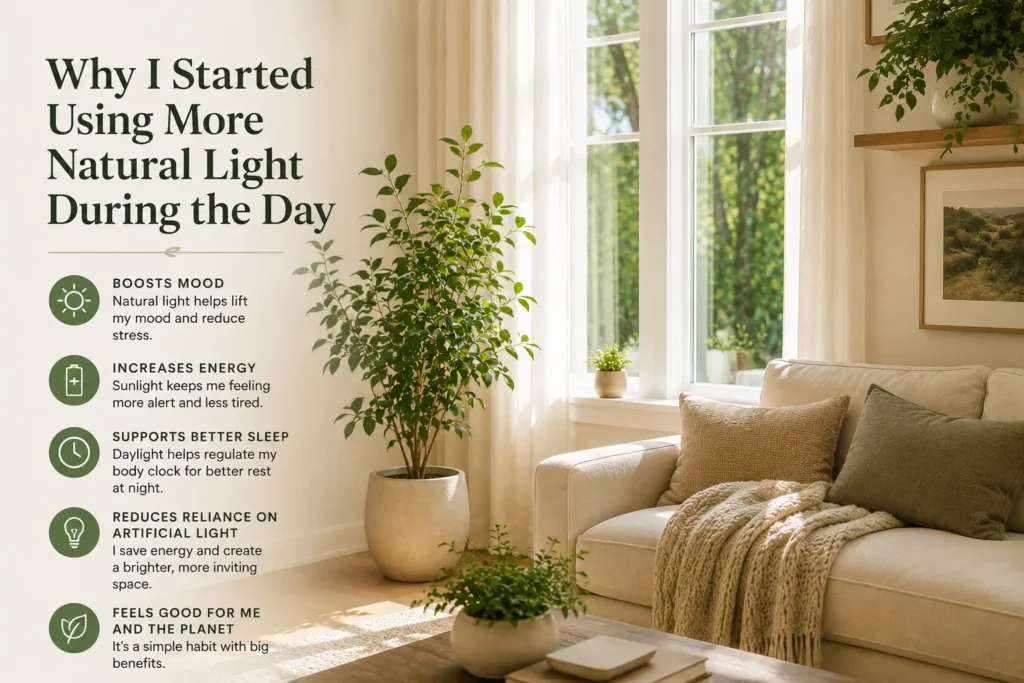
Bright living room filled with natural daylight
Cozy Living, DIY & Decorating

Why I Started Using More Natural Light During the Day

For years, I automatically turned on lights the moment I entered a room. It was simply a habit. But recently, I started opening the blinds more often and relying on natural daylight whenever possible. The change was surprisingly simple, yet it made my home feel brighter, more inviting, and even a little more spacious.

Natural light is one of the easiest and most affordable ways to improve the feel of a home.

The Difference I Noticed

After making an effort to let more sunlight into my living space, I noticed several benefits:

  • Rooms felt larger and more open
  • My home looked cleaner and brighter
  • I used less artificial lighting during the day
  • Indoor plants seemed healthier
  • The space felt more welcoming and comfortable

It’s amazing how much a room can change simply by pulling back the curtains.

Buy on Amazon USA

NICETOWN Blackout Curtains

Great for controlling light when needed while still allowing flexibility during the day.

Command Curtain Rod Hooks

An easy solution for hanging lightweight curtains without major installation.

Brightech Sky LED Floor Lamp

Perfect for maintaining a warm atmosphere when the sun goes down.

Simple Ways to Maximize Natural Light

You don’t need to remodel your home to get more daylight.

Try these simple ideas:

  • Open blinds and curtains first thing in the morning
  • Keep windows clean
  • Use mirrors to reflect sunlight around the room
  • Choose lighter-colored dĂŠcor when possible
  • Avoid blocking windows with large furniture

Even small adjustments can make a noticeable difference.

Natural Light and Comfort

Natural light can help create a more pleasant indoor environment throughout the day. Bright spaces often feel more cheerful and welcoming than rooms that rely entirely on artificial lighting.

Many homeowners spend money trying to make rooms feel bigger and brighter when the solution may already be sitting just outside the window.

Final Thoughts

One of the simplest changes I’ve made at home was using more natural light during the day. It didn’t cost anything, took almost no effort, and immediately improved how my living space felt.

Before buying new furniture or redecorating a room, try opening the blinds and letting the sunshine in. You might be surprised by how much of a difference it makes.

Buy on Amazon Canada

NICETOWN Blackout Curtains

Provide flexibility for controlling daylight and privacy throughout the day.

Command Curtain Rod Hooks

A simple way to update window treatments without complicated installation.

LED Floor Lamp

Helps maintain a cozy atmosphere after sunset.

Natural light is free, abundant, and one of the easiest ways to make your home feel brighter, warmer, and more inviting. ☀️🏡✨

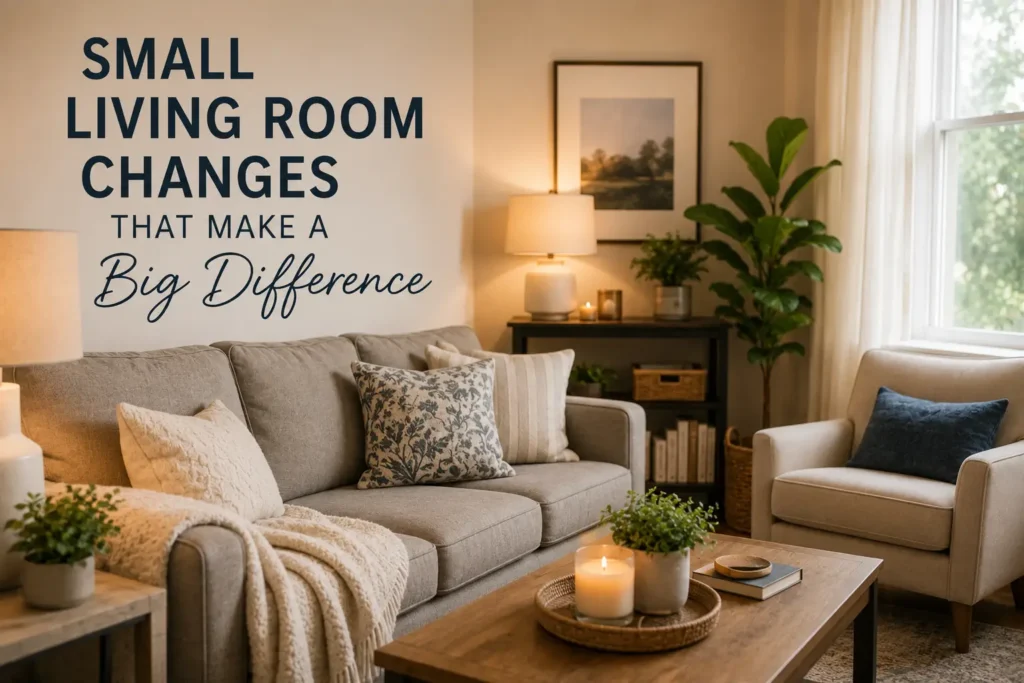
Bright comfortable living room improved with simple decor changes
Cozy Living, DIY & Decorating

Small Living Room Changes That Make a Big Difference

You don’t need a complete makeover to transform your living room. In fact, a few small changes can make the space feel larger, brighter, and more inviting.

Start by removing anything that doesn’t belong in the room. Clearing clutter instantly creates a cleaner look. Next, add a few throw pillows or a soft blanket to make the space feel warm and comfortable. Rearranging furniture to improve traffic flow can also make a surprising difference.

Lighting is another game changer. A floor lamp or table lamp can create a cozy atmosphere that overhead lights often can’t match. Finally, add a plant or two to bring life and color into the room.

Small improvements add up quickly and can make your living room feel like a brand-new space.


🇺🇸 Buy on Amazon USA

Decorative Throw Pillows

Add color, texture, and comfort to any living room.

Cozy Throw Blankets

Perfect for creating a warm and inviting atmosphere.

Floor Lamps

Improve lighting and make the room feel larger and brighter.

Indoor Plants and Planters

Bring natural beauty into your living space.

Storage Ottomans

Add seating while hiding clutter.

Area Rugs

Help define the room and add warmth underfoot.


🕯️ Final Thoughts

Creating a more comfortable living room doesn’t have to be expensive or time-consuming. A few thoughtful updates can completely change how the space looks and feels, making it a place you’ll enjoy spending time in every day.


🍁 Buy on Amazon Canada

Decorative Throw Pillows

An easy way to refresh your living room without redecorating.

Cozy Throw Blankets

Add warmth and comfort year-round.

Floor Lamps

Create a relaxing atmosphere for evenings at home.

Indoor Plants and Planters

A simple way to add color and life to your space.

Storage Ottomans

Stylish storage that helps reduce clutter.

Area Rugs

Make your living room feel more finished and welcoming.

Stylish living room with simple affordable upgrades
Cozy Living, DIY & Decorating

10 Small Changes That Make Your Home Feel More Expensive

10 Small Changes That Make Your Home Feel More Expensive

You don’t need to spend thousands of dollars on renovations to make your home look and feel more luxurious. In many cases, small upgrades can have a surprisingly big impact. By focusing on lighting, organization, dĂŠcor, and a few simple design tricks, you can create a space that feels more polished, comfortable, and inviting.

Upgrade Your Lighting

Good lighting can completely transform a room. Swapping outdated fixtures for modern designs or adding warm LED lighting can instantly create a more upscale atmosphere.

Add a Statement Mirror

A large mirror reflects light, makes rooms feel bigger, and adds a touch of elegance to almost any space.

Replace Cabinet Hardware

Changing old knobs and pulls in kitchens and bathrooms is one of the easiest and most affordable upgrades you can make.

Declutter and Organize

Luxury homes tend to feel open and organized. Clearing unnecessary items from countertops, shelves, and tables creates a cleaner look.

Hang Curtains Higher

Mounting curtain rods closer to the ceiling makes windows appear larger and ceilings feel taller.

Bring in Houseplants

Plants add color, texture, and life while making a room feel more welcoming and thoughtfully designed.

Refresh Your Throw Pillows

New pillow covers are an inexpensive way to update a living room or bedroom without buying new furniture.

Use Decorative Storage

Baskets, bins, and storage ottomans help reduce clutter while adding style.

Add a Signature Scent

Candles, diffusers, and essential oils can make your home feel warm, inviting, and memorable.

Touch Up Paint and Walls

Fresh paint and repaired scuffs can make a room feel newer and better maintained almost instantly.


📦 Buy on Amazon USA


💡 Final Thoughts

Making your home feel more expensive doesn’t have to involve major renovations or a large budget. Small improvements like better lighting, stylish storage, fresh dĂŠcor, and thoughtful organization can dramatically improve the look and feel of your space. Start with one or two changes and you’ll be surprised at the difference they can make.


🍁 Buy on Amazon Canada

A beautiful home is often built through small improvements over time. Focus on the details, and your space will feel more comfortable, functional, and welcoming every day. 🏡✨

Practical indoor living and home-improvement ideas
Cozy Living, DIY & Decorating

The Three Simple Content Ideas That Helped MyIndoorSpace Grow Faster

When I first started writing for MyIndoorSpace, I noticed something interesting about the posts that people seemed to connect with the most. It wasn’t always the biggest ideas or the most dramatic home upgrades. Instead, it was the simple improvements that made everyday living feel a little easier. Over time, a clear pattern started to emerge in the kinds of topics that consistently helped the site grow.

The first type of post focuses on comfort. These are the kinds of articles that explore how small changes can make a home feel calmer and more welcoming. Soft lighting, quiet reading corners, and comfortable seating all fall into this category. People aren’t always searching for a major renovation — sometimes they’re just looking for ways to make their space feel more relaxing after a long day.

The second type of content revolves around organization fixes. Almost everyone deals with clutter at some point, whether it’s tangled cables, messy counters, or drawers filled with random items. When a post shows a simple way to solve one of those problems, readers tend to pay attention. I’ve found that even small organization improvements can make a room feel noticeably more peaceful.

The third category that performs well is small apartment solutions. Many homes today are smaller than people would like, and readers are constantly looking for ways to make those spaces feel larger and easier to live in. Mirrors, smart storage, wall shelving, and thoughtful furniture choices can make a surprising difference without requiring a major redesign.

What makes these three ideas work so well is that they focus on real daily life. Instead of chasing big decorating trends, they solve everyday problems people experience in their homes. I didn’t expect something this simple to make my home feel calmer. But once I started focusing on comfort, organization, and smarter use of space, the entire home started to feel easier to live in.


📦 Buy on Amazon USA

Fabric Storage Bins for Shelves and Closets

Cable Management Box for Desks and Charging Stations

Minimalist Desktop Organizer Tray

Floating Wall Shelves for Small Spaces


🕯️ Final Thoughts

Sometimes the best improvements in a home don’t come from dramatic changes. They come from small adjustments that make everyday routines smoother. A room that feels comfortable, organized, and easy to move through naturally becomes a place you enjoy spending time in.

Focusing on comfort, organization, and small-space solutions has helped me see my home differently. Instead of trying to fix everything at once, it becomes easier to improve one small area at a time.

And over time, those small changes quietly add up to something much bigger — a home that simply feels better to live in.


📦 Buy on Amazon Canada

Fabric Storage Bins for Shelves and Closets

Cable Management Box for Desks and Charging Stations

Minimalist Desktop Organizer Tray

Floating Wall Shelves for Small Spaces

Comfortable small-apartment living room arranged to feel larger
Cozy Living, DIY & Decorating

Small Apartment, Big Comfort: How I Made My Living Room Feel Larger

Living in a smaller space teaches you something pretty quickly: the way a room feels matters just as much as its actual size. My living room isn’t huge, and for a while it always felt a little tighter than it needed to. Nothing was technically wrong with the furniture or layout, but the space never quite felt open or relaxed.

What changed things wasn’t a renovation or buying a whole new set of furniture. It was a few small adjustments that subtly changed how the room looked and how the eye moved through the space. Once I started paying attention to how light, height, and floor space interacted, the room suddenly felt much larger than it really was.

One of the first things that helped was adding a mirror to one wall. Mirrors quietly expand a room because they reflect both light and movement. Instead of a wall stopping your eye, the reflection makes the space feel deeper. Even a medium-sized mirror can make a living room feel more open during the day when natural light bounces across the room.

Furniture height also matters more than most people expect. Switching to lower-profile furniture instantly created a sense of more vertical space. When couches and tables sit a little lower, the room appears taller because there’s more visible wall space above them. That simple visual shift makes a room feel less crowded.

I also noticed how much rugs influence the perception of space. A light-colored rug brightens the floor and visually stretches the room outward. Dark flooring can make a space feel smaller, but a softer rug tone spreads light across the floor and subtly opens things up.

Wall shelving made another surprisingly big difference. Instead of placing storage units on the floor where they take up valuable space, shelves move that storage upward. Books, small plants, and decor items stay organized while the floor area stays open and uncluttered. The room feels more breathable when fewer things sit at ground level.

After these changes, the room didn’t magically become bigger, but it definitely felt different. I didn’t expect something this simple to make my home feel calmer. The space became easier to move through, easier to relax in, and a lot more comfortable overall.

📦 Buy on Amazon USA

Large Decorative Wall Mirror

Floating Wall Shelves

Light-Colored Living Room Area Rug

Low-Profile Modern Coffee Table


🕯️ Final Thoughts

Small spaces don’t have to feel cramped. Often the difference comes down to how the room is arranged and how light moves through it. A few thoughtful adjustments can completely change how open a space feels.

What I like most about these kinds of changes is that they don’t require a full redesign. Mirrors, lighter rugs, and simple shelving quietly improve the room without making it feel over-decorated.

Over time, these little upgrades make daily living easier. The room feels lighter, calmer, and more comfortable — which is really what a living space should do in the first place.

📦 Buy on Amazon Canada

Large Decorative Wall Mirror

Floating Wall Shelves

Light-Colored Living Room Area Rug

Low-Profile Modern Coffee Table

Cozy Living, DIY & Decorating

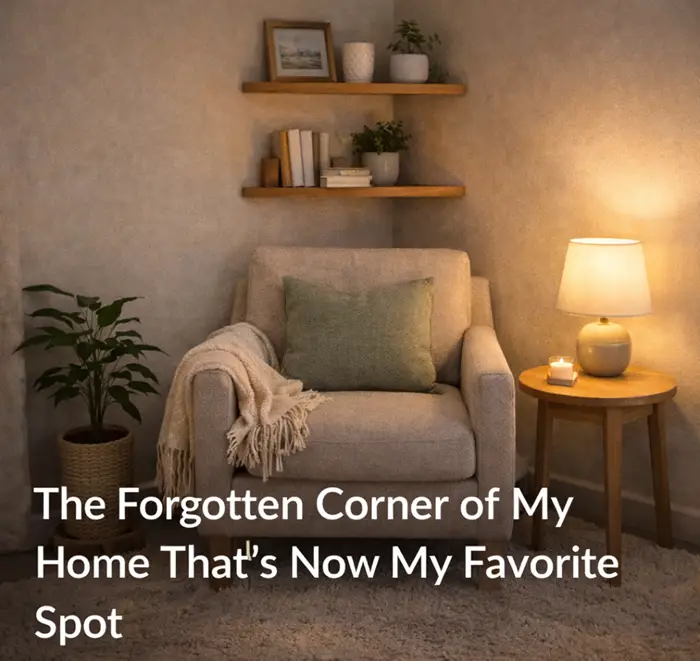
The Forgotten Corner of My Home That’s Now My Favorite Spot

There was a corner in my home that I barely noticed for years. It wasn’t ugly. It wasn’t cluttered. It just… existed. A quiet triangle of wall space that held nothing but shadow and the occasional pile of something waiting to be moved. I’d walk past it every day without thinking twice.

One afternoon, I stood there longer than usual. The light from the window was falling into that corner in a way I hadn’t paid attention to before. It felt like unused potential — not in a dramatic, renovation-show way — but in a quiet, almost apologetic way. The space didn’t need to be big to matter. It just needed intention.

I started small. A compact chair that didn’t overwhelm the wall. A slim corner shelf that gave the eye somewhere to rest. A small lamp with a warm glow instead of the harsh spill from the ceiling light. None of it was expensive or bold. But when I stepped back, the corner didn’t look forgotten anymore. It looked invited.

What surprised me most wasn’t how it looked — it was how I used it. I began sitting there in the late afternoon, even if just for a few minutes. Coffee tasted slower there. Thoughts felt less tangled. I added a simple plant stand with something green and alive, and suddenly the corner felt grounded. Not staged — lived in.

It’s funny how a small shift can change the energy of a room. That corner used to absorb space. Now it gives it back. It’s where I read a few pages before bed, or sit quietly when I don’t want a screen. The rest of the room continues around me, but the nook feels slightly separate — like a pause inside the house itself.

🛋️ I didn’t expect something this simple to make my home feel calmer.

📦 Buy on Amazon USA

Corner shelf

Small table lamp (warm light)

Plant stand

Compact accent chair

🕯️ Final Thoughts

Not every improvement needs to be big to matter. Sometimes the spaces we ignore hold the most potential for comfort. That corner didn’t need a redesign — it needed attention.

What I appreciate most is how natural it feels now. There’s no ritual attached to it, no performance. I just drift there when I need a softer place to land. And that’s enough.

Homes aren’t just about square footage. They’re about moments. And sometimes, the smallest corner holds the most room for them.

📦 Buy on Amazon Canada

Corner shelf

Small table lamp (warm light)

Plant stand

Compact accent chair

Cozy Living, DIY & Decorating

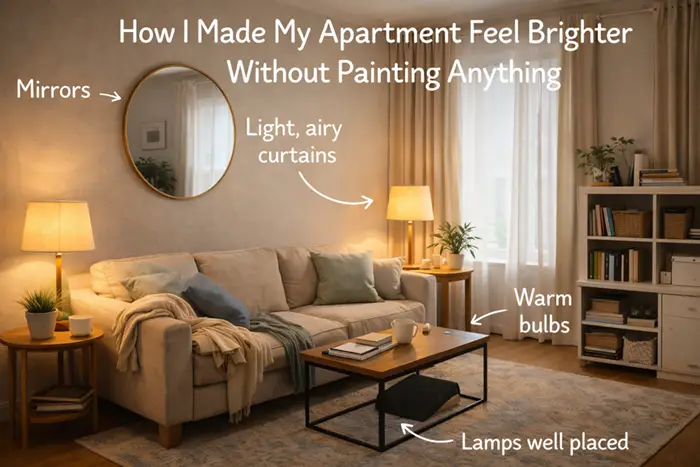
How I Made My Apartment Feel Brighter Without Painting Anything

For a long time, my apartment felt dim in a way I couldn’t quite explain. It wasn’t dark exactly — there were lights on, windows uncovered — but the space still felt flat and heavy. I kept thinking the walls needed a lighter color, even though painting wasn’t an option. It turns out the problem wasn’t the walls at all.

The first real shift came from mirrors, but not in a decorative way. I stopped thinking of them as accents and started treating them like light tools. Placing one across from a window bounced daylight deeper into the room instead of letting it stop at the glass. Suddenly, mornings felt more open, and the space held onto light longer throughout the day.

Curtains mattered more than I expected too. Thick, dark panels made sense for privacy, but they were quietly blocking daylight even when open. Switching to lighter, more translucent fabric softened the light instead of cutting it off. The room didn’t glare — it glowed. Even cloudy days felt usable again.

Bulb temperature was another subtle but powerful change. Cooler bulbs made the space feel harsh without actually making it feel brighter. Warmer bulbs, especially when layered across a few lamps, gave the room depth instead of flat illumination. The light felt intentional, not exposed.

Lamp placement tied everything together. Instead of relying on one overhead source, I spread light around the room at different heights. A lamp near the couch, one in a corner, another closer to eye level — the space stopped feeling lit and started feeling alive. Shadows softened. Corners opened up. The room felt bigger without anything physically changing.

I didn’t expect something this simple to make my home feel calmer.


📦 Buy on Amazon USA

Full-length or wall-mounted mirror

Light-filtering curtains

Warm white LED bulbs (2700K)

Table or floor lamps with fabric shades


🕯️ Final Thoughts

Brightness isn’t just about more light — it’s about better light. When illumination is layered, softened, and guided, a space feels open instead of exposed. What surprised me was how much control I had without touching a paintbrush.

These changes didn’t just make the apartment look brighter — they made it feel easier to be in. Mornings felt lighter. Evenings felt warmer. The space worked with the light it already had instead of fighting it.

For renters especially, small adjustments matter. When you can’t change the walls, changing how light moves through the room can transform everything. Sometimes the brightest upgrade is simply learning where to place what you already have.


📦 Buy on Amazon Canada

Full-length or wall-mounted mirror

Light-filtering curtains

Warm white LED bulbs (2700K)

Table or floor lamps with fabric shades

Cozy Living, DIY & Decorating

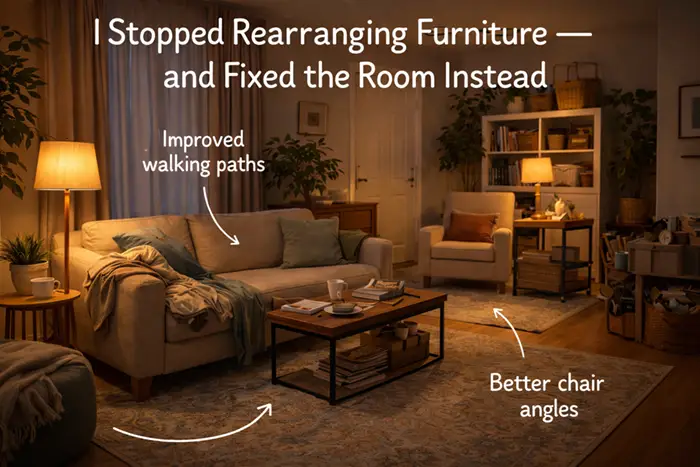
I Stopped Rearranging Furniture — and Fixed the Room Instead

For a long time, I thought the solution to a room that felt “off” was to keep moving things around. Couch here. Chair there. Desk angled differently. Every few weeks I’d try again, convinced I just hadn’t found the right layout yet. But no matter how much I rearranged, the room still felt awkward — like it was working against me instead of with me.

What finally clicked was that the problem wasn’t where things were placed, but how I was moving through them. Walking paths were tight in some spots and oddly wide in others. I was constantly stepping around furniture instead of flowing past it. Once I paid attention to how I entered the room, where I naturally walked, and where I paused, the issues became obvious.

Chair angles were another quiet culprit. A chair pointed slightly away from where I actually sit or look might not seem like a big deal, but it creates subtle resistance. I noticed myself never fully settling into certain spots — not because they were uncomfortable, but because they were misaligned. Rotating a chair just a few degrees toward the room changed how welcoming it felt, without moving it anywhere else.

Then there were the dead zones. Corners that collected nothing useful. Spaces between furniture that didn’t serve a purpose. These weren’t empty in a peaceful way — they were just forgotten. Instead of leaving them unresolved, I gave them small, intentional roles. A slim side table where I naturally reach. A rolling cart where clutter used to drift. Suddenly, those dead zones became helpful instead of distracting.

Rugs helped more than I expected too. Not as decoration, but as anchors. They defined where movement stopped and where rest began. A rug under a chair made it feel grounded. One under a table clarified its purpose. The room didn’t get fuller — it got clearer.

I didn’t expect something this simple to make my home feel calmer.


📦 Buy on Amazon USA

Low-profile area rug

Slim rolling storage cart

Compact side table

Under-desk floor mat


🕯️ Final Thoughts

A room doesn’t always need new furniture — it often needs better logic. When walking paths are clear and seating feels intentional, your body relaxes without you realizing why. You stop adjusting, sidestepping, and compensating.

What surprised me was how little I actually moved things. Most pieces stayed where they were. I just paid attention to how I lived in the space instead of how it looked on first glance. That shift made everything feel more cooperative.

Fixing a room doesn’t have to be loud or expensive. Sometimes it’s about noticing the friction, smoothing it out, and letting the space finally support the way you move through your day.


📦 Buy on Amazon Canada

Low-profile area rug

Slim rolling storage cart

Compact side table

Under-desk floor mat

Cozy Living, DIY & Decorating

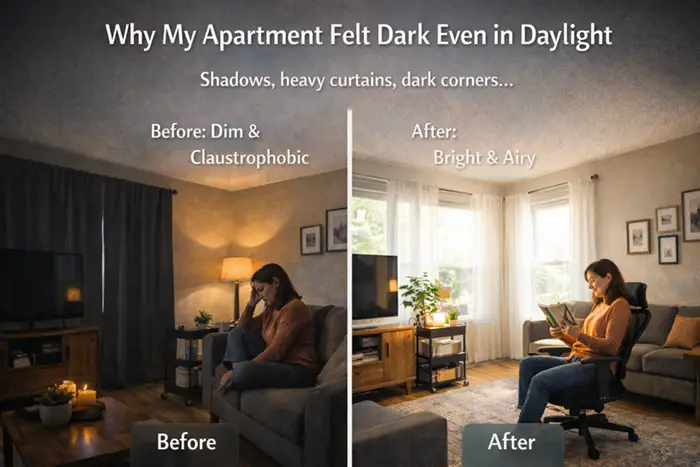
Why My Apartment Felt Dark Even in Daylight

For a long time, I couldn’t understand why my apartment felt dim even on bright days. Sunlight was coming in. The windows weren’t small. And yet, the space always felt a step removed from daylight — like the light stopped short of fully entering the room. I kept thinking something was wrong with the apartment itself, when really, it was how the light was being handled once it arrived.

Window direction was the first thing I started paying attention to. Light from the north or shaded sides of a building is softer and more indirect, which can be beautiful — but it also disappears faster inside. Without realizing it, I was treating that gentle light the same way I would treat strong, direct sun. The result was a room that never quite filled in.

The biggest culprit turned out to be the curtains. They weren’t heavy or dark, just thicker than they needed to be. Even when open, they absorbed more light than they passed along. The fabric softened the glow, but it also muted it. Daylight was entering the room, then quietly stopping at the window instead of spreading.

Wall color played a role too. Not in a dramatic way — just enough to matter. Darker or matte finishes don’t bounce light very far. They keep it close. I realized the light was pooling near the windows instead of traveling across the room. The space wasn’t dark — the light just didn’t have anywhere to go.

The shift came when I stopped thinking about adding light and started thinking about guiding it. I swapped in sheer curtains that let daylight pass through instead of filtering it away. I placed a mirror where it could catch light naturally instead of facing it straight on. I added a soft lamp in a corner that never quite brightened on its own. Nothing structural changed — but the room did.

What surprised me most was how much brighter the space felt without being harsher. Daylight stretched further. Corners softened. Even cloudy days felt usable instead of heavy. The apartment didn’t just look brighter — it felt more awake.


📦 Buy on Amazon USA

Sheer Curtains (Light-Filtering, Not Blocking)

Decorative Wall or Floor Mirror

Soft Ambient Table or Floor Lamp

Slim LED Light Panels for Dark Corners


🕯️ Final Thoughts

Light doesn’t just enter a home — it needs permission to move. When it’s blocked, absorbed, or stopped too early, even bright days can feel muted. The fix isn’t always stronger bulbs or bigger windows. Often, it’s simply removing obstacles the light was never meant to fight.

What I’ve learned is that brightness is about flow, not intensity. Letting daylight travel across a room changes how the space feels emotionally, not just visually. It brings a sense of openness that renovations can’t always replicate.

If your home feels dim even when the sun is out, look at what happens after the light comes in. A few thoughtful adjustments can help your space finally catch up to the day outside.


📦 Buy on Amazon Canada

Sheer Curtains (Light-Filtering, Not Blocking)

Decorative Wall or Floor Mirror

Soft Ambient Table or Floor Lamp

Slim LED Light Panels for Dark Corners

Scroll to Top