DIY & Decorating

Approachable decorating ideas and small DIY upgrades with a big impact.

Cozy Living, DIY & Decorating

I Stopped Buying Furniture and Started Fixing the Flow
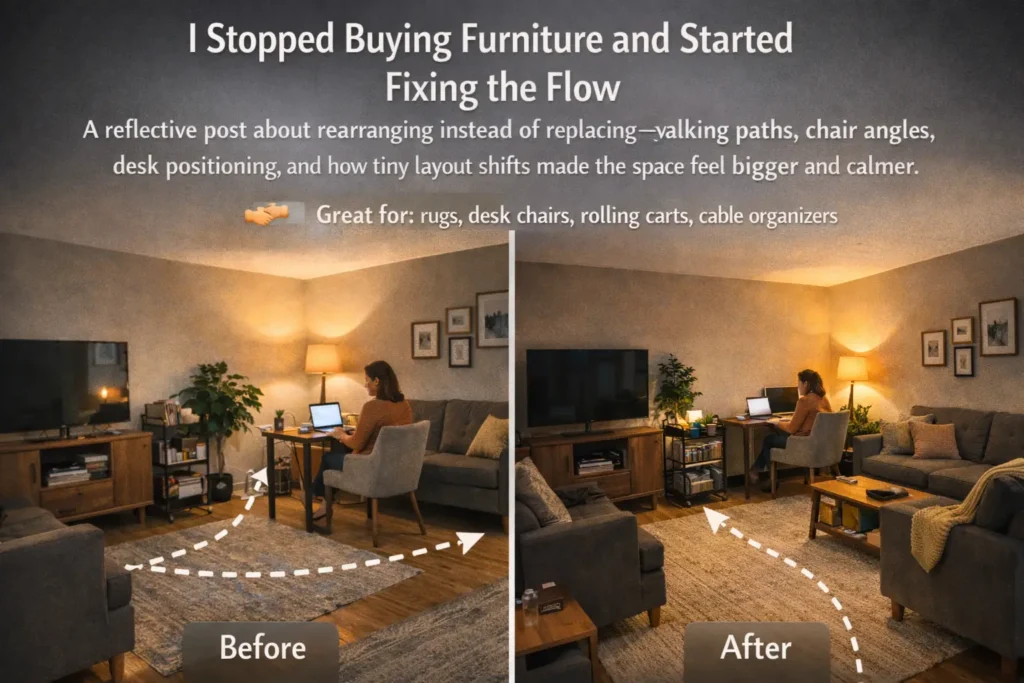
For a long time, my instinct was to replace things. If a room felt cramped or awkward, I assumed the solution was new furniture — a slimmer desk, a different chair, maybe another shelf. I’d browse, compare, imagine how much better the space would feel once something new arrived. But oddly enough, the room never felt calmer afterward. Just… rearranged chaos.

What finally changed things wasn’t buying anything at all. It was paying attention to how I actually moved through the space. Where I walked. Where I hesitated. Where I kept bumping into corners or shifting a chair just to pass through. The room wasn’t too small — it was just asking for a better conversation between the furniture and my body.

I started with walking paths. Clearing a few inches here, rotating a chair there. Turning the desk slightly instead of keeping it rigidly squared to the wall. Suddenly, the room stopped feeling like a collection of objects and started feeling like a place designed to move through. My steps felt smoother. My shoulders stopped twisting awkwardly just to get by.

Chair angles made a bigger difference than I expected. A chair facing directly into a wall feels confrontational somehow, like it’s demanding focus even when you’re tired. Angling it slightly opened the space visually and mentally. The same desk, the same chair — but the room felt less rigid, more forgiving.

I noticed it most during quiet moments. Sitting down with a coffee. Standing up to grab a notebook. Rolling my chair back without snagging on cables or rug edges. These weren’t dramatic changes, but they added up to something that felt… kinder. The room stopped interrupting me.

🛋️ Human line:
I didn’t expect something this simple to make my home feel calmer.

What surprised me most was how much space I gained without removing anything. By letting furniture breathe — even just a few inches — the room felt larger, lighter, and easier to exist in. Flow isn’t about minimalism. It’s about reducing friction, so your space supports you instead of constantly asking you to adjust.


📦 Buy on Amazon USA

Low-Profile Area Rug (Easy to Slide Chairs Over)

Ergonomic Desk Chair with Smooth Casters

Slim Rolling Storage Cart

Under-Desk Cable Organizer Tray


🕯️ Final Thoughts

What I’ve learned is that a calm space doesn’t come from owning better things — it comes from letting the things you already have work together. Flow is invisible when it’s right, but painfully obvious when it’s wrong. Fixing it doesn’t require a shopping cart full of upgrades.

Small layout shifts can give a room back its purpose. Clear paths reduce mental noise. Angled seating softens the atmosphere. Tucked-away cables remove visual clutter you didn’t realize was draining your attention.

If a room feels tight or stressful, pause before replacing anything. Walk it. Sit in it. Notice where your body hesitates. Sometimes the most meaningful upgrade is simply allowing your space to move with you.


📦 Buy on Amazon Canada

Low-Profile Area Rug (Easy to Slide Chairs Over)
Ergonomic Desk Chair with Smooth Casters

Slim Rolling Storage Cart

Under-Desk Cable Organizer Tray

Cozy Living, DIY & Decorating

The Small Home Upgrade I Didn’t Think Would Matter (But Does)

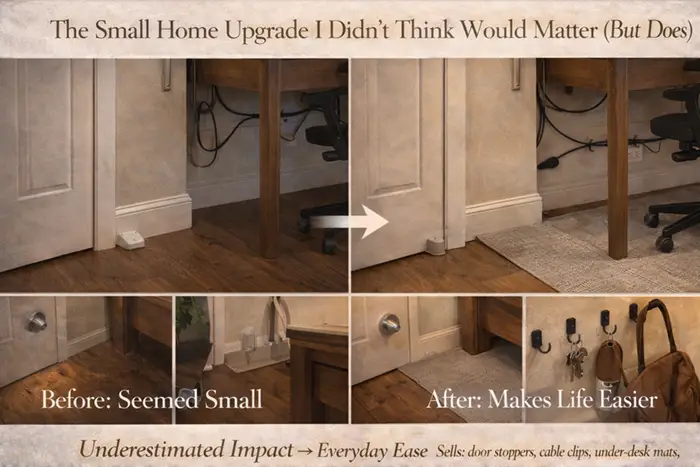
I almost didn’t buy it because it felt too small to matter. One of those things you add to your cart as an afterthought, half-expecting it to end up ignored in a drawer. At the time, my place was fine — not uncomfortable, just mildly annoying in ways I’d learned to live with. A door that drifted. Cables that never stayed put. Tiny frictions I told myself weren’t worth fixing.

What changed wasn’t the space itself, but how often I stopped noticing it. The moment those little problems disappeared, the room felt quieter. Not visually quieter — mentally quieter. I wasn’t nudging a door with my foot. I wasn’t untangling cords. I wasn’t adjusting my chair to avoid scraping the floor. My body relaxed because it no longer had to compensate.

The upgrade didn’t draw attention to itself, and that’s exactly why it worked. A door stopper that keeps things where they belong. Cable clips that stop my desk from feeling chaotic. An under-desk mat that softens every movement without me thinking about it. These aren’t changes you admire — they’re changes you stop noticing, and that absence is the relief.

I started realizing how many of my habits were shaped by tiny discomforts. When those went away, staying put became easier. Sitting longer felt natural. Moving through the space felt smoother, less interrupted. The room didn’t look different, but it behaved better — and that mattered more than I expected.

I didn’t expect something this simple to make my home feel calmer.

📦 Buy on Amazon USA

Heavy-Duty Door Stopper

Adhesive Cable Clips for Desk Organization

Under-Desk Floor Mat

Minimal Wall or Door Hooks

🕯️ Final Thoughts

Comfort at home isn’t always about big upgrades or visible changes. Often, it’s about removing the small irritations that quietly drain your attention throughout the day. When those disappear, your space starts working with you instead of around you.

These understated fixes don’t announce themselves, and they don’t need to. Their value shows up in how little you think about them once they’re in place. That kind of ease adds up faster than most people realize.

It’s a reminder I come back to often: you don’t need to change everything to feel better at home — sometimes you just need to fix the one thing that’s been bothering you all along.

📦 Buy on Amazon Canada

Heavy-Duty Door Stopper

Adhesive Cable Clips for Desk Organization

Under-Desk Floor Mat

Minimal Wall or Door Hooks

Cozy Living, DIY & Decorating

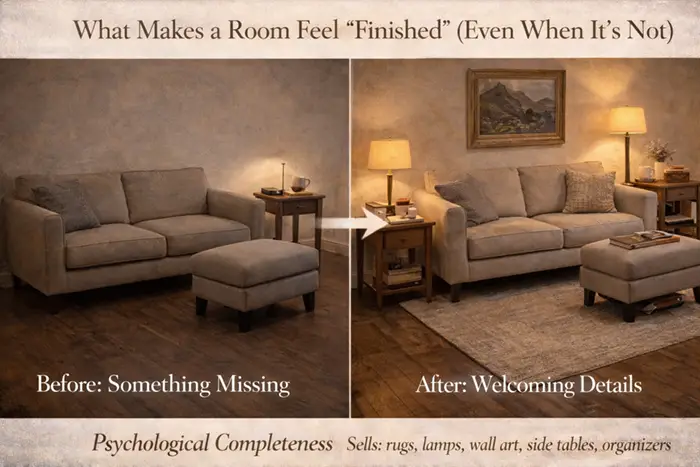
What Makes a Room Feel “Finished” (Even When It’s Not)

I’ve lived in spaces that were technically incomplete for months — missing furniture, walls still bare, things very much in progress — yet somehow they still felt done. Comfortable. Settled. And I’ve also been in rooms that had everything they were supposed to have, but never quite let me relax. Over time, I started noticing that “finished” isn’t really about completeness at all.

What makes the difference is whether the room feels intentional. A rug that anchors the floor, even if the rest of the furniture hasn’t caught up yet. A lamp that softens the edges of the space so the light doesn’t feel harsh or temporary. These elements signal that someone has decided how the room is meant to feel, even if it’s still evolving.

I notice it most at night. Overhead lights off, one warm lamp on, the room suddenly feels whole. Add a small side table where things naturally land — a book, a cup, a notebook — and the space starts working with me instead of asking for attention. The room doesn’t feel empty anymore; it feels paused, mid-thought, but comfortable.

Wall art plays a quieter role than people expect. It doesn’t need to fill every blank space. One piece, placed with care, gives the room a sense of personality and closure. The same goes for simple organizers — not to hide clutter perfectly, but to show that everyday items have a home. That sense of order creates calm far beyond what it looks like on the surface.

I didn’t expect something this simple to make my home feel calmer.

📦 Buy on Amazon USA

Soft Area Rug for Living Spaces

Warm Floor or Table Lamp

Minimal Wall Art Print

Compact Side Table

Simple Storage Organizer

🕯️ Final Thoughts

A room feels finished when it stops asking questions. When you don’t feel the urge to fix, adjust, or mentally note what’s missing, even if you know it isn’t complete yet. That feeling comes from a few grounding elements doing a lot of emotional work.

You don’t need to rush the process or fill every corner. Choosing a handful of pieces that create warmth, function, and intention is often enough to let the space breathe.

Finished doesn’t mean final. It just means comfortable enough to live in — and that’s usually the real goal.

📦 Buy on Amazon Canada

Soft Area Rug for Living Spaces

Warm Floor or Table Lamp

Minimal Wall Art Print

Compact Side Table

Simple Storage Organizer

Cozy Living, DIY & Decorating

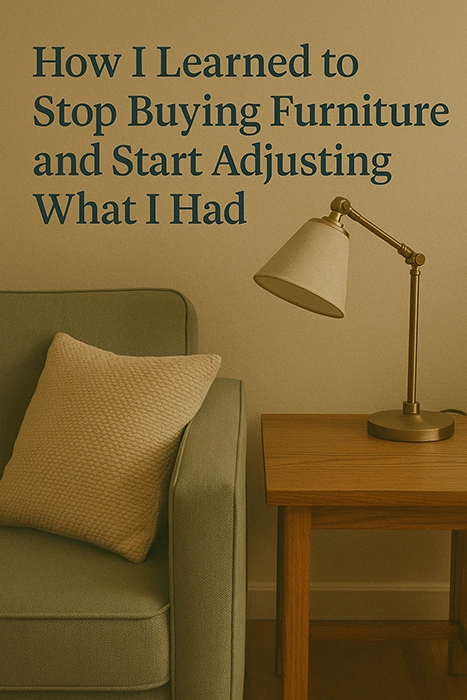
How I Learned to Stop Buying Furniture and Start Adjusting What I Had

For a long time, my instinct was to fix discomfort by replacing things. If a room didn’t feel right, I assumed something was missing. A different chair. A better table. One more piece that would finally make the space work the way I wanted it to. I’d browse, compare, convince myself the next purchase would solve the feeling — and sometimes it did, briefly. But the calm never really lasted.

What changed wasn’t my taste or my budget. It was realizing that most of the frustration wasn’t coming from what I owned, but from how I was using it. Furniture wasn’t wrong — it was just slightly off. Angles, spacing, height, placement. Small things I’d never questioned because buying something new felt easier than slowing down and paying attention.

The first time I tried adjusting instead of replacing, it felt almost too simple. I moved a chair a few inches. Rotated a table. Pulled something away from the wall instead of pushing it closer. The room didn’t look dramatically different, but it felt different. Flow improved. The space breathed better. And for the first time, I noticed that comfort often lives in inches, not purchases.

I started doing this everywhere. Adjusting lamp height instead of buying a new one. Swapping furniture between rooms instead of adding more. Even removing pieces altogether. Each small change taught me more about how I actually live in the space, not how I thought I should. The home began to feel more intentional — less like a collection of things and more like a place that understood me.

What surprised me most was the trust that grew from this approach. I stopped second-guessing my space. I stopped chasing solutions. By working with what I already had, I learned what actually mattered to me — light, movement, ease. The urge to buy faded because the need had already been met.

Now, when something feels off at home, I don’t reach for my phone. I reach for the furniture. I adjust. I pause. And more often than not, that’s all it takes.

🪑 I didn’t stop buying furniture because I had enough — I stopped because I finally started listening to the space I was in.


📦 Buy on Amazon USA

🪑 Furniture Sliders for Hardwood & Carpet

📐 Adjustable Furniture Risers

💡 Dimmable Plug-In Lamp Cord Set


🕯️ Final Thoughts

It’s easy to believe comfort comes from upgrades, but real ease often comes from understanding. When you slow down and adjust what you already have, your home starts responding in quieter, more satisfying ways. Nothing new enters the space — but everything works better.

There’s confidence in realizing you don’t need more to feel settled. You need alignment. Small changes made thoughtfully can transform how a room feels without changing what’s in it. That awareness builds trust — in your space and in your decisions.

If your home feels slightly off right now, try adjusting before replacing. Move things. Change the angles. Give the room a chance to meet you where you are. Sometimes the solution is already there — it just hasn’t been moved yet.


📦 Buy on Amazon Canada

🪑 Furniture Sliders for Hardwood & Carpet

📐 Adjustable Furniture Risers

💡 Dimmable Plug-In Lamp Cord Set

Cozy Living, DIY & Decorating

The Ultimate Cozy Living Room Setup for Fall

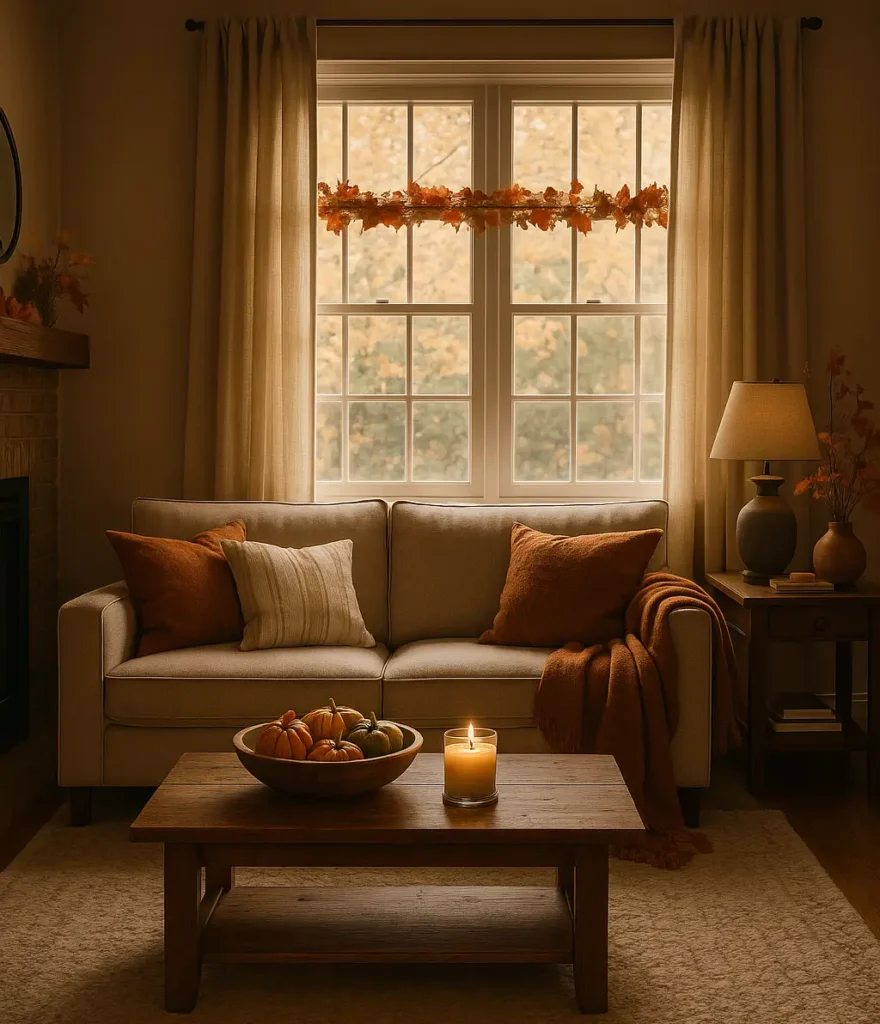
When fall arrives, the living room becomes the coziest place in the house. It’s where you unwind after a long day, sip a warm drink, and gather with loved ones. In Fall 2025, the key to creating a perfect living room setup is blending warmth, function, and style through a few carefully chosen pieces.


🛋️ Seating That Invites Relaxation

  • A cozy sofa sets the tone for comfort. Choose something plush and deep, with cushions that you can sink into after a chilly evening walk. Pair with neutral throws and seasonal accent pillows to bring in warm fall tones without overpowering the space.

💡 Lighting That Sets the Mood

Lighting shapes the atmosphere of a room. A tall floor lamp creates a warm

glow, while table lamps and candles add layered softness. Dimmable fixtures are trending this year, making it easy to switch from bright reading light to a cozy evening vibe.


🪑 Storage That Doubles as Style

Clutter-free living is part of cozy living. Look for coffee tables with shelving or hidden compartments, and multipurpose pieces like ottomans with storage. They keep the essentials handy while maintaining a clean and inviting look.


📦 Buy on Amazon USA

🛋️ Cozy Sofa

Stone & Beam Westview Extra-Deep Down-Filled Sofa

💡 Warm Lamp

Brightech Sky LED Torchiere Floor Lamp

🪑 Coffee Table with Storage

Sauder North Avenue Coffee Table with Shelf


🧮 Final Thoughts

A fall-ready living room doesn’t require a total redesign. Just three smart upgrades — a sofa you love, lighting that warms the room, and a table that keeps things tidy — can completely transform your space into a retreat you’ll want to spend every evening in.


📦 Buy on Amazon Canada

🛋️ Cozy Sofa

HONBAY Reversible Sectional Sofa Couch

💡 Warm Lamp

Simple Designs Home LF2000-BLK Floor Lamp with Reading Light

🪑 Coffee Table with Storage

Furinno Simple Design Coffee Table

Scroll to Top