
bedroom organization

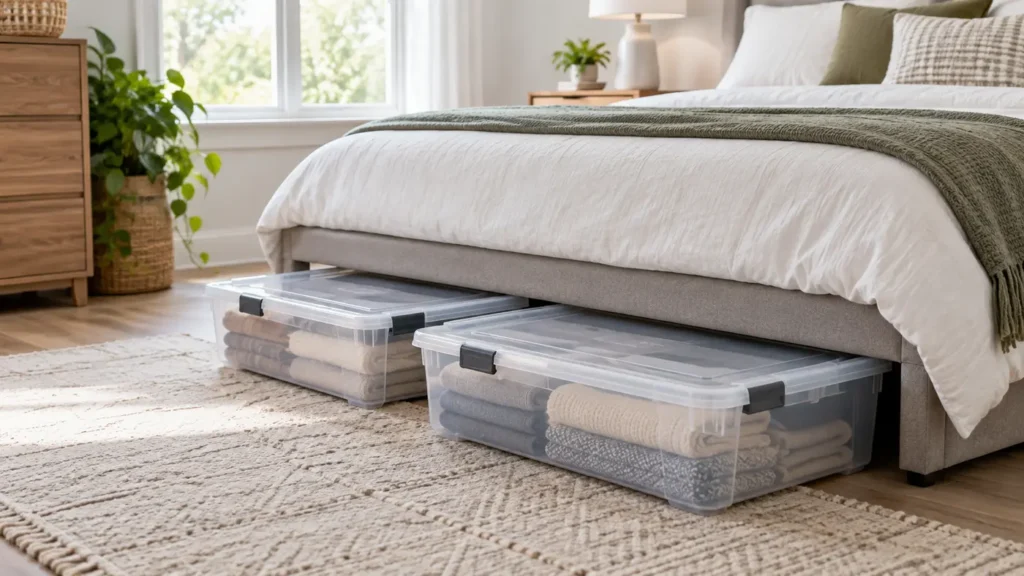
Clear lidded storage containers under a neatly made bed
Home Organization

Best Under-Bed Storage Containers: A Practical Buying Guide

Disclosure: This post contains affiliate links. If you buy through one of our links, we may earn a commission at no extra cost to you. Measure the actual clearance under your bed before ordering and do not overload containers beyond their rated capacity.

Under-bed storage can hold off-season clothing, spare bedding and rarely used items without adding another cabinet to the room. The wrong container, however, can waste half the space, collect dust, snag on carpet or become too heavy to pull out.

The best choice starts with accurate clearance, then balances structure, access, dust protection and the weight of what you plan to store.

Quick verdict

Choose a low-profile, lidded container with a rigid frame, smooth base or sturdy wheels, handles on at least two sides and enough transparency to identify contents. Fabric bags work for light bedding; rigid boxes protect structured items; rolling drawers are best for frequent access.

Under-bed storage types

Type Best for Advantages Tradeoffs
Rigid plastic box Clothing, shoes and dust protection Stackable, visible and easy to wipe Needs exact clearance and can crack
Fabric zip bag Blankets and soft seasonal items Light, flexible and inexpensive Can sag, snag or collapse when partly empty
Rolling drawer Items used weekly Fast access and easy movement Wheels add height and require clear flooring
Vacuum storage bag Bulky textiles for longer storage Reduces volume dramatically Awkward access and not ideal for every material

Measure clearance in several places

Do not rely on the height of one bed leg. Measure from the floor to the lowest point of the frame, centre support and any slats or hardware. Rugs, uneven floors and a sagging box spring can reduce clearance.

Leave a little extra space so the container does not scrape. If a box is listed at exactly the measured height, the lid, handles or wheels may still catch. Measure the usable depth from the side of the bed to any centre legs.

Plan what goes inside first

Light bedding can fill a large fabric bag without becoming difficult to move. Books, tools or dense shoes need a smaller rigid box. A giant container feels efficient until it weighs too much to pull out safely.

Group items by how often you use them. Weekly items belong near the easiest side of the bed. Seasonal items can go deeper. Keep emergency supplies or anything needed quickly somewhere more accessible.

Lids, zippers and dust control

A rigid snap lid offers good everyday dust protection, while a zipper bag fits soft items and can compress slightly. Look for a zipper that travels around at least two sides so you can open the bag without removing everything from beneath the bed.

Dust-resistant is not the same as airtight or waterproof. Under-bed containers should not be used to hide damp textiles, and they will not protect belongings from an active leak. Clean and fully dry every item before storage.

Wheels vs smooth bases

Wheels help on hard floors, particularly with frequent access, but they add height and can roll poorly across thick rugs. Small hard casters may mark delicate flooring or catch debris.

A smooth rigid base slides easily on many surfaces and uses less vertical space. On carpet, broad low-friction runners can work better than tiny wheels. Protect the floor according to its care instructions.

Handles and access

A front handle is essential. Side handles help when carrying the container to another room. Handles should be stitched through a reinforced area or moulded into the rigid body rather than attached to a thin panel.

Clear sides or a label window save time. If containers are opaque, label both the front and top because you may approach them from different sides of the bed.

What not to store under a bed

  • Damp clothing or textiles
  • Food or scented products that attract pests
  • Important documents without suitable environmental protection
  • Heavy objects in a flexible bag
  • Items needed during an emergency
  • Anything that blocks a floor vent, heater or required clearance

Vacuum bags: useful but not universal

Vacuum bags reduce the volume of comforters and seasonal clothing, but the compressed shape can become lumpy and difficult to stack. Some fillings and delicate materials may not respond well to long compression. Follow the textile care guidance.

Use a bag with a dependable valve and place it inside a protective outer container if abrasion is likely. Recheck it after a few days because slow leaks can make the bag expand and jam beneath the frame.

Common buying mistakes

  • Measuring only at the bed corner
  • Buying the tallest container that might fit
  • Choosing one huge box for dense items
  • Expecting a fabric bag to hold its shape when partly full
  • Ignoring centre legs and crossbars
  • Blocking floor vents or electrical cords
  • Storing items before they are fully clean and dry

Simple organization system

  1. Empty and clean the area beneath the bed.
  2. Measure height, depth and obstructions.
  3. Sort by season and frequency of use.
  4. Choose smaller containers for heavy items.
  5. Label the front and top.
  6. Make a short inventory note on your phone.
  7. Review the contents when seasons change.

This is especially effective when combined with our guide to organizing a bedroom without buying more furniture.

Frequently asked questions

Are fabric or plastic containers better?

Plastic provides more structure and easier cleaning. Fabric is lighter and suits soft items. Choose according to contents and access frequency.

Should under-bed boxes have wheels?

Wheels help on hard floors and with frequent use, but they reduce clearance. A smooth base may be better for shallow spaces.

Can I store clothes in vacuum bags?

Many everyday textiles can be compressed, but check garment and filling care guidance. Avoid long compression for items that may be damaged.

How do I prevent musty smells?

Store only clean, fully dry items and keep the room’s humidity under control. A sealed container cannot correct damp contents or an existing moisture problem.

How much clearance should I leave?

Leave enough margin to account for lids, handles, rugs and small variations in the frame. A little spare height makes daily use much easier.

Shop under-bed storage

Compare exterior height, usable interior size, frame rigidity, wheel height, lid security, handle strength and empty weight.

Shop Amazon USA
Shop Amazon Canada

Who should buy it—and who should skip it

Buy it if: you have unused clearance under the bed and need seasonal clothing, linens, or low-use items out of the main living space.

Skip it if: the bed clearance is too low, dust control is poor, or you need the stored items every day.

Best value

Low-profile zippered containers with a clear top and handles are the best value for soft goods. Rigid bins make more sense when stacking strength or crush protection matters.

When the upgrade is worth it

Pay more for stronger zippers, reinforced handles, wheels on heavier bins, and better dust sealing when the containers will be moved often. Decorative materials are rarely worth extra under a bed.

Final answer

The best under-bed storage is slightly shorter than your measured clearance, rigid enough for its contents and easy to pull from the side you use. Choose transparent lidded boxes for protection, fabric bags for light bedding and rolling drawers for frequent access. Several manageable containers usually work better than one oversized bin.

For more practical storage ideas, see the most overlooked storage space in your home and how to reduce visual clutter.
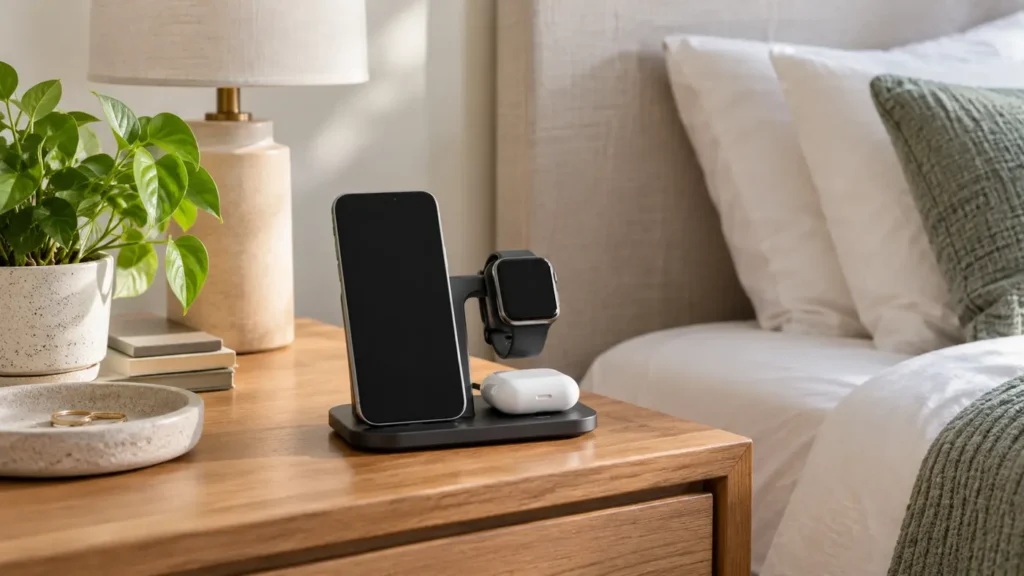
Bedside charging station holding a phone, smartwatch and wireless earbuds
Smart Home

Best Bedside Charging Station: What to Look For

Disclosure: This post contains affiliate links. If you buy through one of our links, we may earn a commission at no extra cost to you. Use certified chargers and cables that match your devices, and follow the manufacturer’s electrical and heat-safety instructions.

A bedside charging station can replace a tangle of cables with one predictable place for a phone, watch and earbuds. The useful ones do more than look tidy: they align devices reliably, supply the correct power and let you pick up a phone without dragging the entire stand across the nightstand.

This guide covers wireless stands, three-in-one docks, cable organizers and the compatibility details that matter before you buy.

Quick verdict

Choose a weighted charging stand with clearly stated phone, watch and earbud compatibility, a certified power adapter included, non-slip feet and easy alignment in the dark. If you change devices often, a cable organizer or modular stand may last longer than a tightly integrated three-in-one dock.

Charging station types

Type Best for Advantages Tradeoffs
Three-in-one wireless dock Matching phone, watch and earbud ecosystem Cleanest setup and one power cord Compatibility can be narrow
Magnetic phone stand Phone-first charging and bedside viewing Easy alignment and upright screen Requires compatible phone or case
Multi-port wired charger Mixed device households Flexible cables and faster charging options More visible wires
Cable-management tray Renters and frequently changing devices Uses existing chargers and is easy to update Less polished than an integrated dock

Compatibility comes first

A station can physically hold a device and still charge it slowly or not at all. Check the exact phone model, watch generation, earbud case and protective case thickness. Watch chargers are especially ecosystem-specific, and some docks require you to install your original watch charging puck.

Magnetic alignment depends on both the phone and case. A thick wallet case, metal plate or misaligned magnetic ring can weaken the connection and increase heat. If you plan to upgrade soon, choose a modular design with replaceable cables or charging modules.

Included power adapter and real output

Some docks include only the stand and cable. Without a suitable wall adapter, the station may divide limited power among devices and charge more slowly than expected. Read what input the dock requires and whether the recommended adapter is included.

Large total-wattage numbers can be misleading because power is shared across ports. Check the maximum for each charging position when all devices are connected. Overnight charging does not require the absolute fastest speed, but it should be stable and compatible.

Wireless or wired at the bedside?

Wireless charging makes placement easy and reduces connector wear. An upright stand also keeps a clock or alarm visible. Wired charging is more efficient, can be faster and works with a wider range of devices.

If heat, energy use or maximum charging speed matters most, a well-managed wired setup may be the better choice. If convenience and reducing nightly cable fumbling matter most, wireless alignment wins.

Nightstand-friendly design

  • Weighted base: stays down when you lift the phone.
  • Non-slip feet: protects furniture and prevents sliding.
  • No bright status light: or a light that turns off automatically.
  • Small footprint: leaves room for a lamp, glasses and water.
  • Case-friendly spacing: prevents the camera bump or watch band from interfering.
  • Accessible controls: does not block phone buttons or alarm gestures.

Heat and safe placement

Charging creates heat, and wireless charging can feel warmer than a cable. Keep the dock on a hard, open surface instead of under bedding, papers or clothing. Remove anything that the phone or charger maker says can interfere, and stop using equipment that is damaged, discoloured, unusually hot or making noise.

Do not balance a dock on a narrow shelf where a phone can fall. Route the power cord along the back of the nightstand and leave enough slack that moving the table does not pull the plug.

Case and camera-bump problems

Modern phones can have thick camera sections that prevent the back from sitting flat. Look for a raised charging pad or adjustable support. Folded stands are convenient for travel, but the hinge must stay firm under the phone’s weight.

Cases with cards, magnets not intended for charging or metal kickstands may need to be removed. Confirm compatibility instead of assuming “case-friendly” covers every case.

When a simple cable organizer is better

A cable organizer costs less, works with mixed devices and lets you replace one charger at a time. It is often the best choice for couples using different phone brands or for anyone expecting to upgrade watches.

Use short, high-quality cables and label them if several connectors look similar. A small weighted cable holder keeps ends from falling behind the table without locking you into one dock.

Common buying mistakes

  • Assuming every watch uses the same wireless standard
  • Buying a dock without checking whether the adapter is included
  • Ignoring charging speed when all positions are occupied
  • Using a thick or metal-backed case that prevents alignment
  • Accepting a bright status light beside the bed
  • Choosing a lightweight stand that lifts with the phone
  • Covering the charger with bedding or clothing

Frequently asked questions

Is overnight wireless charging safe?

Use compatible, undamaged equipment from reputable sources and follow device instructions. Modern devices manage charging, but placement, heat and charger quality still matter.

Will a three-in-one charger work with any phone and watch?

No. Phone standards overlap more often than watch standards. Check exact model compatibility for every position.

Do I need a magnetic case?

For a magnetic stand, a compatible case usually gives the most reliable hold and alignment. Ordinary thick cases may weaken the connection.

Why is my phone charging slowly?

The wall adapter may be undersized, power may be shared, the device may be misaligned, or heat may be limiting speed. Check the approved setup.

Is wired charging better?

It is generally more efficient and flexible. Wireless charging is mainly about placement convenience and reducing cable handling.

Shop bedside charging stations

Compare exact compatibility, per-device output, included adapter, case fit, light behaviour, base weight and cord routing.

Shop Amazon USA
Shop Amazon Canada

Who should buy it—and who should skip it

Buy it if: several devices charge beside the bed and you want fewer loose adapters and cables on the nightstand.

Skip it if: one charger already covers your needs or the station would crowd a small bedside surface.

Best value

A compact certified charging station with enough ports for the devices you actually use is the best value. Fewer good ports beat a crowded unit full of connectors you do not need.

When the upgrade is worth it

Pay more for higher-power USB-C charging, a well-designed wireless pad, and replaceable cables when your devices can use those features. Do not pay extra for excessive port count alone.

Final answer

A weighted, dark, case-compatible charging stand is the best bedside choice for people with matching devices. Mixed-device homes are often better served by a quality multi-port charger and tidy cable holder. Buy for exact compatibility and included power—not for the number of charging symbols printed on the box.

For broader cable control, see why every home needs a charging station. For a calmer setup, pair it with our white noise machine guide.

Scroll to Top