Home Organization

Decluttering, storage and practical organization ideas for a calmer home.

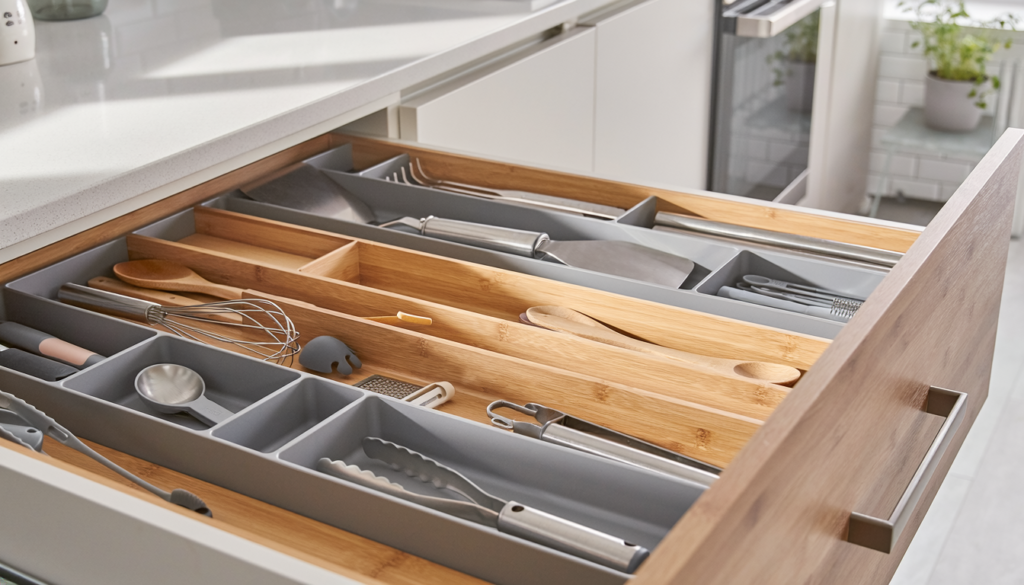
Organizers fitted inside a deep kitchen drawer
Home Organization

Best Organizers for Deep Kitchen Drawers

Disclosure: As an Amazon Associate, My Indoor Space may earn from qualifying purchases made through links in this guide, at no extra cost to you.

Deep kitchen drawers can hold pots, lids, dishes, food containers, and utensils, but depth alone does not create order. The best organizer keeps items upright, visible, and easy to lift without wasting space under bulky fixed compartments.

Quick verdict

For most deep drawers, adjustable dividers plus a few removable bins offer the best value. Use a pegboard system for dishes and cookware, a vertical rack for lids, and tiered inserts only when the drawer opens far enough to reveal the back section.

Who it is for—and who should skip it

Deep-drawer organization suits kitchens with lower drawers used for cookware, mixing bowls, plates, containers, baking tools, or pantry items. It also helps prevent heavy stacks from sliding each time the drawer closes.

Skip a complex insert if the drawer already has a specific purpose and stays tidy. An organizer that reduces usable space without solving a real access problem becomes clutter itself.

Compare the main organizer types

Type Best for Main trade-off
Adjustable dividers Mixed utensils and pantry items Need firm tension and exact height
Pegboard system Plates, bowls, pots, and lids Higher cost and reduced floor area
Removable bins Small packets and tools Can leave awkward gaps
Vertical rack Lids, boards, and pans Requires enough drawer height
Tiered insert Spices and small containers Rear items can hide in shallow-opening drawers

Best value: adjustable dividers

Spring-loaded or locking dividers create zones without committing the entire drawer to a fixed layout. They adapt when cookware or food-storage needs change.

Measure interior width and height at several points. Drawer sides may taper, screw heads may protrude, and slides can reduce usable space. Choose padded ends that grip without damaging the finish.

Upgrade worth it: custom-fit peg system

A pegboard base with movable pegs is worth the upgrade for heavy dishes and cookware. Pegs stop stacks from sliding and can be repositioned for bowls, pots, and lids.

Check the weight rating of the drawer and slides before loading ceramic dishes or cast iron. The organizer does not increase what the cabinet hardware can safely carry.

Measure the opening, not only the drawer box

Record the inside width, depth, height, and the vertical clearance at the cabinet frame when the drawer moves. Tall dividers may fit inside but strike the frame while opening.

Also measure how far the drawer extends. If several inches remain under the counter, keep rarely used items at the back or choose bins that lift out easily.

Organize by movement and frequency

Place frequently used items near the front and keep heavy pieces low. Group tools by task—baking, food prep, storage, or serving—rather than by colour or appearance.

Leave a little open space so items return easily. A perfectly packed drawer in a photograph can be frustrating in daily use if every tool has to be positioned exactly.

Keep stacks stable

Nonslip liner can reduce movement but must lie flat and remain clean. Vertical lid organizers need wide enough slots for handles and knobs. Pan racks need protective contact points to avoid scratching finishes.

Do not stand sharp blades loose in a deep drawer. Use a purpose-built knife organizer that protects edges and hands.

Materials and cleaning

Plastic bins are light and washable. Bamboo looks warm but needs dry care and can swell if soaked. Coated metal racks are durable when the coating remains intact.

Removable pieces simplify crumb cleanup. Avoid permanent adhesive unless you are certain of the layout and surface compatibility.

Common buying mistakes

  • Measuring the drawer box but not the cabinet opening.
  • Buying shallow utensil trays that waste vertical space.
  • Overloading drawer slides with dishes or cookware.
  • Choosing too many tiny compartments.
  • Hiding daily items at the back of a partial-extension drawer.
  • Using unprotected racks that scratch pans or plates.

Frequently asked questions

What is best for pots and pans?

A sturdy peg system or vertical rack works well when the drawer has enough height and weight capacity.

How do I organize food-container lids?

Store lids vertically by size in an adjustable divider or narrow bin, with matching containers nested nearby.

Do drawer dividers damage cabinets?

Padded, correctly tensioned dividers are designed to reduce marks. Avoid overtightening and inspect the finish periodically.

Is bamboo or plastic better?

Bamboo offers a finished look; plastic is lighter and easier to wash. Fit, adjustability, and cleaning habits matter more than the material alone.

Final winner

The best system for most deep kitchen drawers is a set of adjustable padded dividers combined with removable bins. It preserves usable space, adapts to changing items, and costs less than a custom insert. Choose a pegboard upgrade for heavy dishes and cookware that slide during use.

Continue the kitchen organization project with our pantry organizer guide and small habits that keep counters clear.
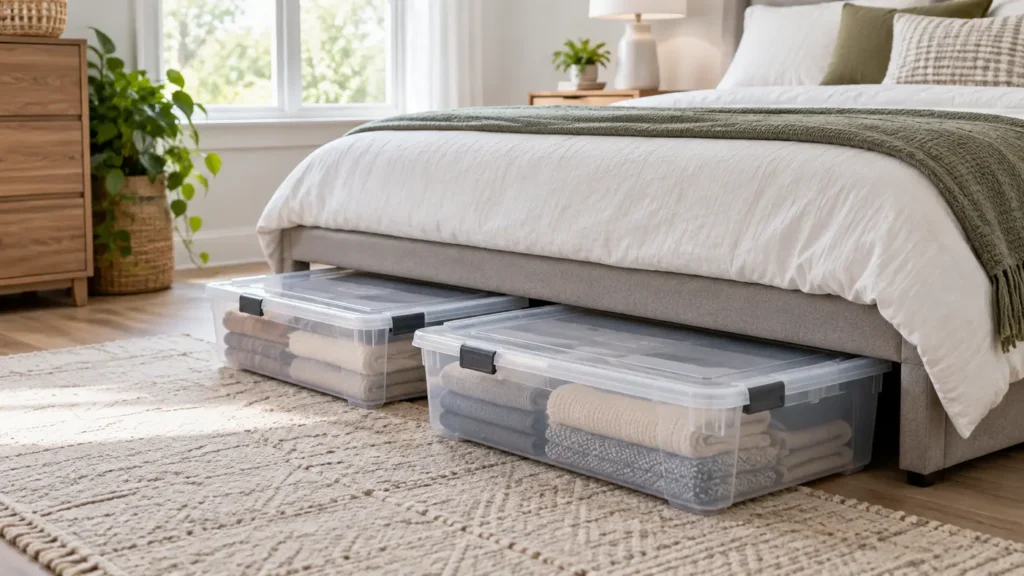
Clear lidded storage containers under a neatly made bed
Home Organization

Best Shoe Storage for a Small Entryway

Disclosure: As an Amazon Associate, My Indoor Space may earn from qualifying purchases made through links in this guide, at no extra cost to you.

Shoe storage works only when it fits the entryway and the household’s real habits. A narrow cabinet can hide clutter beautifully, but an open rack is faster for wet boots and everyday shoes. The best solution often combines quick-access space with overflow storage elsewhere.

Quick verdict

For most small entryways, choose a stable two- or three-tier open rack with adjustable shelf height, a washable boot tray, and enough clearance for the door to swing fully. Choose a tilt-out cabinet when visual calm matters more and shoes are normally dry.

Who it is for—and who should skip it

Entryway storage is useful for apartments, busy families, and homes where shoes collect beside the door. It creates a clear landing zone and keeps pairs together.

Skip a large “all shoes” unit if it blocks circulation. A small rack for current footwear plus seasonal storage in a closet or under the bed is often more effective.

Compare the main types

Type Best for Main trade-off
Open tiered rack Daily shoes and airflow Footwear remains visible
Tilt-out cabinet Narrow, tidy entryways Boots and large sizes may not fit
Bench with shelves Sitting while putting on shoes Needs more depth
Over-door organizer No floor space Door and shoe-size limits
Stacking boxes Protected collection storage Slower everyday access

Best value: adjustable open rack

An open metal or easy-clean composite rack gives the best value. Adjustable shelves can create a taller bay for ankle boots while keeping flats and sneakers in lower rows.

Look for level feet, smooth edges, and a width that holds complete pairs without forcing shoes sideways. A rack that expands may fit the wall exactly, but the extended centre should remain rigid.

Upgrade worth it: narrow tilt-out cabinet

A tilt-out cabinet is worth paying for when the entryway opens directly into the living area and visible footwear makes the room feel cluttered. Its shallow depth can preserve walking space.

Measure the internal compartment, not only the outside dimensions. Large shoes, high-tops, and boots may need to sit sideways or may not fit. Tall narrow furniture also needs appropriate anti-tip restraint where permitted.

Measure the complete traffic path

Open the entrance door fully and measure the remaining floor area. Include baseboards, door stops, heating vents, outlets, intercoms, and the space a person needs to stand with bags.

Use painter’s tape to mark the proposed footprint. Walk through the entry several times before ordering. A few extra centimetres of depth can make a surprising difference in a narrow path.

Capacity claims can be misleading

A “12-pair” rack may reach that number only with narrow shoes placed closely together. Measure the widest and longest shoes used by the household, then calculate realistic pairs per shelf.

Leave room for the shoes worn most often rather than filling every slot. Easy placement is what keeps the system working.

Wet boots need drainage and airflow

Place wet footwear on a tray with a raised edge, not directly on wood or carpet. Open storage lets moisture escape, while closed cabinets should receive only dry shoes and need ventilation.

Shake off snow and outdoor debris before bringing boots inside. Empty and wash the tray regularly so salt and dirt do not spread across the entry.

Stability and cleaning

A rack should not tip when shoes are removed from one side. Connect stacking units exactly as directed and do not exceed height or load limits. Benches must be specifically rated for sitting.

Smooth shelves and removable liners are easiest to clean. Fabric cubbies can hold dust and moisture, so they are better for dry indoor shoes than winter boots.

Common buying mistakes

  • Measuring the wall but not the door swing.
  • Trusting pair capacity without measuring actual shoes.
  • Putting wet boots inside an unventilated cabinet.
  • Buying a bench that is not rated to support a seated person.
  • Trying to store every seasonal pair at the entrance.

Frequently asked questions

Is open or closed shoe storage better?

Open storage offers airflow and quick access. Closed storage looks tidier but works best for dry shoes and needs suitable ventilation.

How deep is a narrow shoe cabinet?

Depth varies widely. Compare the outer footprint and internal shoe orientation with your largest footwear before buying.

Where should winter boots go?

Use a washable boot tray with enough height and airflow for drying. Move fully dry off-season boots to longer-term storage.

How many pairs should stay at the door?

Keep the pairs currently used by the household. Rotating seasonal and occasional footwear prevents the entry rack from becoming permanent overflow.

Final winner

The best shoe storage for most small entryways is a stable adjustable open rack paired with a washable boot tray. It handles mixed shoe heights, wet-weather footwear, and hurried daily use. A slim tilt-out cabinet wins only when shoes fit and concealed storage is the top priority.

Continue organizing with our guide to the entryway change that stopped daily clutter and our under-bed storage buying guide.

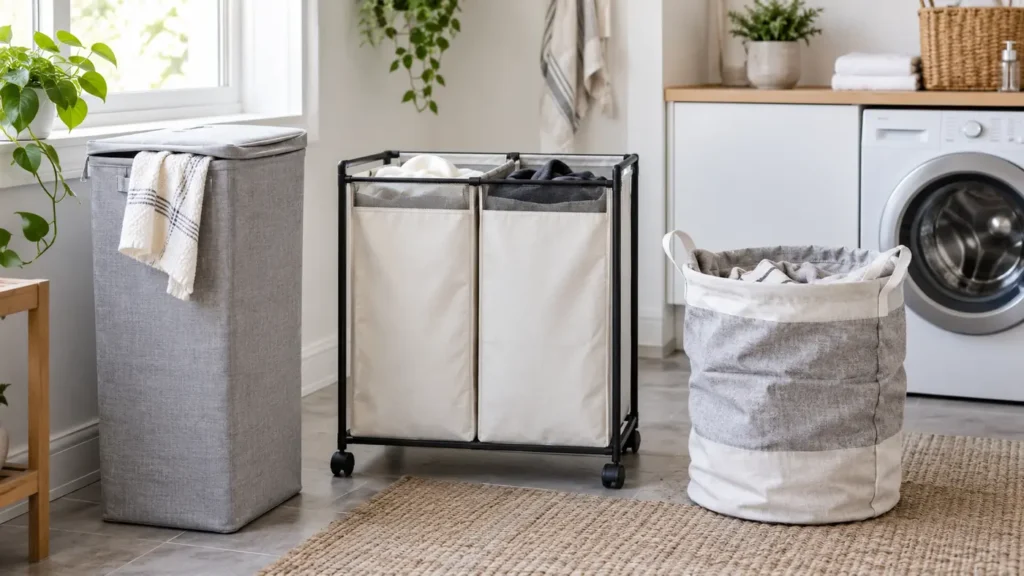
Laundry hampers in a bright laundry room
Home Organization

Best Shower Caddy for a Small Bathroom

Disclosure: As an Amazon Associate, My Indoor Space may earn from qualifying purchases made through links in this guide, at no extra cost to you.

A good shower caddy turns a crowded tub or shower into usable storage without making the space feel tighter. The best choice depends on where it mounts, how much weight it must hold, whether you rent, and how quickly water can drain away.

For most small bathrooms, a compact adhesive or over-the-showerhead caddy offers the best balance of capacity and simplicity. Tension-pole models hold more, but they take up visual space and need a stable floor-to-ceiling fit.

Quick verdict

Choose a caddy with open drainage, rust-resistant materials, enough vertical clearance for pump bottles, and a mounting system suited to your wall. Avoid buying by shelf count alone: secure mounting and useful spacing matter more than squeezing in one extra basket.

Who it is for—and who should skip it

A shower caddy is ideal for renters, shared bathrooms, small tubs, and showers with little or no built-in shelving. It also helps keep bottles off the floor, where they collect soap residue and become harder to reach.

Skip a large hanging unit if your showerhead pipe is loose, your handheld hose needs that space, or the caddy would interfere with controls. A recessed niche or stable existing shelf may already be the cleaner solution.

Compare the main types

Type Best for Main trade-off
Adhesive wall caddy Renters and compact showers Needs smooth, properly prepared tile
Over-showerhead caddy Fast installation Can slide or crowd the showerhead
Tension-pole caddy Maximum family storage Larger visual footprint
Corner suction caddy Light bottles and temporary use Suction can weaken over time
Over-door caddy Glass shower enclosures Must protect glass and clear the door

Best value: a two-tier adhesive caddy

For many small bathrooms, a two-tier adhesive model is the value sweet spot. It uses empty wall space, keeps the floor clear, and usually offers enough room for everyday shampoo, conditioner, body wash, and razors.

Look for replaceable adhesive pads, generous drainage slots, rounded edges, and a rail tall enough to keep pump bottles from tipping. Confirm that the adhesive is approved for your exact surface; textured tile, grout lines, painted drywall, and damp walls can reduce its grip.

Upgrade worth paying for: modular removable baskets

A modular system with removable baskets costs more but is easier to clean and rearrange. Separate baskets also let each person keep a small group of products together rather than creating one overloaded shelf.

The upgrade is worthwhile for a shared bathroom or anyone who buys tall pump bottles. It is less important if you only store two or three lightweight containers.

Measure bottle height, not just shelf width

Measure your tallest bottle with the pump fully raised. Then allow room above it for your hand. A shelf may look spacious in a product photo yet become awkward when a pump cannot be pressed naturally.

Also check basket depth. Very shallow rails let rounded bottles tip, while overly deep baskets can make small items hard to reach. A mixed layout with one tall tier and one shallow tray is often more useful than identical shelves.

Mounting strength matters

Adhesive mounts work best on clean, smooth, non-porous surfaces. Remove soap film, let the wall dry fully, and follow the curing time before adding weight. Do not assume “no-drill” means suitable for every rental wall.

Hanging caddies need a non-slip collar or stabilizing suction cups so they do not swing. Tension poles need firm contact at both ends and periodic checks, especially where temperature and humidity change.

Choose materials that handle constant moisture

Stainless steel, coated aluminum, and quality plastic are practical choices. Painted steel can perform well, but chips expose the metal underneath. Product claims such as “rustproof” are most useful when the construction and coating are clearly identified.

Open wire or slotted baskets dry faster than solid trays. Smooth joints and removable parts also make it easier to scrub away soap residue before it becomes stubborn.

Small details that improve daily use

  • Hooks for razors, washcloths, or a shower squeegee.
  • An inverted-bottle opening for dispensing without removal.
  • Rounded corners in a tight shower.
  • Enough clearance around controls and a handheld hose.
  • Baskets that lift off for cleaning.
  • A load rating that covers full bottles, not empty ones.

Common buying mistakes

  • Mounting adhesive across grout lines.
  • Loading the caddy before the adhesive has cured.
  • Choosing too many small tiers instead of useful bottle clearance.
  • Ignoring the showerhead, hose, door, and control layout.
  • Buying a coated metal model without checking for exposed welds or chipped finish.

Frequently asked questions

Are adhesive shower caddies safe for renters?

They can be, but removal risk depends on the wall surface and adhesive. Check the lease, use the maker’s removal method, and avoid fragile paint, loose tile, or damaged grout.

Do suction-cup caddies stay up?

They work best on very smooth, clean surfaces and with light loads. For multiple full bottles, quality adhesive or mechanical support is usually more dependable.

How do I stop a hanging caddy from sliding?

Choose a model with a locking collar, grippy hanger, or stabilizing cups. Keep the load balanced between the two sides.

How often should I clean it?

Rinse it regularly and deep-clean when soap film appears. Removable baskets make this much easier and help you inspect coatings and mounts.

Final winner

For most small bathrooms, the winner is a compact two-tier adhesive caddy with removable, fast-draining baskets and replaceable mounting pads. It uses wall space efficiently without crowding the showerhead. Choose a tension-pole model only when you genuinely need family-size capacity.

Build out the rest of your cleaning setup with our electric spin scrubber guide and small-space laundry hamper guide.

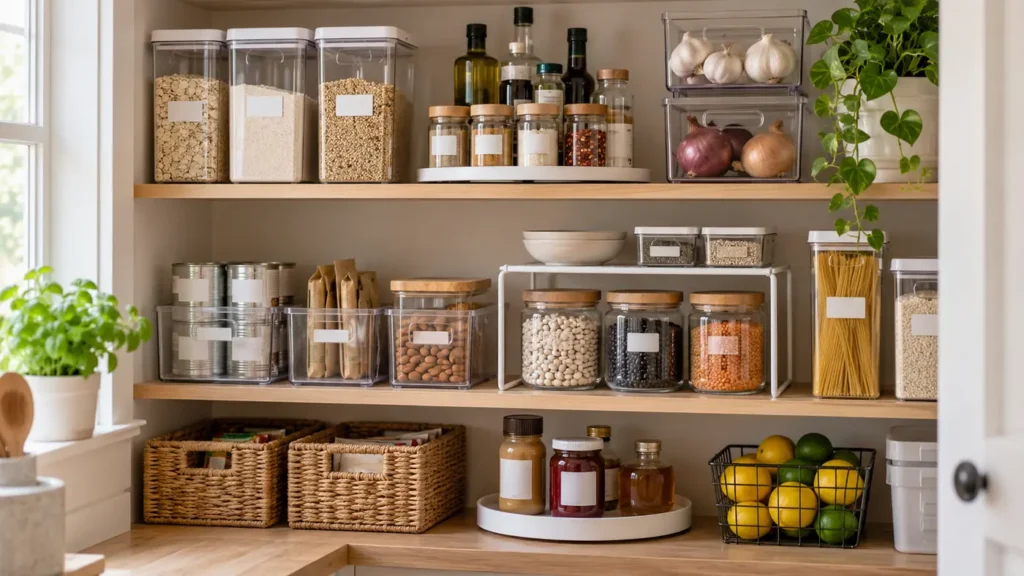
Organized small kitchen pantry with bins, turntable and shelf riser
Home Organization

Best Pantry Organizers for a Small Kitchen

Disclosure: As an Amazon Associate, My Indoor Space may earn from qualifying purchases made through links in this guide, at no extra cost to you.

A small pantry becomes frustrating when every shelf is packed but useful food still disappears behind taller packages. The best organizers do not simply add containers; they make everyday items visible, reachable, and easy to return to the right place.

Before buying a matching set, measure the actual shelf opening, depth, and vertical clearance. Then organize around what you store most often. A few correctly sized pieces usually outperform a large bundle of bins that leaves awkward gaps.

Quick verdict

Start with clear open-front bins for categories, a turntable for bottles, and one adjustable shelf riser for cans or jars. Add airtight containers only for foods that benefit from a seal. Choose pieces that fit the shelf and your habits, not a staged pantry photo.

What to compare first

Feature Why it matters Practical target
Open-front bins Keep packets and snacks grouped Handles plus straight sides
Turntable Makes bottles in a corner reachable Raised rim and non-slip base
Shelf riser Uses vertical space above short items Stable, adjustable width
Airtight container Protects selected dry foods Simple seal and wide opening

Measure before you shop

Measure shelf width, depth, height, and the narrowest point at the door frame. Note hinges, shelf supports, and any lip that reduces usable space. Leave enough clearance to lift a bin or open a lid without scraping the shelf above.

Sketch each shelf and assign a purpose before choosing products. Repeating a few modular widths makes the layout easier to change later, while unusually shaped organizers can create wasted strips of space.

Choose visibility over perfect matching

Clear bins help you see remaining stock, but perfectly transparent containers are not essential for every category. Open bins with simple labels can work better for packets, baking supplies, lunch items, and snacks because nothing needs to be decanted.

Avoid deep bins for tiny items unless they include dividers. If products stack in multiple layers, the organizer has recreated the same hidden-item problem it was meant to solve.

Use turntables in difficult corners

A turntable is useful for oils, vinegars, condiments, and jars that would otherwise be pushed to the back. A raised edge helps prevent narrow bottles from tipping when the tray rotates.

Check diameter carefully. A turntable that is too large may hit the wall or shelf frame; one that is too small wastes the corner. Divided models can help, but fixed sections may limit what fits.

Add vertical storage carefully

Shelf risers create a second level for cans, mugs, jars, or short food boxes. Adjustable models are helpful when shelf widths differ, but the expanded center should remain rigid under the expected load.

Tiered steps improve label visibility, although they consume more depth than a flat riser. Keep heavier containers on the lowest level and do not stack glass where it can be knocked forward.

Decide what really needs an airtight seal

Flour, sugar, rice, cereal, and some snacks may benefit from airtight storage when humidity, pests, or stale food are concerns. The lid should seal consistently, come apart for cleaning, and be easy to operate with dry or slightly damp hands.

Decanting everything creates work and can hide cooking instructions or best-before dates. Keep labels or write the product name and date on the container. Do not mix new food into an old batch before washing and drying the container.

Plan for cleaning and maintenance

Smooth corners and removable parts make organizers easier to clean. Confirm whether a product is dishwasher-safe; many large bins and lids should be hand-washed to avoid warping.

Wipe spills promptly and let containers dry completely before refilling them. Once a month, bring older items forward and remove empty packages so the system continues to save space.

Build zones that match your routine

Place breakfast, baking, snacks, or dinner staples together based on how your household cooks. Store daily items between waist and eye level, with bulk refills and rarely used supplies higher or lower.

A small back-stock limit prevents overbuying. If a category no longer fits its bin, use what you have before adding more storage. The organizer should set a useful boundary rather than justify extra clutter.

Common buying mistakes

  • Buying a large set before measuring every shelf.
  • Using tall sealed containers for foods that are already convenient in their packaging.
  • Choosing bins with heavily tapered sides that waste shelf width.
  • Packing organizers so tightly that none can be removed easily.
  • Ignoring dates and care instructions after decanting food.

Frequently asked questions

Are clear pantry bins worth it?

They are useful when visibility prevents duplicate purchases and forgotten food. Open-front or handled bins are often more practical than lidded boxes for items used every day.

Should pantry containers be airtight?

Use airtight containers for foods that benefit from moisture and pest protection. Packets, cans, and frequently used snacks may only need an open category bin.

What is the best organizer for a deep pantry shelf?

Use a pull-out bin, turntable, or clearly defined front-and-back zones. Avoid placing small loose items in the rear where they cannot be seen.

How much space should I leave around bins?

Leave enough room to grip and lift each bin without rubbing neighboring pieces. A small amount of clearance also makes cleaning easier.

Can I organize a pantry without decanting food?

Yes. Group original packages in bins, use shelf risers for cans, and add labels to zones. Decant only where it provides a real freshness or visibility benefit.

Who should buy them—and who should skip

Buy organizers if: pantry items are hard to see, deep shelves waste space, or food repeatedly expires because it gets buried.

Skip them if: the pantry already works well and adding bins would reduce usable space or hide labels.

Best value

Start with a few clear bins or turntables sized to the shelves and the foods you buy most. A small targeted setup is better value than filling every shelf with containers.

When the upgrade is worth it

Pay more for sturdy stackable bins, smooth turntables, or pull-out systems when they solve deep-shelf access. Decorative matching sets are not worth extra if they reduce flexibility.

Final answer

The best small-kitchen pantry system begins with accurate measurements and a few flexible tools. Prioritize access, visibility, stable construction, and easy cleaning. A simple arrangement of bins, a turntable, and a shelf riser is usually easier to maintain than a complicated wall of matching containers.

For more practical kitchen storage ideas, see our food storage container guide and kitchen habits for clear counters.

Clear lidded storage containers under a neatly made bed
Home Organization

Best Under-Bed Storage Containers: A Practical Buying Guide

Disclosure: This post contains affiliate links. If you buy through one of our links, we may earn a commission at no extra cost to you. Measure the actual clearance under your bed before ordering and do not overload containers beyond their rated capacity.

Under-bed storage can hold off-season clothing, spare bedding and rarely used items without adding another cabinet to the room. The wrong container, however, can waste half the space, collect dust, snag on carpet or become too heavy to pull out.

The best choice starts with accurate clearance, then balances structure, access, dust protection and the weight of what you plan to store.

Quick verdict

Choose a low-profile, lidded container with a rigid frame, smooth base or sturdy wheels, handles on at least two sides and enough transparency to identify contents. Fabric bags work for light bedding; rigid boxes protect structured items; rolling drawers are best for frequent access.

Under-bed storage types

Type Best for Advantages Tradeoffs
Rigid plastic box Clothing, shoes and dust protection Stackable, visible and easy to wipe Needs exact clearance and can crack
Fabric zip bag Blankets and soft seasonal items Light, flexible and inexpensive Can sag, snag or collapse when partly empty
Rolling drawer Items used weekly Fast access and easy movement Wheels add height and require clear flooring
Vacuum storage bag Bulky textiles for longer storage Reduces volume dramatically Awkward access and not ideal for every material

Measure clearance in several places

Do not rely on the height of one bed leg. Measure from the floor to the lowest point of the frame, centre support and any slats or hardware. Rugs, uneven floors and a sagging box spring can reduce clearance.

Leave a little extra space so the container does not scrape. If a box is listed at exactly the measured height, the lid, handles or wheels may still catch. Measure the usable depth from the side of the bed to any centre legs.

Plan what goes inside first

Light bedding can fill a large fabric bag without becoming difficult to move. Books, tools or dense shoes need a smaller rigid box. A giant container feels efficient until it weighs too much to pull out safely.

Group items by how often you use them. Weekly items belong near the easiest side of the bed. Seasonal items can go deeper. Keep emergency supplies or anything needed quickly somewhere more accessible.

Lids, zippers and dust control

A rigid snap lid offers good everyday dust protection, while a zipper bag fits soft items and can compress slightly. Look for a zipper that travels around at least two sides so you can open the bag without removing everything from beneath the bed.

Dust-resistant is not the same as airtight or waterproof. Under-bed containers should not be used to hide damp textiles, and they will not protect belongings from an active leak. Clean and fully dry every item before storage.

Wheels vs smooth bases

Wheels help on hard floors, particularly with frequent access, but they add height and can roll poorly across thick rugs. Small hard casters may mark delicate flooring or catch debris.

A smooth rigid base slides easily on many surfaces and uses less vertical space. On carpet, broad low-friction runners can work better than tiny wheels. Protect the floor according to its care instructions.

Handles and access

A front handle is essential. Side handles help when carrying the container to another room. Handles should be stitched through a reinforced area or moulded into the rigid body rather than attached to a thin panel.

Clear sides or a label window save time. If containers are opaque, label both the front and top because you may approach them from different sides of the bed.

What not to store under a bed

  • Damp clothing or textiles
  • Food or scented products that attract pests
  • Important documents without suitable environmental protection
  • Heavy objects in a flexible bag
  • Items needed during an emergency
  • Anything that blocks a floor vent, heater or required clearance

Vacuum bags: useful but not universal

Vacuum bags reduce the volume of comforters and seasonal clothing, but the compressed shape can become lumpy and difficult to stack. Some fillings and delicate materials may not respond well to long compression. Follow the textile care guidance.

Use a bag with a dependable valve and place it inside a protective outer container if abrasion is likely. Recheck it after a few days because slow leaks can make the bag expand and jam beneath the frame.

Common buying mistakes

  • Measuring only at the bed corner
  • Buying the tallest container that might fit
  • Choosing one huge box for dense items
  • Expecting a fabric bag to hold its shape when partly full
  • Ignoring centre legs and crossbars
  • Blocking floor vents or electrical cords
  • Storing items before they are fully clean and dry

Simple organization system

  1. Empty and clean the area beneath the bed.
  2. Measure height, depth and obstructions.
  3. Sort by season and frequency of use.
  4. Choose smaller containers for heavy items.
  5. Label the front and top.
  6. Make a short inventory note on your phone.
  7. Review the contents when seasons change.

This is especially effective when combined with our guide to organizing a bedroom without buying more furniture.

Frequently asked questions

Are fabric or plastic containers better?

Plastic provides more structure and easier cleaning. Fabric is lighter and suits soft items. Choose according to contents and access frequency.

Should under-bed boxes have wheels?

Wheels help on hard floors and with frequent use, but they reduce clearance. A smooth base may be better for shallow spaces.

Can I store clothes in vacuum bags?

Many everyday textiles can be compressed, but check garment and filling care guidance. Avoid long compression for items that may be damaged.

How do I prevent musty smells?

Store only clean, fully dry items and keep the room’s humidity under control. A sealed container cannot correct damp contents or an existing moisture problem.

How much clearance should I leave?

Leave enough margin to account for lids, handles, rugs and small variations in the frame. A little spare height makes daily use much easier.

Shop under-bed storage

Compare exterior height, usable interior size, frame rigidity, wheel height, lid security, handle strength and empty weight.

Shop Amazon USA
Shop Amazon Canada

Who should buy it—and who should skip it

Buy it if: you have unused clearance under the bed and need seasonal clothing, linens, or low-use items out of the main living space.

Skip it if: the bed clearance is too low, dust control is poor, or you need the stored items every day.

Best value

Low-profile zippered containers with a clear top and handles are the best value for soft goods. Rigid bins make more sense when stacking strength or crush protection matters.

When the upgrade is worth it

Pay more for stronger zippers, reinforced handles, wheels on heavier bins, and better dust sealing when the containers will be moved often. Decorative materials are rarely worth extra under a bed.

Final answer

The best under-bed storage is slightly shorter than your measured clearance, rigid enough for its contents and easy to pull from the side you use. Choose transparent lidded boxes for protection, fabric bags for light bedding and rolling drawers for frequent access. Several manageable containers usually work better than one oversized bin.

For more practical storage ideas, see the most overlooked storage space in your home and how to reduce visual clutter.

Useful furniture and storage in an overlooked corner of a home
Cozy Living, Home Organization

The Forgotten Corners of Your Home That Can Become Useful Spaces

Disclosure: As an Amazon Associate, My Indoor Space may earn from qualifying purchases through links in this article, at no extra cost to you.

Every home has spaces that are often ignored. They collect dust, become clutter magnets, or simply sit empty because we aren’t sure what to do with them. With a little creativity and a few practical additions, these forgotten areas can become some of the most useful parts of your home.

Let’s take a look at four places that deserve a second chance.

Under the Stairs

The space beneath a staircase is one of the biggest missed opportunities in many homes. Instead of storing random boxes, turn it into organized storage with shelving, baskets, or cabinets.

It’s a great place for shoes, books, pet supplies, seasonal decorations, or even a small reading nook if you have enough room.

Empty Hallway Ends

That blank wall at the end of your hallway doesn’t have to stay empty.

A narrow bookshelf, floating shelves, or a slim console table can add both storage and style without taking up much space. Add a lamp or a framed photo to make the area feel warm and inviting.

Wide Landings

If your staircase has a large landing, think of it as an extra room.

A comfortable chair, a small side table, and a corner lamp can create a quiet reading space. You could also add a bookshelf or a few indoor plants to give the area more personality.

Awkward Corners

Every home seems to have one corner that’s difficult to decorate.

A corner shelving unit, floor lamp, or storage bench can completely change the look of the space while making it more functional. Even a decorative basket can help organize blankets, magazines, or children’s toys.

You’ll be surprised how much bigger and more organized your home feels when every corner has a purpose.


🛒 Buy on Amazon USA

Looking to transform those forgotten spaces? These products can help:


Final Thoughts

You don’t always need to renovate your home to make it feel bigger or more functional. Sometimes the best improvements come from simply looking at your space with fresh eyes. Those forgotten corners you’ve been walking past every day could become your favorite and most useful spots in the house.


🍁 Buy on Amazon Canada

Looking to transform those forgotten spaces? These products can help:

If the unused corner is inside a closet, the renter-friendly closet organizer guide helps with fit.

Organized under-bed storage in a bedroom
Cozy Living, Home Organization

The Most Overlooked Storage Space in Your Home

Disclosure: As an Amazon Associate, My Indoor Space may earn from qualifying purchases through links in this article, at no extra cost to you.

When most people think about storage, they focus on closets, shelves, and cabinets. But one of the most overlooked storage areas in the home is often hiding in plain sight—under the bed.

That space can be used to store seasonal clothing, extra bedding, shoes, holiday decorations, and other items that don’t need to be accessed every day. Using low-profile storage containers helps keep everything organized while making the most of unused space.

Another commonly overlooked area is vertical wall space. Floating shelves, wall hooks, and over-the-door organizers can create valuable storage without taking up precious floor space.

The key is to look beyond traditional storage areas and use every part of your home more efficiently.

A few smart storage solutions can help reduce clutter and make even a small home feel larger and more organized.


Measure the hidden space first

Before ordering under-bed bins, measure from the floor to the lowest part of the bed frame, including any centre support. Leave room to slide a filled container out without scraping the frame. Measure the usable width and depth too, especially if legs or drawers interrupt the space. A soft zip bag can flex around a tight opening; a rigid bin is easier to stack and protects contents from dust. Neither option helps if you cannot pull it out when needed.

Which organizer fits the job?

Use sealed, labelled containers for clean off-season bedding or clothes, and keep items you reach for weekly in an easier location. Vacuum bags can shrink textiles, but avoid compressing items whose care instructions discourage it. Bed risers add clearance only when they are compatible with the frame and are used according to their load rating; skip them if the bed feels unstable. Floating shelves require suitable wall anchors and are a better fit for light, visible items than heavy overflow.

Quick choice: Buy a low bin if you have measured clearance and need dust protection. Choose an over-the-door organizer for small things used often. Skip additional storage if the real problem is keeping items you no longer need. The U.S. and Canada lists are search starting points; check dimensions and installation details on the specific listing before purchase.

🇺🇸 Buy on Amazon USA

Under-Bed Storage Containers

Perfect for storing seasonal clothing, blankets, and shoes.

Vacuum Storage Bags

Save space by compressing bulky bedding and winter clothing.

Floating Wall Shelves

Add storage without using floor space.

Over-the-Door Organizers

Great for bedrooms, bathrooms, and closets.

Storage Bins with Lids

Keep items protected and easy to organize.

Bed Risers

Create additional storage space under the bed.


🕯️ Final Thoughts

Many homes already have hidden storage opportunities—they just aren’t being used. By taking advantage of under-bed storage and vertical wall space, you can reduce clutter, stay organized, and make your home feel more spacious without adding extra furniture.


🍁 Buy on Amazon Canada

Under-Bed Storage Containers

An easy way to maximize unused space.

Vacuum Storage Bags

Store bulky items while saving valuable room.

Floating Wall Shelves

Add both storage and decorative display space.

Over-the-Door Organizers

Perfect for organizing small items throughout the home.

Storage Bins with Lids

Keep belongings tidy and easy to find.

Bed Risers

A simple way to create extra storage in smaller homes.

For storage beneath the bed, see the under-bed container guide before measuring.

Entryway catch-all basket holding everyday household items
Cozy Living, Home Organization

Why Every Home Needs a Catch-All Basket

Disclosure: As an Amazon Associate, My Indoor Space may earn from qualifying purchases through links in this article, at no extra cost to you.

If clutter seems to appear out of nowhere, a catch-all basket might be the simplest solution you’ve never tried.

A catch-all basket is exactly what it sounds like—a designated place for everyday items that tend to get left around the house. Keys, mail, remotes, chargers, reading glasses, and other small items can quickly make a room feel messy.

Instead of letting these things pile up on tables and countertops, place a decorative basket in a convenient location. It keeps clutter contained while making it easy to find the items you use most often.

The best part? It takes almost no effort. Rather than constantly tidying up, you simply drop items into the basket and sort them later when you have time.

It’s a small change that can make your home feel more organized every day.


Give the basket one job

Decide what belongs in the basket before choosing its size. Near the door, a shallow tray can hold keys and sunglasses while mail gets a separate place. In a living room, a larger basket can collect remotes, a throw, or children’s small toys. Chargers need a spot near an outlet, and loose cables are easier to find in a divided organizer than at the bottom of a deep basket. Avoid using one basket for everything in the house: it can quickly become another pile to sort.

Basket, tray, or hidden storage?

Measure the shelf or floor area and the largest item you expect to put away. An open woven basket is easy to drop things into, but check for rough edges if it will hold delicate fabrics. A wipeable tray suits keys or glasses on a console. A storage ottoman takes more floor space and makes sense only if you also need a footrest or seat; confirm its dimensions and stated seating capacity. Clear the catch-all once a week so important papers and small items remain easy to find.

Quick choice: Start with a container you own for a week. If the habit sticks, buy one that fits the location and the actual contents. Skip a large bin for a handful of keys. U.S. and Canada shoppers can compare the separate searches below for size, material, and current price.

Buy on Amazon USA

Decorative Woven Basket

Perfect for storing everyday clutter while adding style.

Entryway Organizer Basket

Great for keys, wallets, sunglasses, and mail.

Storage Ottoman

Provides hidden storage and extra seating.

Wooden Catch-All Tray

Keeps small items neatly organized on tables and counters.

Decorative Storage Bin Set

Ideal for living rooms, bedrooms, and home offices.

Floating Shelf with Basket Storage

Adds organization without taking up floor space.


🕯️ Final Thoughts

Sometimes the best organizing solutions are the simplest ones. A catch-all basket gives everyday items a home, reduces visual clutter, and helps keep your living spaces looking tidy with very little effort.


🍁 Buy on Amazon Canada

Decorative Woven Basket

A stylish way to control everyday clutter.

Entryway Organizer Basket

Keep essentials organized and easy to find.

Storage Ottoman

Hide clutter while adding function to your room.

Wooden Catch-All Tray

Perfect for organizing keys, mail, and accessories.

Decorative Storage Bin Set

A versatile storage solution for any room.

Floating Shelf with Basket Storage

Adds both display space and practical organization.

For a catch-all near the door, pair it with shoe storage that fits a small entryway.

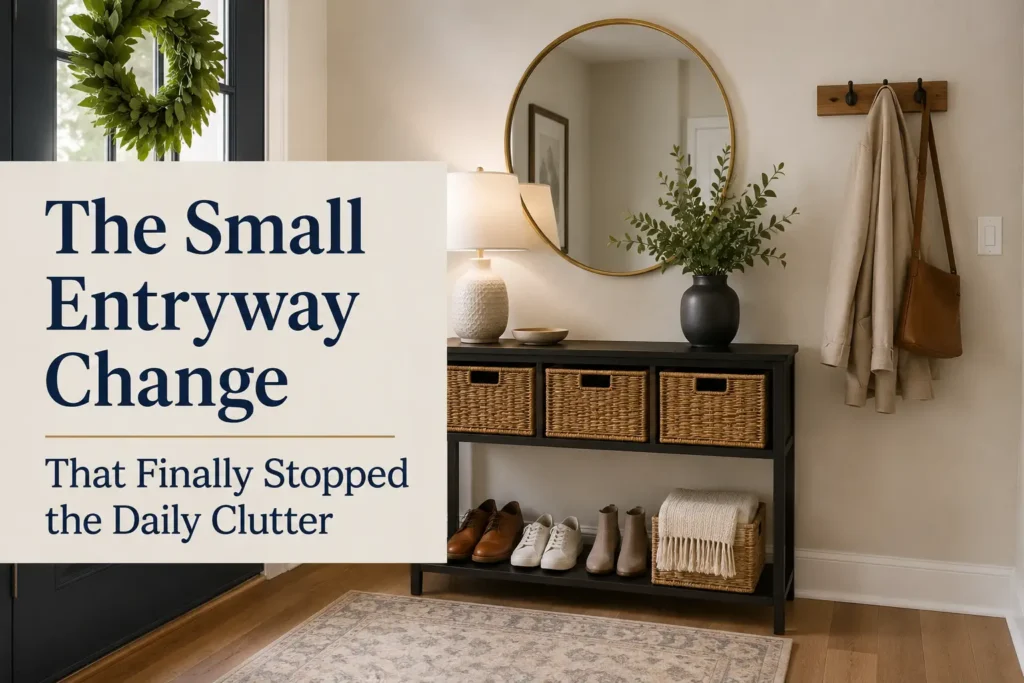
Organized small entryway with hooks and storage
Cozy Living, Home Organization

The Small Entryway Change That Finally Stopped the Daily Clutter

Disclosure: As an Amazon Associate, My Indoor Space may earn from qualifying purchases through links in this article, at no extra cost to you.

Walking through the front door should feel like arriving home — not like stepping into a small pile of chaos. For a long time, though, that’s exactly what it felt like for me. Keys ended up on random tables. Mail piled up on the counter. Bags landed wherever there was space. Coats sometimes made it to the closet, but more often they hung over a chair or the back of a door. None of it felt dramatic on its own, but together it created a quiet kind of daily clutter that made the house feel more stressful than it needed to be.

What I eventually realized is that the problem wasn’t the stuff — it was the lack of a simple landing place for it. Every home benefits from what people sometimes call a “drop zone,” a small, intentional area near the door where everyday items can land the moment you walk in. It doesn’t need to be large or fancy. It just needs to exist. Once I created one, the difference in how the space felt was surprisingly noticeable.

A drop zone works because it matches how people actually move through their homes. When you arrive home, you’re usually carrying something — keys, a bag, a jacket, maybe the day’s mail. If there isn’t an obvious place for those items, they scatter naturally. But when there is a bench, a hook, or a small tray waiting nearby, everything suddenly has a home. Keys land in the tray. Bags hang on the hooks. Mail gets placed in a small organizer instead of drifting around the house.

What surprised me most was how small the setup could be. Even a narrow section of wall can become an effective drop zone with just a few pieces. A small bench gives you a place to sit while removing shoes and provides hidden storage underneath. A row of simple hooks instantly solves the coat-and-bag problem. A tray for keys prevents that familiar daily search through pockets and counters. None of it feels complicated — but together it changes the rhythm of coming home.

I also noticed that once a drop zone exists, the rest of the house naturally stays tidier. Instead of everyday items migrating through different rooms, they stop right at the door where they belong. The living room feels calmer. The kitchen counters stay clearer. The entryway quietly handles the little bits of life that used to spread everywhere.

Place the basket where keys and mail actually land, then empty it on a set day so it stays a useful landing spot.

There’s something reassuring about walking into a home where the first few steps already feel organized. It removes a tiny bit of friction from daily life — the kind of friction you barely notice until it disappears.


📦 Buy on Amazon USA

Entryway Bench with Storage

Wall Mounted Coat Hooks

Decorative Key Tray

Small Entryway Storage Cabinet


🕯️ Final Thoughts

Small home changes rarely feel dramatic at first. A drop zone near the door is one of those subtle upgrades that quietly improves everyday life without calling attention to itself. It simply works in the background, catching the things you carry and giving them a natural place to land.

Over time, those small habits add up. Keys stop disappearing. Mail stays contained. Bags and coats stop drifting from room to room. The entryway becomes less of a transition space and more of a quiet system that keeps the rest of the home running smoothly.

Sometimes the most helpful improvements in a home aren’t the big renovations or expensive furniture pieces. They’re the simple adjustments that make daily routines easier — the kind that make you walk through the door and feel like everything already has its place.


📦 Buy on Amazon Canada

Entryway Bench with Storage

Wall Mounted Coat Hooks

Decorative Key Tray

Small Entryway Storage Cabinet

For shoes that crowd the doorway, compare small-entryway shoe storage.

Neatly organized bedroom using existing furniture
Cozy Living, Home Organization

How to Organize a Bedroom Without Buying More Furniture

Disclosure: As an Amazon Associate, My Indoor Space may earn from qualifying purchases through links in this article, at no extra cost to you.

A cluttered bedroom can make it difficult to relax, sleep, and enjoy your space. The good news is that getting organized doesn’t always require buying new furniture or spending a lot of money. Sometimes the best solutions involve making better use of the space you already have.

Here are some simple ways to organize your bedroom using what you already own.

🛏️ Start by Removing What You Don’t Need

Before organizing anything, take a quick look around the room and identify items that no longer belong there.

Consider removing:

  • Clothes you no longer wear
  • Empty boxes and packaging
  • Old magazines and papers
  • Broken or unused electronics
  • Decorative items that create visual clutter

The less you have to manage, the easier organization becomes.

👕 Maximize Your Closet Space

Most closets have unused vertical space.

Try:

  • Hanging shorter clothing together
  • Storing seasonal items on higher shelves
  • Using matching hangers to save room
  • Folding sweaters and jeans neatly instead of hanging everything

A well-organized closet instantly makes the entire bedroom feel cleaner.

📦 Use Under-Bed Storage

The area under your bed is valuable storage space.

Store:

  • Extra bedding
  • Seasonal clothing
  • Shoes
  • Travel bags

Even simple storage bins can help keep these items out of sight while remaining easy to access.

🧺 Create a Laundry System

Dirty clothes are often one of the biggest sources of bedroom clutter.

Use:

  • A dedicated laundry basket
  • A separate basket for clean clothes waiting to be folded
  • A routine for putting clothes away immediately

This small habit can make a huge difference.

📚 Organize Nightstands and Surfaces

Flat surfaces tend to attract clutter.

Keep only essential items on your nightstand:

  • Lamp
  • Phone charger
  • Book or e-reader
  • Glass of water

Everything else should have a designated place elsewhere in the room.


📦 Buy on Amazon USA

Under-Bed Storage Containers

Fabric Storage Bins for Closets

Slim Laundry Hamper for Small Bedrooms

Drawer Organizer Trays

Over-the-Door Hanging Organizer


🕯️ Final Thoughts

Organizing a bedroom doesn’t have to involve expensive furniture or a complete makeover. By decluttering, maximizing closet space, using under-bed storage, and creating simple daily habits, you can transform your bedroom into a cleaner, calmer, and more relaxing space.

Small improvements often have the biggest impact, and the best part is that most of these changes can be made today using items you already have.


🍁 Buy on Amazon Canada

Under-Bed Storage Containers

Fabric Storage Bins for Closets

Slim Laundry Hamper for Small Bedrooms

Drawer Organizer Trays

Over-the-Door Hanging Organizer

For closet space that can work harder, see the renter-friendly closet organizer guide.

Scroll to Top