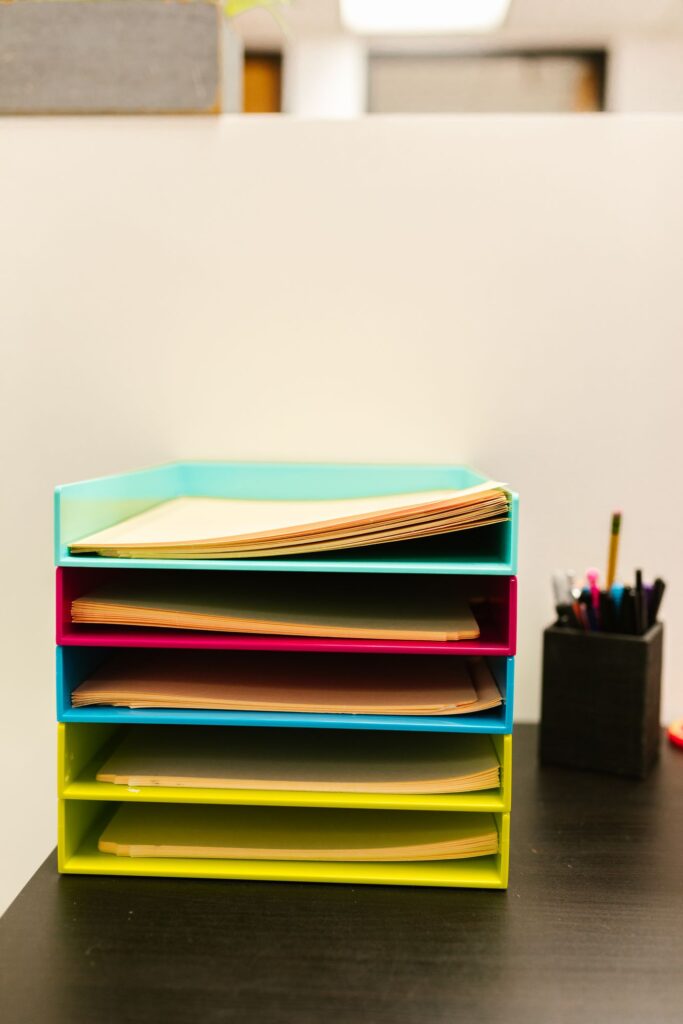
Paperwork in stacked desktop trays
Home Organization

Desktop File Sorter vs Portable File Box: Which Clears Paper Clutter?

Disclosure: As an Amazon Associate, My Indoor Space earns from qualifying purchases through links in this article, at no extra cost to you.

Quick verdict

Choose a desktop sorter for a few active paper categories you reach for daily. Choose a portable hanging-file box for labeled folders you want to put away and carry. Start by separating active work from stored paperwork before deciding whether you need either product.

Research-based buying guide. Information checked October 16, 2026 (Winnipeg). We have not tested these products hands-on; source findings and our buying judgments are identified separately.

Deflecto small incline sorter

IRIS letter file box with handle
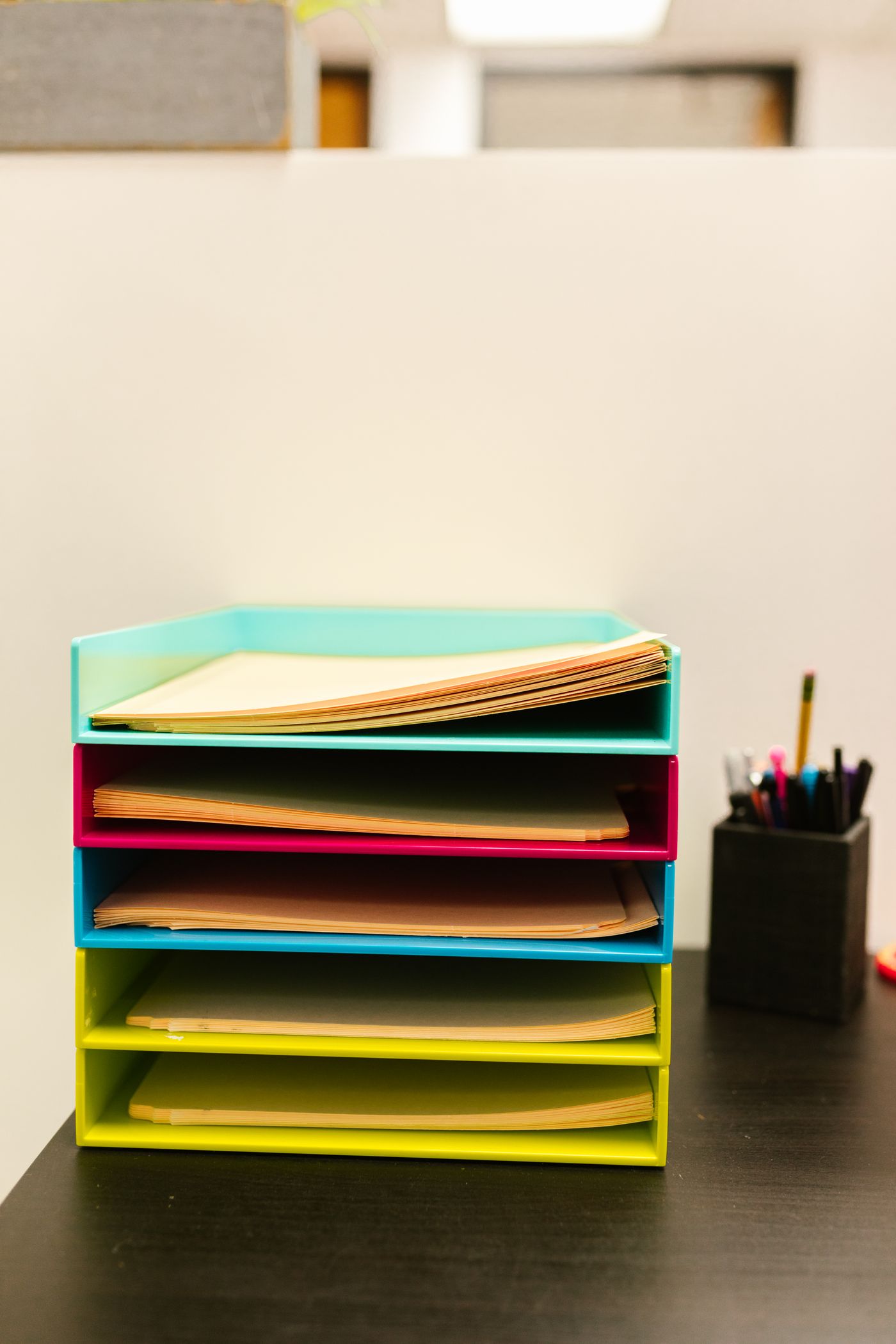
Paperwork in stacked desktop trays
Paper-sorting context with an alternative tray format; neither compared organizer is pictured. Stock photo: Pexels.

A desktop file sorter and a portable file box work at different stages of a paper routine. The sorter keeps a small number of active groups visible. The box holds folders you want to close up and store. Buying the wrong one can simply move an unsorted pile into a new container.

Compare access and storage

Question Deflecto small sorter IRIS handled file box
Format Five open graduated compartments Lidded hanging-file storage
Useful role Daily active-paper access Put-away folders and transport
Main fit check Desk footprint and paper height Letter folders and shelf clearance

When the desktop sorter is enough

Deflecto’s small incline sorter has five stepped compartments and listed dimensions of eight inches wide, 5.5 inches deep and six inches high. The open arrangement helps you see and retrieve the papers rather than removing a lid first.

Our buying judgment is to use that format for a few action categories, such as items to read, reply to or file. The product cannot decide which paper needs attention. If every slot becomes an unrelated backlog, increasing the number of compartments may make the desk look organized without improving retrieval.

When the portable box earns its space

IRIS model 110977 holds letter-size hanging files and includes a carry handle, securing buckle and organizer section in the lid. The manufacturer lists the entire unit at 10.2 by 13.8 by 11.7 inches.

Check hanging-folder size separately from paper size. A box described as letter-size should not be assumed to support legal-size hanging folders. Confirm whether folders are included in the selected offer, since buying them separately changes the setup cost.

Measure opening space as well as closed size

A file box can fit on a shelf but be awkward to use there if you cannot open the lid or lift out the folders. Leave working clearance or plan to move it onto a stable surface. Test the intended storage location with a cardboard stand-in before ordering if the shelf is tight.

A carry handle and lid do not establish fire resistance, waterproofing or secure document protection. If you need a specific protection rating, select a product that actually provides it. These examples are ordinary organization tools.

Who should buy or skip?

Buy the sorter for daily paper flow, or the file box for labeled stored folders and occasional carrying. We have not tested loaded-handle strength, drop resistance or the practical capacity of your particular folder collection.

Skip buying both until you can identify which papers remain active and which should be stored. A simple existing tray may handle the active pile, while an existing drawer holds the archive. Paying for a new container is worthwhile when its access or portability fixes a repeated problem, not merely because another box will hide the papers.

Compare listings in your country

These buttons open matching Amazon search results, rather than a guaranteed in-stock offer. Confirm the exact model, seller, included parts, delivered price and return terms. Prices and availability can differ between the United States and Canada.

Deflecto small incline sorter

IRIS letter file box with handle

Related guides on My Indoor Space

Sources and research

Calendar and notebook arranged on a desk
DIY & Decorating

Thermal Laminator vs Self-Sealing Pouches: Which Is Worth Buying?

Disclosure: As an Amazon Associate, My Indoor Space earns from qualifying purchases through links in this article, at no extra cost to you.

Quick verdict

Choose self-sealing pouches for a few items when you want to avoid buying a machine. Consider a thermal laminator for repeated batches that fit its pouch and width limits. Both methods are permanent, so use copies when the original needs to remain unaltered.

Research-based buying guide. Information checked October 16, 2026 (Winnipeg). We have not tested these products hands-on; source findings and our buying judgments are identified separately.

Scotch TL901X thermal laminator

Scotch letter self-sealing pouches

Calendar and notebook arranged on a desk
Paper-planning context; no laminator, finished laminate or performance test is pictured. Stock photo: Pexels.

A thermal laminator and self-sealing pouches protect frequently handled paper through different workflows. The thermal system adds a machine, power and compatible heated pouches. Self-sealing products use an adhesive process without a laminator. Decide how many items you expect to finish before buying the hardware.

Compare the complete system

Question Thermal laminating Self-sealing pouches
Machine required? Yes No
Consumable Compatible thermal pouch Adhesive self-sealing pouch
Likely buying reason Repeated batches A few occasional items

When a thermal machine earns its cost

The cited Scotch TL901 page shows TL901X packaging and lists a nine-inch width limit, two heated rollers and pouches up to five mil thick. Match the exact selected model and supplied instructions, since similar names can appear across packages and generations.

That setup can make sense for repeated household signs, activity sheets or craft projects. Check both document size and the complete pouch width. A letter document fitting on your desk does not establish that every larger pouch will enter a nine-inch machine.

When self-sealing is enough

Scotch’s letter self-sealing pouch page specifies items up to 8.5 by 11 inches and no machine requirement. That is attractive when you want to finish a handful of signs without finding a place for another powered appliance.

Work through the manufacturer’s alignment and sealing instructions before starting with a valuable item. We have not tested bubbles, finish clarity or adhesion. A machine-free process still needs careful positioning; it does not make a misaligned document reversible.

Keep the pouch types separate

Do not put adhesive self-sealing pouches through a thermal machine unless both products’ instructions explicitly permit it. The two formats are different systems. Likewise, an ordinary unheated sleeve does not become permanently laminated simply because it looks like a thermal pouch.

The cited thermal unit requires a suitable grounded 120-volt outlet, and 3M says not to use a voltage or outlet converter. Consider where you will operate it and leave the working clearance required by its manual. Include compatible replacement pouches in the purchase cost.

Who should buy or skip?

Compare the machine plus the pouches needed for your actual batch against the equivalent self-sealing pack. Avoid inventing a universal break-even count: pack prices, thickness, item size and how often you use the machine change the result.

Buy thermal for a repeated compatible workflow; buy self-sealing for occasional items. Skip permanent lamination when you need to update the paper regularly or preserve an original without alteration. A reusable document sleeve may already solve that job. Neither option is presented here as a tested winner for archival preservation or submersion resistance.

Compare listings in your country

These buttons open matching Amazon search results, rather than a guaranteed in-stock offer. Confirm the exact model, seller, included parts, delivered price and return terms. Prices and availability can differ between the United States and Canada.

Scotch TL901X thermal laminator

Scotch letter self-sealing pouches

Related guides on My Indoor Space

Sources and research

Colorful folders and a pen on a table
Home Organization

Fellowes LX65 vs LX41: Cross-Cut Capacity or Smaller Pieces?

Disclosure: As an Amazon Associate, My Indoor Space earns from qualifying purchases through links in this article, at no extra cost to you.

Quick verdict

Choose the LX65 if its higher listed sheet capacity and shorter cooldown better fit your routine. Choose the LX41 if its smaller paper pieces are the reason to buy. Compare the stated cut dimensions and rating; the words “micro-cut” and “cross-cut” alone are not a complete security comparison.

Research-based buying guide. Information checked October 16, 2026 (Winnipeg). We have not tested these products hands-on; source findings and our buying judgments are identified separately.

Fellowes LX65 cross-cut

Fellowes LX41 micro-cut

Colorful folders and a pen on a table
Paperwork context; neither shredder is pictured. Stock photo: Pexels.

The Fellowes LX65 and LX41 make different compromises for a home paperwork pile. The LX65 accepts more sheets in a pass. The LX41 cuts paper into shorter pieces. Neither is a continuous-duty machine, so the cooldown schedule matters if you save shredding for one large session.

Compare the stated limits

Specification LX65 LX41
Sheets per pass Up to 10 Up to 8
Paper cut size 4 × 40 mm 4 × 12 mm
Duty cycle 6 minutes on; 20 off 5 minutes on; 30 off

When the LX65 is the useful buy

The North American LX65 instructions list a ten-sheet maximum with specified letter-size, twenty-pound paper. They also warn that heavier paper, humidity or a different voltage can reduce capacity. Treat that figure as a rated limit, not a target for every stack.

Our buying judgment is to prefer the LX65 when the main frustration is feeding a modest recurring pile and waiting for cooldown. The one-minute run-time difference is less important than the complete cycle and the number of sessions your pile requires.

When the LX41 makes more sense

The LX41’s stated paper pieces are shorter than the LX65’s. That is a concrete reason to compare it even though its sheet capacity is lower. Fellowes uses micro-cut terminology in the US and mini-cut in some regional materials, so match dimensions and model numbers.

Do not assume that those names alone prove a higher formal rating. The cited manufacturer materials identify P-4 for these examples despite their different piece dimensions. Choose according to any actual document-destruction requirement you need to meet, rather than an advertising adjective.

Check the regional version and emptying routine

Match the voltage, product code, bin arrangement and warranty in your country. Regional catalogues can list different bin capacities for similarly named products. Do not combine the most favorable numbers from several versions into one imaginary specification.

Leave enough space to empty the bin in the way the selected machine requires. A shredder wedged under a shelf may fit its closed dimensions while being inconvenient to service. Also follow the exact manual’s permitted-material and maintenance instructions; paper capacity is not permission to feed every household item.

Who should buy or skip?

Buy the LX65 for its specified feeding and duty-cycle balance, or the LX41 for the smaller pieces. We have not tested noise, jam frequency, cutting speed or real-world daily throughput.

Skip either if your existing shredder already meets the required cut specification and workload. For a rare major clear-out, compare an appropriate document-destruction service with buying and storing a machine. Paying for capacity that sits unused all year may solve the wrong problem.

Compare listings in your country

These buttons open matching Amazon search results, rather than a guaranteed in-stock offer. Confirm the exact model, seller, included parts, delivered price and return terms. Prices and availability can differ between the United States and Canada.

Fellowes LX65 cross-cut

Fellowes LX41 micro-cut

Related guides on My Indoor Space

Sources and research

Stapler and pens on a desk
Home Organization

Manual vs Electric Stapler: Is Powered Stapling Worth It at Home?

Disclosure: As an Amazon Associate, My Indoor Space earns from qualifying purchases through links in this article, at no extra cost to you.

Quick verdict

Choose a manual stapler for occasional packets and simple grab-and-use storage. Consider the electric model when repeated stapling makes powered operation useful. The compact electric example holds fewer sheets per pass than the compared manual model, so a motor is not automatically a capacity upgrade.

Research-based buying guide. Information checked October 16, 2026 (Winnipeg). We have not tested these products hands-on; source findings and our buying judgments are identified separately.

Swingline manual Optima Grip

Swingline Optima 20 Compact electric

Stapler and pens on a desk
Stationery context; the stapler is not identified as either Swingline model. Stock photo: Pexels.

A manual-versus-electric stapler comparison should separate operating effort from paper capacity. The motor changes how a staple is driven. It does not mean the tool accepts a thicker packet. Match the actual model numbers before assuming the powered one is the upgrade.

Compare these specific Swingline models

Feature Manual Optima Grip Optima 20 Compact electric
SKU S7087810 S7048207B
Listed sheet capacity 25 20
Staple-strip capacity 210 staples 105 staples

When manual is enough

The manual Optima Grip is designed for handheld use and can stand vertically on a desk. It needs no power source. That can suit a small home office where stapling means assembling a few pages once in a while.

Capacity is specified using twenty-pound paper and recommended staples. Heavier sheets or a different staple type change the job. If your regular packets exceed the tool’s stated capacity, choosing a suitable higher-capacity stapler is more useful than forcing an ordinary one.

When powered operation earns its cost

The compact electric model offers automatic and manual trigger modes. “Manual” here refers to how you trigger the electric mechanism; it does not turn the machine into the separate mechanical Optima Grip. Choose the workflow that gives you controlled placement.

Swingline lists an included AC adapter or four AA batteries, which are not included. The cited page specifically says rechargeable batteries are not compatible. Include the power arrangement in your purchase decision rather than assuming your existing rechargeable AA set will work.

Read the full product name

Swingline notes that the electric model was formerly called Optima Grip. That naming overlap makes searching by “Optima Grip” alone unreliable. Check the electric or manual designation, SKU, selected capacity and included accessories before ordering.

Both compared models specify compatible Optima or S.F. 4 Premium staples. Keep a matched refill available, especially if replacing a stapler that uses another size. A low advertised purchase price is less useful when the staples already in your drawer do not suit it.

Who should buy or skip?

Buy manual for occasional work and simple storage. Buy electric when the repeated operating action justifies the added power setup and expense. We have not measured stapling effort, speed or reliability, and manufacturer performance guarantees have conditions tied to the specified staples.

Skip replacement if your existing stapler handles your normal packets comfortably. For a temporary project, binder clips may already solve the need for removable groups of paper. Pay for the motor when it improves a routine you repeat, not because “electric” sounds like a larger-capacity tool.

Compare listings in your country

These buttons open matching Amazon search results, rather than a guaranteed in-stock offer. Confirm the exact model, seller, included parts, delivered price and return terms. Prices and availability can differ between the United States and Canada.

Swingline manual Optima Grip

Swingline Optima 20 Compact electric

Related guides on My Indoor Space

Sources and research

Towel hanging from a bathroom hook
Home Organization

Suction vs Adhesive Shower Hooks: Which Fits Your Bathroom Surface?

Disclosure: As an Amazon Associate, My Indoor Space earns from qualifying purchases through links in this article, at no extra cost to you.

Quick verdict

Choose suction for a verified smooth, nonporous surface when repositioning is useful. Choose a bathroom-rated adhesive hook for a compatible surface and a fixed location you can prepare correctly. Skip both when the surface or wet load falls outside the selected product’s instructions.

Research-based buying guide. Information checked October 16, 2026 (Winnipeg). We have not tested these products hands-on; source findings and our buying judgments are identified separately.

OXO StrongHold suction hook

Command Bath adhesive hooks

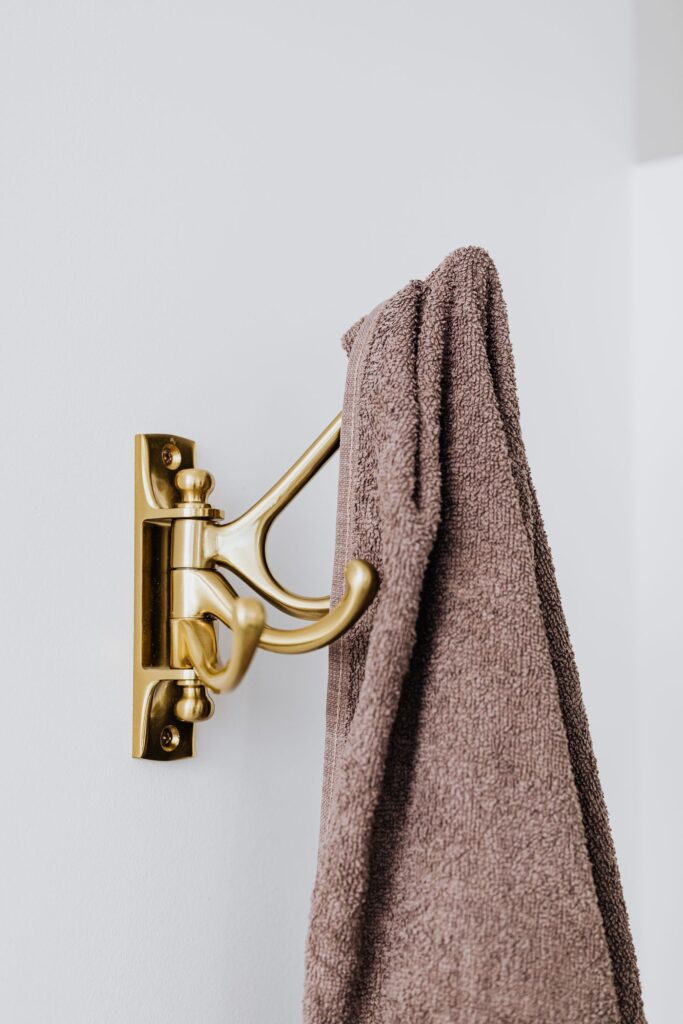
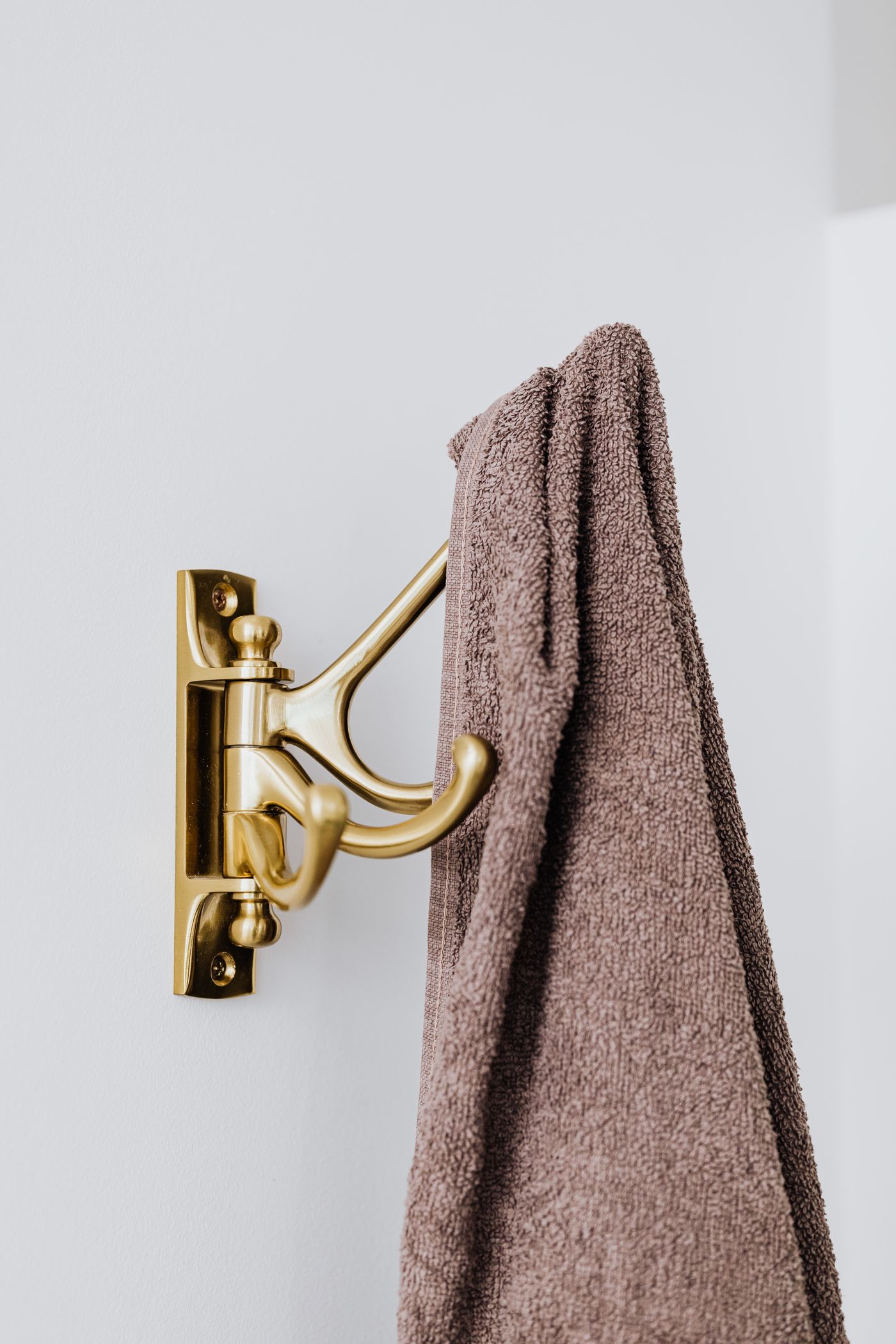
Towel hanging from a bathroom hook
Bathroom-storage context; the pictured hook is not identified as a suction or adhesive model. Stock photo: Pexels.

A shower hook is a surface-compatibility purchase before it is a style choice. Smooth glass, textured tile and a grout line do not give a mounting system the same conditions. Choose the attachment method only after identifying the exact area available.

Compare the mounting routine

Question OXO StrongHold suction Command Bath adhesive
Attachment Suction cup and release lever Bathroom-rated adhesive strips
Moving it Release and reposition as instructed Remove properly and use suitable replacement strips
Critical fit Smooth, nonporous patch Approved surface plus removal space

When suction is the sensible buy

OXO lists glass, mirrors and smooth glazed tiles for its StrongHold hook. It specifically discourages textured or porous surfaces, including some stone, acrylic and metal. The release lever is useful when you want to move the hook without buying another adhesive strip.

Check whether the full cup fits one uninterrupted area. A small tile crossed by grout may not provide the same seating surface as a large smooth panel. Do not infer compatibility from the general phrase “bathroom tile.”

When bathroom adhesive earns its place

Command’s Bath range uses water-resistant strips for humid locations. Regular indoor strips should not be substituted merely because the hook looks similar. Match the hook and correct refill type before judging the price of a multipack.

The manufacturer’s bathroom instructions cover surface preparation, pressure and waiting steps, with differences between one-piece and two-piece hooks. Follow the specific package rather than copying one generic waiting time from another Command product.

Plan removal before installation

Command’s bathroom instructions call for slowly stretching the tab straight down along the wall, rather than pulling the strip toward you. Leave room to perform that removal motion. A hook squeezed just above a shelf may be convenient today but difficult to remove correctly later.

Check the selected hook’s weight limit and the weight of the item when wet. A loofah, small hand towel and soaked bath towel are different loads. Neither a suction mechanism nor an adhesive label establishes a universal capacity for every accessory.

Who should buy or skip?

Buy suction for an approved surface and useful repositioning. Buy bathroom adhesive for a suitable fixed spot and a preparation routine you will follow. We have not tested holding force or damage-free removal on your finish.

Skip the purchase when neither method is approved for the surface or load. An existing suitable rail or caddy may solve the job without another attachment. Compare refill costs and removal access as part of the ownership cost, not only the price per hook.

Compare listings in your country

These buttons open matching Amazon search results, rather than a guaranteed in-stock offer. Confirm the exact model, seller, included parts, delivered price and return terms. Prices and availability can differ between the United States and Canada.

OXO StrongHold suction hook

Command Bath adhesive hooks

Related guides on My Indoor Space

Sources and research

Ironing board with clothes and an iron
Laundry & Cleaning

Tabletop vs Freestanding Ironing Board: Which Fits a Small Home?

Disclosure: As an Amazon Associate, My Indoor Space earns from qualifying purchases through links in this article, at no extra cost to you.

Quick verdict

Choose a tabletop board when you already have a suitable stable surface at a comfortable working height. Choose a freestanding board for a dedicated adjustable-height setup. A smaller folded board is not automatically a smaller or cheaper complete ironing station.

Research-based buying guide. Information checked October 16, 2026 (Winnipeg). We have not tested these products hands-on; source findings and our buying judgments are identified separately.

Joseph Joseph Pocket board

Joseph Joseph Glide Compact board

Ironing board with clothes and an iron
Ironing-station context; neither Joseph Joseph board is identified. Stock photo: Pexels.

A tabletop ironing board borrows a surface from your home. A freestanding one brings its own support. That difference matters more than how little room either takes in a product photograph. Check the complete working setup as well as the folded dimensions.

Compare the formats

Question Pocket tabletop example Glide Compact example
Ironing surface 90 × 33 cm 110 × 33 cm
Support Existing suitable table or counter Own adjustable-height legs
Storage approach Board folds in half Slim folded leg arrangement

When tabletop is a useful purchase

The cited Pocket board stands about eleven centimeters above its supporting tabletop. Add that height to your table before deciding whether the final working position suits you. Its folded US-listed size is 45.5 by 34 by 15.5 centimeters.

A small apartment can benefit if a suitable table is already available and can be cleared quickly. Include the effort of moving a laptop, dining items or craft supplies each time. The compact board loses convenience when the only supporting surface is permanently occupied.

When freestanding earns the space

The UK-listed gray Glide Compact has a 110-by-33-centimeter board, six height positions and a folded size of 131 by 42 by 10 centimeters including its legs. These measurements describe that specific version; confirm the regional listing rather than assuming every Glide model matches.

The dedicated support can be useful for frequent shirt ironing or a longer session. It also means finding clear floor space and a tall storage location. Compare your cupboard opening and how the board will pass through it, not merely the space available behind the door.

Include covers and iron storage

Both cited gray models have wipe-clean cover instructions, not machine-washable ones. Check replacement-cover compatibility and delivered cost before choosing a board you expect to keep for years. A generic cover may not match a folding or unusually shaped surface.

Pocket includes an iron-storage compartment, but the maker instructs letting the iron cool to room temperature before putting it inside and ensuring the cover is dry before folding. The supplied hanging bracket uses screws and wall plugs; do not assume the hanging option is automatically suitable for your rental.

Who should buy or skip?

Buy tabletop when the supporting surface and finished height already work. Buy freestanding when independent setup and height adjustment solve a repeated problem. We have not tested stability, steam handling or ironing speed.

Skip replacement if your existing board is sound, fits the iron and works comfortably. Include any required table, mounting or replacement-cover expense when comparing costs. Choosing the smaller package is good value only when the full routine becomes easier.

Compare listings in your country

These buttons open matching Amazon search results, rather than a guaranteed in-stock offer. Confirm the exact model, seller, included parts, delivered price and return terms. Prices and availability can differ between the United States and Canada.

Joseph Joseph Pocket board

Joseph Joseph Glide Compact board

Related guides on My Indoor Space

Sources and research

Person sweeping a kitchen floor with a broom and dustpan
Laundry & Cleaning

Compact Dustpan Brush vs Upright Sweep Set: Which Comes First?

Disclosure: As an Amazon Associate, My Indoor Space earns from qualifying purchases through links in this article, at no extra cost to you.

Quick verdict

Choose the compact brush for small crumbs and reachable surfaces. Choose the upright set for regular floor sweeping when a long-handled dustpan suits your routine. Keep an existing broom and pan if they already collect debris comfortably and store neatly.

Research-based buying guide. Information checked October 16, 2026 (Winnipeg). We have not tested these products hands-on; source findings and our buying judgments are identified separately.

OXO compact dustpan and brush

OXO upright sweep set

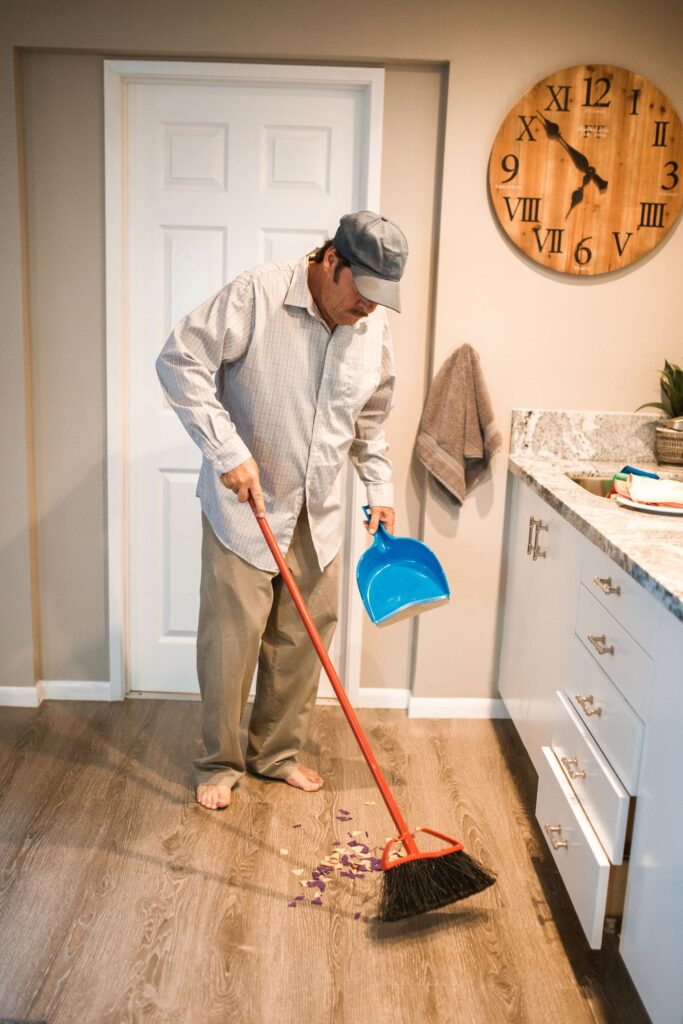
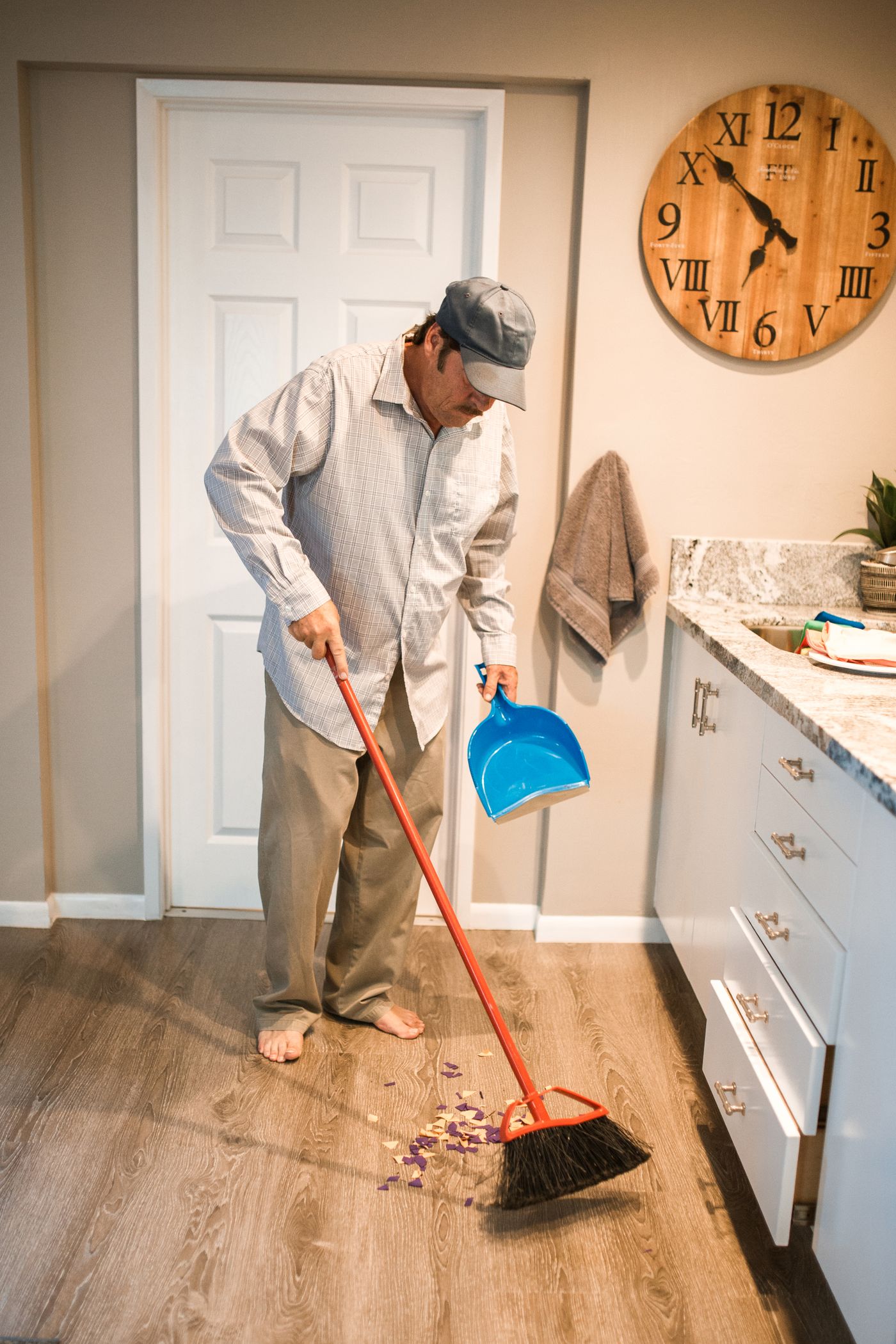
Person sweeping a kitchen floor with a broom and dustpan
Floor-cleaning context; neither compared OXO set is identified. Stock photo: Pexels.

A tiny brush and a full-size sweep set are not competing versions of exactly the same job. One can live near a work surface for small spills; the other handles a floor area. Start by identifying where you repeatedly need a cleanup tool.

Compare the intended task

Question Compact OXO set OXO upright set
Handle format Short hand brush and pan Full-size broom and long pan handle
Likely use Small reachable debris Routine floor sweeping
Storage question Drawer or shelf clearance Tall closet or utility-space fit

When the compact set is enough

OXO identifies its compact set with countertop use and an angled handle. The brush clips into the pan, covering the bristles for storage. Its listed dimensions are 7.35 by 5.4 by 1.6 inches.

That makes it a plausible choice for a small dry spill near a workspace. Keep cleaning tools appropriate to their surfaces; a brush used on the floor should not become your food-preparation-surface brush. Check the surface maker’s cleaning instructions, especially for delicate finishes.

When the upright set earns the upgrade

The upright model includes a full-size broom and a larger dustpan. OXO describes flagged bristle ends, a flexible pan lip, combing teeth and a pan that locks open for emptying. These are manufacturer design features, not results from our own pickup tests.

A long-handled pan can suit someone who dislikes placing a small pan at floor level. Check the actual handle height against your preferred working position. A single listed overall dimension does not prove the set will be comfortable for every person’s height.

Measure storage before buying both

The upright page lists overall dimensions of 9.5 by 3 by 38.5 inches. Leave enough room to remove the set from the closet without catching its broom head on other supplies. A tool that falls out whenever you open the door is a poor organizational upgrade.

The compact tool can store separately near the task. That is its potential advantage over a broom already in another room. If you would keep both in the same utility closet and use them for the same floor spill, the smaller set may add little.

Who should buy or skip?

Buy compact for repeated small, reachable jobs, or upright for a floor routine that benefits from longer handles. We have not tested fine-dust pickup, pan-to-floor contact on different flooring, or bristle durability.

Skip either when your current broom, dustpan or appropriate vacuum attachment already handles the task well. The best purchase removes a repeated inconvenience. A matching collection is less useful than one tool with the right working height, lip contact and storage location.

Compare listings in your country

These buttons open matching Amazon search results, rather than a guaranteed in-stock offer. Confirm the exact model, seller, included parts, delivered price and return terms. Prices and availability can differ between the United States and Canada.

OXO compact dustpan and brush

OXO upright sweep set

Related guides on My Indoor Space

Sources and research

Person cleaning shower glass with a squeegee
Laundry & Cleaning

Fixed vs Extendable Shower Squeegee: Is More Reach Worth It?

Disclosure: As an Amazon Associate, My Indoor Space earns from qualifying purchases through links in this article, at no extra cost to you.

Quick verdict

Choose a fixed squeegee when you comfortably reach the whole shower panel. Choose an extendable one when its extra handle reach solves a specific high or low section. Keep a working tool if the real problem is an inconvenient storage spot rather than its length.

Research-based buying guide. Information checked October 16, 2026 (Winnipeg). We have not tested these products hands-on; source findings and our buying judgments are identified separately.

OXO fixed stainless squeegee

OXO extendable aluminum squeegee

Person cleaning shower glass with a squeegee
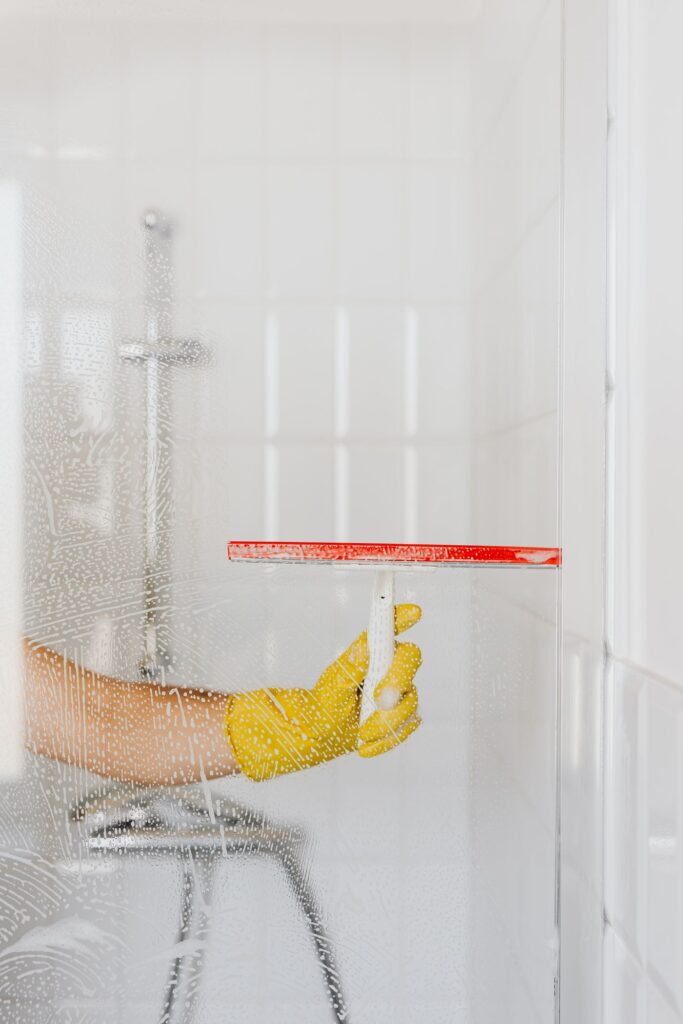
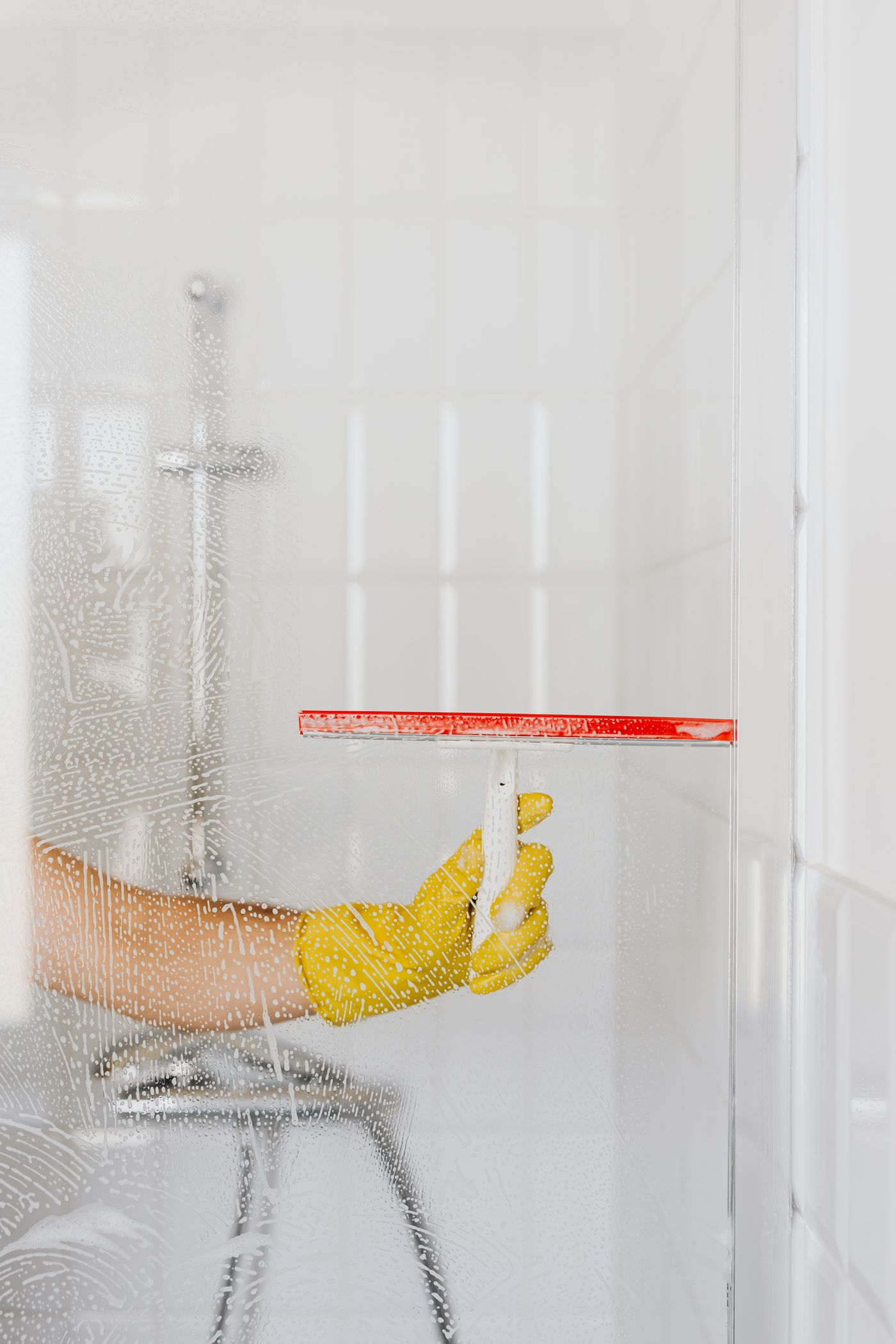
Shower-cleaning context; the squeegee is not identified as either OXO model. Stock photo: Pexels.

A shower squeegee needs to be easy to reach before it can help with the glass. Decide whether your difficulty is reaching the panel or remembering to use the tool. A longer handle addresses the first problem; convenient storage may address the second.

Compare the two OXO designs

Question Fixed stainless Extendable aluminum
Handle format Compact fixed design Extends from 15.5 to 23 inches
Storage provided Included mounting holder Rotating hanging hook
Useful upgrade Simple everyday access Additional working reach

When fixed length is the better purchase

OXO’s stainless model has a flexible blade and a nonslip handle. The current product page includes a holder for keeping it close to the working area. That setup can be enough for a standard panel you already reach comfortably.

Think through the mounting surface before ordering. Check the instructions for the actual included holder and the selected package. A photograph showing a holder on one smooth wall does not establish attachment performance on every shower finish.

When the extra handle earns its cost

OXO lists the extendable aluminum handle at 15.5 to 23 inches and describes a flexible silicone blade. The hanging hook rotates for storage on suitable bars or caddies. This gives you a different storage arrangement as well as additional handle length.

Measure the section you cannot currently reach, then consider the angle needed to pull the blade across it. An extension can help with a tall panel or a low section, but the stated handle range is not a promise that every user can reach every part of a shower.

Fit the blade to your glass layout

Check blade width against small panels, handles, tracks and other interruptions. A broad blade may cover an open area with fewer passes while becoming awkward around hardware. Longer reach does not remove the need to maneuver the head itself.

Follow the shower maker’s surface-care instructions and keep the blade clean. A squeegee moves water; it does not replace the cleaning method required for existing deposits or soap residue. We have not tested streaking, blade life or cleaning-time savings for these models.

Who should buy or skip?

Buy the fixed tool when its length and mounting setup suit you. Buy extension when the measurement and working angle show a real benefit. Compare delivered price and any mounting accessories needed, rather than the handle material alone.

Skip an upgrade when your present squeegee reaches the glass and its blade remains serviceable. First move it to an accessible, approved storage position if forgetting to use it is the main issue. The best-value tool is one that fits the routine you will actually repeat.

Compare listings in your country

These buttons open matching Amazon search results, rather than a guaranteed in-stock offer. Confirm the exact model, seller, included parts, delivered price and return terms. Prices and availability can differ between the United States and Canada.

OXO fixed stainless squeegee

OXO extendable aluminum squeegee

Related guides on My Indoor Space

Sources and research

Person dusting a shelf with framed pictures
Laundry & Cleaning

Hand Duster vs Extendable Duster: Which OXO Tool Is Worth Buying?

Disclosure: As an Amazon Associate, My Indoor Space earns from qualifying purchases through links in this article, at no extra cost to you.

Quick verdict

Choose the hand duster for surfaces comfortably within reach. Pay for the extendable model when high or deep surfaces are a repeated problem and its head can actually reach them. Keep a suitable cloth if your dusting is mostly simple tabletops.

Research-based buying guide. Information checked October 16, 2026 (Winnipeg). We have not tested these products hands-on; source findings and our buying judgments are identified separately.

OXO microfiber hand duster

OXO extendable microfiber duster

Person dusting a shelf with framed pictures
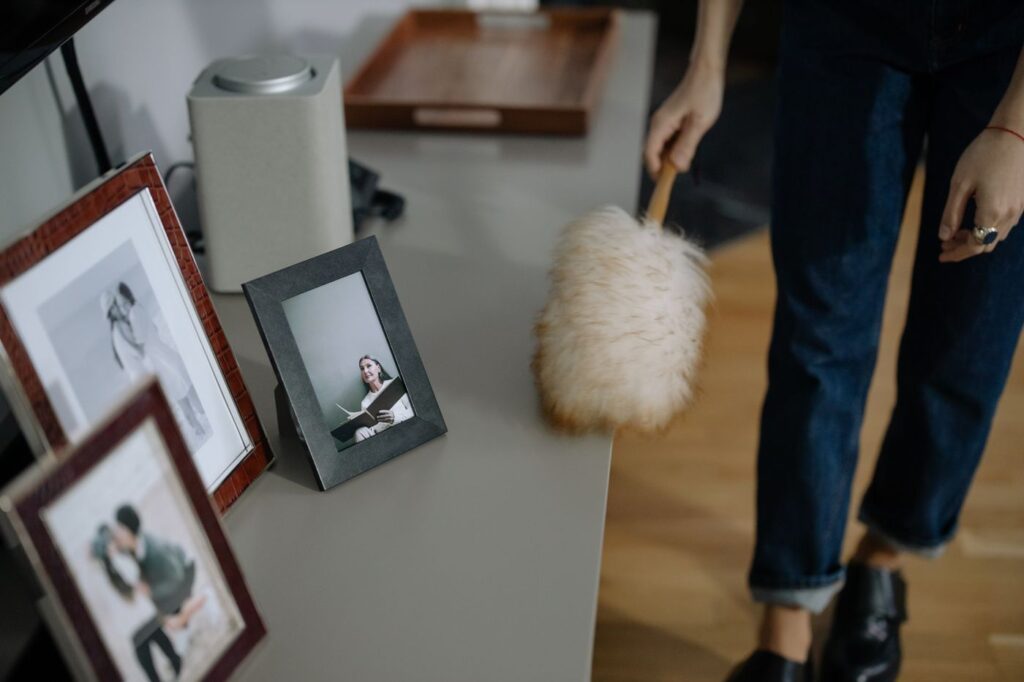
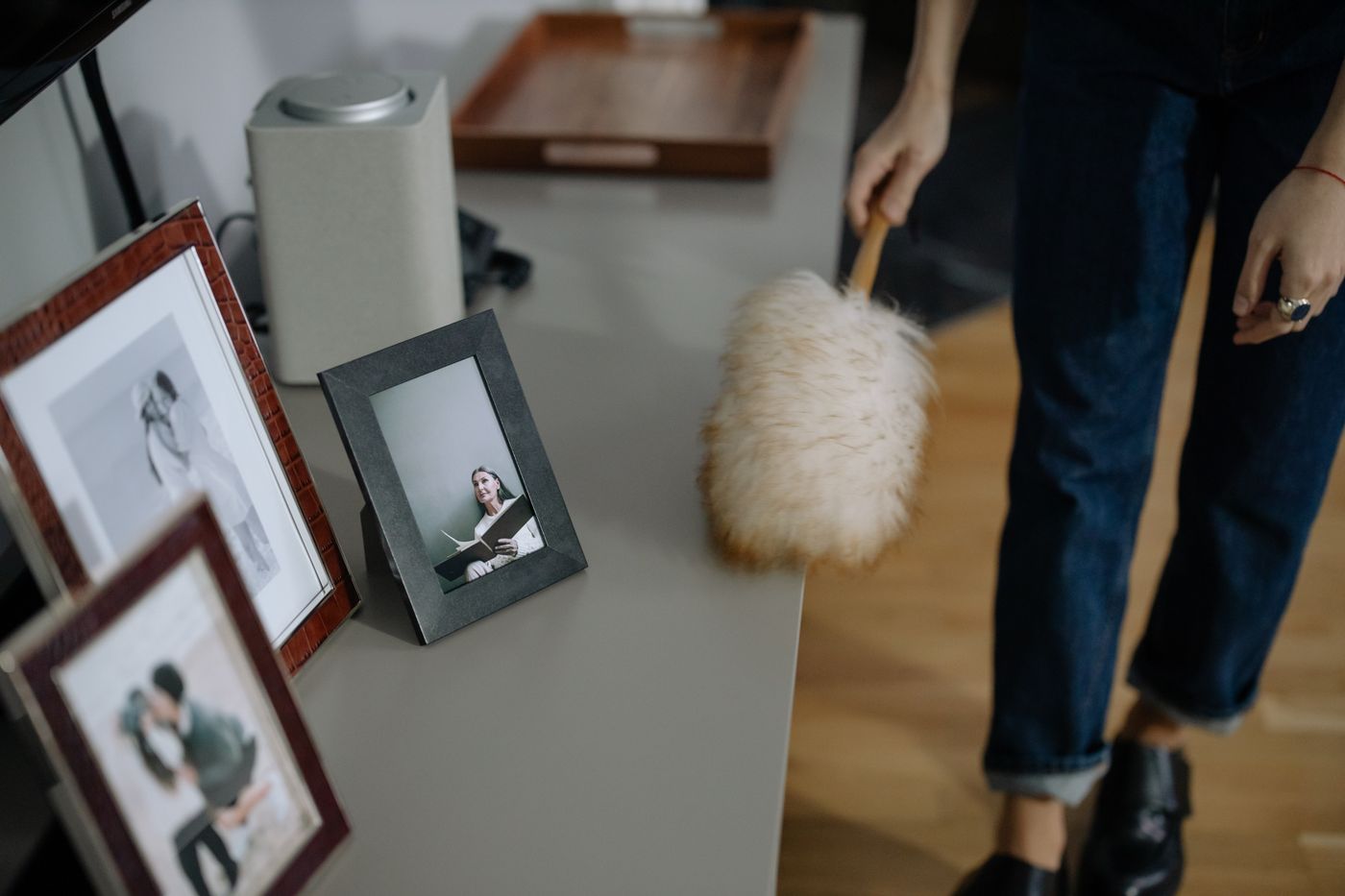
Dusting context with a different tool; neither OXO microfiber model is identified. Stock photo: Pexels.

The hand-duster-versus-extendable-duster choice is about access. A longer tool is useful when it reaches a surface you otherwise struggle to clean. It adds less value if most of your dust sits on furniture directly in front of you.

Compare reach and control

Feature OXO hand duster OXO extendable duster
Listed format 18-inch overall tool Telescoping aluminum pole
Head arrangement Flexible microfiber head Pivoting, locking microfiber head
Cleaning Removable washable head Removable washable head

When the short tool is enough

OXO’s hand model has a double-sided head and a slim profile. The maker lists an eighteen-inch overall length. That can be a sensible size for reachable shelves, cabinet fronts or low gaps, provided the head itself fits the space.

Our buying judgment is to start with the simpler handle when reach is not the problem. A longer pole needs additional storage and changes where your hand sits relative to the surface. Neither extra length nor a premium bundle improves access to a narrow gap the head cannot enter.

When extension earns its cost

The extendable model adds a head that pivots through 270 degrees and locks in position. OXO describes the pole extending from twenty-four to fifty-two inches; its specification table lists overall tool dimensions separately. Those are different measurements, so do not compare pole length with an overall-tool figure.

Measure the distance to the actual surface and consider the working angle. Cleaning the top of a tall bookcase requires the head to lie against the top, not merely reach the front edge. Avoid leaning or standing on unstable furniture to compensate for a tool that is too short.

Washable still means maintenance

Both cited pages instruct cold washing without fabric softener or bleach and drying without heat. Check that you can remove and refit the head easily. A washable design loses convenience when it stays damp or dirty between cleaning sessions.

Replacement heads are available according to OXO, but confirm compatibility with your exact handle before ordering a refill. Do not assume every orange microfiber head in the brand’s range uses the same fitting.

Who should buy or skip?

Buy the hand duster for manageable everyday reach. Buy extension for a measured need, particularly when the pivoting head solves the working angle. We have not compared dust pickup, head wear or handling comfort hands-on.

Skip both if a suitable existing cloth handles your reachable flat surfaces. If you already own a working telescoping system, first check whether its correct replacement head is available. Replacing one worn part may cost less than buying another complete cleaning tool.

Compare listings in your country

These buttons open matching Amazon search results, rather than a guaranteed in-stock offer. Confirm the exact model, seller, included parts, delivered price and return terms. Prices and availability can differ between the United States and Canada.

OXO microfiber hand duster

OXO extendable microfiber duster

Related guides on My Indoor Space

Sources and research

Person using a lint roller on clothing
Laundry & Cleaning

OXO FurLifter vs Adhesive Lint Roller: Which Is Better Value?

Disclosure: As an Amazon Associate, My Indoor Space earns from qualifying purchases through links in this article, at no extra cost to you.

Quick verdict

Choose the FurLifter furniture brush for repeated hair removal on suitable upholstery when you want an emptyable base instead of adhesive refills. Choose an adhesive roller for a quick clothing touch-up or occasional cleanup. They can serve different jobs rather than replace one another completely.

Research-based buying guide. Information checked October 16, 2026 (Winnipeg). We have not tested these products hands-on; source findings and our buying judgments are identified separately.

OXO FurLifter furniture brush

Scotch-Brite pet lint rollers

Person using a lint roller on clothing
Lint-removal context; the tool is not identified as either compared product. Stock photo: Pexels.

A reusable furniture brush and an adhesive lint roller have different ongoing costs. One collects debris into a base that you empty. The other uses replaceable sticky sheets. Choose according to the surface you clean most often, not just the word “reusable” on the package.

Compare the ownership routine

Question FurLifter furniture brush Adhesive roller
Collection method Directional micro-bristles Adhesive sheets
After cleaning Use and empty base Peel used sheet; replace roll eventually
Useful buying trigger Repeated upholstery touch-ups Convenient occasional lint pickup

When the FurLifter earns its space

OXO describes arrows indicating the direction to brush. You flip the brush to work the other way, then dip it into the base to clear the head. The bottom compartment opens for emptying. “Self-cleaning” describes that transfer process, not a base that disposes of the hair for you.

The furniture version has a pivoting handle and a hanging hole. Check that exact name in the listing: OXO also sells a separate garment brush. A review of the smaller clothing tool does not establish how the furniture version handles a sofa seam.

When adhesive remains the useful choice

Scotch-Brite sells pet-hair rollers for clothing and household use, with replacement rolls available. A sticky sheet is a simple option for a last check of trousers or a jacket before leaving home. You still need to confirm that the adhesive is suitable for the fabric.

For an infrequent job, an inexpensive roller may be easier to justify than a larger reusable system. Compare compatible refill price and sheet count, rather than the cheapest handle alone. Different roller widths and refill formats should not be assumed interchangeable.

Calculate value without guessing a lifespan

Estimate how quickly your household uses a refill, then compare a year’s likely refill cost with the reusable brush’s delivered price. Include a place to keep the FurLifter and its base near the furniture. A tool stored inconveniently may be used less often than a cheaper roller already beside the door.

We have not measured hair pickup, fabric abrasion or lifetime durability. Try any cleaning tool cautiously on a suitable inconspicuous area and follow the upholstery or garment care instructions. Neither option substitutes for a vacuum’s other cleaning jobs.

Who should buy or skip?

Buy the FurLifter for a recurring furniture problem and a routine you are willing to maintain. Buy adhesive rollers for convenient light-duty touch-ups. Keep both only if they clearly serve different surfaces.

Skip the upgrade when your existing brush already clears hair effectively or when refills last so long that replacement cost is minor. Reusability creates an opportunity to save repeat purchases; it does not establish guaranteed savings for every household.

Compare listings in your country

These buttons open matching Amazon search results, rather than a guaranteed in-stock offer. Confirm the exact model, seller, included parts, delivered price and return terms. Prices and availability can differ between the United States and Canada.

OXO FurLifter furniture brush

Scotch-Brite pet lint rollers

Related guides on My Indoor Space

Sources and research

Scroll to Top