Berry muffins on a tray
Kitchen & Dining

Silicone Baking Cups vs Paper Liners: Which Is Better Value?

Disclosure: As an Amazon Associate, My Indoor Space earns from qualifying purchases through links in this article, at no extra cost to you.

Quick verdict

Choose silicone cups for repeated home batches when you will collect and wash them. Choose paper liners when cupcakes leave your home or you want minimal washing. Reusable cups earn their cost through actual reuse, not simply by being labeled reusable.

Research-based buying guide. Information checked October 16, 2026 (Winnipeg). We have not tested these products hands-on; source findings and our buying judgments are identified separately.

OXO reusable baking cups

Wilton paper cupcake liners
Berry muffins on a tray
Home-baking context; the photograph does not compare liner performance. Stock photo: Pexels.

Silicone baking cups and paper liners are different ownership commitments. One comes back to your sink; the other can leave with the cupcake. The right purchase depends as much on where the baking goes as on what happens in the oven.

Compare the complete routine

Decision Reusable silicone Paper liners
After serving Collect, wash and store Single-use liner
Example pack OXO, 12 cups Wilton, 300 liners
Useful buying trigger Frequent batches eaten at home Gifting or many portions at once

When reusable cups earn their cost

OXO’s cups have fill lines and tabs, and the maker permits using them in a muffin tin or on a baking sheet. It lists dishwasher-safe care; another current OXO packaging page also describes turning the silicone inside out for cleaning.

That can be useful if you bake regularly for the same household. The practical question is whether the cups will be ready for the next batch. If the first twelve are still holding snacks or waiting to be washed, a second tray of batter may require another set.

When paper is the more convenient purchase

Wilton’s cited white liners come in a 300-count pack with a listed two-inch diameter. Verify the complete shape against your muffin tin rather than assuming every “standard” liner has identical dimensions.

Paper is a straightforward choice for school events, guests or gifts because you do not need to recover a reusable item. It also lets you start successive batches without washing each liner. That convenience may outweigh the replacement expense for someone who bakes only a few times per year.

Calculate value using your real batch size

Divide a paper pack’s delivered price by the usable liner count. For silicone, divide the set cost by the number of batches you realistically expect to complete, then include washing and any cups you lose. These are household cost comparisons, not tested lifespan claims.

Do not compare twelve silicone cups with hundreds of paper liners as though the counts describe equivalent purchases. One set can be reused, but only after the cups are emptied and cleaned. A larger event needs enough cups or enough time between batches.

Who should buy or skip?

Choose silicone for a regular home-baking routine with reliable collection and cleaning. Choose paper for treats that travel or for a low-washing workflow. We have not tested release, browning or flavor differences, so neither is presented as a universal baking-performance winner.

Keep using liners that already fit and give results you like. If your recipe works well in a prepared muffin tin without liners, either purchase may be unnecessary. Reusable cups are an upgrade when you will use their specific convenience repeatedly, rather than store them beside an unfinished paper pack.

Compare listings in your country

These buttons open matching Amazon search results, rather than a guaranteed in-stock offer. Confirm the exact model, seller, included parts, delivered price and return terms. Prices and availability can differ between the United States and Canada.

OXO reusable baking cups

Wilton paper cupcake liners

Related guides on My Indoor Space

Sources and research

Hands holding a pan and spatula while cooking
Kitchen & Dining

Silicone vs Stainless Steel Turner: Which Fits Your Cookware?

Disclosure: As an Amazon Associate, My Indoor Space earns from qualifying purchases through links in this article, at no extra cost to you.

Quick verdict

Start with a silicone-covered turner when your cookware requires a nonmetal contact surface. Choose a bare stainless turner for compatible cookware and a metal edge you prefer. Keep a working utensil if it already fits the pan and supports the food you normally flip.

Research-based buying guide. Information checked October 16, 2026 (Winnipeg). We have not tested these products hands-on; source findings and our buying judgments are identified separately.

OXO silicone flexible turner

OXO stainless flexible turner

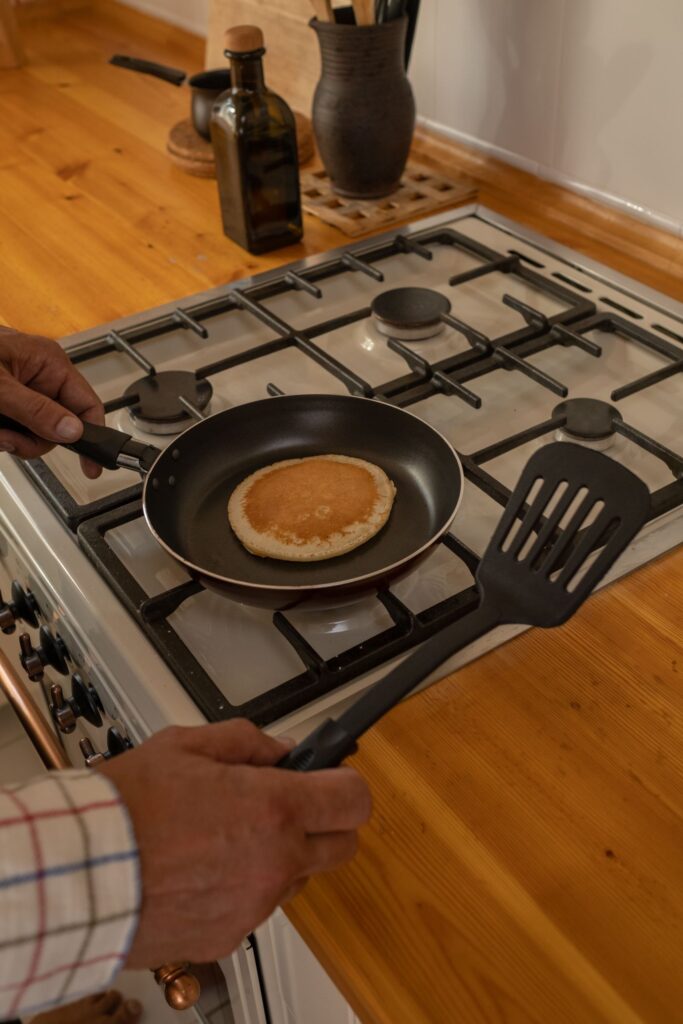
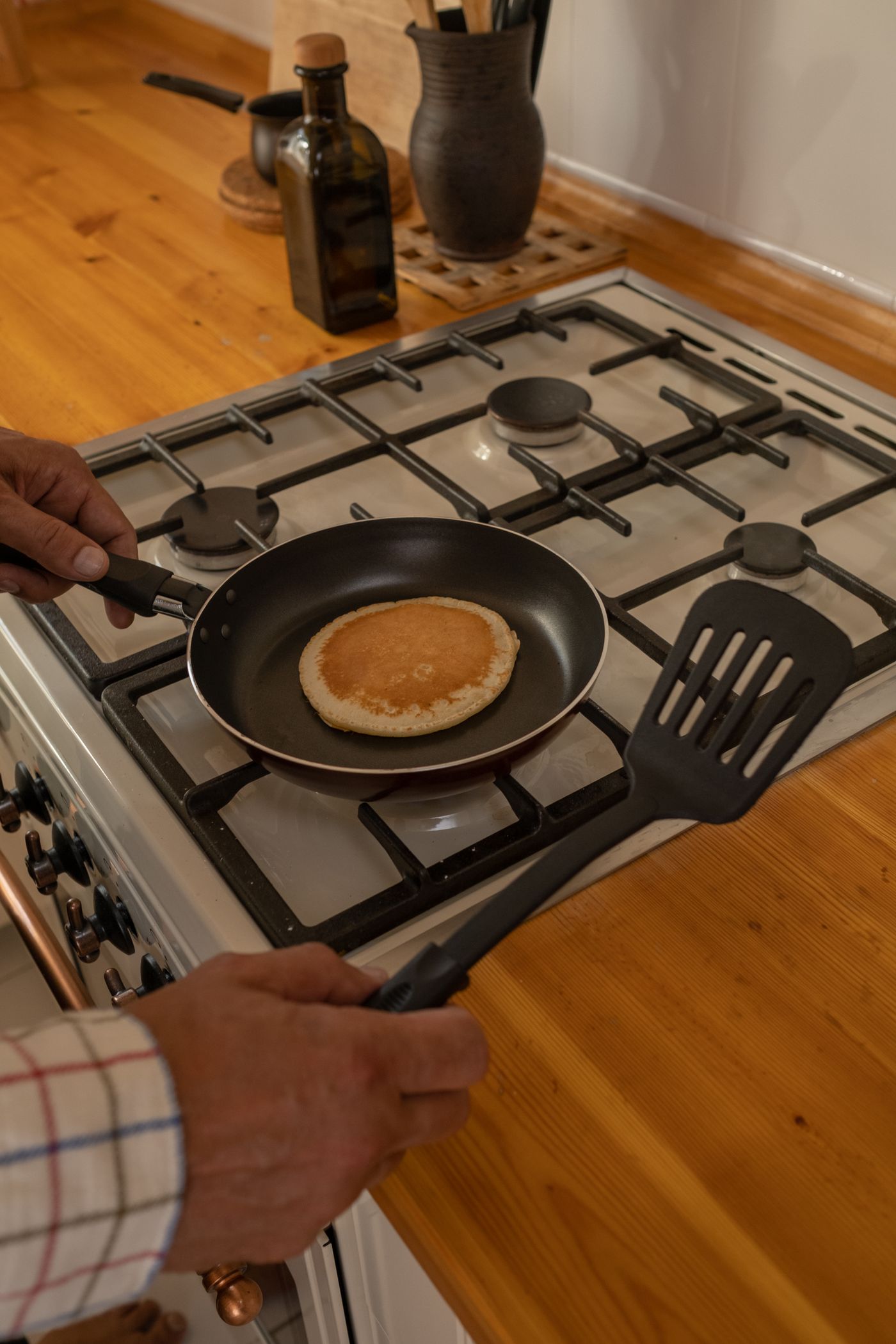
Hands holding a pan and spatula while cooking
Cooking context; the spatula is not identified as either OXO model. Stock photo: Pexels.

A silicone-versus-stainless turner decision begins with your pan’s utensil rules. A thin edge is useful only when the material is appropriate for the cooking surface. After compatibility, compare the head with the food you usually lift.

Compare the contact surfaces

Question Silicone-covered OXO Stainless flexible OXO
Working surface Silicone outer layer Bare metal head
Construction point Stainless strength underneath covering Flexible stainless design
First check Coating and heat instructions Pan allows metal utensils

When the silicone option is the sensible first buy

OXO’s silicone flexible turner combines a stainless structure with a silicone outer layer. It is not an entirely soft silicone tool. The maker describes thin flexible edges for sliding beneath food and lists dishwasher-safe cleaning.

That design can suit an everyday cook using pans that prohibit metal contact. Check the cookware instructions and the turner’s supplied heat limits. “Heat-resistant” does not mean an utensil can remain against a hot pan indefinitely or be exposed to a burner.

When bare stainless earns a place

A stainless flexible turner is an alternative for cookware that permits it. Our buying judgment is that the exposed metal edge may suit someone who prefers that feel when getting beneath food. We have not measured edge thickness, stiffness or lifting performance against the silicone model.

Do not choose stainless solely because it sounds more durable. If your everyday pan requires a nonmetal tool, that mismatch defeats the purchase. Likewise, a thin flexible head may be less suitable for a heavy item than a sturdier turner designed for that job.

Check head dimensions, not only handle length

OXO lists multiple silicone and stainless variants, including larger designs. A title that says “flexible turner” is not enough to identify the head size. Match the product name, model and dimensional drawing before comparing the two prices.

Measure the clear cooking area inside your pan. A wide head may support a pancake yet be awkward to angle inside a small skillet. A narrow head can maneuver well while giving less support to a large fragile piece of food. Choose for your common portion, rather than your largest imagined meal.

Who should buy or skip?

Buy silicone covering for compatible coated cookware and the lifting size you need. Buy stainless when your cookware permits it and the exposed-metal shape solves a repeated frustration. Inspect any existing tool for wear and follow its maker’s replacement guidance.

Skip a second turner when the one you own fits your pan, cleans easily and flips your usual food successfully. A full utensil set is rarely the cheapest way to solve one missing-head-size problem. Compare the delivered cost of the exact single tool before paying for a collection.

Compare listings in your country

These buttons open matching Amazon search results, rather than a guaranteed in-stock offer. Confirm the exact model, seller, included parts, delivered price and return terms. Prices and availability can differ between the United States and Canada.

OXO silicone flexible turner

OXO stainless flexible turner

Related guides on My Indoor Space

Sources and research

Kitchen utensils arranged in a drawer
Home Organization

Rotating vs Adjustable Utensil Holder: Which OXO Organizer Is Worth It?

Disclosure: As an Amazon Associate, My Indoor Space earns from qualifying purchases through links in this article, at no extra cost to you.

Quick verdict

Choose the rotating holder when reaching tools around the container is the problem. Choose the adjustable holder when short utensils disappear among tall ones. Keep a drawer or sturdy existing crock if it already provides clear access without crowding your prep area.

Research-based buying guide. Information checked October 16, 2026 (Winnipeg). We have not tested these products hands-on; source findings and our buying judgments are identified separately.

OXO rotating utensil holder

OXO large adjustable holder

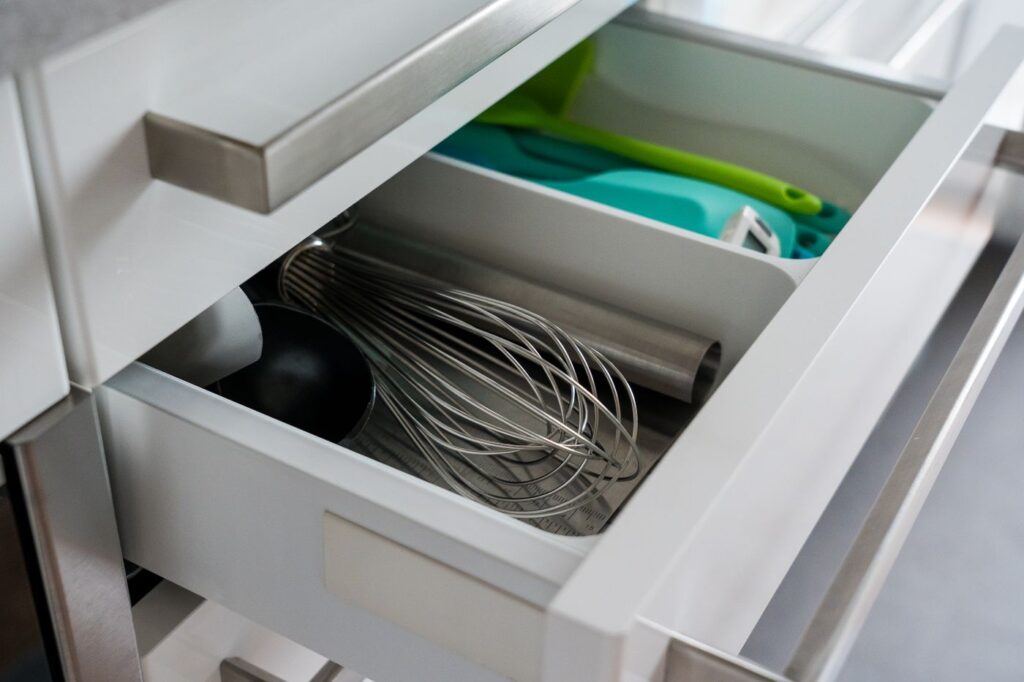
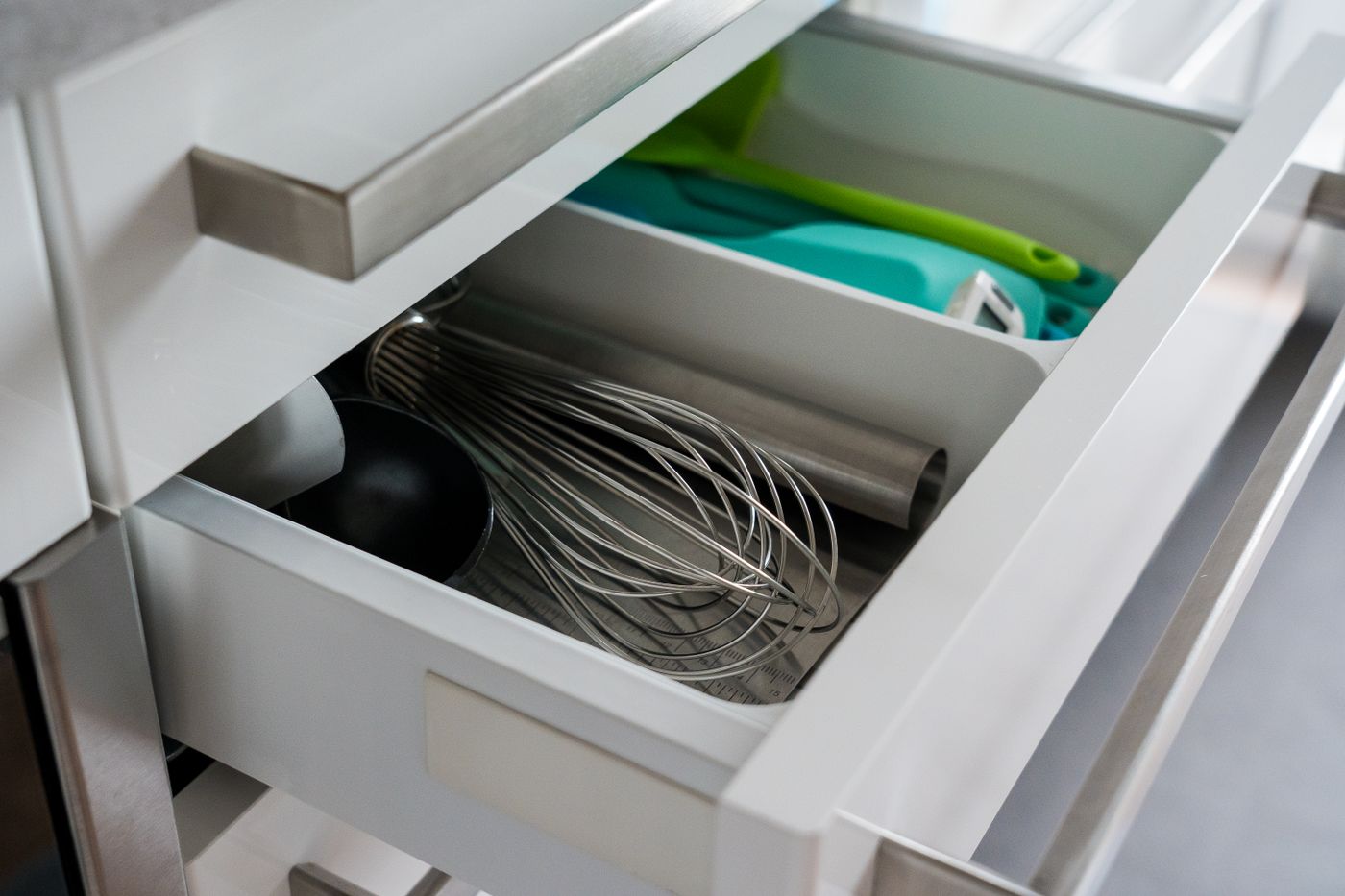
Kitchen utensils arranged in a drawer
Utensil-storage context showing a drawer alternative; neither countertop holder is pictured. Stock photo: Pexels.

A better utensil holder should make one cooking motion easier. Rotating the container and raising shorter tools solve different problems. Neither feature is a good reason to fill a small counter with utensils you rarely use.

Compare access rather than capacity alone

Feature Rotating OXO holder Large adjustable OXO holder
Main mechanism Turns for access around holder Removable, adjustable dividers
Short-tool solution Contoured bottom Hinged divider platforms
Best buying trigger Tools hidden at the back Small tools buried too deeply

When rotation is worth paying for

OXO describes its rotating model as providing access through a full turn. Its listed footprint is 5.25 by 5.25 inches, with a 6.125-inch height. The maker also describes a contoured base intended to keep tools upright.

Allow clearance around the utensils themselves. A compact base does not mean long spoons or wide turners stay inside that footprint as the holder turns. Check nearby outlets, backsplash shelves and other objects before treating it as a perfect corner solution.

When adjustable dividers do more useful work

The large adjustable holder uses two removable dividers that hinge to create raised platforms for shorter tools. That is a specific advantage when small spatulas or peelers tend to sink below the surrounding handles.

OXO describes a large utensil capacity, but real usable space depends on handle width and head shape. Our recommendation is to count the tools you actually reach for while cooking, then check whether each can be removed without lifting its neighbors. A packed holder can make a large advertised capacity less useful.

Consider cleaning and counter cost

The adjustable model’s cited page lists dishwasher-safe care. Do not automatically apply that instruction to a different rotating mechanism; check the care information supplied with the exact model. Removable parts also need a place to dry and a routine that keeps them from being misplaced.

At the time checked, OXO’s US pages listed US$26.99 for the rotating holder and US$39.99 for the large adjustable model. Those reference prices may differ from Canadian or Amazon offers. Pay the difference only if the platform arrangement solves a problem you repeatedly notice.

Who should buy or skip?

Buy rotation for access around the container; buy adjustable platforms for mixed tool heights. We have not tested loaded stability, turning resistance or how many of your utensils either model will hold.

Skip both when your drawer is accessible or an existing crock already works. Before ordering, put only your everyday cooking tools in one place for a week. If that simple reduction fixes the clutter, a new holder may add cost while taking away valuable preparation space.

Compare listings in your country

These buttons open matching Amazon search results, rather than a guaranteed in-stock offer. Confirm the exact model, seller, included parts, delivered price and return terms. Prices and availability can differ between the United States and Canada.

OXO rotating utensil holder

OXO large adjustable holder

Related guides on My Indoor Space

Sources and research

Person slicing pizza with a wheel cutter
Kitchen & Dining

Steel vs Nonstick-Safe Pizza Wheel: Which Cutter Fits Your Pan?

Disclosure: As an Amazon Associate, My Indoor Space earns from qualifying purchases through links in this article, at no extra cost to you.

Quick verdict

Choose a steel wheel when you cut on a suitable board and want that blade format. Consider the nonstick-safe wheel when you intend to cut in compatible coated bakeware. Keep your current cutter if it already cuts cleanly on a surface approved for it.

Research-based buying guide. Information checked October 16, 2026 (Winnipeg). We have not tested these products hands-on; source findings and our buying judgments are identified separately.

OXO 4-inch steel pizza wheel

OXO nonstick-pan pizza wheel

Person slicing pizza with a wheel cutter
Pizza-cutting context; the cutter is not identified as an OXO model. Stock photo: Pexels.

Buying a pizza wheel starts with the surface under the pizza. A metal wheel on a cutting board and a cutter designed for coated bakeware address different routines. Decide where you want to slice before comparing blade size or handle style.

Compare the intended setup

Question OXO 4-inch wheel OXO nonstick-pan wheel
Blade description Stainless steel Tapered, nonstick-safe design
Buying reason Steel wheel for suitable cutting surface Cut in compatible nonstick bakeware
Check before purchase Board and storage fit Your pan maker’s utensil guidance

When the steel wheel is the straightforward choice

OXO’s four-inch model has a stainless blade, a thumb guard and a soft handle. The maker positions the larger blade for thick-crust pizzas. Treat that as a design description, not our own test of how many passes a crust will need.

If you already move pizza onto a suitable board, the steel option fits that sequence. The useful question is whether its head and handle feel manageable for your normal portion. A larger wheel is not automatically easier to store or control in a small kitchen.

When the nonstick-pan version earns its place

OXO specifically markets SKU 11301100 for cutting without damaging nonstick bakeware. It also describes a nonstick blade surface intended to limit cheese sticking. This is a distinct model, not a protective coating you should assume exists on the stainless wheel.

Our buying judgment is to consider it only when leaving the pizza in the pan is a meaningful convenience. Still check the pan manufacturer’s instructions: a utensil compatibility claim does not override restrictions for every individual coating or bakeware surface.

Match the listing carefully

OXO sells several wheel designs. Read the complete product name and selected variant rather than choosing solely by a black handle in the photograph. Confirm that a result described as “nonstick” refers to suitability for the pan, not just food release from a different blade.

Also check cleaning instructions and where the blade will sit after washing. Leave space for the complete head in a drawer or use suitable protected storage. A cutter wedged between other tools is inconvenient even if the advertised cutting diameter looks ideal.

Who should buy or skip?

Buy the steel wheel when a board-based workflow suits you. Buy the nonstick-safe model when a verified pan-and-cutter combination removes a step you dislike. We have not measured cutting force, coating wear or cheese drag, so there is no hands-on performance winner here.

Skip either if a cutter you own already works well, or if suitable kitchen shears give you the portions you want. Compare the cost of the complete setup: avoiding an unnecessary pan replacement matters more than saving a few dollars on the wrong wheel.

Compare listings in your country

These buttons open matching Amazon search results, rather than a guaranteed in-stock offer. Confirm the exact model, seller, included parts, delivered price and return terms. Prices and availability can differ between the United States and Canada.

OXO 4-inch steel pizza wheel

OXO nonstick-pan pizza wheel

Related guides on My Indoor Space

Sources and research

Wooden rolling pin resting on dough
Kitchen & Dining

French vs Handled Rolling Pin: Which Style Is Worth Buying?

Disclosure: As an Amazon Associate, My Indoor Space earns from qualifying purchases through links in this article, at no extra cost to you.

Quick verdict

Choose a French tapered pin if you prefer guiding the rolling surface directly with your palms. Choose a handled pin if a rotating barrel and separate grips suit your motion. Keep a comfortable pin you already own unless its size or action limits your regular recipes.

Research-based buying guide. Information checked October 16, 2026 (Winnipeg). We have not tested these products hands-on; source findings and our buying judgments are identified separately.

JK Adams tapered rolling pin

JK Adams handled Gourmet pin

Wooden rolling pin resting on dough
Dough-preparation context; the rolling pin is not identified as a JK Adams product. Stock photo: Pexels.

A French rolling pin and a handled rolling pin ask your hands to work differently. The French pin is one continuous tapered shape. The handled design separates the grips from the rotating barrel. The better purchase is the one that suits your dough, workspace and preferred movement.

Understand the working lengths

Feature JK Adams French tapered JK Adams Gourmet example
Basic shape One-piece tapered pin Barrel with handles
Listed length 20.5 inches overall 12-inch barrel; 21 inches overall
Moving mechanism No separate barrel axle Steel axle, nylon bearings

When the tapered shape makes sense

With a French pin, your palms guide pressure on the pin itself. Our judgment is that this can appeal to a baker who likes making small adjustments while shaping a round of pastry. It is a handling preference, not evidence that every user will roll more evenly.

JK Adams offers two listed diameters in its French range. Match the selected size in the actual listing before comparing prices. A product photograph can make different diameters look nearly identical, especially when no ruler is shown.

When the handled barrel is worth choosing

The Gourmet page describes a hardwood barrel turning on a full-length steel axle with nylon bearings. Separate handles can suit someone who prefers holding grips while the barrel rolls beneath them. The cited twelve-inch barrel does not mean the complete tool is only twelve inches long.

Measure your drawer against the overall length. Also compare the rolling surface with the dough you normally prepare. A wider pastry sheet may require repositioning with a shorter barrel, while a very large pin can be cumbersome on a crowded counter.

Care matters more than a decorative finish

Both cited JK Adams ranges use North American hardwood with a light beeswax finish. Their care guidance calls for hand washing, thorough towel drying, no submersion and wood conditioning. Neither is intended for the dishwasher, microwave or oven.

Choose wood only if you are comfortable with that maintenance. A visually attractive pin that stays wet in the sink does not gain value from its appearance. Check the maker’s care guidance for the particular item, especially if a marketplace listing shows another finish or material.

Who should buy or skip?

Buy the tapered pin for its direct hand control, or the handled model for a barrel-and-grip action you prefer. We have not tested wrist comfort, rolling pressure or bearing life. If hand fit is decisive, handling a sample or checking return terms is more useful than treating either shape as universally ergonomic.

Skip a second pin when your present one rolls your usual dough comfortably and fits your storage. A full-size replacement earns its cost when it solves a repeated size or handling problem; owning both styles is not a requirement for good home baking.

Compare listings in your country

These buttons open matching Amazon search results, rather than a guaranteed in-stock offer. Confirm the exact model, seller, included parts, delivered price and return terms. Prices and availability can differ between the United States and Canada.

JK Adams tapered rolling pin

JK Adams handled Gourmet pin

Related guides on My Indoor Space

Sources and research

Bowl filled with popcorn
Kitchen & Dining

Stovetop vs Microwave Popcorn Popper: Which Fits Your Movie Night?

Disclosure: As an Amazon Associate, My Indoor Space earns from qualifying purchases through links in this article, at no extra cost to you.

Quick verdict

Choose the original aluminum Whirley Pop for a larger stove-based batch and a hands-on cranking routine. Choose Nordic Ware’s microwave bowl for a smaller pop-and-serve setup. Skip either if your current method already fits your portions and cleanup preferences.

Research-based buying guide. Information checked October 16, 2026 (Winnipeg). We have not tested these products hands-on; source findings and our buying judgments are identified separately.

original aluminum Whirley Pop

Nordic Ware microwave popper

Bowl filled with popcorn
Popcorn-serving context; neither compared popper is pictured. Stock photo: Pexels.

The best popcorn popper depends on your appliance and how much you actually eat. A six-quart stovetop pot and a twelve-cup microwave bowl are different-sized systems. Compare the complete routine before deciding the larger one is better value.

Compare capacity and workflow

Question Original Whirley Pop Nordic Ware microwave
Listed capacity 6 quarts, about 24 popped cups 12 cups
Cooking action Stove heat and hand crank Microwave cycle
Serving Transfer to a serving bowl Pop and serve in same bowl

When the stovetop model earns its space

The original silver Whirley Pop uses an aluminum pan and a stirring mechanism. Its instructions include oil and a hands-on cranking process. That can appeal if making popcorn is part of the evening’s ritual and you often want a family-sized batch.

This specific aluminum model is not induction-compatible. The manufacturer points induction users toward other versions. Do not assume all Whirley Pop finishes share the same stove compatibility, and check your cooktop manual if it restricts lightweight cookware.

When the microwave bowl makes more sense

Nordic Ware’s model 60120 lists a twelve-cup capacity and permits popping with or without oil. Its instructions use one-third cup of kernels and note that microwave wattage changes cooking time. The bowl is for microwave and storage use, not a stovetop substitute.

Measure its fit in your microwave, including the lid and turntable clearance. A compact apartment can benefit from serving in the cooking vessel, but a bowl that rubs the microwave walls is not a useful space-saving purchase.

Compare cleanup and the real purchase cost

Nordic Ware recommends hand washing and discourages dishwasher use because it can discolor the product. That means the microwave option still has a cleaning routine; it is not automatically equivalent to throwing away a commercial popcorn bag.

For the stovetop system, include the separate serving bowl and the space needed for the pot and crank lid. For either option, compare delivered price and the amount of popcorn you usually make, rather than treating unused maximum capacity as a benefit.

Who should buy or skip?

Buy the Whirley Pop if your stove supports the selected version and you enjoy making larger batches manually. Buy the microwave bowl if the smaller portion and single-vessel routine suit you. Neither manufacturer capacity figure is a promise about your exact popcorn yield.

Keep your existing method when it already gives you a satisfying portion without troublesome cleanup. We have not measured crispness, unpopped kernels or speed in side-by-side tests. Follow each maker’s instructions for stopping the cycle and handling hot lids and steam; advertised timing is not a reason to keep heating after popping slows.

Compare listings in your country

These buttons open matching Amazon search results, rather than a guaranteed in-stock offer. Confirm the exact model, seller, included parts, delivered price and return terms. Prices and availability can differ between the United States and Canada.

original aluminum Whirley Pop

Nordic Ware microwave popper

Related guides on My Indoor Space

Sources and research

Round baking pan filled with batter
Kitchen & Dining

Springform vs Round Cake Pan: Do You Need the Removable Sides?

Disclosure: As an Amazon Associate, My Indoor Space earns from qualifying purchases through links in this article, at no extra cost to you.

Quick verdict

Buy a springform pan for recipes that need the sides removed around a delicate dessert. Start with a solid round cake pan for ordinary layers that you can turn out. They are different tools, and equal diameter does not make every recipe interchangeable.

Research-based buying guide. Information checked October 16, 2026 (Winnipeg). We have not tested these products hands-on; source findings and our buying judgments are identified separately.

Nordic Ware 9-inch springform

Nordic Ware solid round cake pan

Round baking pan filled with batter
Cake-baking context; the pan is not identified as either Nordic Ware model. Stock photo: Pexels.

The most important springform-versus-round-pan difference is how the dessert comes out. A springform’s band releases around the food. A solid cake pan stays in one piece, usually requiring the cake to be turned out or served from the pan.

Compare the Nordic Ware examples

Feature 9-inch springform Naturals 9-inch round
Construction Removable band and base Solid pan
Material listed Carbon steel, nonstick Uncoated aluminum
Main buying reason Release delicate desserts upright Bake conventional cake layers

When the springform is worth buying

A dessert you cannot comfortably invert is a clear reason to consider removable sides. Cheesecake is the familiar example. The benefit is access and release, not a claim that the mechanism improves every batter.

Check the recipe’s specified size, preparation and release instructions. A nominal nine-inch diameter is not the complete capacity description. Nordic Ware lists its springform example at ten cups, while the solid Naturals model has a listed interior depth of 2.5 inches. Do not fill either according to the other pan’s dimensions.

Why the solid pan is usually the first cake pan

A one-piece round pan avoids a removable-base seam. That is appealing for ordinary layers you expect to turn out after the recipe’s cooling period. The cited Naturals model uses uncoated aluminum, so prepare its surface as directed rather than assuming it behaves like a coated springform.

For a small baking cupboard, two solid pans that fit your most-used layer-cake recipe can be more useful than one pan in several unrelated styles. Buy for the recipes you repeat, not for the number of desserts shown in product photography.

Do not treat a seam as a waterproof seal

We have not tested leakage or water-bath performance. A removable band should not be assumed watertight simply because a listing uses reassuring language. Follow the exact recipe and pan instructions for any water bath or thin mixture.

Before ordering, inspect how the base seats and how the latch opens. Think through where you will store both pieces after washing. Losing or bending a detachable base can make the whole pan less useful, even if the band still looks fine.

Care, cost and who should skip

Nordic Ware recommends hand washing the springform and avoiding metal utensils or abrasive cleaners on its nonstick surface. The Naturals page also recommends hand washing to preserve its aluminum finish. Neither purchase should be based on an assumed dishwasher shortcut.

Buy the springform when a specific dessert needs its release method. Choose the solid pan when regular cake layers are the job. Skip the specialty pan if you rarely bake those delicate desserts, and keep an existing pan when its dimensions and condition already suit the recipe.

Compare listings in your country

These buttons open matching Amazon search results, rather than a guaranteed in-stock offer. Confirm the exact model, seller, included parts, delivered price and return terms. Prices and availability can differ between the United States and Canada.

Nordic Ware 9-inch springform

Nordic Ware solid round cake pan

Related guides on My Indoor Space

Sources and research

Fruit pie on a plate
Kitchen & Dining

Glass vs Metal Pie Pan: Which Is Worth Buying for Home Baking?

Disclosure: As an Amazon Associate, My Indoor Space earns from qualifying purchases through links in this article, at no extra cost to you.

Quick verdict

Choose metal when efficient heat transfer and bottom-crust browning are the priority. Choose glass when seeing the crust through the dish matters more. Keep a working pan if your recipes already turn out as you like.

Research-based buying guide. Information checked October 16, 2026 (Winnipeg). We have not tested these products hands-on; source findings and our buying judgments are identified separately.

Pyrex 9-inch glass pie plate

Nordic Ware aluminum pie pan

Fruit pie on a plate
Pie-serving context; the photograph does not compare baking-pan performance. Stock photo: Pexels.

A glass or metal pie pan is a useful purchase only when it fits the recipes you make. Material affects heat transfer, but diameter, depth and technique still matter. Start with the pie you want to bake rather than assuming one material wins every comparison.

Compare the practical tradeoffs

Buying question Glass Metal
See the bottom crust? Yes, through clear glass No, through an opaque base
Heat behavior Slower to heat; retains heat Conducts heat more efficiently
Example to compare Pyrex 9-inch plate Nordic Ware Naturals 9-inch pan

What the baking trial actually showed

King Arthur’s own pumpkin-pie trial found the metal pan gave the most even bottom browning. Its glass-baked crust browned too, with more variation between center and edge. The company also noted that all the tested pies turned out well. This is attributed testing, not a trial conducted by My Indoor Space.

That supports metal as our starting choice for a baker specifically trying to improve bottom-crust consistency. It does not establish a guaranteed outcome with another filling, crust, oven or pan. Replacing a perfectly satisfactory glass dish solely because of that trial is unnecessary.

Why glass can still be the right buy

Glass lets you inspect crust color through the side and bottom. That feedback can be useful while learning a recipe. Pyrex’s nine-inch plate is one straightforward example, but confirm the exact listing: a deeper or nine-and-a-half-inch variant changes more than the material.

Follow Pyrex’s complete glass-use instructions, including a fully preheated oven and avoiding sudden temperature changes. Its glass bakeware is not a stovetop or broiler pan. Do not transfer a technique involving direct contact with a preheated baking steel to glass without explicit manufacturer approval.

Measure the recipe fit first

Compare inside diameter, usable depth and rim shape. Two nominally nine-inch plates can hold different amounts of filling. A deep dish may make an otherwise familiar recipe look underfilled, while a shallow replacement can leave you with excess filling.

Also consider serving. A dish that travels to a family meal needs to fit the carrier you already have. If the purchase forces you to replace both the plate and its carrier, include both costs when judging the upgrade.

Who should buy or skip?

Choose the aluminum option for a deliberate baking-performance experiment; choose glass for visibility and a serving style you prefer. Check each model’s cleaning instructions rather than assuming all pie pans tolerate the same dishwasher routine.

Skip a replacement when your present pan fits, remains in good condition and produces the pies you want. If you bake only occasionally, learning one reliable recipe in the existing dish may be better value than building a collection of different materials.

Compare listings in your country

These buttons open matching Amazon search results, rather than a guaranteed in-stock offer. Confirm the exact model, seller, included parts, delivered price and return terms. Prices and availability can differ between the United States and Canada.

Pyrex 9-inch glass pie plate

Nordic Ware aluminum pie pan

Related guides on My Indoor Space

Sources and research

Person spreading frosting on a cake
Kitchen & Dining

Offset vs Straight Icing Spatula: Which Cake Tool Comes First?

Disclosure: As an Amazon Associate, My Indoor Space earns from qualifying purchases through links in this article, at no extra cost to you.

Quick verdict

Start with a small offset spatula if keeping your knuckles above frosting is the main problem. Choose a straight spatula when that uninterrupted blade shape suits your smoothing technique. A basic spreader can remain enough for occasional informal decorating.

Research-based buying guide. Information checked October 16, 2026 (Winnipeg). We have not tested these products hands-on; source findings and our buying judgments are identified separately.

Wilton 9-inch offset spatula

Wilton 11-inch straight spatula

Person spreading frosting on a cake
Cake-decorating context; this is not a test of either Wilton spatula. Stock photo: Pexels.

The offset-versus-straight icing spatula decision is mostly about hand position and working room. An offset blade steps down from the handle. A straight version keeps a continuous line. Either can spread frosting, so choose the shape that fixes a real difficulty in your decorating routine.

Compare the two Wilton examples

Feature 9-inch angled 11-inch straight
Handle relationship Raised above working blade Aligned with blade
Construction listed Stainless blade, black handle Stainless blade, plastic handle
Cleaning Top-rack dishwasher-safe Top-rack dishwasher-safe

Why an offset spatula is a useful first purchase

Wilton specifically identifies finger clearance as a purpose of its angled design. That makes it a sensible first decorating tool when a regular table knife keeps dragging your fingers through the icing. The compact example can also suit filling between cake layers.

Think about your smallest regular task. A tool that works comfortably on cupcakes may be more useful than a long blade bought for a large celebration cake you make once a year. The offset bend helps with clearance; it does not automatically create a smooth finish without practice.

When the straight blade makes sense

Wilton describes its straight model as a tool for gliding over icing. Some bakers may prefer that direct relationship between the handle and blade when working along a cake’s side. Our recommendation is based on the geometry, rather than a measured performance advantage.

If you already have a straight spatula that feels comfortable, an offset one should solve a specific remaining problem before it becomes the next purchase. Conversely, owning an offset spatula does not create an automatic need for a matching straight version.

Do not confuse overall size with blade length

The product names use nine and eleven inches as the listed tool sizes. Do not interpret those names as confirmed usable blade lengths. Check the seller’s dimensional illustration if reaching across a particular cake is essential.

Also leave enough drawer space for the offset bend. It may sit higher than a flat tool. A protective storage arrangement should keep the blade from being forced against other utensils, particularly if you pack a small baking drawer tightly.

Buy one tool before a decorating set

Both cited pages allow top-rack dishwasher cleaning; Wilton also gives warm, soapy hand-washing guidance. Follow the instructions for the exact selected item. We have not tested blade flexibility, balance or long-term handle durability.

Buy the offset tool for hand clearance, or the straight tool for a preferred smoothing motion. Skip a set until you know which size or shape you are missing. For occasional rustic frosting, a spreader you already own may deliver the result you want without another purchase.

Compare listings in your country

These buttons open matching Amazon search results, rather than a guaranteed in-stock offer. Confirm the exact model, seller, included parts, delivered price and return terms. Prices and availability can differ between the United States and Canada.

Wilton 9-inch offset spatula

Wilton 11-inch straight spatula

Related guides on My Indoor Space

Sources and research

Baking ingredients being mixed in a bowl
Kitchen & Dining

Balloon Whisk vs Flat Whisk: Which Should You Buy First?

Disclosure: As an Amazon Associate, My Indoor Space earns from qualifying purchases through links in this article, at no extra cost to you.

Quick verdict

Buy a balloon whisk first for bowl-based mixing and whipping. Add a flat whisk if sauces in shallow pans are a frequent job. Keep your current whisk when it already reaches the vessels you use comfortably.

Research-based buying guide. Information checked October 16, 2026 (Winnipeg). We have not tested these products hands-on; source findings and our buying judgments are identified separately.

OXO balloon whisk

OXO flat whisk

Baking ingredients being mixed in a bowl
Whisking context; the photograph does not identify either OXO model. Stock photo: Pexels.

A balloon whisk and a flat whisk solve different access problems. The balloon spreads wires through a bowl, while a flat head brings its working wires closer to the bottom of a shallow pan. Buying both makes sense when you regularly need both movements.

The differences that matter

Decision OXO balloon OXO flat
Listed overall length 11 inches 10 inches
Head arrangement Rounded wire cage Flattened wires
First buying reason Mixing and whipping in bowls Stirring sauces against pan bottoms

When the balloon shape is enough

OXO identifies its stainless balloon design with whipping. Think about the depth of your mixing bowl and how much mixture you normally prepare. A full-size tool can be appropriate for pancake batter or a bowl of eggs, yet awkward inside a narrow cup.

Our buying judgment is to start with one whisk that fits your common bowl, rather than a large matching set. If you mainly stir a small dressing, the fork you already use may be enough. A whisk also does not replace the strength of a mixer for every thick dough.

When the flat design earns drawer space

OXO describes its flat whisk as a sauce-making tool that reaches pan bottoms. That is a useful reason to add it if you often work in a shallow saucepan and find the rounded head keeps the wires above the area you want to stir.

It is a specialty purchase, though. If your sauces are occasional and your existing spoon reaches the corners adequately, the extra shape may save little effort. Check the pan opening as well as the whisk’s overall length; a ten-inch handle measurement does not establish head clearance.

Match the wires to the cookware

Both cited stainless models are listed as dishwasher-safe. They have soft handles, but that feature does not determine whether bare metal wires suit your pan’s interior. Follow the cookware maker’s utensil instructions before using either against a coated surface.

OXO separately sells a silicone balloon whisk. Do not assume a search result with a similar black handle has the same wire covering or intended surface compatibility. Read the material description and inspect the selected variant.

Best value and who should skip

The OXO US pages checked listed US$13.99 for the balloon and US$11.99 for the flat whisk. These are manufacturer reference prices, not promised Amazon or Canadian offers. Compare delivered cost for the one shape you need before buying a bundle.

Choose the balloon as the general bowl tool; choose the flat as a targeted sauce upgrade. Skip a second whisk if your cooking rarely exposes a limitation in the first. We have not compared mixing speed, aeration or handle comfort hands-on.

Compare listings in your country

These buttons open matching Amazon search results, rather than a guaranteed in-stock offer. Confirm the exact model, seller, included parts, delivered price and return terms. Prices and availability can differ between the United States and Canada.

OXO balloon whisk

OXO flat whisk

Related guides on My Indoor Space

Sources and research

Scroll to Top